
Pig farming in India means raising pigs for pork and breeding stock in small backyard units or larger commercial farms. It suits farmers who have a pork buyer nearby, clean housing and a firm biosecurity routine, because disease can wipe out a herd fast.
Table of Contents
What Is Pig Farming in India?
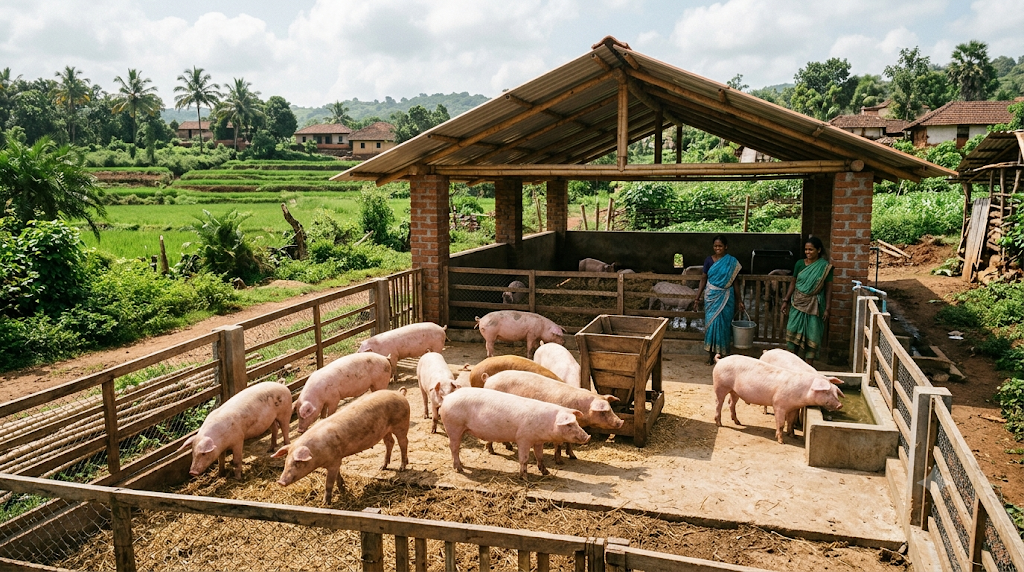
Pig farming in India is the rearing of pigs, mainly for pork. It is also called piggery. Most units are small. A family keeps a few pigs in a backyard pen and sells piglets or grown animals to local buyers.
Pigs grow fast and a sow gives birth to many piglets in one litter. That is why piggery can turn a small investment into regular income faster than cattle or buffalo. The same fast cycle works against you when disease or a bad market hits, because losses also come quickly.
Pig farming in India is one of seven livestock groups we cover in our guide to livestock categories. If you are still comparing animals, read our posts on types of livestock, goat farming in India and dairy farming in India before you decide.
Pig Farming in India by the Numbers
The 20th Livestock Census (2019) counted 9.06 million pigs in India. According to the Department of Animal Husbandry and Dairying (DAHD), pigs make up 1.7% of the country’s total livestock. The numbers come from DAHD’s Good Husbandry Practices document on pig farming, linked in the sources.
Three more facts from ICAR publications show where the sector stands:
- The pig population fell by about 12.03% compared with the previous census.
- About 79.03% of pigs are indigenous or non-descript. Crossbred and exotic pigs make up the other 20.97%.
- About 47% of India’s pigs are in the North-Eastern Hill region. Assam alone had 2,099,000 pigs in 2019.
Now the number that matters if you farm in the Gangetic plains. An ICAR table from Indian Farming shows Bihar’s pig population dropping from 0.65 million to 0.34 million between the two censuses, a fall of 47.14%. Uttar Pradesh fell from 1.33 million to 0.41 million.
What does this mean for you? Pig farming in India is concentrated in the North-East, and in many other states the sector is shrinking. That can mean less competition and room to grow. It can also mean fewer buyers, fewer vets who know pigs and fewer feed suppliers. Do not read the national figure as proof of easy money. For the wider picture, see our report on livestock population in India.
Is Pig Farming in India Right for You?
Pig farming in India works for some farmers and fails for many others. Ask yourself these questions honestly:
- Do I have a buyer? Demand for pork varies sharply by region and community. If you cannot name two buyers within reach, stop here.
- Can I keep the unit clean? Pigs need daily cleaning and dry floors. A dirty unit invites disease.
- Can I stop disease from entering? One infected animal, one visitor or one sack of contaminated feed can start an outbreak.
- Is my family and my neighbourhood comfortable with a piggery? Smell, waste and social acceptance cause real conflict. Check local rules and speak to neighbours early.
- Do I have a vet nearby who treats pigs? Many vets deal mainly with cattle. Find one who handles pigs before you buy any.
If you answered no to the first or third question, choose another enterprise. A goat unit usually has an easier market in most of India. Our guide on goat farming in India explains that route.
Step 1: Check Your Market First
Pig farming in India lives or dies on the market, so check demand before you build anything.
Visit the nearest pork shops and weekly markets. Ask traders:
- Which pig weight and age do you pay best for?
- Do you buy live animals, or do I have to slaughter and sell?
- How often do prices swing, and when are they highest?
- Do you buy piglets from small farmers?
Write down the answers. Then check whether a licensed slaughter and meat-cutting facility exists nearby. Without one, selling gets harder and legal risk rises. Rules on slaughter and sale differ by state and local body, so ask your district animal husbandry office.
Finally, look at demand around festivals and community events in your area. Time your breeding so animals reach selling weight when demand peaks.
Step 2: Choose the Right Pig Breed
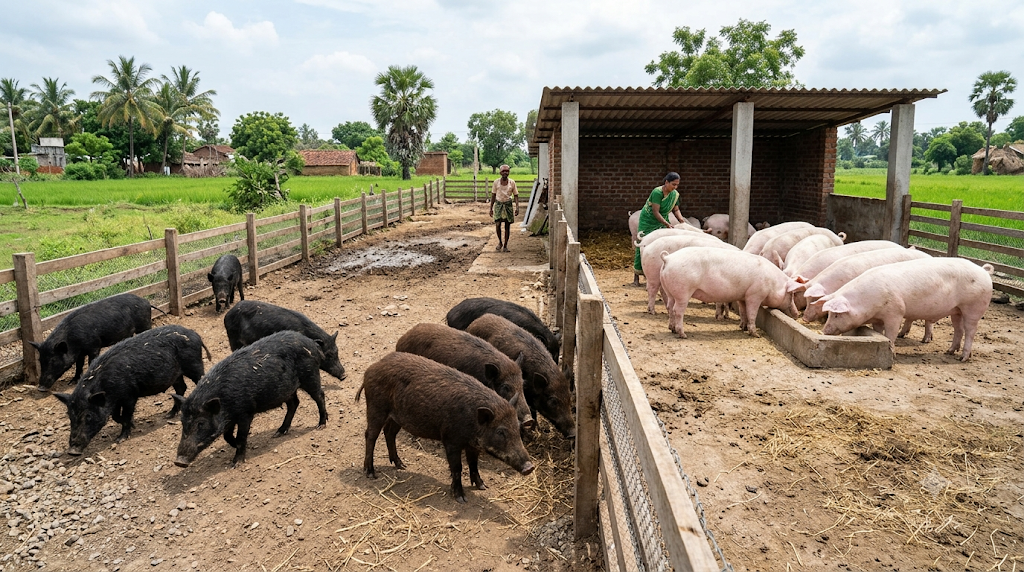
Breed choice shapes growth, feed cost and survival. India has three broad groups.
Indigenous pigs. These are hardy and survive on poor feed and rough housing. They grow slowly and give small litters. They make up the majority of India’s pig population, about 79.03% according to ICAR.
Exotic breeds. Large White Yorkshire, Landrace and Duroc are widely used. They grow faster and give more pork, but they need better feed, housing and vet care. They also cope poorly with heat and rough conditions.
Crossbreds. A cross between an exotic boar and an indigenous or crossbred sow often gives a practical middle path. Growth is better than indigenous pigs and hardiness is better than pure exotics.
For a first-time farmer with limited money, a good crossbred or a local breed from a government farm is usually the safer start. Pure exotic stock rewards good management and punishes poor management.
Buy breeding stock from a state piggery farm, a Krishi Vigyan Kendra, an ICAR institute or a breeder with health records. The ICAR network and your state animal husbandry department can point you to approved sources.
Step 3: Build Simple, Dry Housing
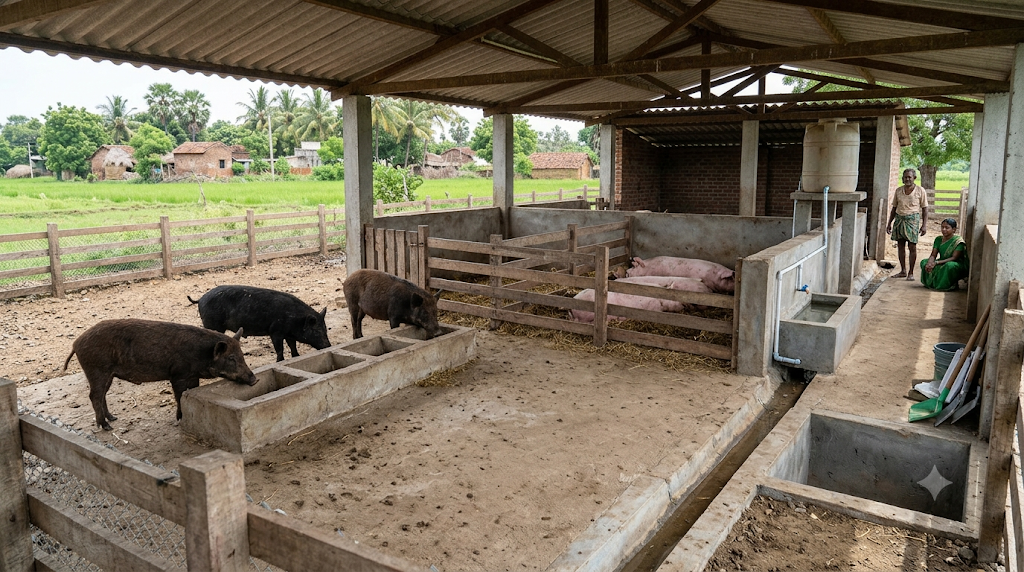
You do not need an expensive building for pig farming in India, but you do need a dry, shaded, easy-to-clean pen.
Location. Build away from your home and from neighbours, on high, well-drained ground. Keep the unit away from water sources used for drinking.
Floor. Use a concrete or well-packed, sloped floor so urine and water drain away. A wet floor causes foot problems and disease.
Roof and ventilation. Pigs suffer in heat. Give them shade, airflow and a place to wallow or be wetted down in hot weather. Pigs do not sweat well, so heat stress is a real risk.
Separate pens. Plan separate space for:
- Boars
- Pregnant sows
- Farrowing sows with piglets
- Weaned piglets and growers
- A small isolation pen for sick or new animals
Drainage and waste. Plan where manure and wash water will go before you build. Poor waste handling causes complaints, smell and disease.
Fencing and gate. Keep a strong boundary and a single entry point. A foot dip or a change of footwear at the gate is cheap protection. This matters even more now that African swine fever is spreading, as we explain in our guide on African swine fever prevention in pigs.
Step 4: Feed Pigs Safely
Feed is the largest running cost in pig farming in India. Pigs eat grain, bran, oilseed cake and household or farm by-products.
Basic ration. A typical pig ration combines an energy source (maize, broken rice, rice or wheat bran), a protein source (soybean meal, groundnut cake or similar), minerals and vitamins. The right mix depends on age and purpose. Piglets, growers, pregnant sows and nursing sows need different rations. Ask your veterinary officer or a Krishi Vigyan Kendra for a ration that suits your animals and local feed prices instead of copying a recipe from a video.
Water. Give clean water at all times. Pigs that lack water eat less and grow slowly.
Do not feed uncooked kitchen waste or pork scraps. This is a major route for disease spread, including African swine fever. If you use kitchen waste, check local rules and heat it thoroughly. Never feed meat products from outside to your pigs.
Cut feed cost safely. Local crop by-products, green fodder and non-conventional feed can cut cost, but quality and safety come first. Avoid mouldy grain, because mould toxins make pigs sick.
Change feed slowly. Sudden feed changes cause digestive upset. Shift over several days.
Step 5: Manage Breeding and Farrowing
Breeding is where pig farming in India earns money, because litter size and piglet survival drive income.
Choosing sows and boars. Pick breeding animals that are healthy, grow well and come from litters with good survival. Avoid breeding closely related animals. Inbreeding lowers litter size and piglet health.
Heat and mating. Learn to recognise heat in sows. Mate or inseminate at the right time for best results. Artificial insemination is available in some regions through government and private services. Ask your district office.
Gestation. A sow carries piglets for about 114 days, or roughly three months, three weeks and three days. Mark the mating date on a calendar and plan to move her to the farrowing pen a few days before the due date.
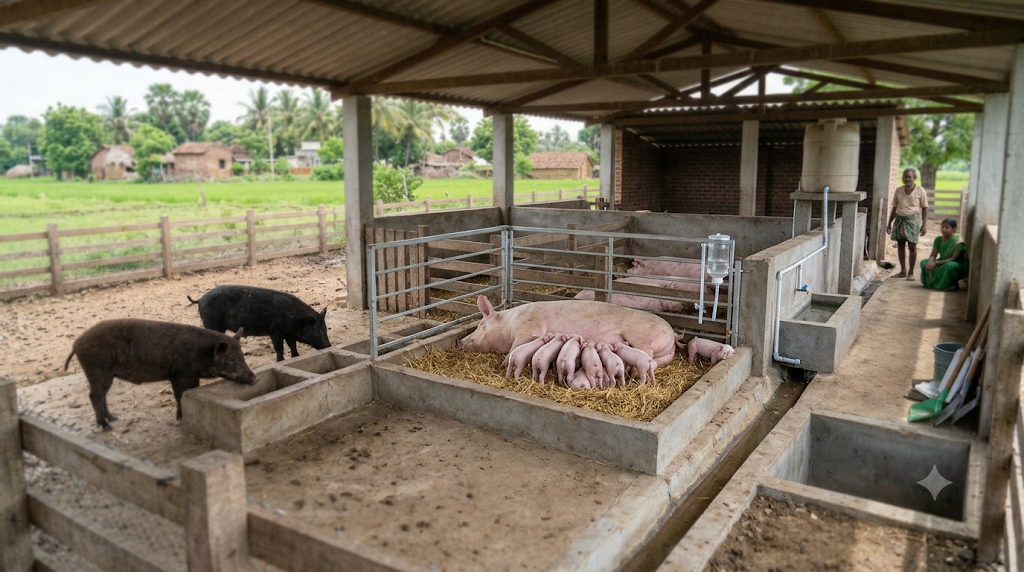
Farrowing. A calm, clean and dry farrowing pen helps. Keep an eye on the sow without disturbing her. Make sure each piglet gets colostrum, the first milk, soon after birth. It carries antibodies that protect newborns. Keep piglets warm, because newborns lose heat quickly.
Piglet care. Piglets are prone to anaemia in their first weeks when raised on concrete floors. Your vet will advise on iron supplementation and other routine care such as tail docking and castration if used. Follow the vet’s schedule and method.
Weaning. Wean piglets on your vet’s advice. Give weaned piglets a good starter feed and a clean, warm pen.
Records. Note each sow’s mating date, litter size, number weaned and piglet deaths. After one or two cycles, you will know which sows earn their feed and which should be sold.
Step 6: Protect Herd Health and Biosecurity
Disease is the biggest threat in pig farming in India. A single outbreak can end an entire unit, so prevention comes before treatment.
Biosecurity basics.
- Keep visitors, vehicles and other animals out of the pens.
- Provide footwear and hand-washing at the entry.
- Do not buy animals from unknown sources or crowded markets.
- Quarantine new animals in a separate pen and watch them for signs of illness before mixing.
- Keep dogs, rodents and wild birds away from feed and pens.
- Clean and disinfect pens and equipment regularly.
Diseases to know. Ask your veterinary officer about:
- African swine fever (ASF): a highly contagious viral disease with high death rates in pigs. Biosecurity is your main defence. Read our detailed guide on African swine fever prevention in pigs.
- Classical swine fever (CSF): a viral disease for which vaccination is available in India. Ask your veterinary department about the schedule.
- Foot and mouth disease (FMD): pigs can be affected too. See our guide on foot and mouth disease.
- Internal and external parasites: worms, mange and lice reduce growth and cause losses.
- Piglet diarrhoea: a common cause of piglet death, linked to dirty pens and cold.
Vaccination and deworming. Follow your state animal husbandry department’s schedule. Do not guess drug doses.
Daily observation. Walk through your pens every morning. Warning signs include:
- A pig that will not get up or eat
- Fever, shivering or huddling
- Red or purple skin patches
- Coughing or laboured breathing
- Diarrhoea, vomiting or bloody droppings
- Sudden deaths
Report outbreaks. If several animals fall sick or die suddenly, call the veterinary officer immediately. Some pig diseases are notifiable, and early reporting protects your neighbours’ pigs too. Do not sell sick animals or move pigs out of an affected unit.
DAHD’s Good Husbandry Practices document for pig farming gives a detailed official checklist. It is linked in the sources below.
Step 7: Sell Pigs and Keep Records
You earn only when you sell, so plan sales before the pigs are ready.
Piglets. If you run a breeding unit, you can sell weaned piglets to growers. This needs a reliable buyer network and healthy, vaccinated piglets.
Grown pigs. Many farmers raise piglets to market weight and sell live animals to traders or meat shops. Ask buyers which weight they prefer. Selling too early loses weight gain, and selling too late wastes feed.
Manure. Pig manure can be used as fertiliser after proper handling. In a mixed farm it can help your crop fields. Handle it carefully to avoid disease spread and smell.
Direct sales and processing. Some farmers move into processing or direct sales for better margins. This needs licences, hygiene standards and cold storage, so start only after your basic unit is stable.
Records. Keep a simple notebook or sheet with:
- Feed purchased and fed
- Animal purchases and sales
- Vaccination and treatment dates
- Births, weights and deaths
- Income and expenses
Without records, you cannot tell whether the unit makes money.
Costs and Income: What You Can and Cannot Know
Many websites show a neat profit table per sow. I will not. Prices, feed costs and mortality rates differ by state, breed and season, and I cannot source a reliable all-India figure.
Main costs:
- Breeding stock
- Housing, fencing and water supply
- Feed, which is usually the biggest running cost
- Vaccines, deworming and vet fees
- Labour and electricity
- Transport and market costs
Main income:
- Sale of weaned piglets
- Sale of grown pigs
- Culled sows and boars
- Manure
To build your own numbers, collect three local quotes for breeding stock, ask two working piggery owners about their feed and medicine spending, and ask two traders what pigs sold for last season. Then plan for losses. If your plan only works when no animal dies and every pig sells at the top price, it is not a plan.
Government Support for Pig Farming in India
Several schemes can reduce the cost of starting pig farming in India. Rules change, so confirm current terms before you apply.
NLM Entrepreneurship Development Programme. Under the National Livestock Mission, pig breeding units can get a 50% capital subsidy, capped at ₹30 lakh. DAHD’s model project report for a pig breed development unit lists capacities of 100 sows plus 10 boars, or 50 sows plus 5 boars. Applications go through the NLM portal at nlm.udyamimitra.in. Our guide to the National Livestock Mission explains how the scheme works.
Pig development in the North-East. The National Livestock Mission includes a sub-mission on pig development in the North-Eastern Region, covering state piggery farms and germplasm import.
State schemes. Several states run backyard piggery schemes with reduced-cost pig units. Terms differ widely. Ask your block veterinary office or district animal husbandry department.
Insurance. Insurance can cover the loss of an insured animal. Our guide to livestock insurance in India explains how claims work. Check whether your policy covers pigs and which diseases count.
Bank loans. Ask a nearby bank or a NABARD-linked branch about animal husbandry loans.
Keep every receipt, tag record and bank statement. Subsidy claims fail more often on missing paperwork than on weak projects.
Common Mistakes in Pig Farming in India
These errors sink many new units:
- Building before finding buyers. Market first, pens second.
- Starting too big. Begin with a small unit and learn for a full cycle.
- Buying animals from unknown markets. This is how disease enters.
- Skipping quarantine. One new sick pig can infect the herd.
- Feeding kitchen waste and meat scraps. A direct path for disease.
- No vet contact. Find a pig-friendly vet before the first emergency.
- Poor drainage and waste handling. It causes disease and neighbour disputes.
- Trusting profit claims from videos. They rarely include deaths, vet bills or unsold animals.
FAQs on Pig Farming in India
1. Is pig farming profitable in India?
It can be where pork demand is steady, feed is affordable and disease is controlled. Profit depends on your market, feed cost, piglet survival and prices. Without a buyer, it fails.
2. How many pigs are there in India?
The 20th Livestock Census (2019) recorded 9.06 million pigs, about 1.7% of India’s livestock. Check DAHD for newer census data.
3. How much money do I need to start pig farming in India?
It depends on unit size, breed and housing. Get local quotes for stock, pens and feed. Be careful with single national figures online.
4. Which pig breed is best for pig farming in India?
There is no single best breed. Indigenous pigs are hardy, exotic breeds such as Large White Yorkshire grow faster, and crossbreds offer a middle path. Choose according to your feed, housing and market.
5. Is there a subsidy for pig farming in India?
Yes. Under the NLM Entrepreneurship Development Programme, pig breeding units can get a 50% capital subsidy up to ₹30 lakh. States also run backyard piggery schemes. Verify current rules with DAHD or your district office.
6. How long is a sow pregnant?
About 114 days, or three months, three weeks and three days. Record the mating date to plan farrowing.
7. What is the biggest risk in pig farming in India?
Disease, especially African swine fever, which spreads quickly and has no simple fix. Strong biosecurity, quarantine and clean feed matter most.
8. Can I feed kitchen waste to pigs?
Avoid uncooked kitchen waste and never feed meat products, because they can spread disease. Check local rules and ask your veterinary officer before using any waste feed.
9. Can I start pig farming in India without much land?
A small backyard unit needs little land, but you still need space for pens, drainage, manure handling and distance from homes and water sources.
10. Is pig farming allowed everywhere in India?
Rules differ by state and local body. Check zoning, waste and slaughter rules with your gram panchayat, municipality and district animal husbandry office before you start.
Conclusion
Pig farming in India rewards farmers who solve the market and disease problems first. The animals are easy to breed, but selling pork and keeping an outbreak out are the hard parts.
Start small, buy healthy stock from a trusted source, quarantine every new animal, keep feed clean and write down every cost. Confirm subsidy rules with your district office before you spend.
If you are still weighing your options, compare this guide with our posts on goat farming in India and dairy farming in India. More guides are in our Livestock category. To see how we research and check our articles, read our editorial policy.