
Foot and mouth disease (FMD) is a viral illness that makes cattle drool, limp and stop eating. It also moves between farms faster than most owners expect.
If you keep cattle, buffalo, goats, sheep or pigs, this guide is for you. It explains how foot and mouth disease spreads, what the first signs look like, and what India’s national vaccination programme asks of you. It ends with seven practical steps you can start this week.
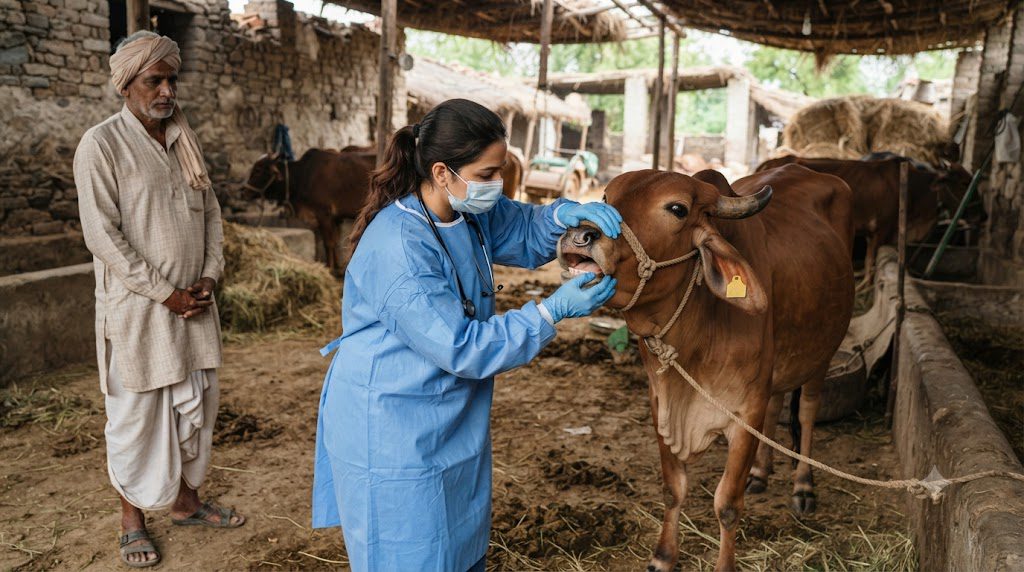
Table of Contents
What Is Foot and Mouth Disease?
Foot and mouth disease is a highly contagious viral infection of cloven-hoofed animals. Those are animals with two toes on each foot, such as cattle, buffalo, sheep, goats and pigs.
The virus causes blisters in the mouth, on the tongue, between the toes and on the teats. These blisters burst and leave raw, painful sores. An animal with sore feet and a sore mouth lies down more and eats less.
Horses are not affected. The FAO Dairy Farming Manual lists cattle, pigs, sheep, goats, buffalo, deer and elephants as susceptible, and notes that horses are not.
Which animals catch foot and mouth disease?
All cloven-hoofed livestock can catch it, but they do not react the same way. Iowa State’s FMD fact sheet describes cattle as “indicator hosts,” meaning they show clear signs early.
Sheep and goats are different. They often show very mild signs or none at all, yet they can still pass the virus to cattle. A flock that looks healthy can still be the source of an outbreak in your herd.
Is foot and mouth disease dangerous to people?
No. Public-health sources, including the FAO manual and Iowa State, describe the infection as not a human-health problem for practical purposes.
It is also not the same as “hand, foot and mouth disease,” a common childhood illness. The Texas Animal Health Commission states that the two are unrelated.
People still matter, though. They can carry the virus on boots, clothes and hands from one farm to another.
How Foot and Mouth Disease Spreads
Foot and mouth disease spreads through direct contact, through the air and through anything an infected animal has touched. That includes bedding, feed, tools, vehicles and people.
The FAO manual notes that wind can carry the virus over many kilometres. Contaminated vehicles, tools and clothing are also a common route of spread.
Silent spreaders: early shedding and carriers
The most worrying part is timing. Texas A&M’s FMD technical sheet says an animal can start shedding the virus up to 14 days before clinical disease appears.
TNAU’s cattle and buffalo advisory adds that the virus can be present in milk and semen up to four days before signs show. It also reports that carrier cattle may harbour the virus for 6 to 24 months.
In plain terms, a healthy-looking animal can be infectious. Foot and mouth disease does not always announce itself before it travels.
Milk, markets and fairs
The same TNAU advisory says calves can catch the disease through infected milk. The FAO manual warns that the virus can survive in milk and meat, and that pasteurisation does not always destroy it.
Cattle fairs, shared transport and new purchases bring animals from many villages together. TNAU therefore advises against buying from disease-affected areas and against taking unvaccinated animals to fairs.
Signs of Foot and Mouth Disease in Cattle
Learning the signs of foot and mouth disease helps you act early. The FAO manual says signs normally appear 1 to 15 days after exposure, with an average of 2 to 6 days.
Early signs to watch for
Look for these in any animal, especially after a new purchase or a fair visit:
- Fever, dullness and loss of appetite
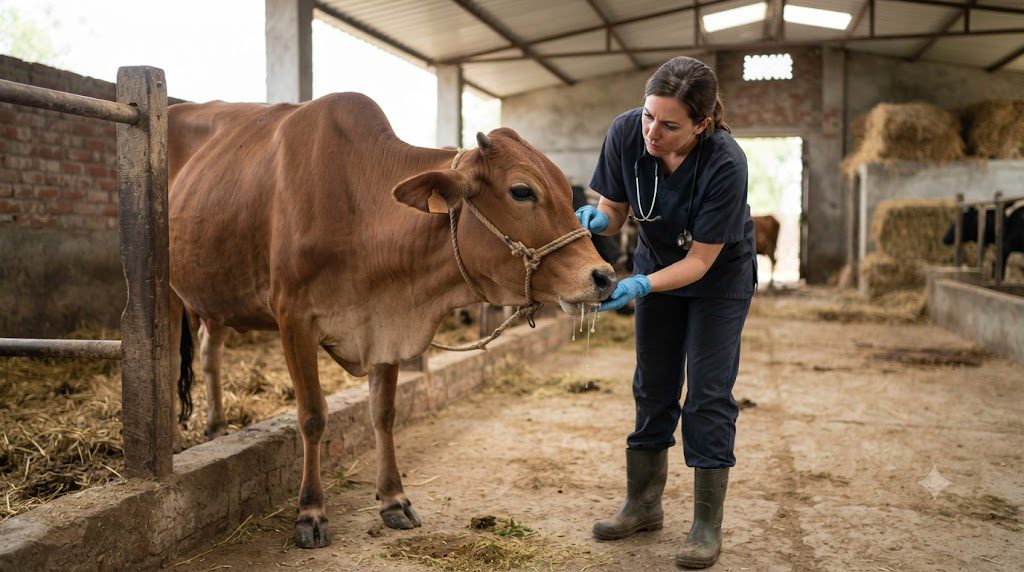
- Heavy drooling or stringy saliva
- Blisters or raw patches on the tongue, gums, lips and nose
- Lameness, or lifting the feet in turn
- Sores between the toes and at the top of the hoof
- Blisters on the teats and a sudden drop in milk
Texas A&M adds that nasal discharge may start clear and turn thick. Burst blisters make every sign worse.
What can look similar
Other diseases can cause mouth or foot sores. The UK government’s foot and mouth disease guidance warns that diseases such as swine vesicular disease and Seneca Valley virus can be confused with it in pigs.
Iowa State lists other look-alikes, including foot rot. That is why you should never diagnose it yourself. A vet or the animal husbandry department has to confirm it with tests.
Young calves are at special risk
Texas A&M reports that only 1 to 5 percent of infected adult cattle die. Young calves are different, and some may die without showing any clear signs.
TNAU also notes that suckling calves usually die and that pregnant animals may abort. Watch calves and pregnant cows closely during any local outbreak.
India’s Vaccination Programme Against Foot and Mouth Disease
India treats foot and mouth disease as a national priority. The government launched the National Animal Disease Control Programme (NADCP) in September 2019 to control FMD and brucellosis through nationwide vaccination.
The programme’s August 2026 update from the Press Information Bureau describes biannual mass vaccination as the core tool. It also describes a vaccine that targets FMD serotypes O, A and Asia 1.
What NADCP asks of farmers
Summaries of the programme, such as this Drishti IAS explainer, say the aim is 100 percent FMD vaccination of cattle, buffalo, sheep, goats and pigs every six months. The stated goal is eradication by 2030.
District notices give the practical rule. A Coimbatore district announcement for the ninth round, held from 1 July to 10 August 2026, asked farmers to vaccinate all cows, bulls, buffaloes and calves above four months of age.
Dates differ by state and district, so ask your nearest government veterinary dispensary when the next round starts.
Vaccination is only part of the answer
Vaccination lowers the chance of infection and the severity of disease, but it works best alongside biosecurity. A vaccinated herd can still be exposed through contaminated vehicles, people and new animals.
The programme also leans on identification and tracking. Our guide to ear tags and animal traceability explains why knowing where each animal came from speeds up any outbreak response.
7 Essential Steps to Protect Your Herd
These seven steps turn the advice from government and university sources into a routine you can run on a small or large farm. They work for foot and mouth disease, and most of them also help against other infectious diseases.
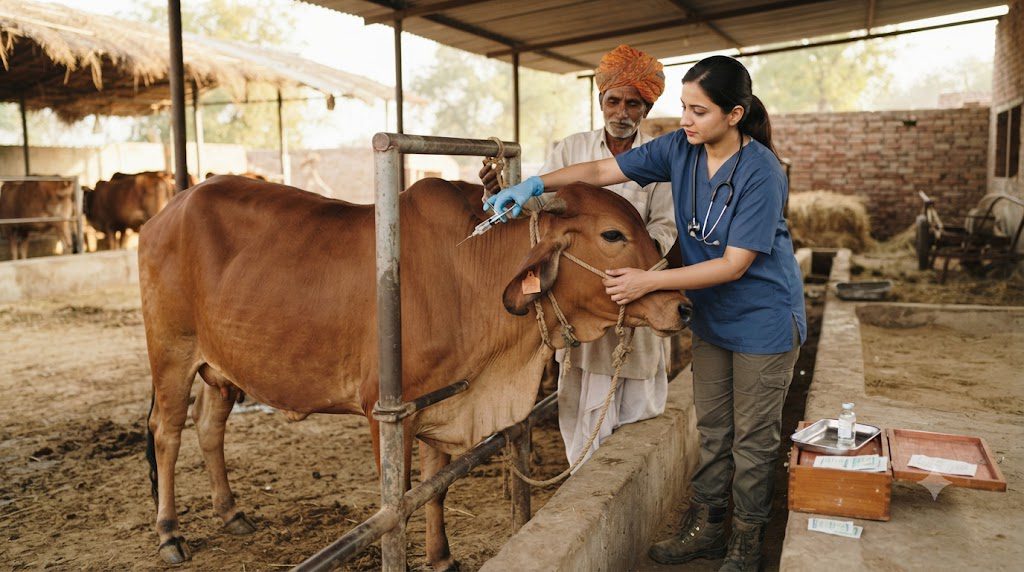
Step 1: Vaccinate on schedule against foot and mouth disease
Make the biannual vaccination non-negotiable. Keep your animals’ ear-tag numbers and vaccination dates in one notebook or phone note.
Include calves once they pass four months of age, as district notices describe. If an animal missed a round, tell the vet at the next visit instead of waiting for the next campaign.
Step 2: Quarantine every new animal
Keep newly bought or returned animals apart from the herd for the period your veterinarian advises. Because animals can shed the virus before they look sick, a quick glance at purchase is not enough.
Use separate feed and water buckets for the quarantine pen. Handle the new animals last, after your main herd.
Step 3: Avoid cattle fairs and risky purchases
TNAU advises against buying animals from disease-affected areas. It also advises keeping unvaccinated animals away from fairs.
If you must trade, buy only from herds with a known vaccination record. Ask to see the dates before you pay.
Step 4: Control people, vehicles and tools
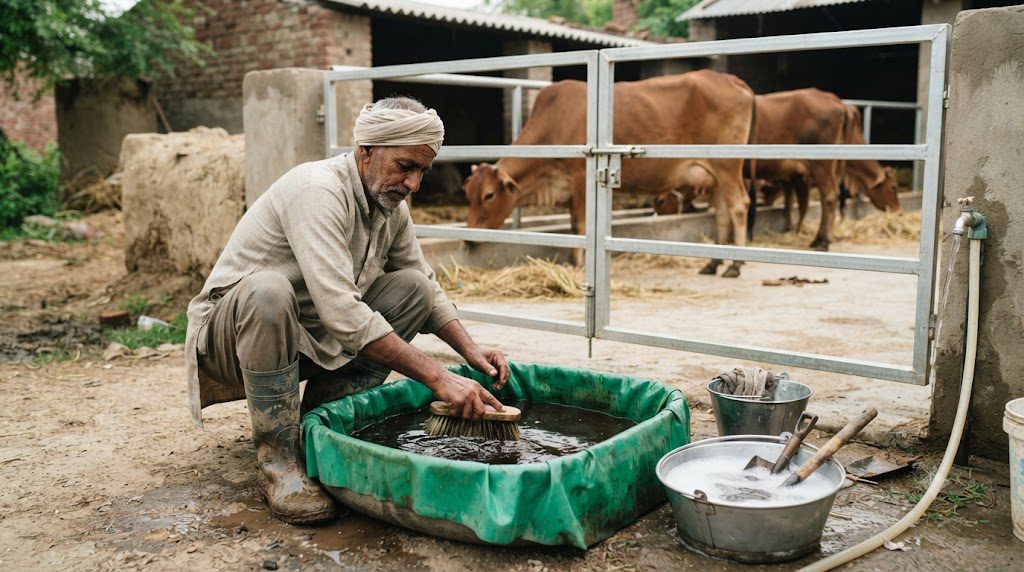
People and vehicles are an easy way for the virus to reach your gate. TNAU recommends a foot bath at the farm entrance and a wheel or truck bath where vehicles enter.
Keep visitors out of animal areas. Give anyone who must enter clean boots and a washable outer layer, and wash them afterwards.
Step 5: Clean and disinfect the premises
The FAO manual lists sodium hydroxide, sodium carbonate and acetic acid as disinfectants for this virus. TNAU gives concentrations of 2 percent sodium hydroxide, 4 percent sodium carbonate and 0.2 percent citric acid for floors and contaminated materials.
Sodium hydroxide is caustic. Wear gloves, eye protection and boots, and ask your vet or animal husbandry officer how to mix and apply it safely.
Remove soiled bedding first, because disinfectant works poorly on thick dirt.
Step 6: Check your animals every day
A two-minute check at milking or feeding catches problems early. Look at the mouth, the feet, the teats and the animal’s appetite.
Write down anything unusual. If you are curious about tools that automate this, our precision livestock farming guide covers sensors and monitoring.
Step 7: Isolate and report suspected cases at once
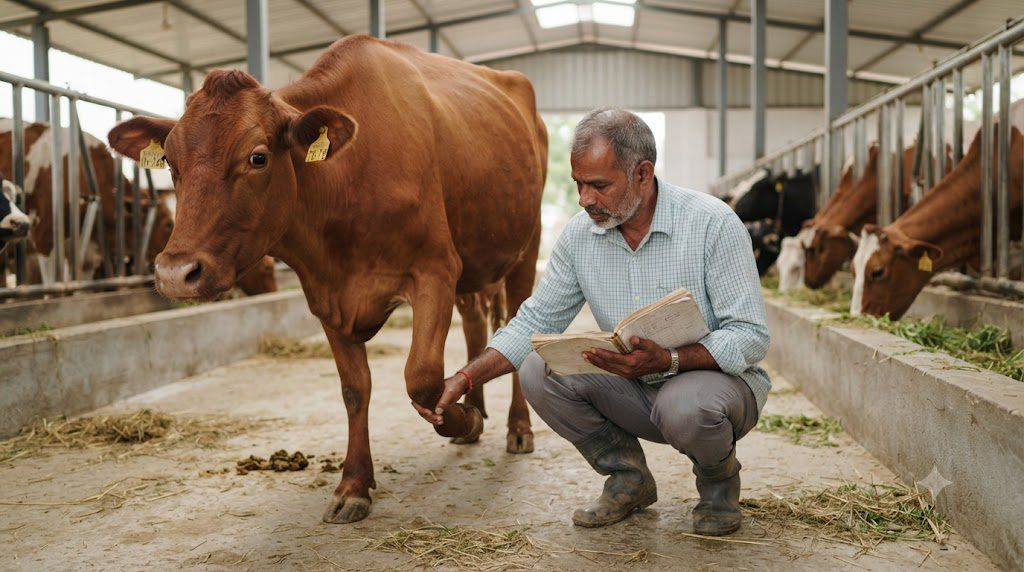
If you see blisters, drooling and lameness together, separate the animal and stop all movement of animals, people and equipment off the farm. Then call your veterinarian or the district animal husbandry office.
An FAO clinical examination job aid advises protective clothing, footwear and disposable gloves when examining suspected animals. It also says to wash clothes at 60 °C or hotter and to disinfect your hands and boots.
Caring for an affected animal
There is no quick cure for foot and mouth disease, so care is mostly supportive. TNAU describes washing the mouth and feet with a 1 percent potassium permanganate solution several times a day, and treating secondary infections under a qualified vet’s guidance.
Soft, easy-to-eat feed and clean, dry bedding help. Our cattle nutrition guide covers feed planning during recovery.
Do not feed milk from sick animals to calves. Ask your vet how to dispose of it safely.
What Foot and Mouth Disease Costs a Farm
Most adult cattle survive, so the damage often comes from lost production. TNAU says milk yield can fall sharply in affected animals, suckling calves may die, and pregnant animals may abort.
Recovery is slow, and the sore mouth and feet cut feed intake for days. Farmers also lose income when movement restrictions stop them from selling milk or animals.
Trade is the larger story at national level. A country with ongoing foot and mouth disease faces limits on livestock and dairy exports, which is one reason eradication by 2030 is part of India’s programme.
Common Mistakes Farmers Make
Most outbreaks on small farms follow a few repeat errors. Fixing these costs little.
Waiting to see if the animal “gets better”
Drooling and limping can look like a minor problem on day one. With foot and mouth disease, a delay of a few days lets the virus reach neighbouring animals.
Treating the herd without a diagnosis
Giving antibiotics to every sick animal does not stop a viral outbreak. A vet can tell whether a secondary bacterial infection needs treatment and can confirm the cause with testing.
Skipping the boosters
Missing a six-monthly round leaves a gap in protection. It is easier to keep a calendar than to rebuild herd protection after an outbreak.
Relaxing after vaccination
Vaccination reduces risk, but it does not make a farm invincible. Keep your foot baths, visitor rules and quarantine pen running all year.
Forgetting other livestock on the farm
Sheep and goats can carry the virus with mild signs, as Iowa State notes. If you keep mixed species, protect and monitor all of them. Our guides to sheep pox and goat pox and African swine fever in pigs show how similar rules apply to other diseases.
Quick Farm Checklist
Print this table and pin it in your cattle shed.
| When | What to do |
|---|---|
| Twice a year | Vaccinate all eligible animals, record the dates |
| On arrival of any animal | Quarantine, separate feed and water, check mouth and feet |
| Every day | Look at mouth, feet, teats and appetite |
| At every farm entry | Foot bath, wheel bath, clean boots for visitors |
| Weekly | Clean and disinfect floors and milking area |
| At first sign | Isolate the animal, stop movement, call the vet |
Frequently Asked Questions
1. What causes foot and mouth disease in cattle?
Foot and mouth disease (FMD) is caused by a highly contagious virus that affects cloven-hoofed animals, including cattle, buffalo, sheep, goats and pigs. It can cause painful mouth and foot lesions, fever, reduced appetite and lower milk production.
2. What are the early symptoms of foot and mouth disease in cattle?
Early signs may include fever, dullness, loss of appetite, excessive drooling, blisters or sores in the mouth, lameness and a sudden drop in milk production. Contact a veterinarian immediately if FMD is suspected.
3. How does foot and mouth disease spread between animals?
FMD can spread through direct contact with infected animals, contaminated equipment, vehicles, clothing, footwear and other materials. Airborne spread can also occur under suitable conditions.
4. Can vaccinated cattle still get foot and mouth disease?
Yes. Vaccination reduces the risk and can reduce disease severity, but it does not guarantee complete protection. Follow the vaccination schedule advised by your local veterinary department and maintain strict farm biosecurity.
5. How often should cattle be vaccinated against FMD in India?
India’s National Animal Disease Control Programme has used a biannual vaccination approach. Farmers should confirm the current schedule, eligible animals and campaign dates with their local government veterinary dispensary.
6. Can goats and sheep spread foot and mouth disease?
Yes. Sheep and goats are susceptible to FMD and may show mild or difficult-to-notice symptoms. They can still play a role in spreading infection to other susceptible livestock.
7. Can humans get foot and mouth disease from cattle?
FMD is an animal disease and is not the same as human hand, foot and mouth disease. Although human infection with the animal FMD virus is exceptionally rare, people can carry the virus on contaminated clothing, footwear and equipment.
8. How long does it take for FMD symptoms to appear?
The article’s cited FAO manual gives an incubation period of approximately 1–15 days, with an average of 2–6 days. Animals may shed the virus before obvious clinical signs appear.
9. What should farmers do if they suspect foot and mouth disease?
Separate the suspected animal if this can be done safely, stop animal movements and avoid moving potentially contaminated equipment or materials. Contact a veterinarian or the local animal husbandry department immediately and follow official instructions.
10. Is there a specific cure for foot and mouth disease?
There is no specific antiviral cure routinely used to eliminate FMD. Supportive care and management of secondary complications must be guided by a qualified veterinarian. Suspected cases also require prompt reporting and disease-control measures.
Key Takeaways
- Foot and mouth disease spreads through animals, people, vehicles, feed and sometimes the air.
- Animals can shed the virus before they look sick, so quarantine every new arrival.
- Vaccinate cattle and buffalo every six months under India’s national programme.
- Use foot baths, clean boots and strict visitor rules on every farm.
- Isolate any animal with blisters, drooling or lameness and call a vet at once.