
Table of Contents
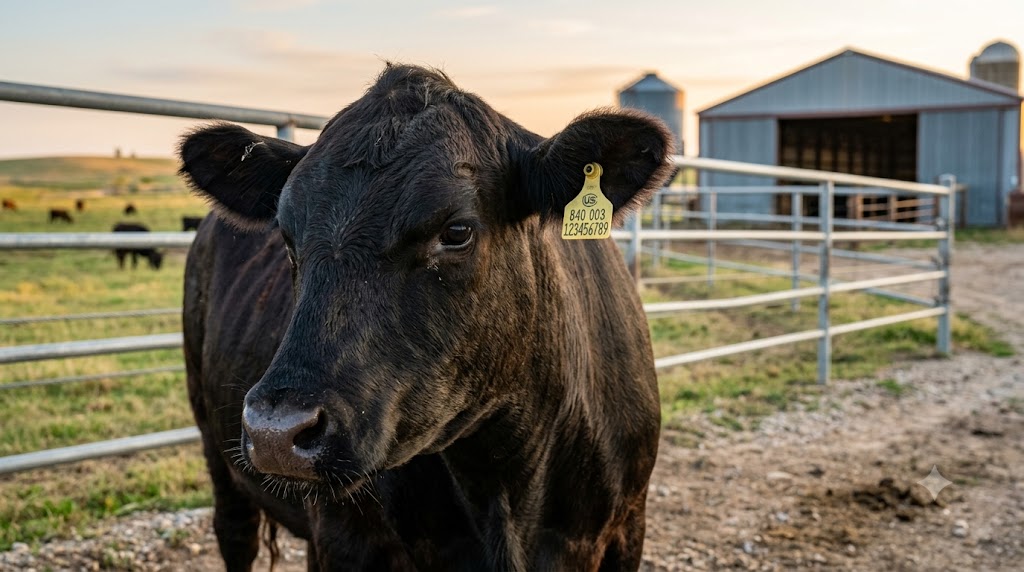
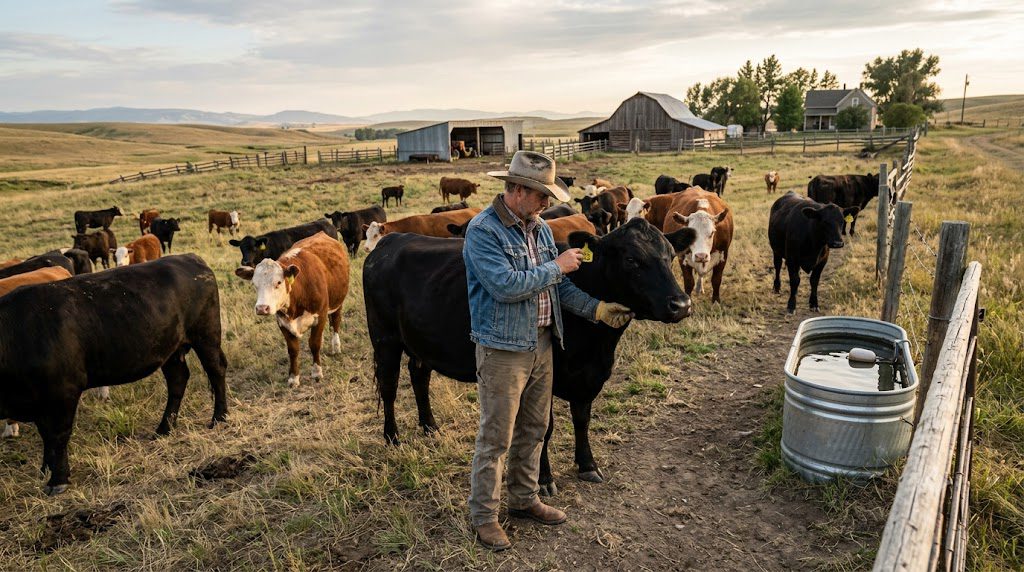
Electronic ID eartags for cattle are no longer optional for a large share of the U.S. cattle herd, and the rule requiring them is currently the subject of active federal litigation that could still change compliance requirements. If you move cattle or bison across state lines, this is a rule you need to understand now, not after a court ruling forces a scramble.
What the Electronic ID Eartag Rule Actually Requires
USDA’s Animal and Plant Health Inspection Service (APHIS) published its final rule, Use of Electronic Identification Eartags as Official Identification in Cattle and Bison, on April 26, 2024, with a compliance date of November 5, 2024. The rule requires official eartags applied to covered animals to be both visually and electronically readable, replacing the visual-only “brite tag” system that had been standard since 2013.
The rule applies specifically to sexually intact cattle and bison 18 months of age or older, all dairy cattle regardless of age, and cattle or bison of any age used for rodeo, recreation, shows, or exhibitions, according to the official APHIS announcement.
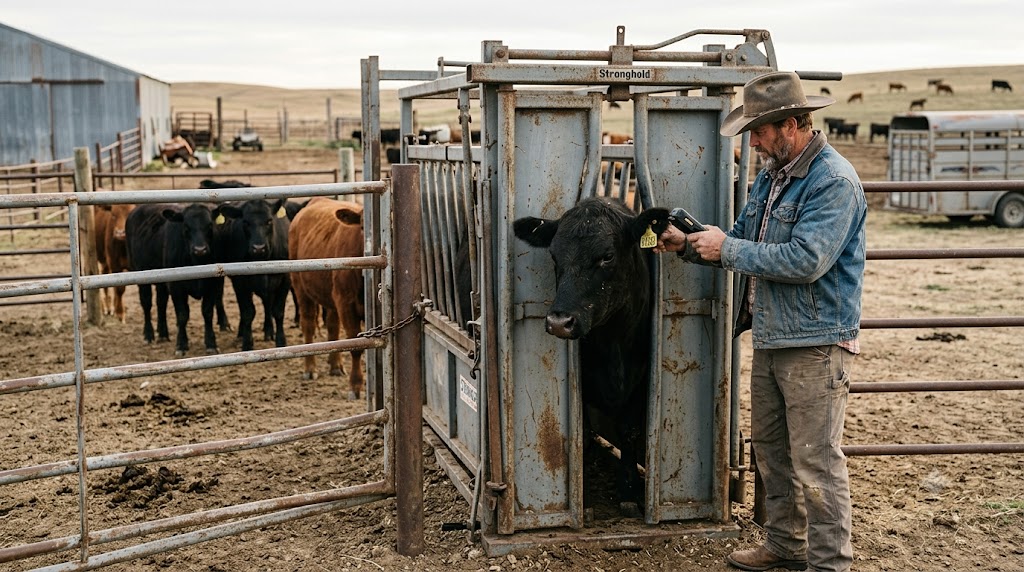
It does not apply to cattle moved within a single state, and it does not require producers to purchase electronic readers, since visual reading of the same tags remains a valid compliance method for anyone who chooses not to invest in scanning equipment, a distinction the New Civil Liberties Alliance’s own case summary confirms even while challenging the rule on other grounds.
The full Federal Register filing documents that APHIS first proposed RFID-only tagging back in 2020, withdrew that proposal following industry pushback, and returned with this narrower final rule in 2024 covering a more limited set of animal classes than originally proposed.
Why USDA Says the Rule Is Necessary
APHIS Administrator Michael Watson framed the rule’s purpose directly in the agency’s release, arguing that rapid traceability during a disease outbreak limits how long farms stay quarantined, reduces how many animals get sick, and helps producers resume selling more quickly, according to reporting from Agri-Pulse. USDA Undersecretary Jenny Lester Moffitt added that the rule is also about the government’s ability to act swiftly and regionalize a response if a foreign animal disease enters the country, rather than facing pressure to impose broader, more disruptive nationwide restrictions.
This rationale connects directly to disease events already reshaping U.S. livestock policy: the ongoing H5N1 detections in dairy cattle and the 2026 New World Screwworm incursion in Texas and New Mexico both triggered exactly the kind of interstate movement restrictions and quarantine zones that faster, electronic traceability is designed to shrink in scope and duration.
A congressional research summary from the Library of Congress confirms the rule builds on animal disease traceability goals USDA first laid out in 2018, rather than representing a sudden new policy direction.
Industry support for the rule has come specifically from the National Cattlemen’s Beef Association. NCBA president Mark Eisele, a Wyoming rancher, stated that most producers are already familiar with visual tagging and are simply transitioning to a tag that is also electronically readable, according to coverage from Drovers.
The Legal Fight: R-CALF USA v. USDA
Not every producer group agrees with that framing. The Ranchers-Cattlemen Action Legal Fund United Stockgrowers of America (R-CALF USA), joined by the South Dakota Stockgrowers Alliance, the Farm and Ranch Freedom Alliance, and individual producers, filed suit in the U.S. District Court for the District of South Dakota on October 30, 2024, one day before the rule’s effective date, according to reporting from DTN Progressive Farmer.
The lawsuit, litigated by the New Civil Liberties Alliance, asks the court to vacate the rule entirely. The plaintiffs’ core arguments, as laid out in NCLA’s March 2026 summary judgment filing, include:
- USDA previously found visual-only tags effective for disease tracing and reversed that position without presenting new supporting data.
- The rule is arbitrary and capricious under the Administrative Procedure Act, in part because it justifies EID tags as reducing human transcription error while still permitting EID tags to be read and recorded manually, the same way visual tags were.
- USDA did not consider a less disruptive alternative, such as simply improving readability standards for existing visual tags.
- The financial burden falls disproportionately on independent producers, while the rule’s stated benefits, particularly maintaining foreign export markets, primarily serve meatpackers and eartag manufacturers.
As of this writing, the case remains pending before the district court following the March 5, 2026 summary judgment motion, with no final ruling yet issued.
What This Means for Individual Producers Right Now
Regardless of how the litigation resolves, the rule is currently in effect and enforced for interstate movement of covered animals. A few practical realities matter here:
- The rule does not apply to intrastate movement. Cattle staying within one state are not subject to this specific requirement.
- Federal funding has helped offset tag costs. Congress allocated $15 million for EID tags in the Consolidated Appropriations Act passed in March 2024, and APHIS has stated it intends to continue funding tags as long as funding remains available, according to Ohio State University’s Farm Office analysis.
- No reader purchase is required. Producers can continue reading the same tags visually rather than investing in scanning equipment, meaning compliance cost is primarily the tag itself, not new infrastructure.
- Legislative pushback exists alongside the lawsuit. Senator Mike Rounds (R-SD) introduced a bill that would bar USDA from mandating electronic eartags at all, according to the same Farm Office analysis, indicating the rule’s future isn’t being contested through the courts alone.
Producers weighing whether to invest in RFID reader equipment beyond the minimum visual-reading requirement may find it useful to review Farm Sutras’ broader look at farm technology tools worth investing in, which covers how to evaluate precision agriculture tools against their actual return rather than adopting technology reactively. For producers building disease-response readiness more broadly, our guide to modern animal husbandry and scientific breeding techniques and our overview of sustainable livestock farming solutions both cover recordkeeping and herd management fundamentals that overlap directly with traceability compliance.
A Balanced Look at the Arguments on Both Sides
Neither side of this dispute is arguing in bad faith, and a fair account has to hold both readings at once.
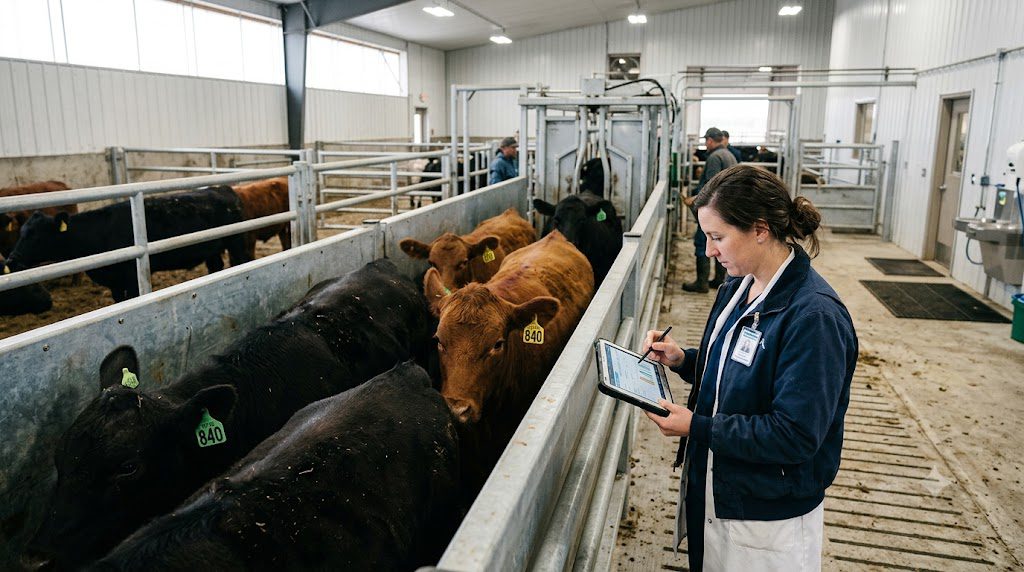
The case for the rule rests on a straightforward operational logic: electronic tags read faster and more reliably than manually transcribed visual tags during an active outbreak investigation, when speed directly determines how many additional farms end up under quarantine.
USDA’s broader traceability goals date back to 2018, and the National Cattlemen’s Beef Association’s support suggests at least part of the mainstream cattle industry views the transition as a manageable, if imperfect, step.
The case against the rule centers less on whether traceability matters and more on whether USDA adequately justified this specific mechanism. R-CALF’s objection that EID tags can still be read manually, undercutting the stated rationale of reducing human transcription error, is a substantive procedural argument, not simply industry resistance to any change.
The financial burden argument also deserves weight: even at roughly $3 per tag, costs accumulate meaningfully across large herds and fall on producers regardless of herd size or profit margin, while some of the rule’s cited benefits (maintaining export market access) accrue more directly to processors and international buyers than to individual ranchers.
Producers are reasonably left to comply with a rule they may still see overturned, which is an uncomfortable but not unusual position during active litigation over federal agricultural regulation.
Practical Compliance Steps While Litigation Continues
- Confirm whether your specific animals are covered. The rule applies to sexually intact cattle and bison 18 months or older, all dairy cattle, and rodeo, exhibition, or show animals — not every animal in a herd.
- Contact your state veterinarian’s office to check current availability of federally funded EID tags before purchasing tags out of pocket.
- Continue using visual reading if you don’t want reader equipment. Compliance does not require purchasing scanners.
- Track the R-CALF USA v. USDA docket through NCLA’s public case page if the outcome could affect your planning, since a ruling could change requirements with limited notice.
- Keep tagging records consistent with whatever official identification method you use, since documentation requirements apply regardless of the underlying legal dispute.
Frequently Asked Questions
1. What are electronic ID eartags for cattle?
Electronic ID eartags, often called EID or RFID tags, are official animal identification tags that can be read both visually and electronically. They help USDA and livestock officials trace cattle during disease investigations and interstate movement.
2. Do all cattle need electronic ID eartags in 2026?
No. The USDA rule does not require electronic ID eartags for every cattle animal. It primarily covers sexually intact cattle and bison 18 months or older, dairy cattle of any age, and cattle or bison used for rodeo, recreation, shows, or exhibitions when they move across state lines.
3. When are electronic ID tags required for cattle?
Electronic identification is required for covered cattle and bison subject to the federal animal disease traceability rules when they are moved interstate. Cattle that remain entirely within one state are not covered by this specific federal EID requirement.
4. Are RFID cattle tags the same as electronic ID eartags?
Yes. RFID cattle tags are a common type of electronic identification tag. They contain technology that allows the animal’s identification number to be captured electronically using a compatible reader while also displaying identification information that can be read visually.
5. Do cattle producers have to buy an RFID reader?
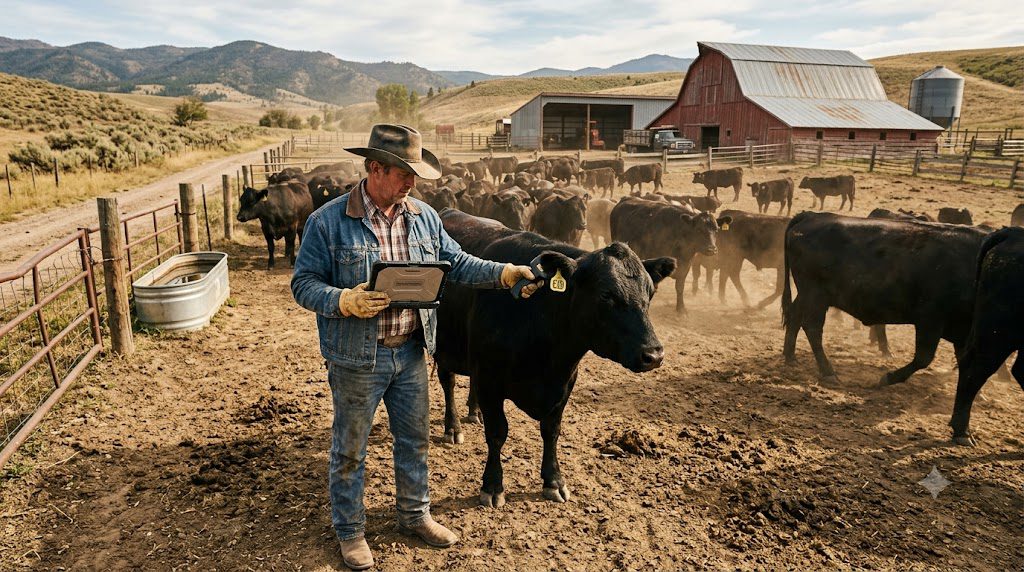
No. The USDA EID rule requires covered official tags to be electronically readable, but producers are not required to purchase an electronic tag reader. The identification number can still be read visually from the tag.
6. Is the USDA electronic cattle tag rule being challenged in court?
Yes. R-CALF USA and other plaintiffs challenged USDA’s electronic identification eartag rule in federal court. The lawsuit argues, among other things, that USDA did not adequately justify the requirement and failed to consider less burdensome alternatives.
7. Why does USDA support electronic ID eartags for cattle?
USDA says electronic identification can improve the speed and accuracy of animal disease tracing. Faster identification during an outbreak can help officials identify potentially exposed animals, trace movements and limit the geographic scope of disease-control measures.
8. How much do electronic ID eartags for cattle cost?
The cost can vary depending on the type of approved tag and purchasing arrangements. Federal funding has also been made available to help offset EID tag costs. Producers should check with their state veterinarian or relevant livestock authorities for current tag availability and funding.
9. Does the electronic ID eartag rule apply to cattle moved within the same state?
Generally, no. The specific federal EID requirement discussed in this article concerns covered cattle and bison moving across state lines. Intrastate cattle movements are not subject to this particular federal requirement, although separate state identification or livestock movement rules may apply.
10. What should cattle producers do while the EID tag lawsuit continues?
Producers should first determine whether their animals and planned movements fall under the current federal requirements. They should check with their state veterinarian about approved EID tags and available funding, maintain accurate identification records, and monitor the R-CALF USA v. USDA litigation because future court decisions or legislation could change the requirements.
11. What is the difference between RFID tags and regular cattle tags?
RFID or electronic ID tags contain technology that allows an animal’s identification number to be captured electronically with a compatible reader. Traditional visual tags generally require the identification number to be read and recorded manually. Under USDA’s current rule, approved official identification for covered animals must be both visually and electronically readable.
12. Can I use an old visual cattle tag for interstate movement?
It depends on the animal and movement. Covered cattle and bison subject to the USDA’s electronic identification requirement generally need an official eartag that meets the current EID standards. Producers should verify the specific movement and identification requirements with their state veterinarian before transporting animals across state lines.
13. How do electronic cattle tags help with disease traceability?
Electronic tags can make it faster to capture an animal’s identification number and connect that animal with movement and herd records. During a disease investigation, this information can help officials identify potentially exposed animals and trace where animals have moved.
14. Can electronic ID tags be reused on another cow?
Official animal identification tags generally identify a specific animal and should not simply be transferred to another animal. Producers should follow USDA and state identification procedures for lost, damaged, or incorrectly applied tags rather than removing and reusing an official tag.
15. Where can cattle producers get USDA-approved electronic ID tags?
Producers can obtain approved official EID tags through authorized livestock identification suppliers and programs coordinated with state animal-health authorities. Because availability, funding, and ordering procedures can vary by state, producers should contact their state veterinarian’s office or animal-health agency before purchasing tags.
Actionable Takeaways
- Confirm which of your animals are actually covered before assuming the rule applies to your entire herd.
- Check for available EID tag funding through your state veterinarian’s office rather than assuming full cost falls on you.
- Understand that compliance and litigation are running on separate tracks: the rule is enforceable now regardless of the pending court case.
- Revisit this guidance periodically, since a court ruling or new legislation could change requirements with little advance notice.
Conclusion
Electronic ID eartags for cattle have become an important part of the U.S. animal disease traceability system, but the 2026 situation is more complicated than simply saying that every cattle producer must adopt RFID technology.
The current USDA rule applies to specific categories of cattle and bison involved in interstate movement, while animals moved only within a state are generally outside this particular federal requirement.
For producers, the most important step is to determine whether their animals and planned movements are actually covered. If they are, compliance currently requires approved identification, but producers do not have to purchase an electronic reader simply to meet the federal requirement. Checking with the state veterinarian’s office about approved tags and available funding can also help reduce unnecessary costs.
At the same time, the legal challenge to USDA’s EID requirement means this issue is not settled permanently. R-CALF USA and other plaintiffs continue to challenge the rule, while USDA maintains that electronic identification can make disease tracing faster and more effective.
Until the court or Congress changes the applicable requirements, producers should plan around the rules currently in effect rather than assuming the lawsuit will automatically suspend them.
For cattle producers, the practical approach is straightforward: know whether your animals are covered, maintain accurate identification records, use compliant tags when required, and monitor developments in the litigation and federal policy.
The requirements surrounding electronic cattle identification may continue to evolve, so staying informed is just as important as choosing the right tagging system.