
I don’t raise pigs commercially. This article draws on Government of India press releases, peer-reviewed veterinary research, international surveillance reporting, and independent Indian journalism covering farmers directly affected by ASF, organized into one practical reference.
Table of Contents
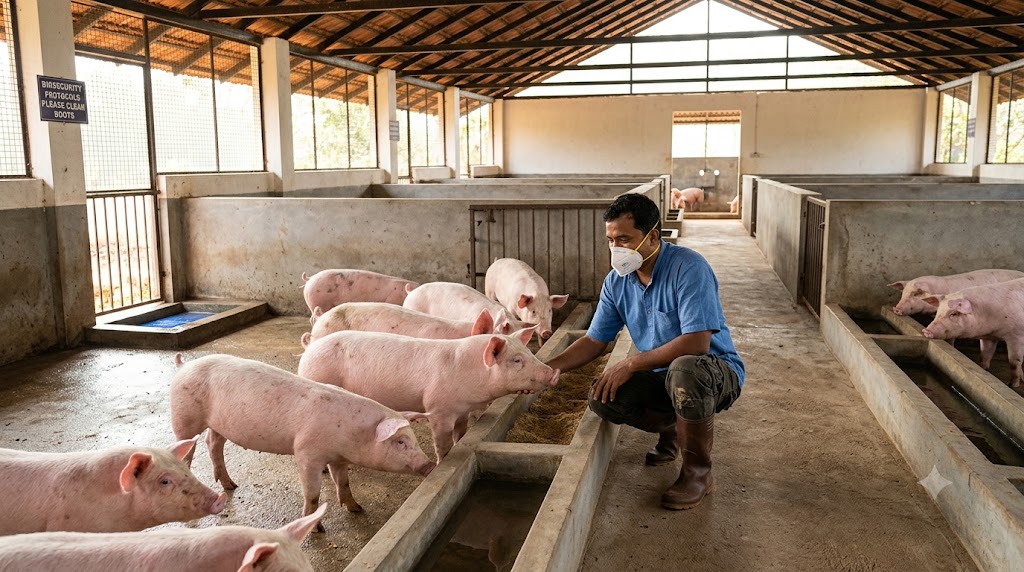
African swine fever prevention in pigs has become one of the most urgent livestock priorities globally in 2026, and India is squarely at the center of that urgency. A disease with a mortality rate that can approach 100% has now spread to the vast majority of Indian states, and for years farmers had no vaccine to fall back on. That changed only last month, with a genuine breakthrough that still comes with important caveats.
Why African Swine Fever Prevention in Pigs Matters More Than Ever
African swine fever (ASF) is currently active across at least 20 countries in the Asia-Pacific region alone, with outbreaks reported across all nine provinces of at least one affected nation and tens of thousands of pigs and wild boar dead as of mid-2026, according to reporting citing the FAO’s regional ASF update.
Governments across the region are simultaneously racing to expand vaccination programs and biosecurity protocols, an indication of how seriously the disease is now being treated at a policy level.
Europe has not escaped either, illustrating why African swine fever prevention in pigs increasingly requires coordination beyond any single farm’s boundary.
Wild boar populations in Spain, Germany, and elsewhere continue to drive new outbreak clusters even where domestic pig farms maintain strong biosecurity, according to the UK government’s ASF outbreak assessment, which specifically flags continued westward spread in Germany as concerning.
That pattern, containment succeeding in commercial farms while wild boar populations keep the virus circulating in the background, is a structural challenge that biosecurity alone cannot fully solve.
What African Swine Fever Actually Is
ASF is a viral hemorrhagic disease affecting domestic pigs and wild boar, characterized by high fever, internal hemorrhaging, and mortality rates that can approach 100%, according to the Government of India’s own description of the disease.
Understanding exactly how the virus behaves is the starting point for effective African swine fever prevention in pigs, since prevention strategy follows directly from transmission biology rather than guesswork.
Unlike some of the other livestock diseases making headlines in 2026, ASF is not zoonotic, meaning it does not directly threaten human health, but its economic impact on pig farmers can be total and immediate rather than gradual.
The virus does not spread through the air. Peer-reviewed research on India’s outbreak pattern confirms healthy pigs become infected only through direct contact with contaminated material, meaning transmission control is fundamentally about restricting contact rather than airborne containment, a distinction that shapes every practical prevention step below.
The Global 2026 Picture
The scale of the current global situation is worth understanding before narrowing to India specifically. A peer-reviewed transmission model published in Nature Communications studying Romania, which has accounted for the majority of European Union pig farm outbreaks in recent years, found that inter-farm transmission alone cannot explain the spread pattern observed, meaning wild boar populations are playing an independent, ongoing role in sustaining the outbreak that farm-level biosecurity cannot fully address on its own.
Meanwhile, industry surveillance from the Swine Health Information Center documented a first-ever domestic pig outbreak in Poland during 2026 affecting more than 21,000 pigs, alongside continued active outbreaks in Latvia, Germany, and other affected regions, underscoring that ASF containment remains a moving target even in countries with well-developed veterinary infrastructure.
ASF in India: Scale and Economic Toll
India’s experience with ASF illustrates both the disease’s severity and the real human cost behind the statistics. Since its first detection in Assam in 2020, ASF has spread to 22 of India’s 28 states and the National Capital Territory, according to regional outbreak tracking. In 2024 alone, more than 150,000 pigs died or were destroyed due to ASF across the country.
The financial toll on smallholder farmers has been severe and specifically documented, and it’s exactly why African swine fever prevention in pigs has become a national policy priority rather than a purely local concern.
According to the Government of India’s own press release announcing its new vaccine, initial outbreaks in Assam during 2020 and 2021 resulted in estimated losses of approximately ₹276 crore, while in Mizoram, ASF outbreaks affected more than 11,382 households through 2025, causing an estimated ₹982 crore in financial losses.
These aren’t abstract industry figures; they represent concentrated devastation among smallholder pig farmers, particularly in India’s North-Eastern states, where pig farming is a primary livelihood for many households.
India’s New Indigenous Vaccine: What It Actually Means
Why the Vaccine Doesn’t Replace African Swine Fever Prevention in Pigs Yet
In August 2026, scientists at ICAR’s National Institute of High Security Animal Diseases in Bhopal developed India’s first indigenous, MA-104 cell line-based live attenuated ASF vaccine, using an attenuated ASFV Genotype II virus with targeted gene deletions to stimulate protective immunity, according to the official Government of India announcement.
This is a genuine scientific milestone: until this development, India had no commercially approved vaccine, and disease control relied entirely on rapid diagnosis, culling, and biosecurity.
It’s important to be precise about what this milestone does and doesn’t mean for individual farmers right now.
Developing a vaccine is a distinct step from making it widely commercially available; independent reporting from farmers in Assam notes that even a proven vaccine candidate must be validated through trials under Indian conditions before the central government arranges procurement for states, according to investigative reporting from Newslaundry.
In practice, this means the current generation of pig farmers facing active outbreaks should not assume immediate, widespread vaccine access, even with this breakthrough now public.
A Balanced Look: The Culling Policy Controversy
A fair account of African swine fever prevention in pigs has to include the real friction between government policy and farmer experience, because it directly shapes how prevention plays out on the ground.
The case for the current approach is straightforward: with no approved vaccine available until very recently, culling infected animals and establishing surveillance zones around outbreak sites has been the primary tool available to prevent wider spread, consistent with international disease-control practice.
The case against the current approach, as documented by IndiaSpend’s on-the-ground reporting from Assam, is that blanket culling within fixed radius zones, rather than more targeted “compartmentalization,” has drawn direct criticism from veterinary experts and farmers alike.
Experts quoted in that reporting argue for compartmentalization instead: targeted culling of only confirmed infected animals, combined with strict biosecurity and regular monitoring, rather than culling every animal within a set radius regardless of individual infection status.
Farmers interviewed have specifically requested that operations maintaining strong biosecurity be allowed to avoid blanket culling unless their own animals show actual symptoms, and separately, state-level support programs like Assam’s Chief Minister’s Flagship Programme have reportedly stalled at the implementation stage, leaving affected farmers without the compensation or support the policy framework promises on paper.
Both realities are true simultaneously: India’s overall disease response strategy is scientifically sound in its fundamentals, and its on-the-ground implementation has left many smallholder farmers feeling under-supported and, in some cases, penalized for outbreaks beyond their direct control.

Biosecurity Steps: The Core of African Swine Fever Prevention in Pigs
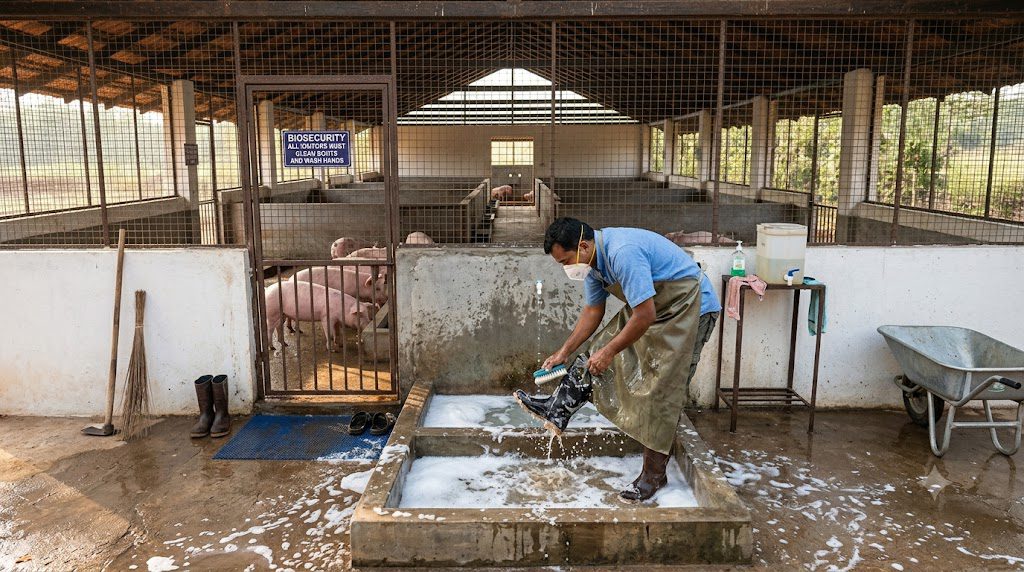
Because ASF spreads only through direct or indirect contact with contaminated material, not through the air, biosecurity remains the single most effective tool for African swine fever prevention in pigs available to individual farmers regardless of vaccine timelines. Veterinary researchers studying India’s outbreak pattern recommend:
- Restrict human access to pig housing areas, since people moving between farms are a documented transmission pathway.
- Disinfect vehicles, equipment, and footwear before and after entering pig housing, particularly after visiting markets or other farms.
- Avoid feeding pigs untreated food waste, since contaminated feed is a known transmission route for ASF.
- Isolate new or returning animals before introducing them to the existing herd.
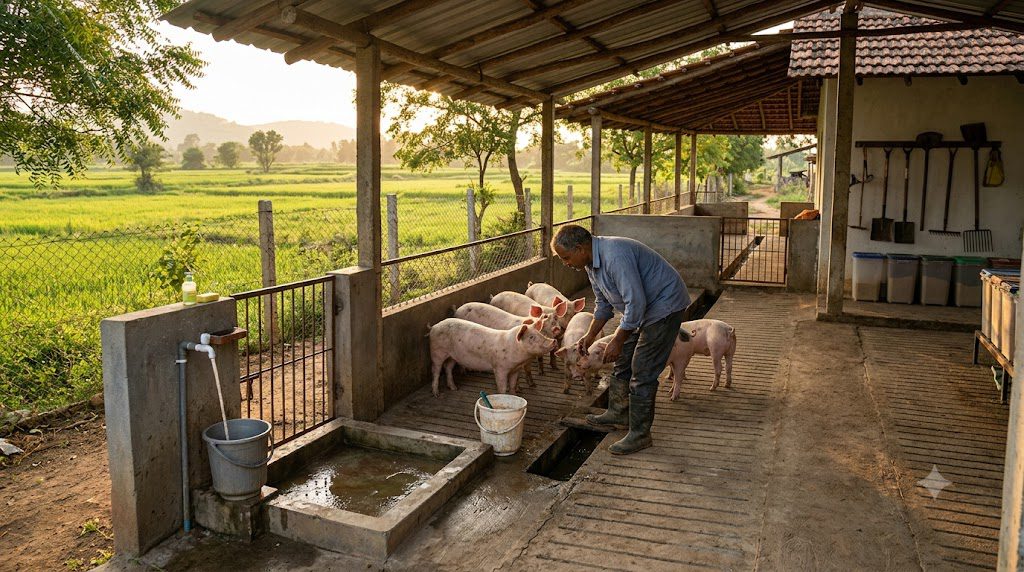
- Improve sanitation in backyard and smallholder settings specifically, since experts note biosecurity remains weakest in exactly these operations, which make up a large share of India’s pig farming sector.
- Report suspected cases immediately to local veterinary authorities, since early detection and reporting are central to containing an outbreak before it spreads to neighboring farms.
Farmers looking to reduce their exposure to a single-species catastrophic risk like ASF may also want to review Farm Sutras’ guide to sustainable livestock farming solutions, which covers approaches to building more diversified, resilient farm income, and our overview of proven goat and poultry farming practices for households considering diversifying beyond pig farming specifically.
Our guide to modern animal husbandry techniques also covers general herd management principles that support faster disease detection across species.
What to Do If You Suspect ASF in Your Herd
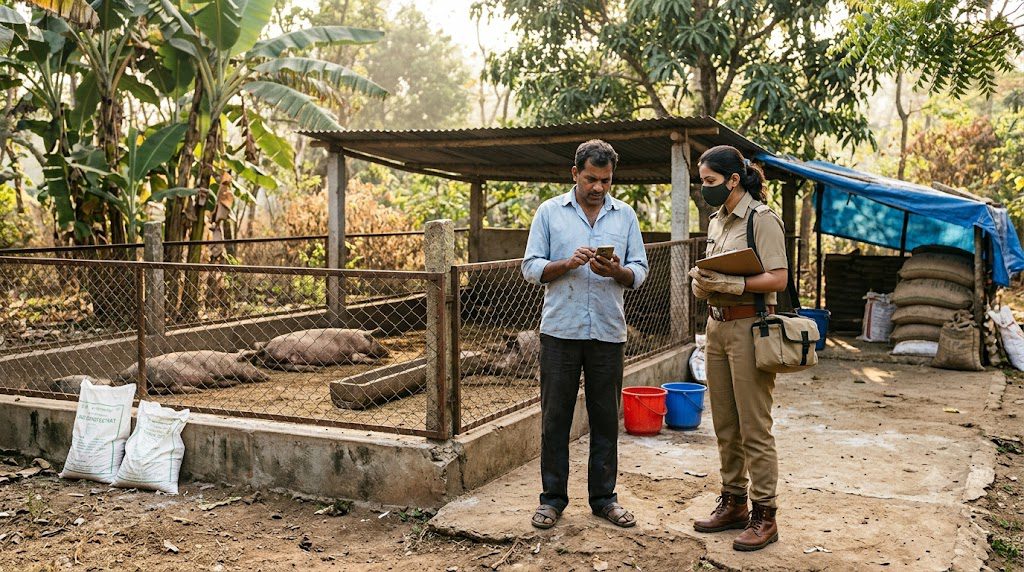
If pigs show high fever, hemorrhaging, sudden unexplained deaths, or other symptoms consistent with ASF, isolate the affected animals immediately and contact your local veterinary or animal husbandry officer without delay.
This step is the last line of defense in African swine fever prevention in pigs once symptoms have already appeared, and speed matters more than any other factor at this stage. Do not move animals, feed, or equipment off the property until officials have assessed the situation.
xThere is currently no treatment for ASF once an animal is infected, which makes early isolation and reporting the only tools that can limit how far an outbreak spreads to neighboring farms.
Frequently Asked Questions
1. What is African swine fever in pigs?
African swine fever (ASF) is a viral disease that affects domestic pigs and wild boar. It can cause high fever, internal hemorrhaging, and mortality rates approaching 100%. ASF is not a zoonotic disease and does not directly infect humans.
2. What are the symptoms of African swine fever in pigs?
Common signs discussed in the article include high fever, hemorrhaging, sudden unexplained deaths, and other symptoms consistent with ASF. Farmers should contact veterinary authorities immediately when ASF is suspected rather than relying on symptoms alone for diagnosis.
3. Is there a vaccine for African swine fever in India?
India developed its first indigenous ASF vaccine in August 2026 through ICAR. However, development of the vaccine does not automatically mean widespread commercial availability; validation trials and subsequent procurement and distribution remain important steps.
4. What is the ICAR ASF vaccine?
The ICAR-developed vaccine is an MA-104 cell line-based live attenuated ASF vaccine using an attenuated ASFV Genotype II virus with targeted gene deletions. It was developed at ICAR’s National Institute of High Security Animal Diseases in Bhopal.
5. How does African swine fever spread between pigs?
ASF can spread through direct or indirect contact with contaminated material, including infected pigs, feed, equipment, vehicles, and footwear. The article emphasizes that the virus does not spread through the air.
6. Can African swine fever spread to humans?
No. African swine fever is not zoonotic, meaning it does not directly infect humans. However, it can cause severe economic losses for pig farmers because mortality can be extremely high.
7. How can farmers prevent African swine fever in pigs?
Farmers can reduce transmission risk by restricting access to pig housing, disinfecting footwear and equipment, avoiding untreated food waste, isolating new animals, improving sanitation, and reporting suspected cases quickly.
8. Can African swine fever spread through contaminated feed?
Yes. Contaminated feed is identified as a transmission route, which is why the article recommends avoiding untreated food waste when feeding pigs.
9. What should I do if I suspect African swine fever in my pigs?
Immediately isolate affected animals, stop animals and potentially contaminated materials from leaving the property, and contact your local veterinary or animal husbandry officer. Early reporting is important because there is currently no treatment for infected pigs.
10. Is there a treatment for African swine fever?
The article states that there is currently no treatment for ASF once an animal is infected. Disease control therefore depends heavily on early detection, isolation, reporting, biosecurity, and official outbreak-control measures.
11. Why is African swine fever dangerous for pig farmers in India?
ASF can cause extremely high mortality and significant economic losses. The article reports that ASF has spread to 22 of India’s 28 states and the National Capital Territory, with substantial losses documented among smallholder pig farmers.
12. Why is India’s ASF culling policy controversial?
The controversy centers on the use of fixed-radius or blanket culling around outbreak areas. Farmers and some veterinary experts cited in the article have argued for more targeted approaches, including compartmentalization, strict biosecurity, and monitoring.
13. Should new pigs be quarantined before joining an existing herd?
Yes. The article recommends isolating new or returning animals before introducing them to the existing herd as part of farm-level biosecurity.
14. How can pig farmers improve biosecurity against African swine fever?
Key measures include controlling human access, disinfecting vehicles and equipment, maintaining clean footwear, preventing contaminated feed from reaching pigs, isolating incoming animals, improving sanitation, and reporting suspected infections promptly.
15. Does the new Indian ASF vaccine mean farmers can stop focusing on biosecurity?
No. The article specifically emphasizes that farmers should not assume immediate vaccine access and should continue prioritizing biosecurity. Vaccine development is an important milestone, but widespread availability is a separate step.
Actionable Takeaways
Every step below supports the same goal: consistent, farm-level African swine fever prevention in pigs, regardless of where vaccine rollout and government policy currently stand.
- Don’t assume the new indigenous vaccine means immediate access; confirm current availability through your local veterinary office before planning around it.
- Prioritize biosecurity now regardless of vaccine timelines, since contact-based transmission means farm-level hygiene is still your strongest available defense.
- If you farm in an affected or bordering region, understand your area’s specific culling and compensation policy before an outbreak occurs, not during one.
- Consider diversifying farm income if pig farming represents your primary or sole livelihood, given the catastrophic, all-or-nothing nature of ASF outbreaks.