
Goat farming in India means raising goats for meat, milk, breeding stock and manure, and it is one of the cheapest ways to enter livestock because goats need less land and capital than cattle.
Cheap to start is not the same as safe to run. Disease, damp sheds and weak buyers sink more goat farms than low prices do.
This guide gives you seven practical steps. It draws on ICAR institutes, the Department of Animal Husbandry and Dairying (DAHD) and the Livestock Census, and it flags where the evidence runs out.
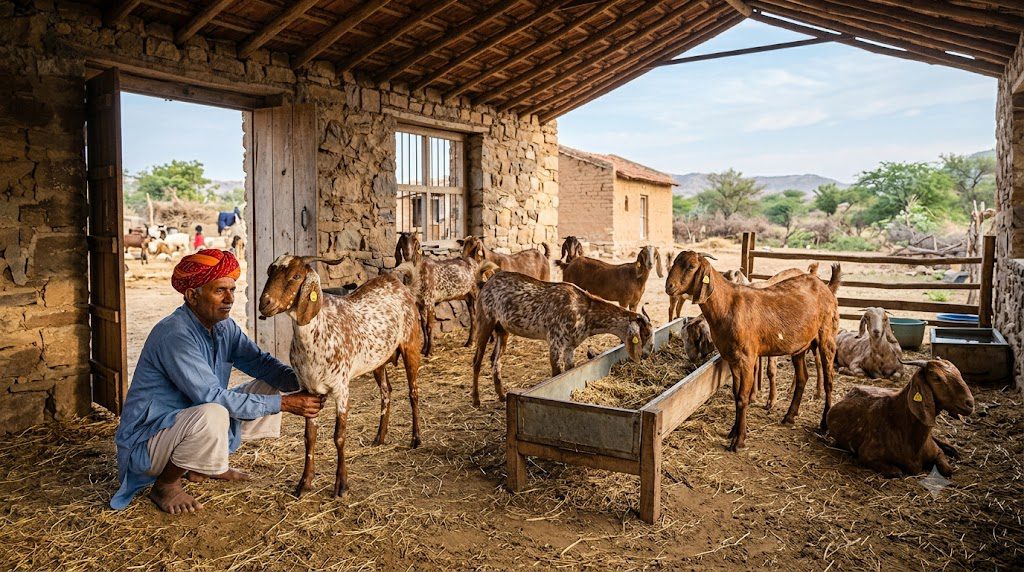
Table of Contents
What Is Goat Farming in India?
Goat farming in India is the rearing of goats, on a household or commercial scale, for meat, milk, breeding animals and manure.
India counted 148.88 million goats in the 20th Livestock Census, a rise of 10.1% over 2012, according to a summary from the People’s Archive of Rural India. Rajasthan held the largest herd, at about 20.84 million, as reported in an ICAR Journal of Livestock Biodiversity paper.
Goats are small ruminants, like sheep. They digest fibrous feed such as leaves, grass and straw in a four-chambered stomach.
Many people call the goat the poor man’s cow. The label fits, because a small herd can be started with modest money and a basic shed.
A 2022 analysis of census data in the Journal of Studies in Dynamics and Change notes that goat rearing needs low initial investment and fewer inputs. It credits commercialisation, breed development and better management for rising goat meat output. That low entry cost explains why goat farming in India attracts so many first-time livestock farmers.
For the wider picture of where goats sit among farm animals, read our guide to the types of livestock.
Why Goat Farming in India Needs a Plan First
Goat meat made up 15.50% of India’s meat output in 2023-24. Poultry led with 48.96%, and buffalo followed at 18.09%, according to a BAHS 2024 summary.
Demand is real. The risk sits elsewhere.
An ICAR study of goat owners, published in the Indian Journal of Animal Sciences, found that PPR caused the highest economic loss among goat diseases.
A goat farm fails on shed, feed and health long before it fails on price. That is why goat farming in India works best when you plan before you buy a single animal.
Goat Farming in India: 7 Steps to Start
Work through these steps in order. Each one removes a common cause of loss.
Step 1: Set Your Goal and Rearing System
Decide first what you will sell: kids and meat, milk, or breeding stock. The goal decides your breed, shed and feed bill.
Next, choose how the herd will be fed. The ICAR-TANUVAS-TNAU expert system, shared on Vikaspedia, describes three systems.
| System | How goats are fed | Good fit |
|---|---|---|
| Extensive | Grazing on pasture all season | Open grazing land, low feed budget |
| Semi-intensive | Grazing plus stall feeding | Mixed farms with some fodder |
| Intensive (zero grazing) | Stall feeding in confinement | Little land, strong fodder supply |
The National Livestock Mission also promotes the stall-feeding model for sheep and goats, as the myScheme listing shows.
Stall feeding saves land but raises your feed bill. Do the sums before you commit.
Step 2: Pick a Breed for Goat Farming in India
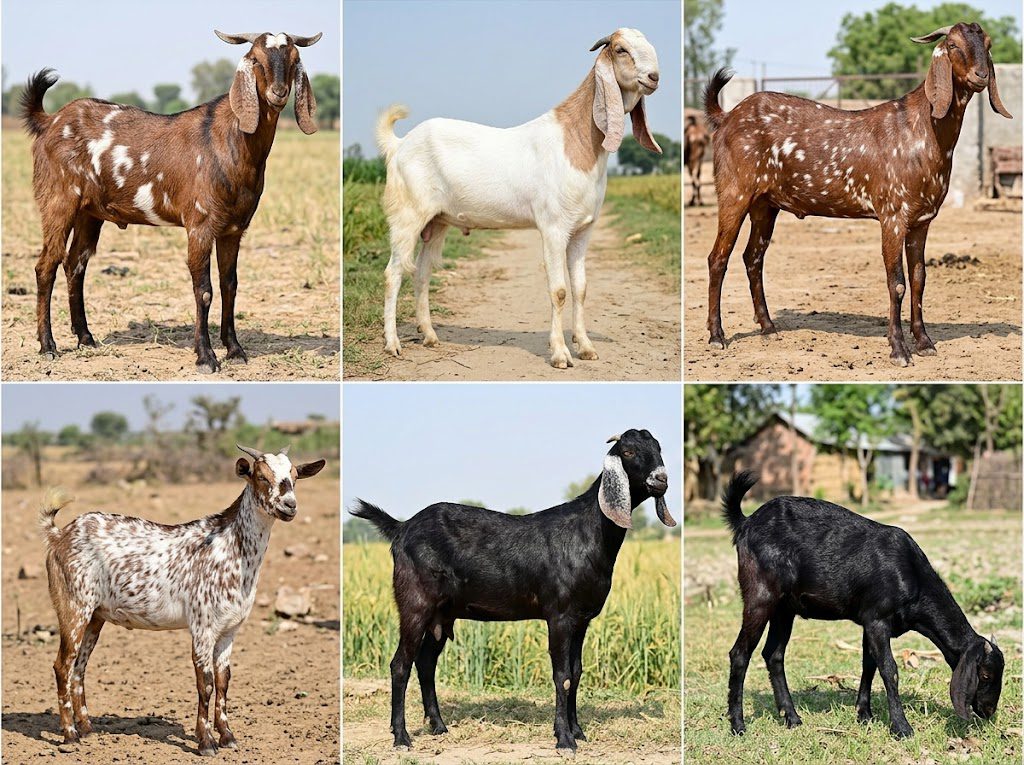
ICAR sources report about 30 registered goat breeds, up from 28 in a 2018 ICAR overview of goat genetic diversity. The list keeps changing, so check the current NBAGR register.
These breeds come up most often in goat farming in India.
| Breed | Home tract | Main use |
|---|---|---|
| Jamunapari | Uttar Pradesh | Milk, large body |
| Beetal | Punjab | Milk and meat, adapts to stall feeding |
| Barbari | Uttar Pradesh | Milk and meat, medium body |
| Sirohi | Rajasthan | Milk and meat, large body |
| Jakhrana | Rajasthan | Milk |
| Black Bengal | West Bengal | Meat, small body, multiple births |
FAO describes the Beetal as second to the Jamunapari in size but more prolific and easier to stall-feed, in its FAO breed notes.
Kerala Agricultural University’s breed table lists average lactation yields of about 202 kg for Jamunapari and 174 kg for Beetal. It lists only about 35 kg for Black Bengal, which is a meat breed.
Start with a breed already thriving in your block. A local breed has already passed your climate test.
Step 3: Build a Dry, Raised, Ventilated Shed
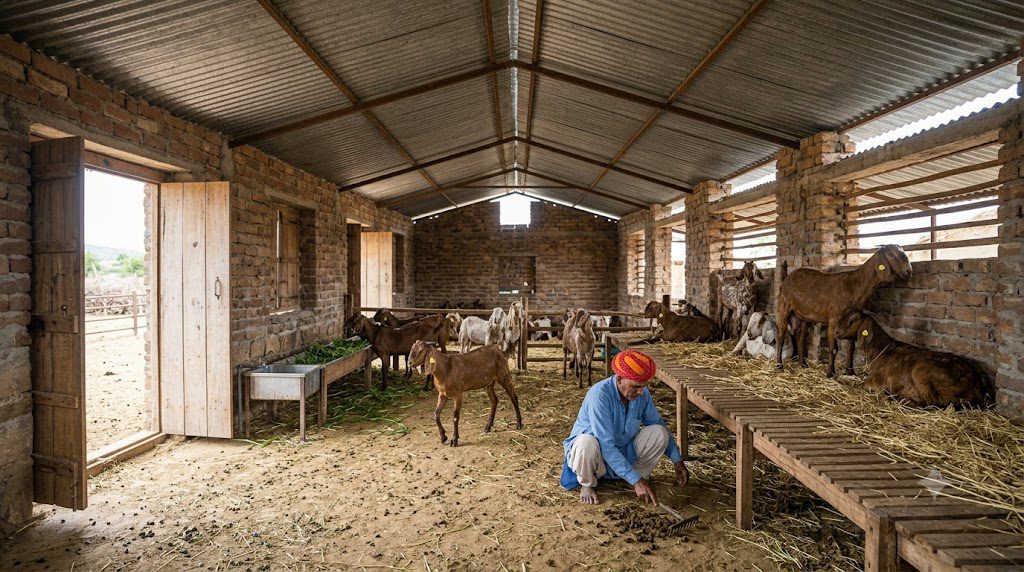
Damp floors cause trouble. A raised platform of wooden planks or wire mesh, kept about 3 to 4 feet above ground, helps the shed stay dry. The expert system notes that external parasites are usually fewer in this design.
The same source gives these space figures for Indian conditions.
| Age group | Covered space (sq m) | Open space (sq m) |
|---|---|---|
| Up to 3 months | 0.2 to 0.25 | 0.4 to 0.5 |
| 3 to 6 months | 0.5 to 0.75 | 1.0 to 1.5 |
| 6 to 12 months | 0.75 to 1.0 | 1.5 to 2.0 |
| Adult | 1.5 | 3.0 |
| Buck, pregnant or lactating doe | 1.5 to 2.0 | 3.0 to 4.0 |
For feeding space, allow 40 to 50 cm of manger length per adult and 30 to 35 cm per kid. A deep-litter shed needs about 15 sq ft per goat.
India also has a Bureau of Indian Standards code for housing sheep and goats, IS 2733:2024, so ask your engineer to follow it.
Good ventilation matters as much as space. Crowded, closed sheds invite pneumonia.
Step 4: Plan Feed and Water Before You Buy
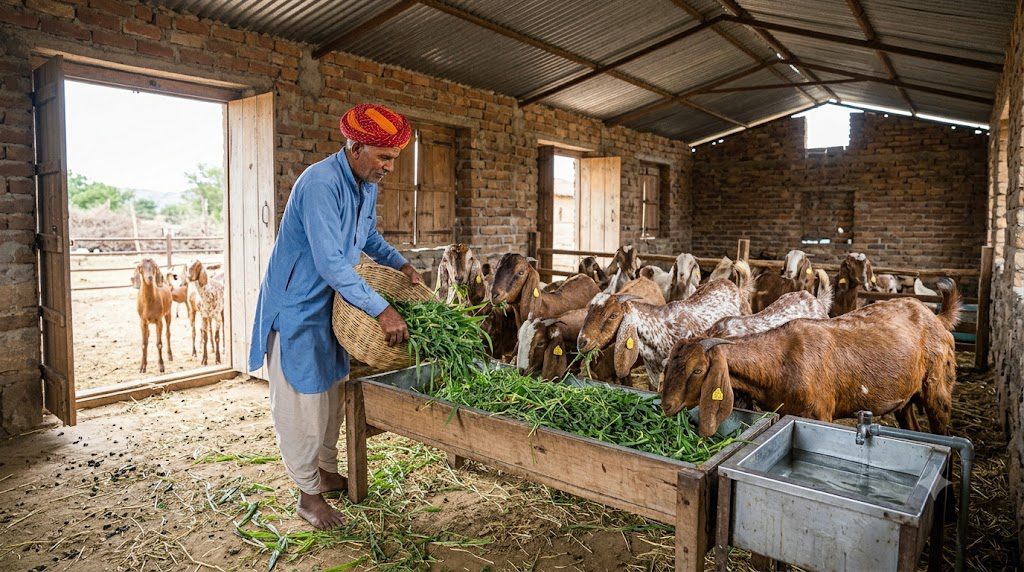
Feed is the biggest running cost in goat farming in India. Plan three layers: green fodder, dry fodder and a concentrate mix.
The ICAR-TANUVAS-TNAU guidance on goat feeding says grazing animals need no concentrate when pasture is good. When grazing is poor, it suggests 150 to 200 g of concentrate per animal per day.
For stall-fed adults of 25 to 30 kg, a feeding table in an Indian university thesis on Krishikosh suggests 200 to 300 g of concentrate and 2 to 3 kg of green fodder per day. Sources differ, so treat these as starting points and adjust with your vet.
Always keep clean water available. Wash troughs often.
Our guides on hydroponic fodder production, corn silage basics and feeding cattle without overspending show low-cost ways to fill the fodder gap.
Step 5: Vaccinate and Deworm on a Calendar
Disease control is where goat farming in India is won or lost. The ICAR-CIRG Annual Goat Health Calendar lists the core schedule.
| Disease | First dose | Booster and repeat |
|---|---|---|
| PPR | 3 months | Not required; repeat every 3 years |
| Foot-and-mouth disease | 3 to 4 months | Booster after 3 to 4 weeks; repeat every 6 to 12 months |
| Goat pox | 3 to 4 months | Booster after 3 to 4 weeks; repeat every 12 months |
| Enterotoxaemia | 3 to 4 months | Booster after 3 to 4 weeks; repeat every 6 to 12 months |
| Haemorrhagic septicaemia | 3 to 4 months | Two doses one month apart; repeat every 6 to 12 months |
The calendar adds two useful rules. Kids are protected by colostrum until about 3 months of age. Deworm animals at least 15 days before vaccination.
It also advises checking faecal samples to time deworming, so you treat on evidence and not on guesswork.
Schedules differ between institutions. An ICAR-IVRI vaccination schedule for goats lists PPR vaccination yearly from 4 months. Follow your state campaign and your vet.
Read our guides on sheep pox and goat pox and foot and mouth disease for the threats behind these shots.
Brucellosis can also affect small ruminants. Ask your vet about testing before you buy, and see our brucellosis in cattle guide for the basics.
Step 6: Manage Breeding and Kids Carefully
Kids are the most fragile animals on the farm. The ICAR study of goat owners found the highest mortality in the 0 to 3 month age group.
Feed colostrum within the first hours of life. The expert system suggests about 100 ml of colostrum per kg of live weight.
Keep the kidding area clean and dry. Separate sick kids at once.
Avoid mating close relatives. Ask your vet or nearest Krishi Vigyan Kendra about exchanging bucks with another flock.
Prolific breeds such as the Black Bengal give multiple births, so plan extra shed space for kids.
Step 7: Match Your Plan to Your Market and Money
Before you buy goats, talk to at least three local buyers. Ask what weight, age and season they prefer, and how they pay.
Then run a cash plan that covers the shed, the herd, feed, vaccines and at least one full year before income arrives.
Start small. A few animals teach you more than a large loan does. Scale only after one full kidding cycle and one monsoon.
Keep simple records from day one. Log births, deaths, vaccinations, weights and sales in one notebook. Records make goat farming in India far easier to scale, and they help you spot a sick or weak line early.
Our overview of animal husbandry and its types can help you see where goats fit in a mixed farm.
PPR: The Disease That Shapes Goat Farming in India
Peste des petits ruminants (PPR) is a viral disease of sheep and goats. It spreads fast and hits goats harder than sheep.
The ICAR-NIVEDI PPR Eradication Programme page describes the target: eradicate PPR in sheep and goats by 2030. The programme is centrally funded, with 100% central assistance.
Its plan is four years of mass vaccination of healthy, non-pregnant animals older than 4 months, followed by surveillance. NIVEDI notes infection rates up to 90% and mortality up to 70%.
The campaign age is 4 months, while the CIRG calendar starts at 3 months. Follow the rule your block veterinary officer gives you.
The DAHD Livestock Health and Disease Control Programme page places PPR control alongside the FMD eradication goal for 2030.
A global push runs in parallel. FAO’s second phase of the PPR Global Eradication Programme covers 2022 to 2030, as a Karnataka vaccination study explains.
Watch for fever, eye and nose discharge, mouth sores and laboured breathing. Isolate sick animals and call your vet the same day.
Government Support for Goat Farming in India
The National Livestock Mission runs an entrepreneurship component for sheep and goat breeding units. The myScheme listing describes a unit of at least 500 females and 25 males.
It offers a back-ended subsidy of up to 50%, capped at ₹50 lakh and paid in two equal instalments. The first instalment follows verified spending on 25% of the infrastructure.
A DAHD parliamentary reply lists smaller unit sizes with lower subsidy ceilings. Read the full table before you plan.
According to Vikaspedia’s scheme summary, applicants need training or experience, owned or leased land, a bank loan sanction and a bank guarantee.
Be realistic. A 500-doe unit is a large business, so most beginners will not qualify. Ask your state animal husbandry department about smaller state schemes.
The guidelines I found cover 2021 to 2026. Confirm the current status with DAHD before you rely on a subsidy.
5 Common Mistakes in Goat Farming in India
- Buying before building. Goats without a dry shed fall sick fast.
- Overcrowding. Packing in extra animals raises disease and kid deaths.
- Skipping quarantine. Keep new animals apart for at least two weeks.
- Copying a neighbour. Their land, fodder and buyers differ from yours.
- Borrowing big on day one. A large loan turns one bad season into a crisis.
What We Still Do Not Know
The 20th Livestock Census is the last full species-wise count I could verify. The 21st census was still under enumeration in 2025, and I could not confirm final national results.
I found no trustworthy, all-India profit figure per goat. Returns swing with breed, feed price, disease and market, so this guide avoids income promises.
Vaccine intervals also differ between ICAR sources, and scheme rules get revised. Treat every number here as a starting point for a conversation with your vet.
Questions to Ask Your Vet Before You Buy
- Which diseases are most common in my block?
- Which vaccines are due, and when is the next PPR campaign?
- Which breed suits my climate and fodder?
- How should I design the shed and plan its ventilation?
- What does a realistic first-year cash plan look like?
Write the answers down and keep them with your farm records.
Frequently Asked Questions
1. What is goat farming in India?
Goat farming in India is the rearing of goats for meat, milk, breeding stock and manure. It ranges from backyard flocks to large commercial units.
2. Is goat farming in India profitable?
It can be, but returns depend on breed, feed cost, disease control and your market. No honest all-India profit figure exists, so test your numbers locally.
3. Which goat breed is best for goat farming in India?
No single breed wins everywhere. Jamunapari and Beetal suit milk, Sirohi and Barbari suit milk and meat, and Black Bengal suits meat. Choose a breed that already does well in your block.
4. How many goats should a beginner start with?
Start with a herd small enough to check every day. Grow only after one full kidding cycle and one monsoon.
5. How much space does a goat need?
ICAR-TANUVAS-TNAU guidance gives 1.5 sq m of covered space and 3.0 sq m of open space for an adult. Bucks, pregnant and lactating does need more.
6. What do goats eat?
Goats eat green fodder, dry fodder and a concentrate mix. Grazing goats on good pasture may need little concentrate.
7. Which vaccines do goats need?
The CIRG calendar lists PPR, foot-and-mouth disease, goat pox, enterotoxaemia and haemorrhagic septicaemia. Follow your state schedule and your vet.
8. What is PPR in goats?
PPR is a fast-spreading viral disease of sheep and goats. India aims to eradicate it by 2030 through mass vaccination.
9. Is there a government subsidy for goat farming in India?
Yes. The National Livestock Mission offers up to 50% capital subsidy, capped at ₹50 lakh, for sheep and goat breeding units. Confirm current rules with DAHD.
10. Can I start goat farming in India without land?
Stall feeding makes it possible, but you will buy most of your fodder. The NLM entrepreneurship scheme also requires owned or leased land.
Key Takeaways
Goat farming in India pays the people who prepare. Shed, feed and vaccines come first, and the goats come after.
- Goat farming in India rewards planning more than it rewards speed.
- Choose a breed that already thrives in your block.
- Build a dry, raised, ventilated shed before the first goat arrives.
- Budget fodder and water first, because feed is your biggest cost.
- Vaccinate and deworm on a calendar, and watch PPR closely.
- Check current subsidy rules with DAHD before borrowing.