
By the Farm Sutras Editorial Team. Every figure below comes from a source we opened and read directly — a United Nations Conference on Trade and Development (UNCTAD) report, GreenWave’s official site, the UN Food and Agriculture Organization, or Wikipedia — each linked where it’s used and again in the Sources section. This is an editorial synthesis of published research, not investment or agronomic advice.
Seaweed farming is no longer a niche coastal tradition. Global production reached roughly 35 to 36 million tonnes a year by 2021, the market value has more than tripled since 2000, and a growing list of governments, NGOs, and private investors now treat it as a serious tool for food security, coastal livelihoods, and climate mitigation all at once.
This guide covers what seaweed farming actually involves, the real numbers behind its growth, the climate science, and — because a trustworthy account has to include it — the disease outbreaks, gender inequities, and market data problems the industry hasn’t solved yet.
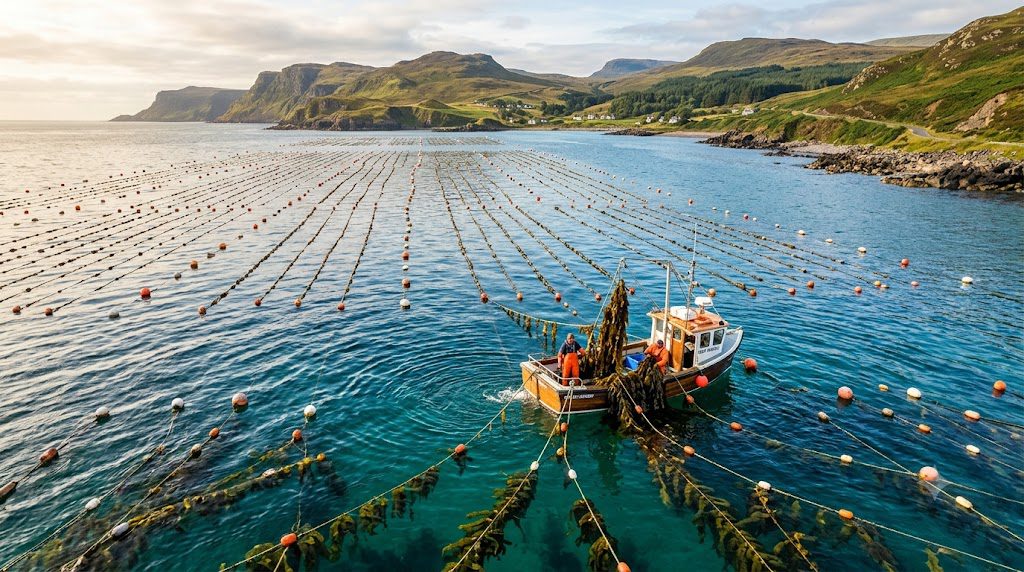
Table of Contents
What Is Seaweed Farming?
Seaweed farming, also called kelp farming, is the cultivation and harvesting of marine macroalgae — brown, red, and green seaweeds — grown on ropes, lines, or nets suspended in coastal or open ocean waters, or in land-based tanks.
According to a detailed 2024 report from the United Nations Conference on Trade and Development (UNCTAD), seaweed is a highly versatile form of biomass used for human food, hydrocolloids (gelling agents like agar, alginate, and carrageenan), livestock and aquatic animal feed, biofertilizer, cosmetics, pharmaceuticals, textiles, bioplastics, and increasingly, carbon sequestration and climate mitigation.
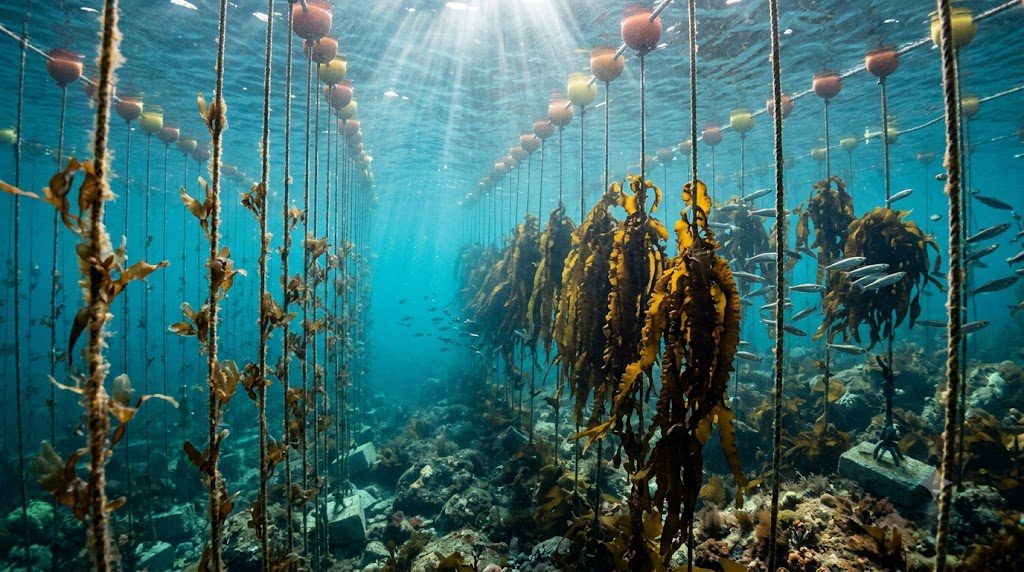
Cultivation methods range from simple off-bottom techniques, where seedlings are tied to lines staked into shallow substrate, to fully offshore operations using floating long-lines anchored in open water. Unlike most terrestrial crops, seaweed farming typically requires no freshwater, no fertilizer, and no land — it grows directly from nutrients already present in seawater.
Why Seaweed Farming Is Trending Globally in 2026
Several forces are converging to push seaweed farming into mainstream climate and food-security conversations this year.
1. Climate mitigation investors are paying attention. UNCTAD’s report describes seaweed as part of the “circular blue bioeconomy,” citing estimates that macroalgae could sequester roughly 173 million metric tons of CO2 per year globally, with offshore seaweed absorbing carbon at a materially higher rate per hectare than mangrove or temperate forests.
2. New regions are entering the industry. Production that was once almost entirely confined to Asia is now expanding meaningfully in North America, Europe, and parts of Africa and Oceania, with fishermen in US states like Maine, Alaska, and Connecticut transitioning from declining wild fisheries into kelp farming.
3. Market value keeps climbing, though estimates vary widely. UNCTAD puts the global seaweed market at $17 billion as of 2021, more than tripled from $5 billion in 2000; other 2026 market research reports put current valuations anywhere from roughly $25 billion to $78 billion depending on methodology and scope. That wide spread is itself a signal of how young and inconsistently measured this industry still is.
4. Western food and cosmetics demand is rising. Consumption that was historically concentrated in East Asian diets is spreading into European and North American food, skincare, and nutraceutical products, driven by rising awareness of seaweed’s nutritional profile.
5. New non-food applications are opening fast-growing niches. The World Bank projects emerging seaweed applications — biostimulants, animal feed, pet food, and methane-reducing additives — could reach a combined $4.4 billion market by 2030, with medium-term opportunities in bioplastics and alternative proteins worth a further $6 billion.
How Seaweed Farming Actually Works
Most commercial seaweed farming follows a broadly similar sequence, adapted to local species and water conditions.
- Spore or seedling production. Hatcheries cultivate young seaweed on seeded twine or netting, which farmers later transfer to the water.
- Line or substrate deployment. Seeded lines are strung between anchored stakes, buoys, or floating long-line systems, depending on whether the operation is nearshore or offshore.
- Growth period. Depending on species and water temperature, seaweed can grow extremely fast — some species grow as much as 1.5 meters per day under favorable conditions.
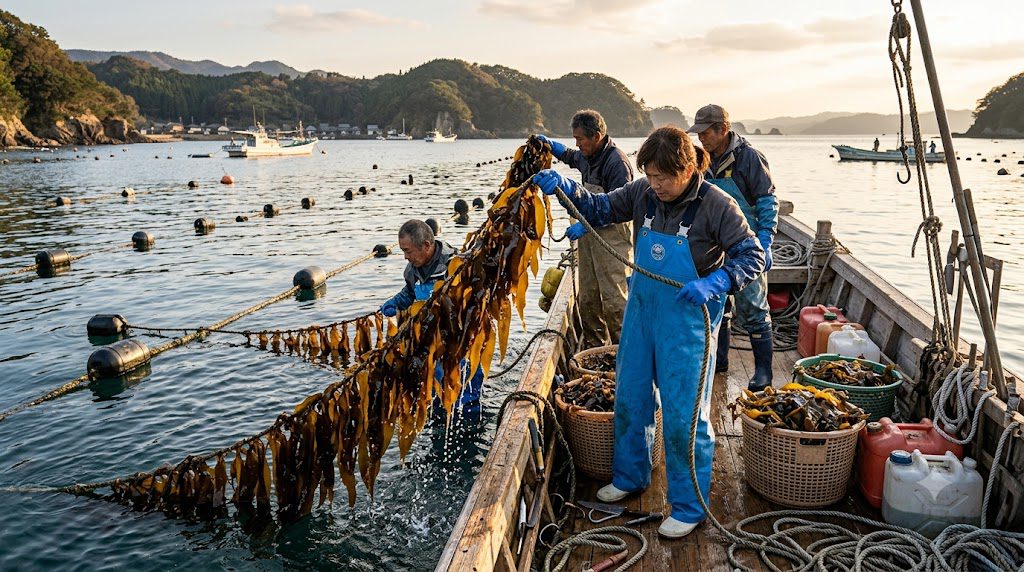
- Harvest. Mature seaweed is cut or pulled from the lines, typically by boat-based crews using manual or semi-mechanized equipment.
- Drying and initial processing. Harvested seaweed is sun-dried or mechanically dried soon after harvest to prevent spoilage, then sorted and graded.
- Sale to processors. Dried or fresh seaweed moves to processors who extract hydrocolloids, prepare food products, or further refine it for cosmetic, pharmaceutical, or industrial use.
A more advanced variant, Integrated Multi-Trophic Aquaculture (IMTA), grows seaweed alongside fed species like finfish or shrimp and extractive species like mussels or oysters in the same system, so the waste from one organism becomes a resource for another — improving water quality and diversifying a farm’s income at the same time.
Types of Seaweed and What They’re Used For
Seaweed farming spans three broad taxonomic groups, each with distinct commercial uses, as detailed in UNCTAD’s industry overview.
| Category | Example Species | Primary Commercial Use |
|---|---|---|
| Brown seaweed | Kelp (Laminaria), Kombu (Saccharina japonica) | Food, alginate, bioenergy, biofertilizer |
| Brown seaweed | Wakame (Undaria pinnatifida) | Food, nutraceuticals, pharmaceuticals |
| Red seaweed | Nori/Laver (Pyropia) | Food (sushi wrap) |
| Red seaweed | Eucheuma, Kappaphycus | Carrageenan, animal feed, biostimulants |
| Red seaweed | Asparagopsis | Human food, livestock methane-reducing feed additive |
| Green seaweed | Sea lettuce (Ulva) | Aquatic animal feed, wastewater treatment |
Of roughly 12,000 known seaweed species worldwide, commercial production is concentrated in just 27 cultivated species — a narrow genetic base that, as discussed later in this guide, carries real biosecurity risk.
9 Powerful Reasons Seaweed Farming Is Growing Fast
- It requires no land, freshwater, or fertilizer. This makes seaweed farming one of the lowest-input forms of food and biomass production available anywhere.
- It grows extremely fast. Some species grow up to 1.5 meters per day, among the fastest growth rates of any organism on the planet.
- It sequesters carbon at a high rate per hectare. UNCTAD cites an absorption average of at least 50 metric tons of CO2 per hectare for offshore seaweed, notably higher than most mangrove and temperate forest comparisons.
- It creates jobs with low capital barriers. Commercial seaweed harvesting has comparatively low technological and financial entry requirements, making it accessible to small-scale coastal communities.
- It supports a genuine plastic alternative market. Startups including Notpla, Evoware, and Algeon Materials have developed biodegradable packaging made from seaweed, with Notpla winning the 2022 Earthshot Prize.
- It’s a viable livestock methane-reduction tool. Species in the Asparagopsis genus have shown significant methane-reduction potential when added to cattle feed, a topic explored in more depth in our guide to methane-reducing feed additives.
- It functions as a natural biofertilizer. Seaweed extracts, including Sargassum in China and Kappaphycus in India, are processed into biostimulants that can increase crop yields while reducing dependence on chemical fertilizer, complementing efficiency-focused inputs like nano fertilizer.
- It diversifies income for coastal and fishing communities. As wild fish stocks decline in many regions, seaweed farming offers an alternative or supplementary livelihood that doesn’t compete directly with fisheries for the same resource.
- Emerging high-value markets are expanding fast. Biostimulants, animal feed, nutritional supplements, bioplastics, and alternative proteins represent a combined projected opportunity north of $10 billion by 2030.
The Real Numbers: Production, Trade, and Who Dominates
Understanding seaweed farming’s actual scale requires looking past market-value headlines to production volume and trade data.
Global seaweed production reached 35.2 million tons (live weight) in 2021, according to UNCTAD and FAO data, a nearly thousandfold increase in cultivation volume since 1950. Asia dominates overwhelmingly, producing 99.5% of global volume that year. China alone accounted for 61% of world production, followed by Indonesia at 26%, then South Korea, the Philippines, North Korea, Japan, and Malaysia.
| Country | 2021 Production (tons) |
|---|---|
| China | 21,584,175 |
| Indonesia | 9,091,307 |
| South Korea | 1,845,682 |
| Philippines | 1,343,707 |
| North Korea | 603,000 |
| Japan | 342,100 |
| Malaysia | 178,897 |
| Tanzania | 81,104 |
| Russia | 23,863 |
| Chile | 17,004 |
Global trade tells a more modest story than production figures suggest: reported seaweed exports totaled approximately $943 million in 2021 against $1.2 billion in imports, with international trade representing only about 14% of total market value — meaning seaweed remains primarily a domestic production and consumption industry rather than a globally traded commodity, despite its growing international profile.
Outside Asia, Tanzania, Chile, and Russia are regional production leaders for Africa, the Americas, and Eurasia respectively, though Tanzania’s production has fluctuated significantly, peaking at 178,000 tons in 2015 before declining to 81,000 tons by 2021.
The Carbon Sequestration Case: What the Science Actually Shows
Seaweed farming’s climate credentials are a major part of its current appeal, and the underlying science is genuinely compelling, though it comes with real caveats worth understanding.
UNCTAD’s report cites research estimating macroalgae could sequester roughly 173 million metric tons of CO2 per year globally, with about 90% of that sequestration occurring through transfer of carbon to the deep sea and the remainder through burial in coastal sediments. Offshore seaweed shows an absorption rate of at least 50 metric tons of CO2 per hectare annually — a notably higher rate than mangrove forests or temperate forest biomass on a per-hectare basis, according to the same report.
However, the report is explicit that seaweed has not yet been widely incorporated into established blue carbon credit programmes, and it directly notes that leading seaweed researchers “strongly advocate caution” regarding the underlying science of deliberately sinking macroalgae biomass for carbon removal, since the long-term fate and verification of sequestered carbon remains genuinely complex and not fully settled scientifically.
Regenerative Ocean Farming: A Closer Look at the GreenWave Model
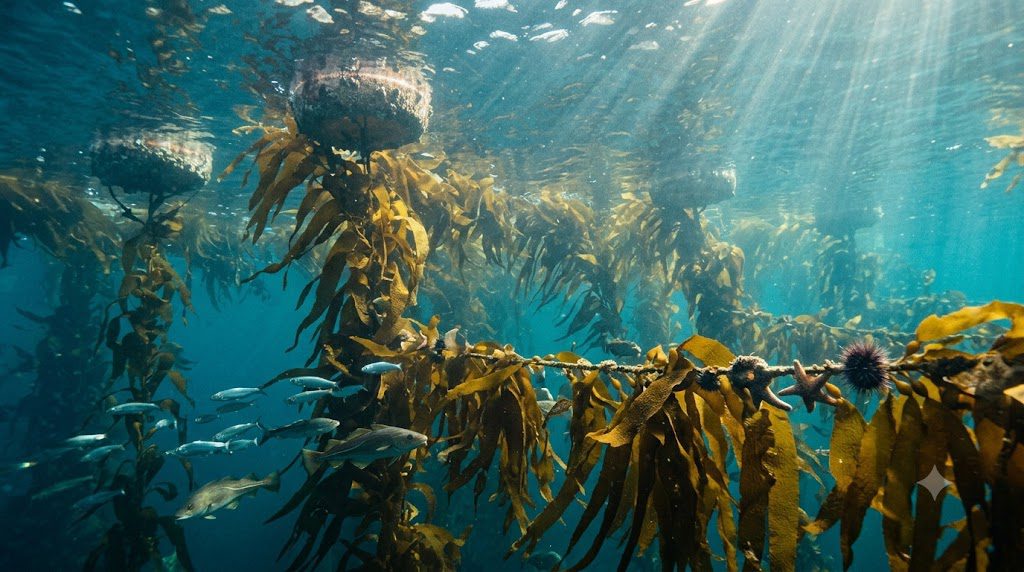
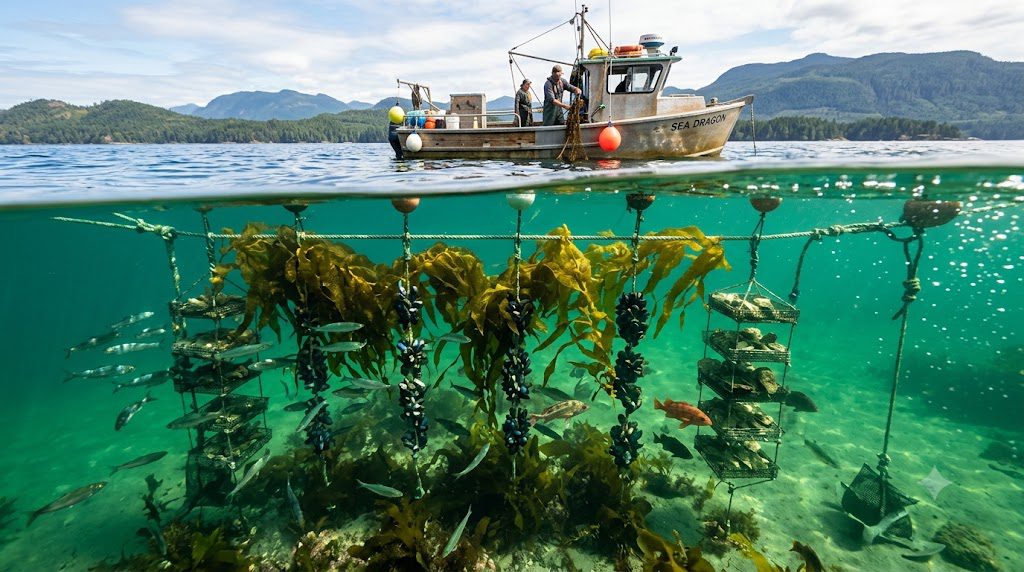
One of the most closely watched approaches to scaling seaweed farming sustainably comes from GreenWave, a US-based nonprofit that pioneered what it calls “3D ocean farming” — a vertical polyculture system growing seaweed and shellfish together in the same water column, using the entire depth of a farm site rather than a single flat surface.
According to GreenWave’s own published model, the system adds zero fertilizer, feed, freshwater, or pesticide to the ocean, and a mature 20-acre regenerative ocean farm can produce roughly 130,000 pounds of kelp and 250,000 bivalves annually, with the capacity to generate more than $100,000 in revenue. The organization cites a World Bank estimate that farming seaweed across just 0.1% of the world’s oceans — roughly 40 million hectares — could potentially create 50 million jobs globally, underscoring the scale of the opportunity proponents see in this model.
GreenWave’s Kelp Climate Fund pays farmers directly for the climate benefits of their farms, including blue carbon capture, nitrogen removal, and reef restoration — in FY 2025-26, the fund distributed over $950,000 to 41 participating farmers, with a goal of expanding to a $1 million annual pool supporting 50-60 farmers by 2026. The model has since spread internationally, including a July 2026 launch by Greenwave Aotearoa in New Zealand using Norwegian modular cultivation technology.
Where Seaweed Farming Still Struggles: An Honest Look
A genuinely trustworthy account of seaweed farming has to include the real structural problems the industry hasn’t resolved.
Disease and biosecurity risk is a documented, recurring threat. UNCTAD’s report cites a case where seaweed farmers in the Philippines sustained income losses of $32 million in a single year between 2011 and 2012 due to disease outbreaks, poor-quality cultivars, and natural disasters. Similar economic losses have affected South Korea, Tanzania, and Indonesia. “Ice-ice disease” and epiphyte infestation remain active, unresolved risks tied partly to climate change and rising ocean temperatures.
Women do most of the labor but own little of the industry. This is one of the most striking findings in UNCTAD’s analysis: in Tanzania’s Zanzibar region, women make up the overwhelming majority of the seaweed workforce — over 8,000 of roughly 8,700 workers in one district alone — yet a Philippines case study found that fewer than 30% of surveyed seaweed farms were women-owned despite women constituting most of the labor force, and women’s earnings averaged more than 50% lower than men’s even within family-owned operations.
Production data quality is genuinely poor. UNCTAD notes that production and trade statistics are not disaggregated by gender, that different national datasets use inconsistent units (wet weight versus dry weight), and that this data gap actively limits the development of better-informed policy for the sector. Market-value estimates from different research firms for the same year can vary by tens of billions of dollars — a sign of an industry still building reliable measurement infrastructure.
Natural seaweed blooms are becoming a double-edged problem. The Great Atlantic Sargassum Belt has expanded dramatically in recent years due to changing ocean circulation patterns linked to climate change, creating both a disposal and economic burden for affected coastal tourism economies and a potential new biomass opportunity for industries exploring Sargassum-based fertilizer and bioenergy.
Biodegradable gear is still a work in progress. Most commercial seaweed farming relies on plastic ropes to anchor growing lines, which degrade into persistent microplastic pollution. Pilot programs, including one in Kenya testing biodegradable Biodolomer®Ocean ropes with local women farmers, are still in early-stage testing as of this article’s publication.
How to Get Started in Seaweed Farming
- Confirm your local regulatory and permitting requirements. Marine spatial planning rules, tenure rights, and permitting vary enormously by country and even by coastal region.
- Choose species suited to your local water conditions. Water temperature, salinity, and nutrient levels determine which of the commercially viable species will actually thrive at your site.
- Start small and nearshore before considering offshore expansion. Off-bottom or nearshore long-line systems require significantly less capital and technical complexity than open-ocean operations.
- Connect with an existing training network where available. Organizations like GreenWave offer free online training hubs, gear lists, and budgeting tools for new entrants in regions where they operate.
- Plan your market channel before you plant. Decide early whether you’re targeting food, hydrocolloid processors, biofertilizer buyers, or emerging markets like bioplastics, since buyer requirements and quality standards differ significantly across these channels.
- Budget for biosecurity risk. Given documented disease outbreak losses elsewhere in the industry, build contingency planning into your financial projections rather than assuming uninterrupted growth.
Seaweed Farming vs Other Climate-Oriented Crops
| Factor | Seaweed Farming | Terrestrial Agroforestry | Land-Based Carbon Crops |
|---|---|---|---|
| Land requirement | None | High | High |
| Freshwater requirement | None | Moderate to high | Moderate to high |
| Fertilizer requirement | None | Often required | Often required |
| Growth speed | Very fast (up to 1.5m/day for some species) | Slow (years) | Moderate |
| Carbon sequestration per hectare | High (offshore estimates exceed many forest comparisons) | Moderate, builds over decades | Moderate |
| Market measurement maturity | Still developing, inconsistent data | More established | More established |
This comparison highlights seaweed farming’s genuine structural advantage — no land, freshwater, or fertilizer competition with food crops — balanced against a market and measurement infrastructure that is still considerably less mature than established terrestrial carbon and agroforestry approaches.
Common Mistakes When Evaluating Seaweed Farming
- Treating all market-value estimates as equally reliable. Given the wide spread across research firms, cross-check any specific figure against multiple sources before using it to justify an investment decision.
- Assuming carbon sequestration claims are already verified and creditable. Blue carbon credit programs for seaweed remain underdeveloped, and leading researchers urge caution on the underlying science.
- Underestimating disease and biosecurity risk. Documented multi-million-dollar losses in the Philippines, Tanzania, and elsewhere show this is a real operational risk, not a theoretical one.
- Overlooking tenure and regulatory barriers, particularly for new entrants in regions where marine spatial planning rules are unclear or still developing.
- Ignoring the gender-equity gap in ownership. Organizations or investors seeking genuinely inclusive impact should look specifically at ownership structures, not just workforce participation statistics.
- Assuming offshore scale is the only path to viability. Nearshore, lower-capital models, including GreenWave’s 20-acre farm example, show meaningful revenue potential without requiring offshore infrastructure investment.
FAQs About Seaweed Farming
1. What is seaweed farming?
Seaweed farming is the commercial cultivation of marine macroalgae such as kelp and other brown, red, and green seaweeds in coastal waters, offshore systems, or controlled environments.
2. Is seaweed farming profitable?
Seaweed farming can be profitable, but returns vary widely depending on species, farm location, production costs, infrastructure, regulations, harvest yields, processing requirements, and access to buyers.
3. Which country produces the most farmed seaweed?
China is the world’s largest seaweed producer based on the production data discussed in this article, followed by Indonesia and other major Asian producers.
4. How fast does seaweed grow?
Growth rates vary considerably between species and environmental conditions. Some seaweeds can grow extremely quickly under favorable conditions, but there is no single growth rate that applies to all farmed seaweed.
5. Does seaweed farming require freshwater?
Commercial seaweed farming generally does not require freshwater irrigation because the crop grows in seawater. This is one of its major differences from conventional land-based crops.
6. Does seaweed farming require fertilizer?
Most conventional seaweed farming systems do not require farmers to apply fertilizer directly because seaweed obtains nutrients from the surrounding seawater.
7. What is seaweed used for?
Seaweed is used for food, animal feed, hydrocolloids such as agar and carrageenan, biofertilizers, cosmetics, pharmaceuticals, bioplastics, and other industrial applications.
8. Can seaweed farming help reduce carbon dioxide?
Seaweed has significant carbon-removal potential, and researchers have estimated large-scale carbon sequestration possibilities. However, the long-term fate of carbon and reliable measurement and verification remain important scientific challenges.
9. Can seaweed farming produce carbon credits?
Potentially, but seaweed carbon-credit systems are still developing. Seaweed has not yet been widely incorporated into established blue-carbon credit programs, and measurement and verification remain important challenges.
10. What are the main risks of seaweed farming?
Major risks include disease, biosecurity problems, extreme weather, changing ocean conditions, poor-quality cultivars, market uncertainty, regulatory restrictions, and difficulties with processing and market access.
About the Author
This article was researched and written by the Farm Sutras Editorial Team and fact-checked against primary and reputable sources we accessed directly: a 2024 UNCTAD report on the global seaweed sector, GreenWave’s official published model, FAO data on commercial seaweeds, and Wikipedia’s seaweed farming overview. It is an editorial compilation of published research, not personalized investment or agronomic advice. Confirm local regulatory, environmental, and market conditions with a qualified local advisor before entering seaweed farming as a business.
Sources Cited in This Article
- UNCTAD — An Ocean of Opportunities: The Potential of Seaweed to Advance Food, Environmental and Gender Dimensions of the SDGs (2024)
- GreenWave — Our Model (Regenerative Ocean Farming)
- FAO — Introduction to Commercial Seaweeds
- Wikipedia — Seaweed Farming
- Seafood Source — Greenwave Aotearoa Launches Seaweed Farm Utilizing Norwegian Modular Cultivation Tech
Final Thought
Seaweed farming sits at a genuinely rare intersection of food security, coastal livelihoods, and climate mitigation potential — grown with no land, no freshwater, and no fertilizer, at some of the fastest growth rates of any organism on the planet. The momentum behind it in 2026 is real, from GreenWave’s expanding regenerative ocean farming model to the rapid growth of non-food applications in bioplastics and biofertilizers.
But the honest picture also includes a workforce, disproportionately women, who do most of the labor while owning little of the industry; recurring, economically devastating disease outbreaks; and a market still too young to produce consistent, trustworthy data on its own size. Anyone evaluating seaweed farming — as a grower, investor, or policymaker — should weigh the genuine opportunity against those unresolved structural gaps, the same way this guide has tried to for similar aquatic crops like makhana farming and land-based climate-resilient crops.