
Editorial note: This article draws on a peer-reviewed study published in Annals of Botany in August 2026, primary reporting from the UN Food and Agriculture Organization and IPBES, data journalism from Our World in Data, and industry reporting on commercial precision pollination companies, all linked below. It has not been reviewed by a pollination ecologist prior to publication.
Table of Contents
Precision pollination technology — AI-powered hive monitoring, robotic hives, and data-driven bee deployment services — has grown into a genuine global industry built on a widely repeated premise: bees are dying, and food production is at risk as a result.
That premise turns out to be more complicated than the marketing suggests. A peer-reviewed study published in Annals of Botany in August 2026 — weeks before this article was written — found no detectable evidence that global crop yields have actually declined due to pollinator loss, despite real, well-documented declines in wild pollinator populations.
This article covers what precision pollination technology actually does, what the newest science says about the “pollination crisis” narrative behind it, and where the technology delivers real, measurable results regardless.
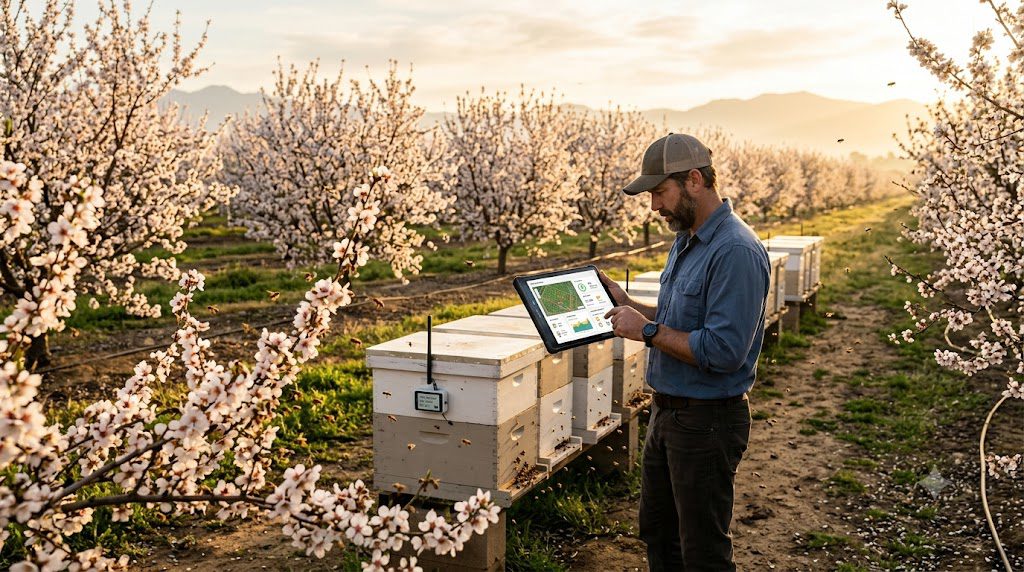
What Is Precision Pollination Technology?
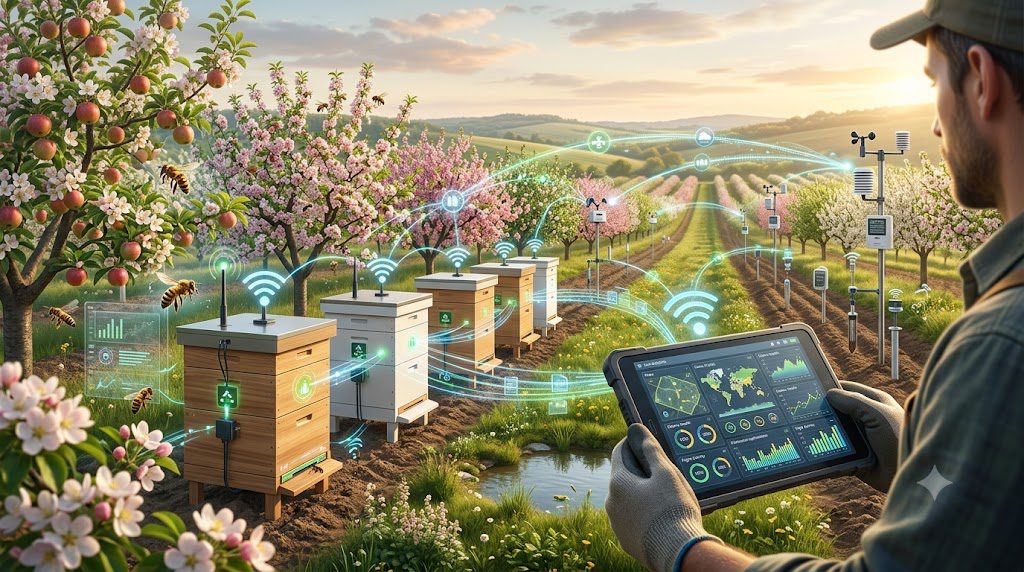
Precision pollination technology uses sensors, artificial intelligence, and data analytics to monitor bee colony health and optimize how pollination services are delivered to farms — a shift from traditional beekeeping’s more intuitive, experience-based hive management toward continuous, quantified monitoring.
According to the UN Food and Agriculture Organization, pollination is the highest agricultural contributor to yields worldwide, with about 75% of global food crop types depending on pollinators to some extent, and pollinators contributing to roughly 35% of global crop production by volume.
Why This Sits at a Genuine Scientific Turning Point in 2026
1. A major new peer-reviewed study directly challenges the “pollination crisis” narrative. Published in Annals of Botany in August 2026, researchers led by Marcelo Aizen reanalyzed 63 years of UN Food and Agriculture Organization yield data across up to 141 crops and 188 countries and concluded there is “limited evidence for the existence of a pollination crisis that is increasingly limiting the yield of pollinator-dependent crops globally” — despite confirming that wild pollinator diversity has genuinely and substantially declined.
2. This isn’t a fringe finding — it’s built on the same UN data everyone else cites. The study’s own abstract states this conclusion stands “despite robust evidence of a global decline in pollinator diversity” and despite “numerous demonstrations that reduced pollinator abundance and diversity constrain crop yields at local and regional scales” — meaning the researchers aren’t denying pollinator decline is real, they’re specifically questioning whether it has yet produced the global food-supply crisis widely assumed to follow from it.
3. The precision pollination industry itself continues to grow rapidly regardless. BeeHero, one of the sector’s largest companies, now manages more than 200,000 commercial hives globally, and Beewise has raised $120 million to date building AI-powered robotic hives — investment levels that predate and continue independent of this new research finding.
4. Real, local, field-level pollination shortfalls remain well documented even as the global picture is more complex. The same Annals of Botany research confirms that pollen limitation — insufficient pollination reducing fruit or seed set — affects up to 61% of global crop systems studied, with coffee and apple flagged as particularly susceptible; the debate isn’t whether pollination problems exist at the field level, it’s whether they’re compounding into an accelerating global crisis.
5. Commercial deployments are producing real, verifiable local results regardless of the global debate. Independent trial reporting shows BeeHero’s platform contributing to a 22% increase in farmer revenue and a 27% reduction in the number of hives needed in a sunflower trial — concrete, field-specific outcomes that don’t depend on whether a global pollination crisis exists.
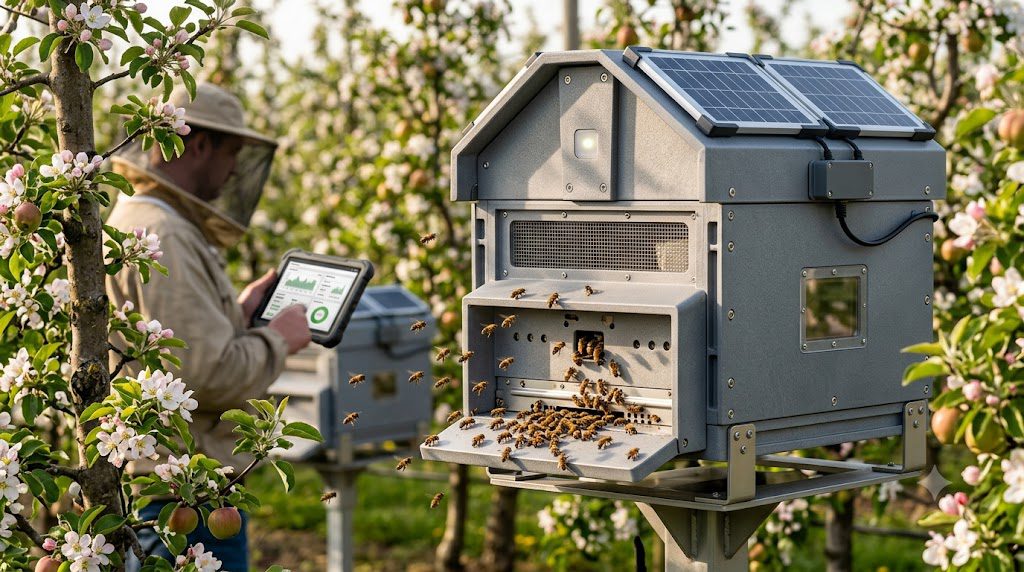
How Precision Pollination Technology Actually Works
Sensor-Based Hive Monitoring
Companies like BeeHero deploy in-field sensors that measure temperature, humidity, and sound inside beehives, feeding data that can predict when a hive is about to swarm or experience stress — described by the company as processing approximately 10 million samples daily across its network.
AI-Powered Robotic Hives
Israel-based Beewise has taken a more hardware-intensive approach, building climate-controlled, solar-powered robotic beehives with persistent AI-driven monitoring, designed to help beekeepers manage hives rather than replace them — the company reports reducing Colony Collapse Disorder from 35% to 8% across the hives it manages over a four-year period.
Frames-Per-Acre Deployment Models
Rather than selling or renting whole hives, BeeHero’s model supplies “frames of bees” matched precisely to a grower’s acreage needs, allowing more accurate matching between pollination demand and hive supply than traditional flat-rate hive rental.
Robotic and Drone-Assisted Pollination
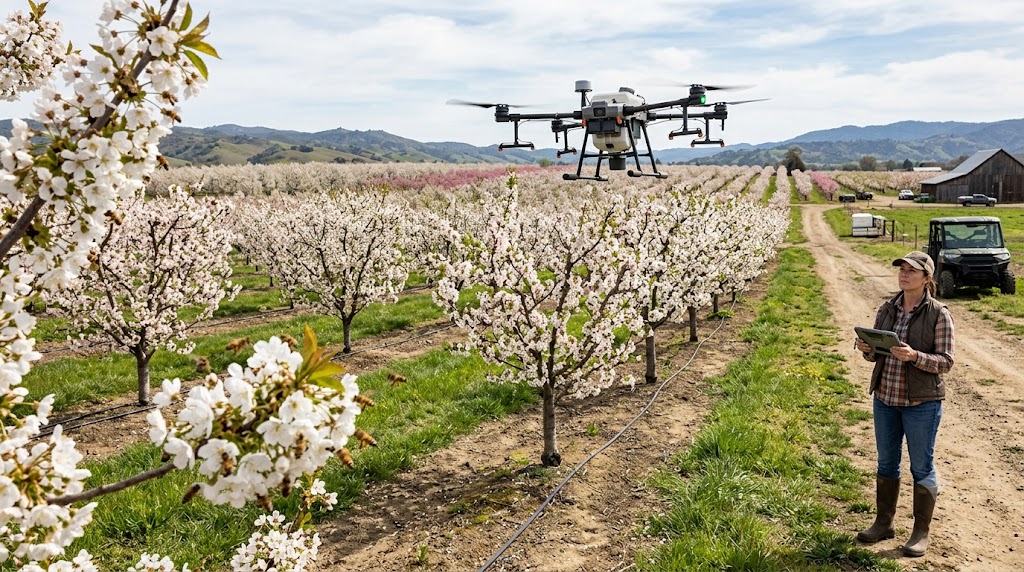
Beyond monitoring, some companies are testing direct mechanical pollination. Dropcopter uses drones to deliver pollen directly to crops, while companies like Edete and PowerPollen focus on precision pollen application for orchard and seed-production crops — approaches the Annals of Botany researchers themselves note are “being tested” as one of several factors that may help buffer agriculture against pollinator decline.
The Surprising Peer-Reviewed Finding Worth Knowing
This is the section worth reading most carefully, because it complicates a narrative repeated across nearly every precision pollination marketing page, including some cited elsewhere in this article.
The Annals of Botany research team analyzed both the average annual rate of crop yield growth and whether that growth has been decelerating over time — the specific pattern that would be expected if a worsening pollination shortage were dragging down global food production.
They found yield growth for pollinator-dependent crops was only weakly and inconsistently related to pollinator dependence, with statistical significance described as “marginal at best,” and that evidence disappeared entirely once crop growth form (whether a crop is a tree, shrub, or herb) was accounted for.
Most strikingly, when they specifically tested for deceleration in yield growth — the clearest fingerprint an intensifying pollinator crisis would leave — they found none tied to pollinator dependence.
The researchers propose eight possible explanations, including that most crops have generalist pollination systems not reliant on any single declining species, that disturbance-resistant pollinators (including managed honey bees and even invasive species) increasingly dominate agricultural landscapes regardless of overall diversity loss, and that plant breeding has actively reduced pollinator dependence in many commercial crop varieties over recent decades.
Their conclusion is careful, not dismissive: “the lack of evidence that decline or deceleration in crop yield can be attributed to increasing pollen limitation… does not negate the reality that pollinator assemblages are increasingly impoverished.”
In their own words, the term “global pollination crisis” deserves “more cautious use” in agricultural contexts specifically — not abandonment of pollinator conservation as a priority.
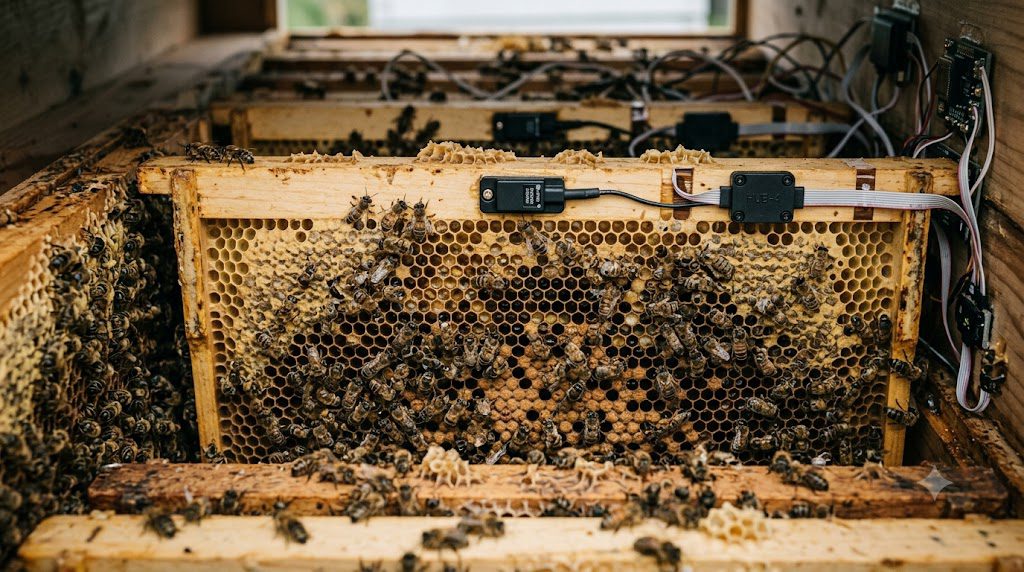
Where Precision Pollination Still Shows Real, Documented Gains
None of this makes precision pollination technology pointless — it reframes what problem it’s actually solving.
The peer-reviewed evidence is clear that pollen limitation is a real, widespread, field-level phenomenon, affecting up to 61% of studied crop systems even if it hasn’t yet produced a detectable global yield crisis.
Precision pollination technology’s genuine, well-documented value lies at exactly that local and field level: BeeHero’s own analysis suggests a potential 30% increase in crop yields and improved bee health, with beekeepers using the technology reporting 33% fewer colony losses compared to the U.S. national average — real, specific, farm-level outcomes, not global food-security claims.
This distinction matters for how a farmer should actually evaluate the technology: not “will this save the global food supply from collapsing bee populations,” but “will more precisely managed pollination measurably improve yield and quality on my specific acreage, for my specific crop.” The second question has real, positive evidence behind it. The first is now genuinely contested science.
Precision Pollination vs. Traditional Beekeeping
| Factor | Traditional Beekeeping | Precision Pollination Technology |
|---|---|---|
| Monitoring method | Visual inspection, beekeeper experience | Continuous sensor data (temperature, humidity, sound) |
| Hive-to-acreage matching | Estimated, often flat-rate per acre | Precision “frames per acre” model |
| Colony loss detection | After visible symptoms appear | Predictive, before visible swarming or stress |
| Documented results | Long-established but less quantified | 22-30% yield gains and 27-33% fewer losses reported in specific trials |
| Cost structure | Lower-tech, lower ongoing cost | Higher-tech, subscription or service-based pricing |
The honest takeaway: precision pollination technology doesn’t replace the fundamental biology of beekeeping — it adds a data layer on top of it, and the peer-reviewed evidence for its value is strongest at the specific-crop, specific-farm level rather than as a solution to a global crisis narrative.
Real Global Numbers: Funding, Scale, and Results
Treat every figure here as reported by the specific source cited.
Company funding: Beewise has raised approximately $120 million to date, and BeeHero has raised approximately $64 million, including a $42 million Series B round backed by General Mills’ venture arm, 301 Inc.
Deployment scale: BeeHero manages more than 200,000 commercial hives globally, positioning it as one of the largest precision pollination providers worldwide, primarily serving almond growers with plans to expand into apples, berries, avocados, and sunflowers.
Documented yield results: A BeeHero sunflower trial produced a 22% increase in farmer revenue alongside a 27% reduction in the number of hives deployed; separate company analysis suggests pollinator monitoring can drive up to a 30% increase in crop yields.
Colony health improvements: Beewise reports reducing Colony Collapse Disorder from 35% to 8% across four years of managed hives, against a backdrop the company’s CEO describes as annual colony loss rates climbing from roughly 3% forty years ago to more than 35% today.
Market sizing: Industry market research estimates the broader pollination services market at $385.2 million in 2025, projected to reach $712.6 million by 2034 — a comparatively modest figure that underscores this remains an early-stage, fast-growing niche rather than a mature industry.
Global economic value of pollination itself: The IPBES global assessment estimates the direct annual value of crops attributable to pollinators at between $235 billion and $577 billion — several orders of magnitude larger than the precision pollination technology market built to protect that value, illustrating how much headroom the sector has to grow.
Who’s Building This: Companies Worldwide
BeeHero, founded by veteran beekeepers and technology experts and headquartered in California with Israeli origins, offers “Precision Pollination as a Service,” supplying bees on a frame-per-acre basis rather than by flat hive count, and reports growing by 300% at points during its recent scale-up.
Beewise, based in Israel, builds the “Beehome” — a solar-powered, climate-controlled robotic system housing 24 colonies with integrated AI monitoring, positioned as a tool to help beekeepers manage hives rather than replace the beekeeping profession.
Dropcopter, based in the United States, specializes in aerial pollination using drones to deliver pollen directly to crops, an approach distinct from bee-based monitoring entirely.
Edete Precision Technologies, based in Israel, provides genetically compatible pollen delivered at optimal timing to address bloom desynchronization and insufficient chill hours — a more agronomic, less bee-dependent approach to the same underlying pollination problem.
UBEES and Nectar Technologies offer connected hive technology and RFID-based hive tracking respectively, reflecting a broader, genuinely global field of companies — spanning Israel, the United States, and Slovenia among others — approaching precision pollination from different technical angles.
If you’re evaluating a specific precision pollination provider, ask directly for field-specific, third-party-verified results for your exact crop and region, rather than relying on the company’s broadest company-wide statistics.
Real Limitations and Open Questions
No credible source treats precision pollination technology as a finished, universally necessary solution.
- The global “pollination crisis” framing used in much industry marketing is now directly contested by peer-reviewed research, meaning claims that frame this technology as essential to prevent global food shortages are overstating current scientific consensus.
- Documented gains are strongest in specific trials, not universally validated across all crops and regions. The 22-30% yield figures cited above come from specific company trials, primarily in almond and sunflower systems, and shouldn’t be assumed to generalize automatically to every crop type.
- Cost remains a real barrier for smaller operations, since subscription-based, sensor-driven services carry higher ongoing costs than traditional hive rental, even where yield gains offset that cost for larger operations.
- Managed pollinators may not fully substitute for wild pollinator loss in every crop. The Annals of Botany research specifically notes that honey bees and other managed pollinators may not fully compensate for reduced wild pollinator services in numerous crop species, even where global yield statistics don’t yet show the effect.
- The industry’s own growth has outpaced independent, third-party academic validation of its specific commercial claims — most of the strongest performance figures cited in this article come from the companies themselves, not fully independent peer-reviewed trials.
How to Evaluate the Evidence Yourself
- Separate global framing claims from field-level performance claims. A company’s marketing may reference a broad “bee crisis” narrative while its actual product delivers genuine, narrower, farm-specific value — evaluate the latter on its own merits.
- Ask for crop-specific and region-specific trial data, not company-wide averages, since the strongest documented results to date cluster in a small number of crop types.
- Read the primary peer-reviewed research directly when possible, rather than relying on industry summaries — the Annals of Botany study is explicit and nuanced in ways a marketing summary is unlikely to preserve.
- Understand that “pollinator decline is real” and “global food supply is currently in crisis from it” are two separate claims, only one of which currently has strong supporting evidence at the global scale.
- Weigh the cost structure against your specific operation’s scale, since sensor- and subscription-based pollination services carry a different cost profile than traditional hive rental, with the strongest current evidence favoring larger, higher-value crop operations.
This same discipline around separating global narratives from field-level evidence connects to the broader precision agriculture approach already covered on this site, and to the crop diversification strategies discussed in our guide to multiple cropping, where diverse cropping systems can themselves support more resilient, generalist pollinator communities.
Common Mistakes People Make Discussing This Topic
- Treating “75% of crops depend on pollinators” as equivalent to “75% of global food production is at risk”, when Our World in Data’s analysis clarifies this figure describes the number of crop types, not the volume of food production — only about 35% of production volume actually relies on pollinators.
- Citing pollinator decline and yield decline as though one automatically proves the other, when the newest peer-reviewed research specifically finds the global-scale link between the two much weaker than commonly assumed.
- Assuming precision pollination technology’s value depends on the global crisis narrative being true, when its real, documented benefits operate at the field and farm level regardless of how the broader scientific debate resolves.
- Dismissing pollinator conservation as unimportant based on this research, when the study’s authors explicitly state their finding does not negate the reality of ongoing pollinator diversity loss — a distinct concern from crop yield impact.
This same rigor around distinguishing real findings from popularized oversimplifications applies to any agritech topic covered on this site — checking what the underlying research actually concludes rather than the version that circulates in summary.
FAQs About Precision Pollination Technology
1. What is precision pollination technology?
Precision pollination technology uses sensors, artificial intelligence, data analytics, and connected systems to monitor bee colonies and improve how pollination services are managed on farms.
2. How does precision pollination technology work?
It can use sensors to monitor hive temperature, humidity, sound, and colony activity. The collected data helps farmers and beekeepers identify colony stress, improve hive placement, and better match pollination resources with crop requirements.
3. Does precision pollination technology actually work?
Evidence cited in the article shows measurable benefits in specific field trials. For example, a BeeHero sunflower trial reported a 22% increase in farmer revenue and a 27% reduction in the number of hives required. These results should not automatically be generalized to every crop or farm.
4. What are AI-powered beehives?
AI-powered beehives combine sensors, automated monitoring, and artificial intelligence to continuously track colony conditions. Some systems are designed to identify potential problems earlier and help beekeepers manage colonies more efficiently.
5. Can precision pollination technology reduce bee colony losses?
Potentially. Beewise reports reducing Colony Collapse Disorder from 35% to 8% across its managed hives over four years. However, this is a company-reported result rather than independent peer-reviewed evidence and should be evaluated accordingly.
6. How does AI help with bee hive monitoring?
AI can analyze large amounts of sensor data from beehives, including temperature, humidity, sound, and other colony signals. This can help identify unusual patterns associated with stress, swarming, or other potential problems.
7. What percentage of food production depends on pollinators?
According to the figures discussed in the article, about 75% of global food crop types depend on pollinators to some extent. However, this should not be interpreted as 75% of total food production. By production volume, the article cites an estimate of approximately 35%.
8. Is there really a global pollination crisis?
The evidence is more complicated than the commonly used phrase suggests. Wild pollinator diversity has declined substantially, and local pollination shortages are documented. However, the 2026 Annals of Botany study discussed in the article found limited evidence that pollinator decline has caused a global decline or deceleration in crop yields.
9. Which crops are most affected by pollination shortages?
The article identifies crops such as coffee, apples, and almonds as particularly susceptible to pollination limitations. The effect varies substantially according to crop, location, pollinator availability, and growing conditions.
10. Can drones be used for crop pollination?
Yes. Drone-assisted pollination is being tested as an alternative or supplemental approach. Companies such as Dropcopter use drones to deliver pollen directly to crops, while other companies focus on precision pollen application.
Final Thought
Precision pollination technology sits at a genuinely interesting scientific moment: the industry has grown rapidly on a “global pollination crisis” narrative that a rigorous, very recent peer-reviewed study now says isn’t supported by six decades of actual global yield data — even as the same research confirms wild pollinator decline is real and pollen limitation genuinely constrains many individual crops.
Both things are true, and neither cancels the other out. For a farmer evaluating this technology, the useful question was never really about the fate of global food security — it’s the narrower, well-evidenced one: does more precisely managed pollination measurably improve results on your specific crop, on your specific land.
The honest answer, based on the documented trial data available, is often yes — which is reason enough to consider it, without needing to believe the broader crisis framing that got the industry funded in the first place.
Related reading on this site: Animal Husbandry: 6 Powerful Types of Animal Husbandry & Breeding, Precision Farming Ultimate: Precision Ag & Vertical Farming, Multiple Cropping: 7 Proven Benefits of Mixed Cropping and Mixed Cultivation, and Agric Technology: Transforming Agriculture for Greater Productivity in 2026.