
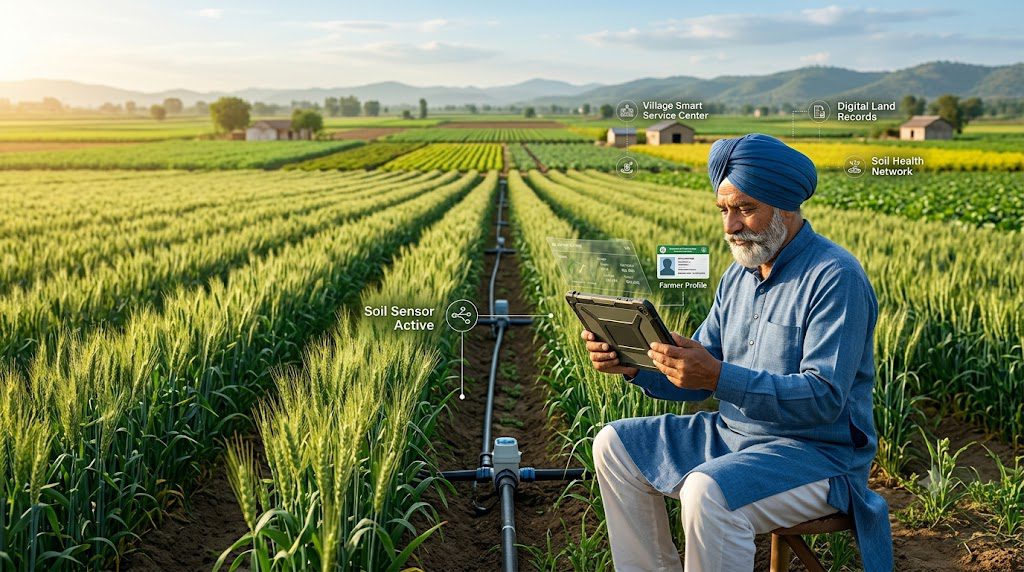
Farmer ID registration is the process of creating a unique digital identity for a farmer under AgriStack, linked to Aadhaar and state land records. You complete it through your state’s farmer registry, a Common Service Centre (CSC) or the local agriculture or revenue office, and the ID is then used to receive scheme benefits such as PM-KISAN.
If you have not finished your Farmer ID registration yet, do it before the next scheme cycle. This guide covers who qualifies, the documents, seven clear steps, common problems and what the ID cannot do.
Government figures below are dated, and every state runs the process a little differently. Confirm local details with your block agriculture office before you travel to a centre.
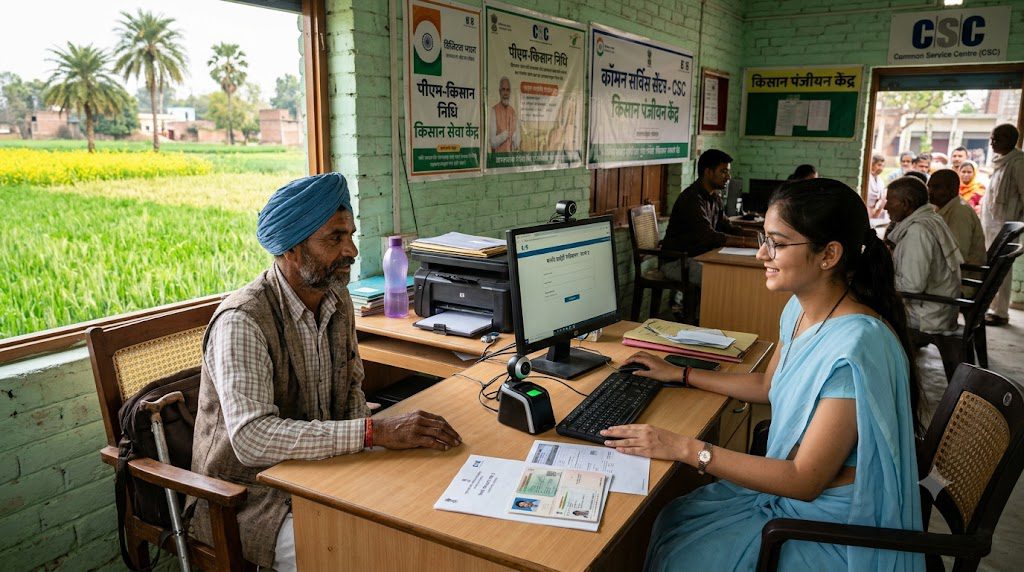
Table of Contents
What Is Farmer ID Registration?
Farmer ID registration adds you to the Farmer Registry, the identity layer of AgriStack. AgriStack is the government’s digital public infrastructure for farmers. The PIB factsheet on AgriStack describes the Farmer ID as similar to an Aadhaar card, a trusted digital identity for farmers.
AgriStack has three foundation pieces: the Farmer Registry, geo-referenced village maps and the Crop Sown Registry. Biovoice reports that states and Union Territories create and maintain these registries. A Farmer ID is generated by linking your details with digitised land records.
The registry works on a federated model. Each state keeps ownership of its own farmer data, and the Centre uses the common standards to connect them.
Vikaspedia’s AgriStack page adds one detail farmers often miss. The Farmer ID is a functional ID based on Aadhaar, and the land link is meant for planning, advisory and scheme delivery, not as a legal land record.
Why Farmer ID Registration Matters for PM-KISAN and Other Schemes
The registry is meant to speed up benefits. A March 2026 report says the Farmers Registry connects farmers to PM-KISAN, crop insurance (PMFBY), MSP procurement, credit, input distribution and disaster relief through Direct Benefit Transfer (DBT).
PM-KISAN gives eligible farmer families ₹6,000 a year in three instalments of ₹2,000. In a Lok Sabha reply on 5 August 2025, the government said a Farmer ID was compulsory for new PM-KISAN registrations in 14 states, as reported by Angel One.
Some states are now pushing every farmer to enrol. Haryana’s officials said farmers who do not register on AgriStack may face difficulties in reaching central and state schemes, according to Outlook Business.
Speed is the other selling point. Maharashtra reportedly paid out over ₹14,000 crore for Kharif 2025 losses within five days using the platform. That figure comes from a news report, so treat it as reported, not audited.
The practical message is simple. Without Farmer ID registration, you are the one farmer in the village whose paperwork is slower.
Who Can Complete Farmer ID Registration?
The registry is meant for landholding farmers. A March 2026 report says it covers women, tenants and sharecroppers too. Rules for tenants differ by state, so ask your agriculture office how your state records tenancy.
You do not need to own a smartphone. Farmers without mobile access can register through Common Service Centres, Farmer Producer Organisations (FPOs) and Krishi Sakhis, according to the same report.
One caution. Eligibility for each scheme is separate from the ID. A Farmer ID gets you into the system, but PM-KISAN, PMFBY and credit schemes still apply their own rules.
Documents You Need Before Farmer ID Registration
Carry the originals and one photocopy of each. States add or drop items, so use this as a base list.
- Aadhaar number: the identity anchor of the Farmer ID.
- Mobile number linked to Aadhaar: Haryana’s process uses Aadhaar OTP authentication, so the OTP goes to this number.
- Land record details: khata, khasra or survey numbers as your state records them. Parcels are linked to digitised land records.
- Bank passbook: PM-KISAN and other benefits arrive by DBT, so keep your account details ready.
- Tenancy or sharecropping proof: only if your state asks for it.
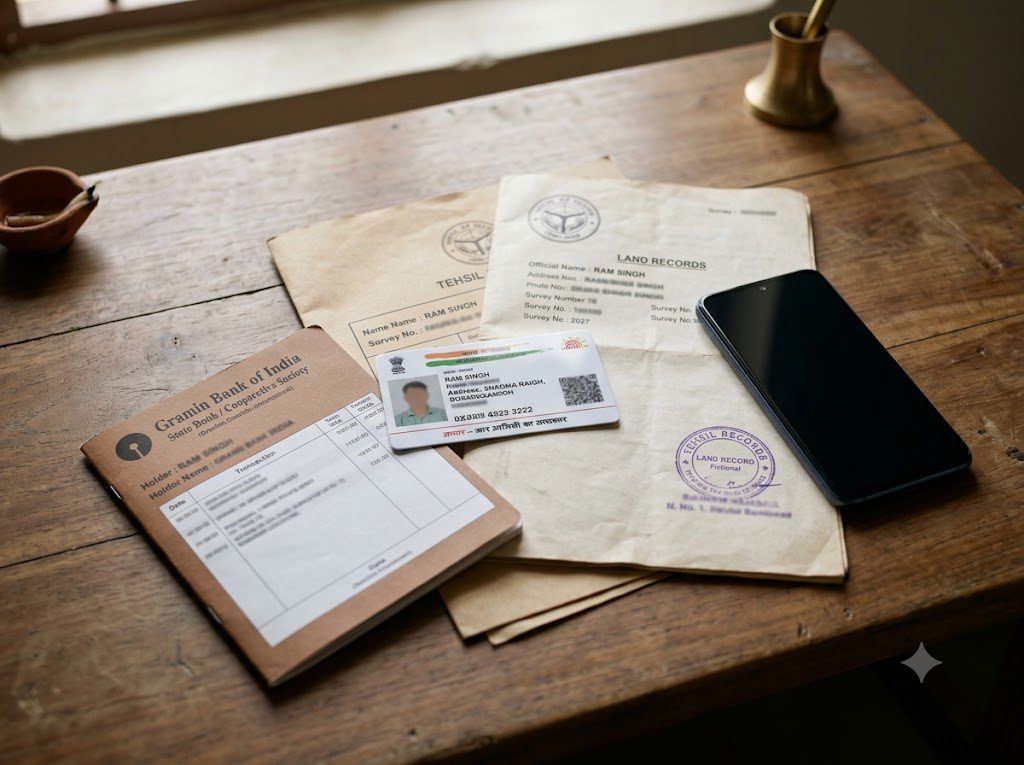
Check the spelling of your name on Aadhaar, the land record and the bank passbook before you leave home. A mismatch is the most avoidable delay.
Farmer ID Registration Step by Step: 7 Essential Steps
The order below is the safest one. Your state may change the screens or add a village camp, but the logic stays the same.
Step 1: Check whether you are already registered
Many states ran camps and drives, and your family may have enrolled you already. Ask your village agriculture or revenue staff, or check your state’s registry portal, before you start a second Farmer ID registration.
Step 2: Keep your Aadhaar-linked mobile with you
The OTP is the key that opens the process. If the phone is switched off, lost or linked to another number, stop and fix that first.
Step 3: Match your name and land details
Place your Aadhaar, land record and passbook side by side. If the name or the land number differs, correct the wrong document before you register. Correcting later takes longer.
Step 4: Pick your registration route
Your state decides which routes are open. Most farmers will use one of three: the state portal, a village camp, or a CSC. Haryana, for example, set up village-level camps with the revenue and agriculture departments working together.
If you are unsure which route your district uses, ask the block agriculture office. Do not pay an unknown agent to complete Farmer ID registration for you.
Step 5: Complete Aadhaar OTP authentication
Enter your Aadhaar details and the OTP sent to your linked mobile. This confirms that you are the person you say you are.
Step 6: Confirm that your land parcels are linked
The system links your parcels to digitised land records. Read the list carefully. Missing parcels, wrong area or a wrong owner name should be raised with the revenue office at once.
Step 7: Save your Farmer ID and check the status
Note the ID, take a screenshot or printout, and keep it with your Aadhaar copy. After a few days, check that the registry shows your status as complete. For PM-KISAN, the e-KYC requirement still applies on top of the ID, as Outlook Money reports.
Farmer ID Registration for Tenant and Women Farmers
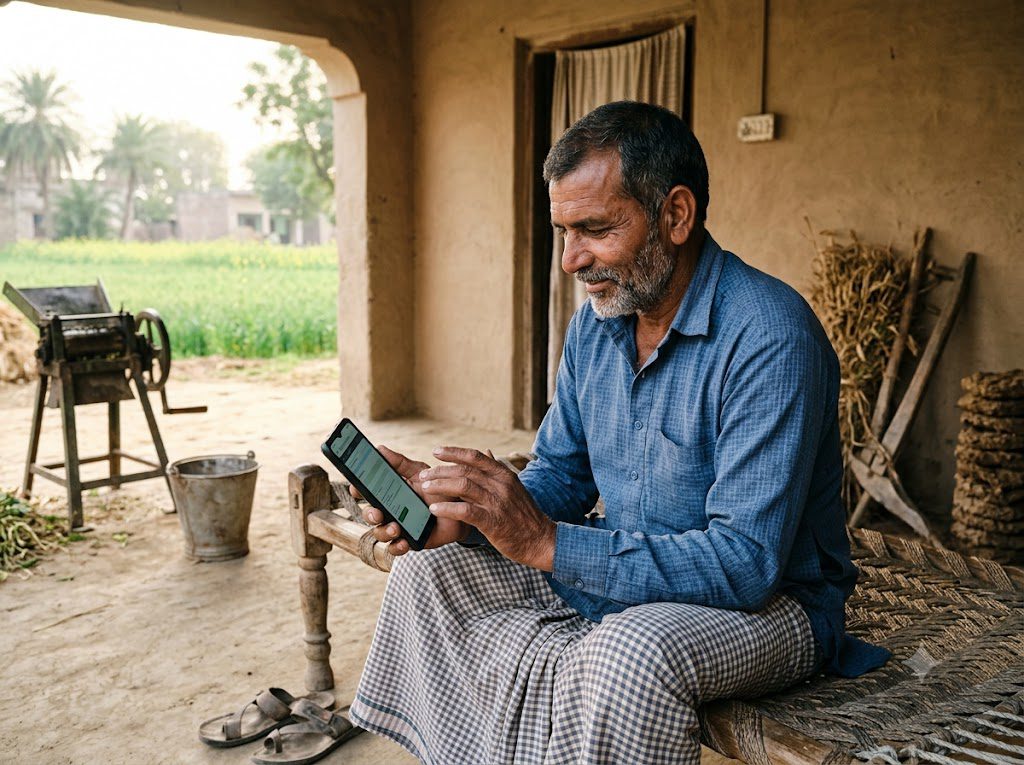
Tenant and sharecropper farmers do the actual cultivation and often fall outside land-based schemes. A March 2026 report says the registry includes them, which is the right direction.
In practice, it depends on your state’s tenancy records. If your name is not on any land record, ask the agriculture office what proof your state accepts for Farmer ID registration. Do not assume the landowner’s ID covers you.
Women farmers are part of the numbers too. A PIB milestone reported 7.63 crore Farmer IDs by 27 November 2025, including 1.93 crore women farmers, according to AgriDots’ summary of PIB data.
If a woman farmer in your family works the land but is not on the record, speak to the village revenue staff about how to add her.
Common Problems in Farmer ID Registration and Practical Fixes
These are practical checks, not official statistics. Every state’s helpdesk will have its own rules.
| Problem | Likely cause | What to do |
|---|---|---|
| OTP does not arrive | Aadhaar is linked to an old or inactive number | Update the mobile number at an Aadhaar centre, then retry |
| Name does not match | Spelling differs between Aadhaar and land record | Correct the wrong document first, then register |
| Land parcel missing | Record not yet digitised or mapped | Meet the village revenue official and ask for the record to be updated |
| Wrong owner or area | Old entry on the land record | Ask the revenue office for a correction before linking |
| No smartphone | Cannot use the portal | Use a CSC, FPO or Krishi Sakhi |
| Tenant not listed | State needs separate tenancy proof | Ask the agriculture office which document the state accepts |
Keep a note of the date, the office and the name of the person who helped you. If the same issue comes up twice, that note will save you a second trip.
What Farmer ID Registration Does Not Do
This part rarely appears in news stories, so read it twice.
- It is not proof of land ownership. The land link is for planning, advisory and scheme delivery, not for legal title.
- It does not replace PM-KISAN e-KYC. The e-KYC step continues for PM-KISAN beneficiaries.
- It does not guarantee any payment. Each scheme still checks eligibility.
- It does not approve loans. Credit access can improve through linked records, but banks still decide.
If an agent promises a fixed benefit after Farmer ID registration, walk away.
Is Your Data Safe After Farmer ID Registration?
The Ministry of Agriculture and Farmers Welfare says farmers’ information is stored in encrypted form. It also says the AgriStack security framework follows cybersecurity guidelines from the Ministry of Electronics and Information Technology and CERT-In, as reported by Biovoice.
The state-run, federated design also means each state holds its own data. That limits a single point of failure, but it also means the quality of records can differ from one state to another.
Your own habits matter more than any framework. Never share your OTP with anyone, including a helpful stranger at a camp. Ask for the official process before you hand over Aadhaar copies.
How Farmer ID Registration Connects With the Digital Crop Survey
The Farmer ID tells the system who you are and which land is yours. The crop survey tells it what you actually grew. Together they feed the Crop Sown Registry.
We covered the field-level side in our guide to the digital crop survey. Read it next if you want to understand how crop entries are recorded season after season.
The government reported that the Digital Crop Survey covered 648 districts and over 31.3 crore plots in Rabi 2025-26.
Once your Farmer ID registration is complete, advisory tools become easier to use. Our explainer on Bharat VISTAAR shows how the voice-first advisory service works, and our post on Kisan Sarathi explains how to reach KVK scientists.
You can find more digital-agriculture explainers in the Agritech category.
Farmer ID Registration Progress in India: The Numbers
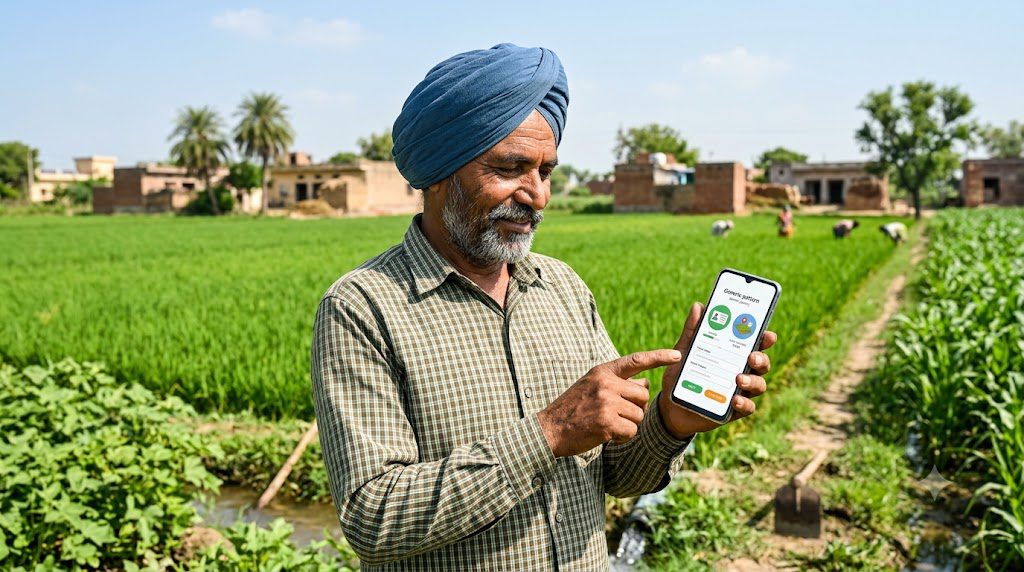
The table lists government-reported or news-reported figures with their dates. Numbers change fast, so check the latest before you quote them.
| Measure | Figure | Date or source |
|---|---|---|
| Farmer IDs created | 7.63 crore (including 1.93 crore women) | 27 November 2025, PIB milestone |
| Farmer IDs created | 8.48 crore+ | 4 February 2026, PIB |
| Farmer IDs created | 9.2 crore+ | 19 March 2026 |
| Farmer IDs created | 10.31 crore+ | 3 August 2026 |
| Target | 11 crore Farmer IDs over three years | 6 crore in FY 2024-25, 3 crore in FY 2025-26, 2 crore in FY 2026-27 |
| Gujarat registry | 63.35 lakh farmers | 23 September 2026, GKToday |
The target and the achieved numbers are close, which tells us Farmer ID registration has been one of the faster digital rollouts in Indian agriculture.
Our view is plain. Numbers show enrolment, not quality. A farmer with an ID but a wrong land entry still has a problem, so check your own record, not the national total.
Final Word on Farmer ID Registration
Do your Farmer ID registration early, with matching documents and your own Aadhaar-linked phone. Read every parcel in the list, keep a copy of the ID, and finish PM-KISAN e-KYC separately.
If your village has not run a camp yet, ask the agriculture office for dates instead of waiting. Delay is the only real cost you control.
This article was prepared by the Farm Sutras editorial team from government and published news sources listed below. It is not legal or financial advice. Please read our editorial policy to see how we source and update posts.
FAQs on Farmer ID Registration
1. What is a Farmer ID?
A Farmer ID is a unique digital identity for farmers under the government’s AgriStack initiative. It links farmer details with digitised land records and helps facilitate access to agricultural schemes and services, subject to eligibility requirements.
2. Is Farmer ID registration compulsory?
It depends on the state and the scheme. Farmer ID registration has been made mandatory for certain applications in some states. Check your state’s latest guidelines with the agriculture department before applying.
3. How do I do Farmer ID registration online?
Visit your state’s official Farmer Registry portal, if online registration is available. Keep your Aadhaar details, linked mobile number and land records ready. You can also visit a Common Service Centre (CSC) or an authorised registration camp.
4. Can I register without a smartphone?
Yes, you may register through a Common Service Centre (CSC) or seek help from an FPO, Krishi Sakhi or local agriculture office, depending on availability in your area.
5. Can tenant farmers and sharecroppers register?
Tenant farmers and sharecroppers may be eligible, depending on their state’s rules. Contact your local agriculture office to confirm the accepted documents and registration procedure.
6. Which documents are needed?
Commonly required details include Aadhaar, an Aadhaar-linked mobile number and land records. Bank details or tenancy documents may also be requested, depending on the state and registration process.
7. Is the Farmer ID the same as PM-KISAN registration?
No, both are different. Farmer ID provides a digital identity under AgriStack, while PM-KISAN is a financial assistance scheme. Eligible beneficiaries must complete any separate PM-KISAN requirements, including e-KYC where applicable.
8. Is my data safe?
The government has stated that AgriStack uses security measures, including data encryption. Always use official registration channels and never share your Aadhaar OTP with unknown individuals.
9. What if my land record has an error?
Contact your local revenue office to correct incorrect names, missing land parcels or other errors. Once the records are updated, check your Farmer Registry details and complete any pending registration steps.
10. Does the Farmer ID prove I own the land?
No, a Farmer ID is not legal proof of land ownership. It links farmer information with agricultural records but does not replace official land documents or establish legal title.
Conclusion
Farmer ID registration is an important step for farmers who want to connect with India’s digital agriculture services. It can make it easier to access schemes such as PM-KISAN and crop insurance, depending on the eligibility rules and requirements of each scheme.
Before registering, keep your Aadhaar, mobile number, and land records ready. Check that your details match, follow your state’s official registration process, and save your Farmer ID once it is generated. If you face any problems, contact your local agriculture or revenue office for help.
Remember, having a Farmer ID does not automatically guarantee scheme benefits, and PM-KISAN e-KYC may still be required separately. Complete your registration on time, keep your records accurate, and stay updated with your state’s latest guidelines to avoid unnecessary delays.