
Table of Contents
Bird flu prevention for poultry farms has gone from a seasonal precaution to a year-round operational requirement. What used to be treated as a winter risk tied to migratory bird patterns is now showing up in outbreaks across every season, and farms that treat biosecurity as optional are the ones most likely to lose their entire flock with almost no warning.
This isn’t an exaggerated threat, and it’s exactly why bird flu prevention for poultry farms deserves more than a passing mention in your farm’s routine. Highly pathogenic avian influenza (HPAI) has a mortality rate of 90–100% in infected chickens, and the current global outbreak active continuously since 2022 has already led to the culling of well over 200 million birds.
If you keep poultry at any scale, from a backyard coop to a commercial layer operation, bird flu prevention for poultry farms is no longer a topic you can afford to skim past.
Why Bird Flu Prevention for Poultry Farms Matters More in 2026 Than Ever
Bird flu cases have surged again in early 2026, with the virus detected across dozens of U.S. states alone since January and prompting at least one state governor to declare a formal disaster. This resurgence follows a pattern that has repeated since 2022: a temporary lull followed by another sharp spike, rather than the outbreak fading out the way earlier avian influenza events historically did.
Three factors explain why bird flu prevention for poultry farms has become such an urgent priority:
- The virus is now endemic in wild bird populations, meaning there is no single “outbreak” to wait out wild waterfowl continue to carry and shed the virus indefinitely, creating constant exposure risk.
- Geographic spread has widened dramatically. The current H5N1 clade has been detected across more species and more continents than any prior avian influenza event, including spillover into dairy cattle and marine mammals.
- Government policy is tightening. In several regions, farms that experience a second outbreak must pass a formal biosecurity audit before receiving indemnity payments turning bird flu prevention for poultry farms from a best practice into a financial necessity.
How Bird Flu Actually Gets Onto a Farm
Understanding transmission is the foundation of effective bird flu prevention for poultry farms, because most farmers assume the risk is bigger and more mysterious than it actually is.
Research consistently shows that roughly 75% of HPAI detections on commercial farms are traced back to wild bird introduction, while the remaining 25% result from farm-to-farm transmission through shared equipment, vehicles, or personnel.
Wild waterfowl ducks, geese, and shorebirds are the primary natural reservoir, and they can shed the virus through droppings, feathers, and contaminated water without showing obvious signs of illness themselves.
This means the core of bird flu prevention for poultry farms isn’t exotic technology it’s physically limiting the interaction between wild birds and your domestic flock, and controlling anything (boots, tires, equipment, hands) that could carry contaminated material from an outside source onto your property.
There’s an uncomfortable wrinkle in this picture, though. Some virologists now believe the virus may be capable of traveling between farms on wind currents under certain conditions a transmission route that standard fencing, disinfectant, and clean boots cannot fully stop, a concern detailed in recent reporting from BBC Science Focus.
This doesn’t make farm-level biosecurity pointless; wild bird contact and fomite transmission (contaminated equipment, vehicles, and people) still account for the overwhelming majority of documented introductions, according to case-control research published by the USDA Animal and Plant Health Inspection Service. But it’s a reminder that bird flu prevention for poultry farms is about stacking multiple layers of risk reduction, not relying on any single control point to guarantee safety.
It’s also worth distinguishing between the two forms of avian influenza you’ll encounter in guidance documents. Highly pathogenic avian influenza (HPAI) is the severe form responsible for the mass culling events making headlines, with near-total mortality in infected chickens.
Low pathogenic avian influenza (LPAI) causes milder or no symptoms but can still spread within a flock and, in some strains, mutate toward a more dangerous form over time which is why even mild, unexplained flock symptoms are worth reporting rather than dismissing.
9 Bird Flu Prevention Steps Every Poultry Farm Needs
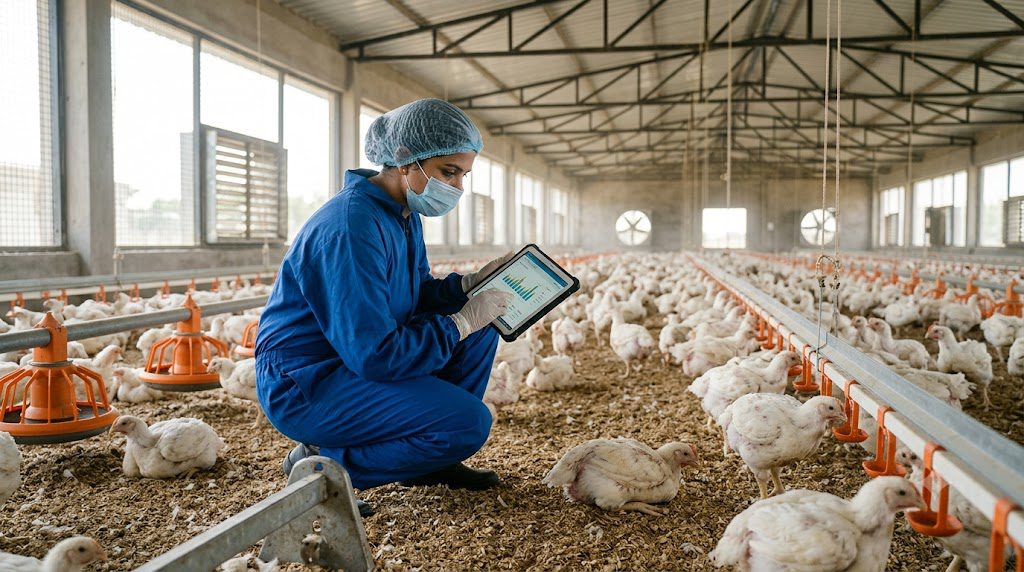
These nine measures form the backbone of effective bird flu prevention for poultry farms, drawn from current extension guidance and case-control studies of real outbreak farms.
1. Establish a Clear Line of Separation
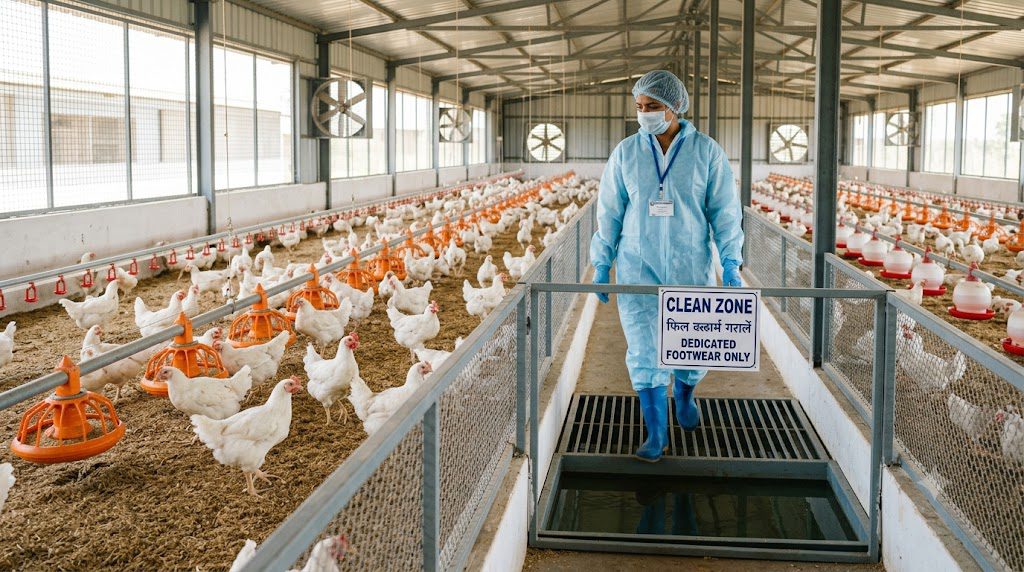
Designate a specific boundary often called a “line of separation” between the outside world and your flock’s living space. Nothing crosses that line (people, equipment, vehicles) without going through a decontamination step first. This single practice is one of the most consistently cited protective factors in bird flu case-control studies.
2. Dedicated Footwear and Boot Disinfection
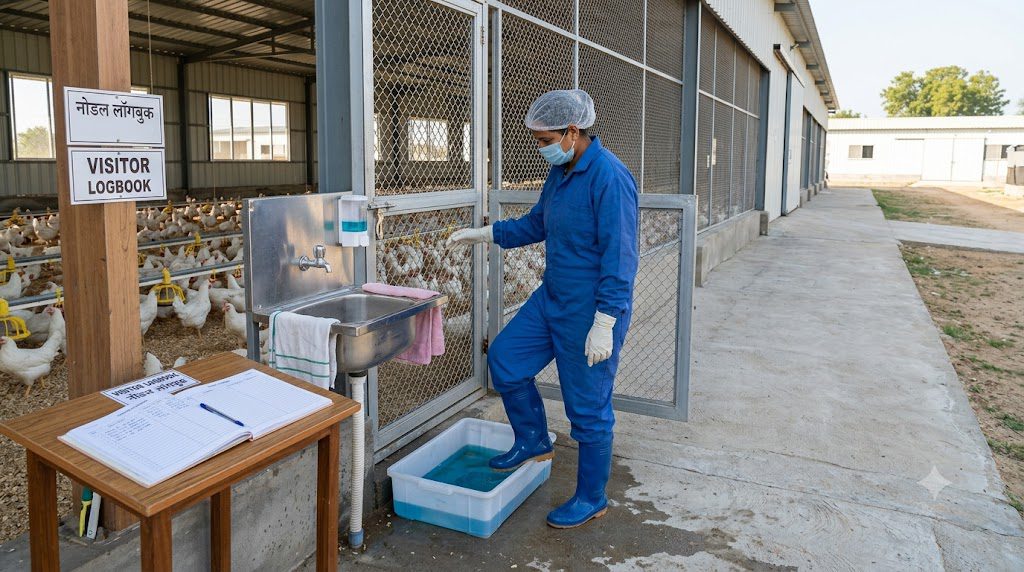
Studies on layer farm outbreaks specifically identified changing shoes at the barn entrance as a protective factor against HPAI introduction. Keep barn-only boots that never leave the property, and place a disinfectant footbath at every entry point.
3. Restrict and Log Visitor and Vehicle Access
Every vehicle and visitor is a potential vector. Bird flu prevention for poultry farms should include a written visitor log, restricted access for anyone who has visited another poultry operation recently, and dedicated (not shared) vehicles for feed delivery and flock transport where possible.
4. Protect Water Sources from Wild Waterfowl
Ponds, open troughs, and runoff areas accessible to wild ducks or geese are a direct transmission pathway. Cover or fence water sources, and avoid drawing flock water from any source wild waterfowl can access upstream.
5. Secure Feed Storage Against Wild Birds and Rodents
Uncovered feed piles attract wild birds directly onto your property, defeating the purpose of every other control measure. Store feed in sealed containers or enclosed structures, and address rodent activity quickly, since rodents can also carry contamination between areas.
6. Practice All-In, All-Out Flock Management Where Possible
Introducing new birds into an existing flock especially birds from live bird markets or mixed sources significantly raises risk. Closed-flock systems, or all-in-all-out cycles where a barn is fully emptied, cleaned, and rested between groups, reduce the chances of an undetected introduction spreading silently.
7. Monitor and Report Early Clinical Signs Immediately
Sudden death without prior symptoms is one of the most common first signs of HPAI. Other signs include lack of energy, appetite loss, dropped egg production, swelling around the eyes and comb, purple discoloration, gasping, nasal discharge, and stumbling. Fast reporting to animal health authorities directly limits the scale of an outbreak detection delays of even a few days measurably worsen outcomes in outbreak modeling studies.
8. Disinfect Shared Equipment and Tools Between Uses
Any tool, crate, or piece of equipment shared between flocks or moved between farms needs cleaning and disinfection before reuse. This is a basic step that’s frequently skipped under time pressure, and it’s a documented contributor to farm-to-farm transmission.
9. Track Vaccination Developments and Regional Guidance
Poultry vaccination against HPAI remains a debated and regionally inconsistent tool some countries are piloting or expanding vaccination programs, while major export markets still restrict trade from vaccinated-flock countries. Bird flu prevention for poultry farms should include staying current on your region’s specific policy, since it directly affects whether vaccination is even a legally available option for your operation.
Early Warning Signs of Bird Flu in Your Flock
Beyond the prevention checklist, knowing exactly what to watch for shortens the gap between exposure and response. Warning signs include:
- Sudden, unexplained deaths with no prior illness
- Lethargy and loss of appetite
- Sharp drop in egg production
- Swelling of the eyelids, comb, wattles, or shanks
- Purple or blue discoloration of the skin
- Gasping, coughing, or nasal discharge
- Twisting of the head and neck, stumbling, or loss of coordination
- Diarrhea
Any combination of these symptoms, especially sudden mortality, should trigger immediate isolation of the affected area and a call to your local animal health authority not a wait-and-see approach. The Massachusetts Department of Agricultural Resources and equivalent state or district agencies publish current regional reporting contacts and specific guidance for both commercial and backyard flock owners.
What Happens If Bird Flu Is Confirmed on Your Farm
Once HPAI is confirmed, the response is standardized in most countries: the entire affected flock is culled to prevent further spread, the farm undergoes quarantine and disinfection, and in many regions, a formal biosecurity audit is required before the farm can restock or qualify for indemnity payments on any future incident. This audit requirement is itself a strong argument for treating bird flu prevention for poultry farms as a permanent standard rather than a response you improvise after the fact.
This is precisely why proactive bird flu prevention for poultry farms matters more than reactive response indemnity programs generally compensate farmers for a confirmed outbreak, but they don’t replace lost production time, damaged buyer relationships, or the emotional toll of a full flock loss. Farms that have already been through one outbreak also face stricter ongoing audit requirements, making prevention progressively more important with each incident rather than less.
Building a Written Biosecurity Plan, Not Just a Mental Checklist
One gap shows up repeatedly in outbreak investigations: farms with strong intentions but no written biosecurity plan tend to apply prevention measures inconsistently, especially during busy seasons or staff turnover. A written plan turns bird flu prevention for poultry farms from something the owner remembers into something every worker follows the same way, every time.
At minimum, a working biosecurity plan should document: who is authorized to enter flock areas and under what conditions, the exact disinfection procedure required at the line of separation, a schedule for inspecting fencing and water source barriers, a clear protocol for isolating and reporting sick or dead birds, and a record of any visitors, deliveries, or new birds introduced to the property.
This documentation isn’t just good practice it’s frequently a direct requirement for indemnity eligibility and biosecurity audits after a farm has experienced a prior outbreak.
Seasonal risk also deserves its own line in the plan. While recent outbreaks have shown bird flu spreading in every season rather than only during traditional migration windows, risk still tends to spike during spring and fall migratory periods in many regions.
Reviewing and tightening bird flu prevention for poultry farms ahead of those windows rather than reacting after local wild bird detections are already reported gives a farm a meaningful head start.
Bird Flu Prevention for Backyard and Small Flocks
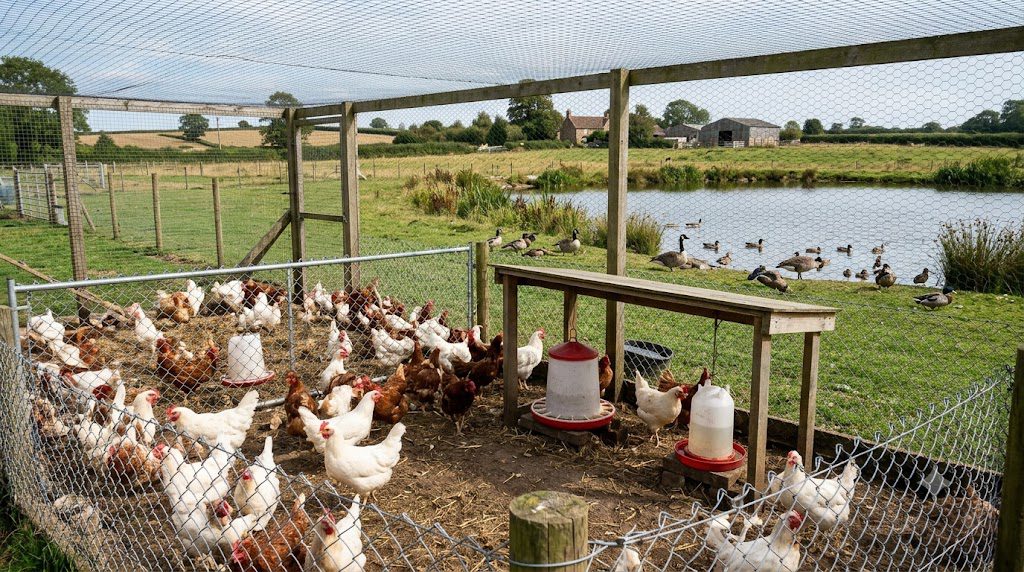
Backyard and hobby flocks face a different risk profile than large commercial operations, but not a smaller one. Backyard birds often have more direct outdoor access, more exposure to wild bird habitats, and fewer formal biosecurity structures in place all of which raise transmission risk even at a household scale.
Practical bird flu prevention for poultry farms at the backyard level includes keeping feed and water inside covered runs rather than open yards, avoiding shared equipment with other bird keepers, changing clothes and shoes after handling birds, and reporting sudden deaths immediately rather than assuming it’s an isolated, unrelated incident.
Regional agriculture departments have specifically flagged backyard flocks as a continuing source of new HPAI detections, precisely because biosecurity awareness tends to be lower than on commercial farms.
Bird Flu Risk for Smallholder Poultry Farmers in India
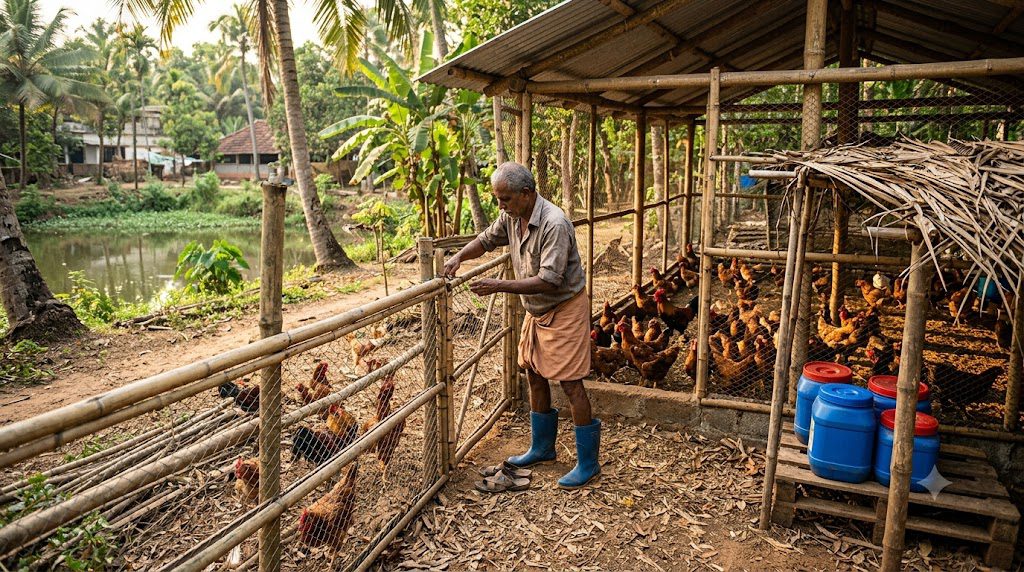
Most global HPAI research and biosecurity guidance is written around large commercial operations in North America and Europe, but the practical reality for smallholder poultry farmers a dominant model across much of India looks different. Free-range and backyard-style poultry keeping is common, flocks are often mixed with ducks or other species, and formal biosecurity infrastructure like dedicated entry points or footbaths is rare.
For smallholders, the most realistic and highest-impact version of bird flu prevention for poultry farms is low-cost and behavioral rather than infrastructure-heavy: separating poultry from open water bodies used by wild waterfowl, avoiding mixing newly acquired birds directly into an existing flock without a short isolation period, washing hands and changing footwear after visiting live bird markets, and reporting unusual flock deaths to local veterinary or animal husbandry officers immediately rather than treating it as a private loss to manage alone.
Farmers already applying structured management practices from our goat and poultry farming guide have a head start, since flock separation and hygiene habits translate directly into stronger bird flu prevention as well.
Cost of Prevention vs. Cost of an Outbreak
The economics here are lopsided in favor of prevention. Basic bird flu prevention for poultry farms footbaths, feed covers, visitor logs, water source fencing costs a fraction of what a single confirmed outbreak costs in culled birds, lost production, quarantine downtime, and reputational damage with buyers.
A single infected commercial farm in a documented 2025 outbreak lost over 15,000 birds with 92% mortality before containment was even complete.
Multiply that kind of loss across an operation’s full production cycle, add quarantine and restocking delays, and the cost comparison against basic biosecurity investment isn’t close. This is the same logic covered in our precision livestock farming guide: monitoring and prevention costs are consistently smaller than the cost of reacting after a problem is already established.
What’s Next: Vaccination Debate and Surveillance Gaps
Two unresolved issues will shape bird flu prevention for poultry farms over the next few years.
Vaccination remains contested. Some countries are actively expanding poultry vaccination programs, while major poultry-exporting nations continue to restrict trade from countries using vaccination, over concerns about masking infection detection in trade partners. This creates a genuine strategic tension for farmers: vaccination could reduce flock losses but may also restrict market access depending on where you sell.
Surveillance is inconsistent and, in places, worsening. National monitoring varies dramatically between regions, and some public health researchers have specifically flagged that geospatial farm data and demographic tracking information that could materially improve early outbreak detection is often poorly tracked or legally shielded from release.
Until that changes, individual farm-level bird flu prevention for poultry farms remains the most reliable line of defense, rather than an assumption that broader surveillance systems will catch problems early enough on their own.
There is also growing scientific concern about the virus’s evolving host range it has already spilled into dairy cattle and marine mammal populations in ways not seen in earlier outbreaks which reinforces that farm-level biosecurity isn’t a temporary fix for a passing event, but an ongoing operational standard.
Frequently Asked Questions
What is the most effective bird flu prevention step for poultry farms? Limiting contact between wild birds and your domestic flock is consistently identified as the single most protective measure, since the large majority of outbreaks trace back to wild bird introduction rather than farm-to-farm spread.
Can vaccinated poultry still get bird flu? Vaccination can reduce severity and transmission risk but does not guarantee complete protection, and vaccinated-flock status can affect trade eligibility in some export markets.
How quickly does bird flu kill poultry? Highly pathogenic avian influenza can cause sudden death with little or no warning, and mortality rates in infected chickens range from 90–100%.
Is backyard poultry at higher or lower risk than commercial farms? Backyard flocks often face comparable or higher exposure risk due to more direct outdoor access and less formal biosecurity infrastructure, even though outbreak numbers are typically reported at the commercial scale.
What should I do if I suspect bird flu in my flock? Isolate the affected birds and area immediately, avoid moving any equipment or birds off the property, and contact your local animal health or veterinary authority right away rather than waiting to see if symptoms resolve.
Does bird flu affect humans? Human infections have occurred, primarily through direct contact with infected birds or contaminated environments, and researchers continue to monitor the virus for mutations that could increase human-to-human transmission risk.
How often should a poultry farm review its biosecurity plan? At minimum once a year, and additionally whenever local wild bird detections are reported nearby, staff turnover occurs, or the farm adds new birds, buildings, or water sources that change its risk exposure.
Can bird flu spread through eggs sold from an infected flock? Properly cooked eggs are not considered a transmission risk to humans, but eggs from a flock under quarantine are not legally sold, and cross-contamination during handling on an infected farm is a genuine concern addressed through the same biosecurity protocols covering equipment and surfaces.
Final Thought
Bird flu prevention for poultry farms isn’t a seasonal checklist anymor it’s an ongoing operational discipline, because the virus itself is no longer behaving like a temporary event. The farms coming through this extended outbreak period with the least damage are consistently the ones applying basic, unglamorous biosecurity steps consistently, not the ones waiting for a vaccine or a policy fix to solve the problem for them.
Whether you run a commercial layer operation or a small backyard flock, the fundamentals are the same, and they are inexpensive enough that there’s no good reason to delay putting them in place.