
Author’s note: I don’t farm cattle and haven’t managed an outbreak. This article is built from peer-reviewed reviews, the UK government’s outbreak assessment, France’s food safety agency (ANSES), the MSD Veterinary Manual and wire-service reporting, so a producer has one place to read the current picture instead of six.
Table of Contents
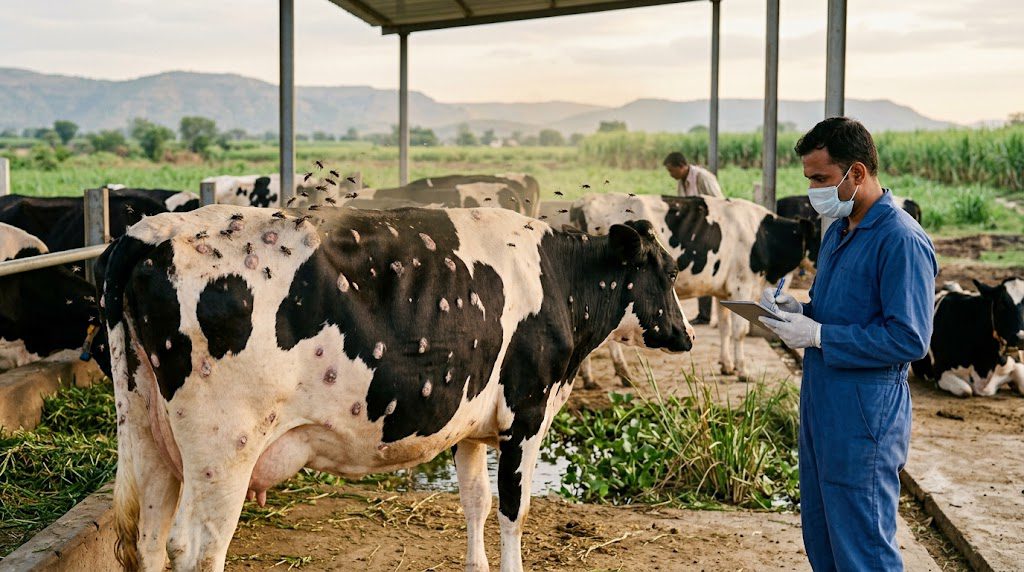
Lumpy skin disease in cattle is no longer a problem that belongs to other continents. After decades concentrated in Africa, the Middle East and parts of Asia, the virus returned to Western Europe in 2025, with outbreaks reported in Italy, France and Spain, according to a 2026 review in Veterinary Research Communications. In the months since, it has prompted mass vaccination, whole-herd culls and tractor blockades on French motorways.
Why Lumpy Skin Disease in Cattle Is a Global Story in 2026
The UK government’s March 2026 outbreak assessment notes that the first European reports in July 2025 were the first on the continent since 2018. It also records spread in North Africa since July 2024, in Algeria and Tunisia. The disease was still finding new farms this year: Spain reported outbreaks in Huesca, Aragón, in early March 2026.
Producers in countries with no cases have good reason to pay attention. The UK has never recorded lumpy skin disease in cattle, and Australian industry press has pointed out that the virus is now present in Timor-Leste, several hundred kilometres from Australia’s northern coast, according to Beef Central. Preparation costs far less than a response after the first case.
What Lumpy Skin Disease in Cattle Actually Is
Lumpy skin disease is caused by a virus in the Poxviridae family, related to the viruses behind sheep pox and goat pox, according to France’s food safety agency ANSES. It mainly affects cattle and water buffalo and does not infect people, as Reuters reported during the French outbreak.
The virus moves mostly by mechanical transmission through biting insects. Experimental work summarised in the Veterinary Research Communications review shows the virus can survive for several days on insect mouthparts and be passed on without multiplying inside the insect. A separate review of the disease in Europe adds that animal movements and weak farm biosecurity make the spread worse.
Mortality is usually modest, typically 1–5%, but the UK assessment cites research showing it can reach 20–85% in naïve and young animals. The larger cost is often economic: reduced milk production, weight loss, infertility, hide damage and lost export trade.
Symptoms of Lumpy Skin Disease in Cattle
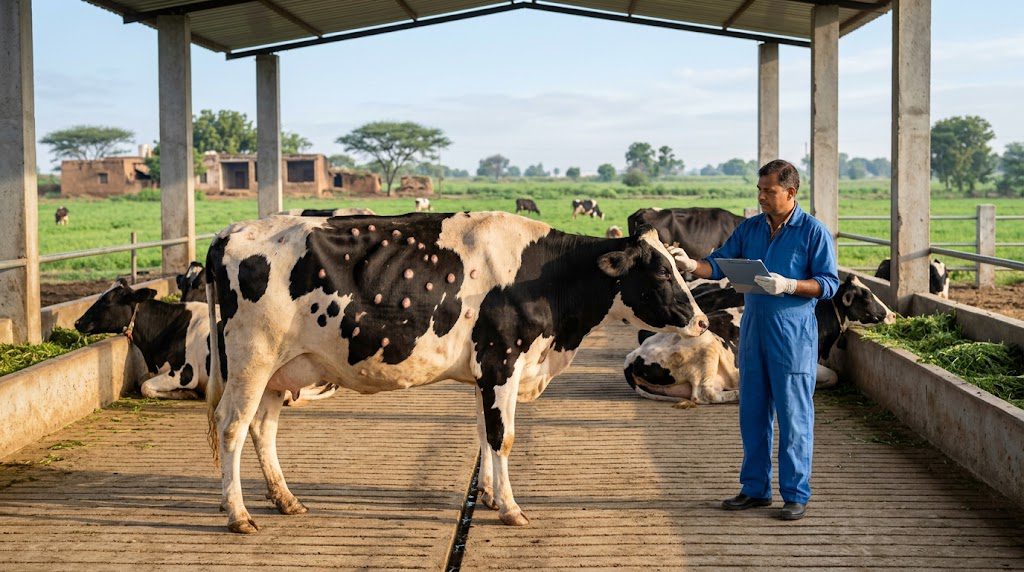
Recognising lumpy skin disease in cattle early is what allows fast isolation and reporting. According to ANSES, the main signs are:
- Nodules appearing on the skin
- Fever
- Sores in the mouth
- A drop in milk production
- Death in serious cases
The UK assessment adds weight loss and infertility to the list of production effects. Because nodules can be mistaken for other skin conditions, any unexplained lumps on more than one animal should be treated as a reason to call a veterinarian rather than wait.
How the Disease Travelled From Africa to Europe
The Veterinary Research Communications review traces lumpy skin disease from its first description in Zambia in 1929 through sub-Saharan Africa, the Middle East, Europe and Asia. The Balkan epidemics of 2015–2017 showed that coordinated high-coverage vaccination and movement restrictions could bring the disease under control across southeastern Europe.
The 2025 return to Western Europe showed that regional elimination is not permanent. The review also notes that spread in Russia and the Middle East has been linked, in one suggestion, to disruptions in vaccine attenuation processes and operational limits on policy compliance. That is a caution, not a settled finding, but it explains why vaccine quality matters as much as vaccine coverage.
Seasonal and environmental conditions that raise insect numbers also shape how fast outbreaks grow and cross borders, according to the same review. Warm, wet periods deserve extra vigilance.
The French Cull Controversy: A Balanced Look
France offers the clearest picture of the difficult choices involved. The disease reached Sardinia and northern Italy in late June 2025, then Savoie in eastern France, and later the south-west, according to The Cattle Site’s report. By 9 December, France had detected 109 outbreaks, according to The Beef Site.
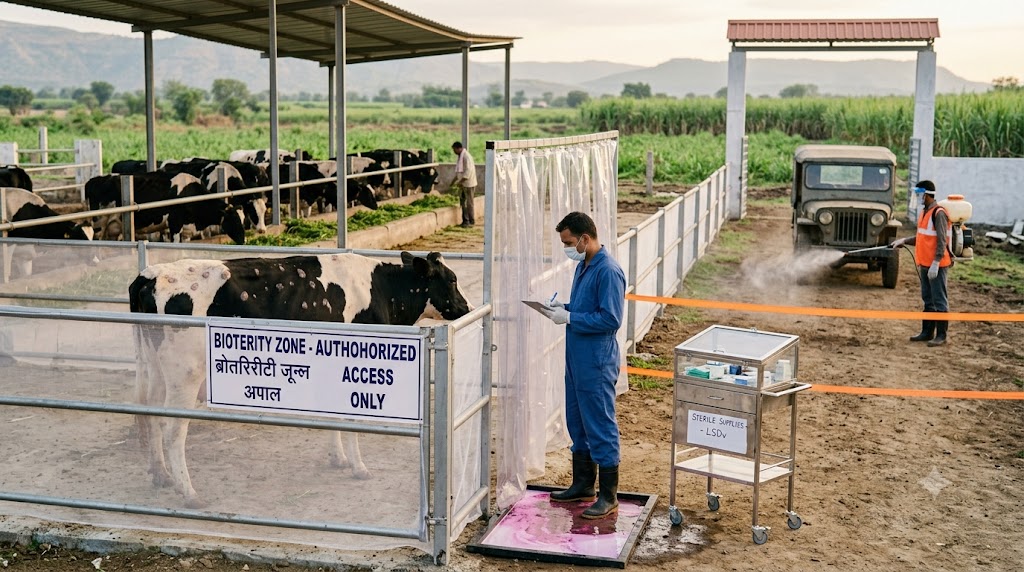
The case for whole-herd culling. The French government argues that removing every animal on an infected farm, combined with vaccination and movement restrictions, is the way to contain the disease and keep cattle exports open. Its agriculture minister warned that uncontrolled spread could kill at least 1.5 million cattle, and promised compensation for farmers’ losses, as Reuters reported. The main farmers’ union, FNSEA, backed the policy.
The case against. Smaller unions called the cull excessive and cruel, arguing that healthy animals were being destroyed and livelihoods wrecked, and farmers blocked highways in protest, per The Beef Site. In one reported case, more than 200 cattle were slaughtered after a single positive detection, and unions asked for a vaccination-focused approach instead, according to Beef Central. The ministry offered psychological support to affected farmers.
Neither side is simply wrong. The UK assessment observes that stamping out alone is difficult and that eradication often needs vaccination as well, which is close to what France is attempting. The unresolved question is how much culling is proportionate once vaccination is in place.
Vaccination: Protection and Trade-Offs
France expanded vaccination sharply, with plans to vaccinate around one million more cattle on top of another million vaccinated since July, according to Beef Central. In April 2026, ANSES concluded that a second vaccination campaign was needed after the 2025 round, with booster doses given before herds are moved.
Vaccines come with trade-offs. The MSD Veterinary Manual says live attenuated lumpy skin disease vaccines give the best protection, but there are fears of reversion to virulence and evidence of vaccine strain spread. Sheep pox and goat pox vaccines protect slightly less against lumpy skin disease, with their own caveats. The European review adds that killed vaccines may help protect animals in areas not yet affected and slow epidemics.
Vaccination can also complicate export status, which is why governments treat it as a trade decision as well as a veterinary one. Producers should follow national veterinary authorities rather than vaccinating independently.
7 Critical Steps for Lumpy Skin Disease in Cattle Prevention
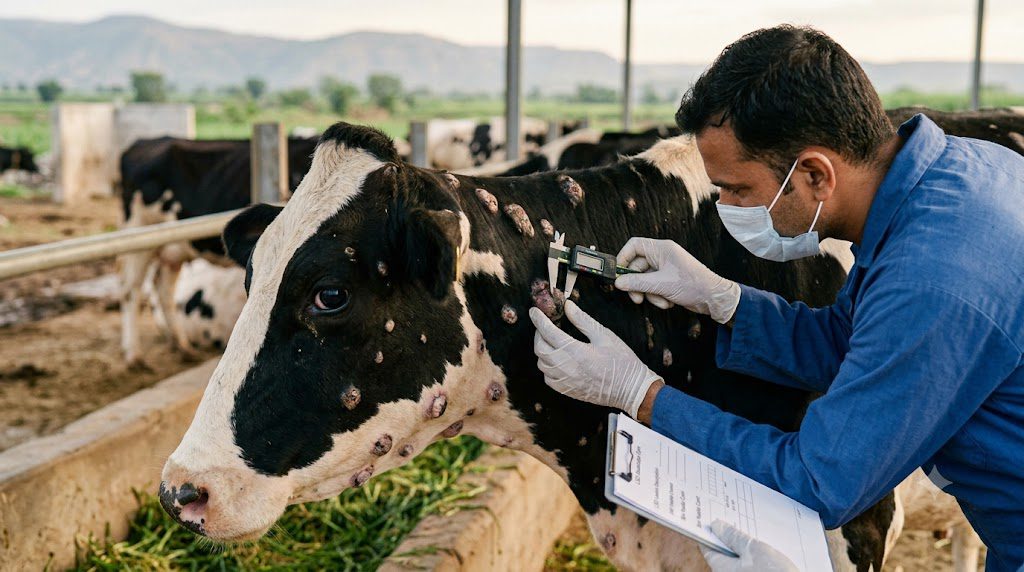
The review in Veterinary Research Communications stresses that control depends on several measures used together rather than any single one. These seven steps follow that principle:
- Reduce biting insects. Vector control is one of the recognised control measures. Remove standing water, manage manure and bedding, and use veterinary-approved insect control on animals and housing.
- Vaccinate where authorities advise it. Follow official schedules, including boosters, and time them before animal movements where possible.
- Control animal movements. France pointed to illegal animal movements as a likely cause of spread. Buy only from herds of known health status and never move animals out of a restricted zone.
- Quarantine new arrivals. Keep new or returning cattle separate for the period your veterinary authority recommends before mixing them with the herd.
- Inspect animals every day. Check for skin nodules, fever, mouth sores and unexplained milk drops, and record what you find.
- Disinfect premises and equipment. Cleaning and disinfection of premises, vehicles and shared equipment is part of standard outbreak control.
- Know your local rules before an outbreak. Learn how zones, movement bans and compensation work in your country so you can act quickly.
Producers building a wider herd-health routine may find Farm Sutras’ guide to modern animal husbandry and scientific breeding techniques useful for record-keeping and daily observation habits. Our overview of sustainable livestock farming solutions covers building a farm that can absorb a disease shock, and our guide to indigenous Indian cattle breeds is relevant to anyone weighing hardier genetics. Because lumpy skin disease is related to sheep pox and goat pox, mixed-species keepers may also want our guide to goat and poultry farming practices.
What to Do If You Suspect Lumpy Skin Disease in Cattle
If you see skin nodules with fever or a sudden drop in milk, isolate the animal and stop moving cattle, vehicles and equipment off the farm. Contact your veterinarian or national animal health authority at once. Lumpy skin disease is notifiable to the World Organisation for Animal Health, and in many countries suspected cases must be reported.
There is no specific antiviral treatment. According to a Veterinary Research Communications review of treatment priorities, care centres on early detection and isolation, anti-inflammatory and fever-reducing therapy, hydration and nutritional support, and management of wounds and mastitis. The European review says research into antiviral options is still needed. This is why prevention and fast reporting carry so much weight.
What This Means for Producers Outside Affected Regions
If your country is still free of the disease, your priorities are surveillance and readiness. Know which veterinary contact to call, keep movement records up to date and understand import rules for live cattle. Watch for signs in your own herd during warm, insect-heavy months.
If you sell cattle or dairy products internationally, remember that an outbreak can close export markets quickly. France’s government has framed its strict policy as a way to protect exports. Producers in trade-dependent regions should follow official updates from their national authority and the World Organisation for Animal Health.
Frequently Asked Questions
1. What is lumpy skin disease in cattle?
Lumpy skin disease (LSD) is a viral disease that mainly affects cattle and water buffalo. It is caused by a virus in the Poxviridae family and is primarily spread mechanically by biting insects. It does not infect humans.
2. What are the symptoms of lumpy skin disease in cattle?
Common symptoms include skin nodules, fever, mouth sores, reduced milk production, weight loss and, in severe cases, death. Farmers should contact a veterinarian when unexplained lumps appear on multiple animals.
3. How does lumpy skin disease spread between cattle?
LSD mainly spreads through biting insects that mechanically carry the virus between animals. Animal movement and inadequate farm biosecurity can also contribute to wider transmission.
4. Can humans catch lumpy skin disease from cattle?
No. Lumpy skin disease is described in the article as a cattle disease that does not infect humans. However, outbreaks can cause significant economic losses and restrictions on livestock trade.
5. How deadly is lumpy skin disease in cattle?
Reported mortality is typically around 1–5%, but the article notes that research cited in the UK outbreak assessment has reported mortality of 20–85% in naïve and young animals. The disease can also cause major losses through reduced milk production, weight loss, infertility and trade disruption.
6. Is there a treatment for lumpy skin disease in cattle?
There is no specific antiviral treatment described in the article. Supportive care can include isolation, fever and inflammation management, hydration, nutritional support, and treatment of wounds and mastitis.
7. Is there a vaccine for lumpy skin disease in cattle?
Yes. Vaccination is an important part of LSD control programs. The article notes that live attenuated vaccines generally provide the strongest protection, while also discussing concerns such as vaccine-strain spread and reversion to virulence. Farmers should follow their national veterinary authority’s vaccination guidance.
8. How can farmers prevent lumpy skin disease in cattle?
Key prevention measures include controlling biting insects, following official vaccination programs, restricting animal movements, quarantining new cattle, inspecting animals daily, disinfecting premises and equipment, and understanding local disease-control rules.
9. What should I do if I suspect lumpy skin disease in my cattle?
Isolate the suspected animal, stop unnecessary movement of cattle and potentially contaminated equipment, and contact a veterinarian or relevant animal-health authority immediately. Suspected cases may need to be reported under national disease-control rules.
10. How can farmers control insects that spread lumpy skin disease?
Farmers can reduce the risk of lumpy skin disease by lowering exposure to biting insects around cattle. Practical measures include removing standing water, properly managing manure and bedding, keeping cattle housing clean, and using veterinary-approved insect-control products on animals and around housing. These measures should be combined with vaccination, movement control, quarantine, and regular inspection of cattle because insect control alone cannot prevent disease transmission.
11. Can lumpy skin disease spread through animal movement?
Yes. Animal movements can contribute to the spread of LSD, particularly when cattle are moved from affected or restricted areas. Farmers should follow movement restrictions and purchase cattle from herds with known health status.
12. Why are cattle sometimes culled during lumpy skin disease outbreaks?
Whole-herd culling can be used as part of an outbreak-control strategy. In France, authorities argued that removing animals from infected farms, together with vaccination and movement restrictions, could help contain the disease and protect cattle exports. The policy has also faced opposition from some farmer groups.
13. Does vaccination completely prevent lumpy skin disease?
The article does not present vaccination as a standalone guarantee. It describes LSD control as requiring multiple measures, including vaccination, insect control, movement restrictions, quarantine, surveillance and biosecurity.
14. Is lumpy skin disease spreading in Europe in 2026?
The article reports that LSD returned to Western Europe in 2025, with outbreaks reported in Italy, France and Spain, and that Spain reported outbreaks in Huesca, Aragón, in March 2026.
15. Is lumpy skin disease a risk for cattle farmers outside affected regions?
Yes, because livestock movement, insect transmission and international trade can allow animal diseases to cross borders. Farmers in unaffected regions should focus on surveillance, movement records, import controls, biosecurity and knowing which veterinary authority to contact if suspicious symptoms appear.
Actionable Takeaways
- Control biting insects around housing and pasture, especially in warm, wet weather.
- Vaccinate only as your national authority advises, and keep booster dates on record.
- Never move cattle out of restricted zones, and quarantine every new arrival.
- Check animals daily for skin nodules, fever and milk drops, and report suspicions immediately.
- Learn your local zoning and compensation rules now, not during an outbreak.