
Table of Contents
Autonomous tractors have quietly moved from CES demo stages to full commercial rollout in 2026, with tens of thousands of units now working fields across North America, Europe, and Asia-Pacific without a driver in the seat.
What used to be a research showcase John Deere’s original autonomy kit reveal at CES 2022 is now a genuine equipment category with retrofit kits, subscription pricing, and multiple manufacturers competing head-to-head.
The global autonomous and semi-autonomous tractor market is estimated at roughly $2.4 billion in 2026 and is projected to reach $9.8 billion by 2035, growing at nearly 17% a year. More than 65,000 units had already been deployed globally by 2024, and that number keeps climbing.
This guide covers what autonomous tractors actually do, what they cost, who’s building them, and where the technology still runs into real limitations without the keynote-stage polish.
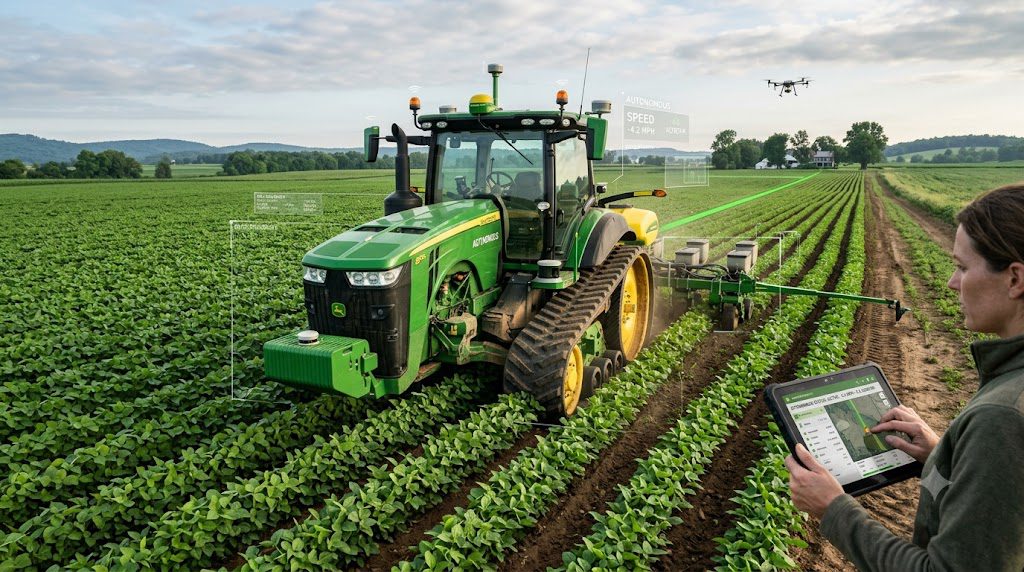
What Are Autonomous Tractors?
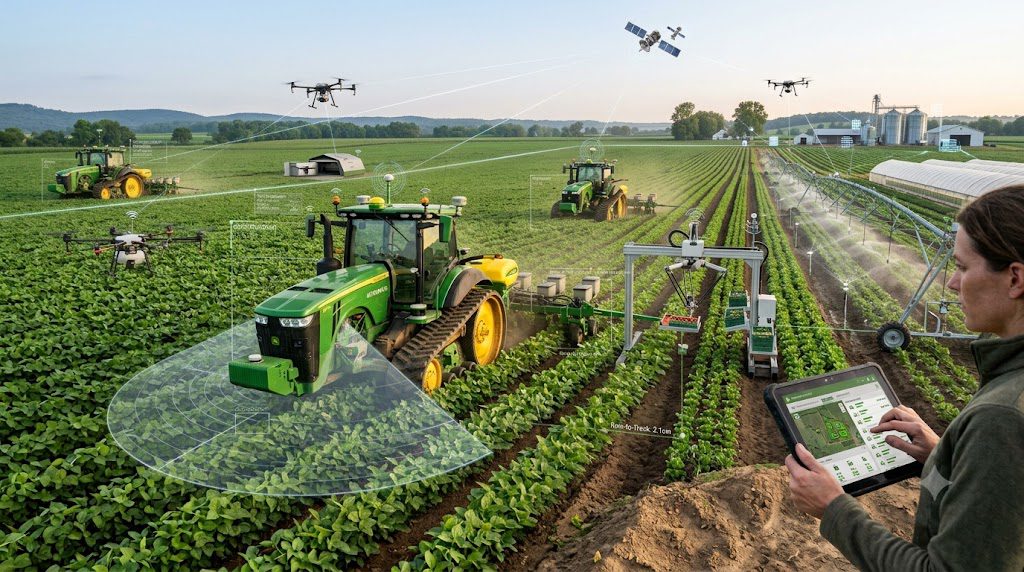
Autonomous tractors are farm vehicles equipped with GPS guidance, cameras, sensors, and AI software that let them till, seed, spray, or pull equipment through a field with little or no human operator present.
Systems range from fully driverless tractors built from the ground up, like John Deere’s autonomous 9RX and Monarch Tractor’s electric MK-V, to retrofit kits from companies like Sabanto and Bluewhite that convert a farmer’s existing tractor into an autonomous one using add-on hardware and software.
Most systems still require a human to supervise remotely, monitoring progress through an app and stepping in if the machine encounters an obstacle or unexpected field condition it can’t resolve on its own full unsupervised autonomy across all field types isn’t universal yet, even on the most advanced platforms.
Why Autonomous Tractors Are Trending in 2026
1. Farm labor shortages have become structural, not seasonal. Acute and persistent labor scarcity is cited as the single largest driver of autonomous tractor adoption across nearly every market analysis published in 2026.
2. Retrofit kits removed the all-or-nothing purchase decision. Companies like Sabanto and Bluewhite now let farmers automate a tractor they already own rather than buying an entirely new machine, which has meaningfully lowered the barrier to entry.
3. Major manufacturers are shipping at real scale. John Deere has deployed thousands of units of its 8R autonomous tractor across U.S. farms, and its second-generation autonomy platform, unveiled at CES 2025, uses 16 cameras for field perception a clear signal this has moved past pilot programs.
4. Investment capital keeps accelerating the category. Between 2020 and 2024, more than $4.1 billion was invested globally in autonomous agriculture technology, with 37% of that directed specifically toward tractor automation. Monarch Tractor alone raised $133 million in a single Series C round in 2024.
5. Specialty crop farms found a purpose-built option. Companies like Monarch Tractor and Agtonomy are building smaller, electric autonomous tractors specifically for vineyards, orchards, and vegetable row crops segments large row-crop-focused manufacturers historically ignored.
6. Regional government funding is entering the picture. China’s Ministry of Agriculture allocated billions of yuan in 2023 for AI-enabled tractor pilot projects, and similar public investment is appearing in other regions as autonomous tractors get treated as agricultural infrastructure rather than a niche product.
7. Sensor costs are dropping across the board. LiDAR and radar modules, once the most expensive component in an autonomy stack, are now the fastest-growing component segment in the market, projected to expand at a 22.6% CAGR through 2031 as prices fall and redundant sensing becomes standard rather than a premium feature.
How Autonomous Tractors Actually Work
Positioning and Navigation
Most systems rely on RTK GPS for centimeter-level positioning accuracy, layered with onboard cameras and sometimes LiDAR or radar for real-time obstacle detection the sensor combination varies by manufacturer and price tier.
Perception and Decision-Making
Cameras and sensors feed into AI software that identifies obstacles, field boundaries, and crop rows, allowing the autonomous tractors to adjust course, stop, or alert a remote supervisor when something unexpected appears in the field.
Remote Supervision
Rather than one operator per tractor, most current deployments let a single supervisor monitor multiple autonomous tractors at once through a tablet or app, checking progress and intervening only when the system flags an issue a meaningful shift in the labor model, not just a labor reduction.
Retrofit vs. Built-In Autonomy
Purpose-built autonomous tractors have the sensors and software integrated from the factory. Retrofit kits instead bolt cameras, GPS receivers, and control hardware onto a farmer’s existing tractor, with companies like Sabanto’s Steward system supporting popular models from John Deere and Kubota specifically to keep upgrade costs down.
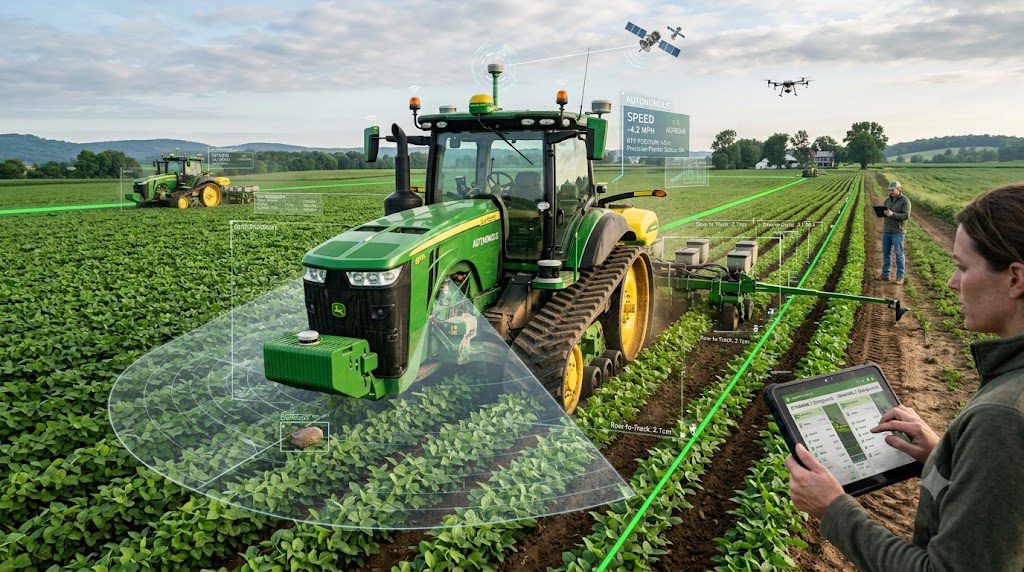
Full Autonomous Tractors vs. Retrofit Kits
| Factor | Full Autonomous Tractor | Retrofit Kit |
|---|---|---|
| Upfront cost | $300,000–$600,000+ for large-frame models | Significantly lower converts equipment you already own |
| Compatibility | Locked to that manufacturer’s platform | Works across multiple existing tractor brands and models |
| Sensor integration | Factory-installed, typically more advanced | Add-on hardware, capability varies by kit |
| Best fit | Large-scale row crop operations replacing aging fleets | Farms wanting to test autonomy before a full equipment overhaul |
The honest takeaway: a retrofit kit is the lower-risk way to trial autonomous tractors on a farm that isn’t ready to commit six figures to a purpose-built machine, while full autonomous platforms make more sense for large operations already due for a fleet replacement.
Real Costs and Market Numbers
Treat every number here as a planning reference, not a guarantee pricing shifts quickly in this category and varies by region and dealer.
Full autonomous tractor pricing: Large-frame autonomous tractors typically run $300,000 to $600,000 or more, while compact autonomous models built for specialty crops range from roughly $50,000 to $150,000.
Retrofit kit pricing: Retrofit solutions are explicitly positioned as the lower-cost entry point, letting farmers automate tractors they already own rather than purchasing new equipment, which materially lowers the adoption barrier for small and mid-sized operations.
Market size: The global autonomous and semi-autonomous tractor market is estimated at roughly $2.41 billion in 2026, projected to reach $9.83 billion by 2035, a compound annual growth rate of 16.9%.
Deployment scale: More than 65,000 autonomous and semi-autonomous tractor units had been deployed globally by 2024, with John Deere alone reporting roughly 2,000 units of its 8R autonomous tractor across U.S. farms and Monarch Tractor selling more than 3,000 units in the U.S. in 2023.
Investment scale: Over $4.1 billion flowed into autonomous agriculture technology globally between 2020 and 2024, with more than a third of that directed specifically at tractor automation.
Regional growth: North America is currently the fastest-growing regional segment, projected to expand at a 22.6% CAGR from 2026 to 2031, driven by large field sizes and high labor costs that make the economics of autonomy easier to justify.
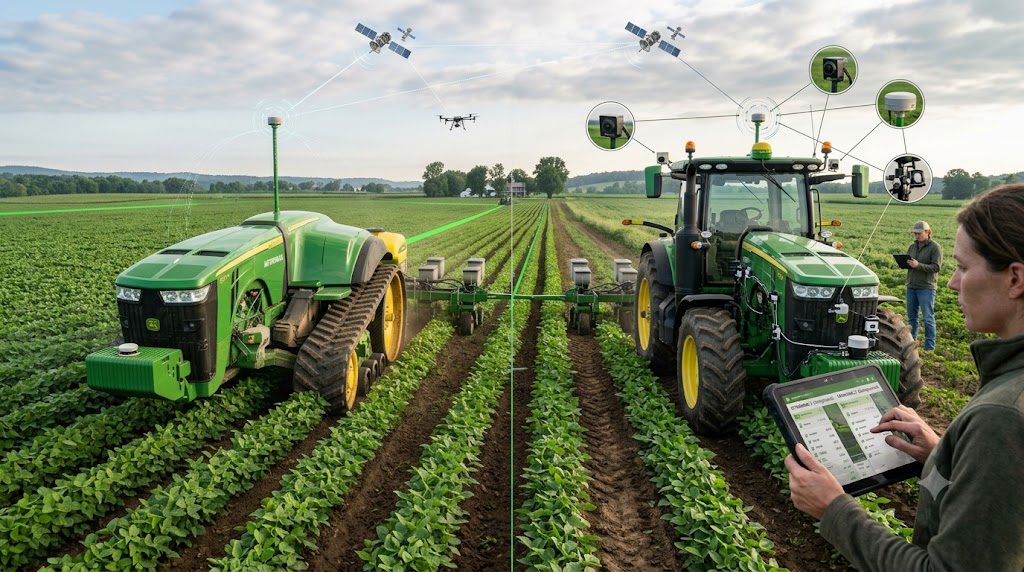
8 Companies Leading the Autonomous Tractor Market
- John Deere : The clear market leader, with its second-generation autonomy platform using 16 cameras for field perception, and roughly 2,000 units of its 8R autonomous tractor already deployed across U.S. farms.
- Monarch Tractor : Builder of the fully electric, driver-optional MK-V, popular with organic farms and vineyards, and backed by a record $133 million Series C round in 2024.
- Kubota : Positioned as a strong second player behind Deere, blending compact autonomous machines, electric powertrain development, and retrofit-kit partnerships such as its work with Agtonomy.
- Sabanto : Focused specifically on retrofit autonomy through its Steward system, compatible with John Deere 5E, 5M, and 6E series tractors and Kubota’s M5 series, and recently backed by Leaps by Bayer.
- Bluewhite : Runs a robot-as-a-service platform for autonomous farming, having raised $39 million in Series C funding to scale its subscription-based model.
- AGCO : Offers the OutRun retrofit kit for converting existing tractors, alongside the experimental Fendt Xaver swarm robot concept.
- CNH Industrial : A major established equipment manufacturer building out its own autonomy and precision agriculture offerings alongside its core tractor lineup.
- Agtonomy : Focused on smaller, specialty-crop autonomous and retrofit solutions, having raised additional funding in 2024 to close its Series A round at $32.8 million.
If you’re comparing vendors, ask specifically whether the system is built for your tractor’s existing make and model, and whether remote supervision requires proprietary software your farm would need to license separately.
Best Use Cases for Autonomous Tractors Today
Autonomous tractors currently perform best on:
- Large row-crop operations running tillage, seeding, and grain-cart tasks where field size justifies the capital investment
- Specialty crop farms : vineyards, orchards, and vegetable row crops using compact electric models like Monarch’s MK-V, particularly in regions facing acute seasonal labor shortages such as California, Spain, and France
- Mid-size farms in the 50–150 HP range, an emerging segment being targeted specifically by Kubota’s X tractor line and similar mid-tier offerings
- Farms wanting to test autonomy before a full fleet replacement, using retrofit kits on equipment they already own
It remains a weaker fit for very small operations without the field scale to justify either a full autonomous purchase or a retrofit subscription, and for regions lacking the connectivity and service infrastructure these systems depend on.
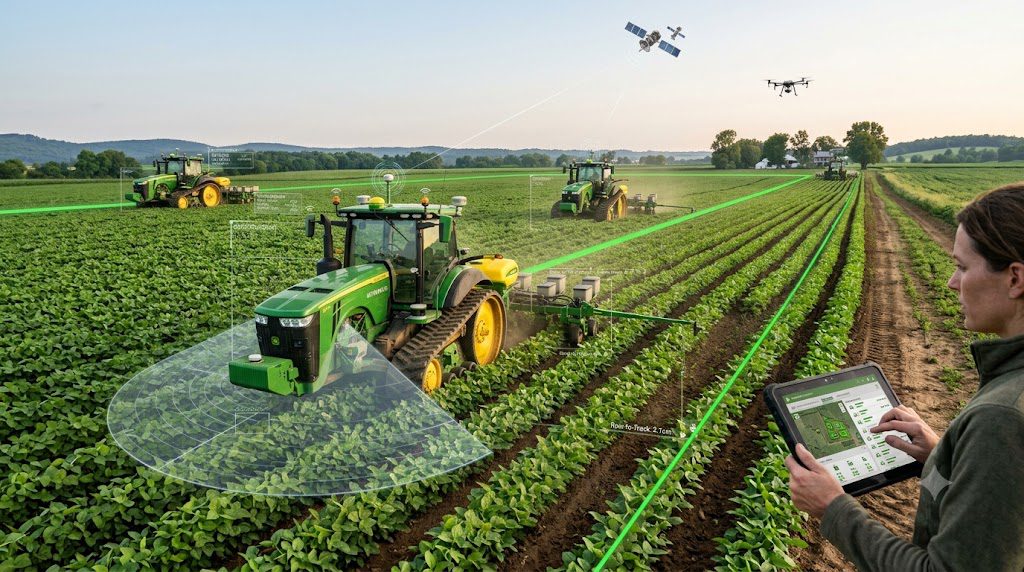
Labor and ROI: What Farms Are Actually Reporting
The clearest labor benefit isn’t eliminating operators entirely it’s letting one supervisor oversee multiple machines instead of one operator per tractor, which changes the staffing model more than it eliminates staffing altogether.
Where it pencils out fastest: Large operations already running multiple tractors during planting or harvest windows, where consolidating supervision reduces headcount needs during the most labor-constrained weeks of the season.
Where retrofit kits change the math: Farms that can’t justify a $300,000+ new machine purchase but want to test whether autonomy fits their operation, using a retrofit kit on equipment they already own to validate the labor savings before a larger capital commitment.
What to budget beyond the machine or kit: Connectivity infrastructure for remote monitoring, operator retraining toward a supervisory role rather than a driving role, and a transition period where fields with irregular boundaries or obstacles may still need closer human oversight than flat, uniform row-crop acreage.
For farms already automating other parts of the operation, autonomous tractors increasingly pair with technology like robotic fruit harvesting and laser weeding technology the pattern across agritech in 2026 is combining several automation layers rather than betting on one system alone.
Insurance, Liability, and Training Considerations
Adopting autonomous tractors raises questions that don’t come up with a conventional machine purchase, and they’re worth resolving before signing a contract rather than after an incident in the field.
Insurance coverage is still catching up to the technology. Not every farm equipment insurer has a standardized policy for autonomous machinery yet, and some require documentation of the specific autonomy system, its safety certifications, and its obstacle-detection capabilities before extending coverage. Ask your insurer directly rather than assuming your existing equipment policy extends automatically.
Liability in the event of an incident depends on the contract, not assumption. Whether responsibility for property damage or a safety incident falls on the farm, the software provider, or the retrofit-kit manufacturer varies by agreement, and this is worth having a straightforward conversation with the vendor about before deployment, not after.
Operator retraining is a real cost, not a footnote. Moving from driving a tractor to supervising one remotely through an app is a genuinely different skill set. Farms that treat this as a one-time onboarding session rather than an ongoing competency tend to see more downtime from preventable errors in the first season.
Cybersecurity policies should be part of the purchase conversation. Connected farm equipment is an increasingly cited target in industry security reports, and asking a vendor directly about their data security practices and software update process is a reasonable part of due diligence, not an unusual request.
Environmental and Efficiency Benefits
Beyond labor, autonomous tractors carry real efficiency upside. RTK GPS precision reduces overlap during tillage, seeding, and spraying, cutting input waste on fuel, seed, and chemicals compared to manual driving. Electric models like Monarch’s MK-V add zero-emission operation and regenerative braking on top of that, with some manufacturers reporting chemical use reductions of roughly 25% tied to more precise, data-driven application.
Round-the-clock operation is another underappreciated benefit autonomous tractors don’t need daylight or driver shift limits, which can meaningfully shorten tight planting and harvest windows during weather-sensitive periods.
Limitations and Risks Worth Knowing
No credible market analysis treats autonomous tractors as a finished, drop-in replacement for human operators. The real limitations include:
- High upfront cost for full autonomous platforms, with large-frame models running $300,000 to $600,000 or more before financing
- Infrastructure and connectivity requirements, since remote supervision and cloud-based software depend on reliable connectivity that isn’t universal across rural regions
- Retrofit compatibility gaps, since kits are typically validated on specific tractor makes and models rather than working universally
- Obstacle handling in irregular fields, where uneven terrain, livestock, or unpredictable field conditions still require closer human oversight than flat, uniform cropland
- Cybersecurity concerns, a risk flagged repeatedly in industry trend reports as connected farm equipment becomes a larger target
How to Evaluate Autonomous Tractors for Your Farm
- Calculate your current per-acre labor cost during peak planting and harvest windows as a baseline before comparing any system.
- Decide whether a retrofit kit or full autonomous platform fits your capital position, rather than assuming a new machine purchase is the only path in.
- Confirm compatibility with your existing tractor fleet if considering a retrofit kit, since validated models vary by vendor.
- Ask about connectivity requirements for remote supervision, especially if your fields are in areas with inconsistent cellular or internet coverage.
- Pilot on a limited number of acres or a single machine for one full season before committing to a fleet-wide rollout.
- Track supervisor-to-machine ratio and per-acre input savings, not just headline labor cost reduction, since the real ROI driver is often reduced overlap and input waste as much as reduced headcount.
Common Mistakes Farmers Make
- Buying a full autonomous platform before testing a retrofit kit, locking in six-figure capital exposure before confirming fit for their specific fields and crops.
- Underestimating connectivity requirements, then discovering remote supervision tools don’t work reliably in areas with weak rural internet or cellular coverage.
- Assuming full unsupervised operation from day one, when most current systems still require active remote monitoring and occasional intervention.
- Ignoring retrofit compatibility details, then finding out a kit isn’t validated for their specific tractor make and model after purchase.
FAQs About Autonomous Tractors
How much do autonomous tractors cost? Full autonomous tractors range from roughly $50,000 for compact specialty-crop models to $300,000–$600,000 or more for large-frame platforms. Retrofit kits offer a significantly lower-cost entry point using equipment farmers already own.
Do autonomous tractors need a driver at all? Most current systems require a human supervisor monitoring remotely rather than sitting in the cab, with one person often able to oversee multiple machines. Fully unsupervised operation across all field conditions isn’t universal yet.
Can I convert my existing tractor into an autonomous one? Yes, through retrofit kits from companies like Sabanto and Bluewhite, which add sensors, GPS hardware, and control software to compatible existing tractor models rather than requiring a new machine purchase.
Which companies make the best autonomous tractors in 2026? John Deere leads in large-scale row-crop deployment, Monarch Tractor leads in electric specialty-crop models, and Sabanto and Bluewhite lead the retrofit-kit segment for farms automating existing equipment.
Are autonomous tractors only for large farms? No. Compact autonomous models and retrofit kits have opened the category to mid-size and specialty-crop operations that couldn’t justify a large-frame platform, though very small operations may still struggle to justify the cost either way.
What’s the biggest limitation of autonomous tractors right now? Reliable connectivity for remote supervision and handling irregular or obstacle-heavy field conditions remain the two most commonly cited limitations across current commercial deployments.
Does insurance cover autonomous tractors the same way as regular equipment? Not automatically. Some insurers require documentation of the specific autonomy system and its safety certifications before extending coverage, so confirm this directly with your provider rather than assuming your existing policy applies.
Final Thought
Autonomous tractors have crossed from demo-stage novelty into a real, fast-scaling equipment category in 2026, with tens of thousands of units already working fields and retrofit kits removing much of the all-or-nothing purchase risk.
They’re not yet fully unsupervised in every field condition, and connectivity and compatibility questions deserve real scrutiny before you commit capital. If your operation is already labor-constrained during planting or harvest, it’s worth requesting a quote for both a full platform and a retrofit kit before deciding. If your labor supply is stable and your fields are irregular, it’s worth watching the category mature a bit further first.
Pingback: Microbial Biofertilizers: 7 Powerful Ways to Reduce Fertilizer Costs in 2026 -