
Alternate wetting and drying is a way of irrigating rice so the field is allowed to dry for a short time before it is flooded again. It uses less water than keeping paddies under water all season, and it can lower methane emissions at the same time.
Rice feeds billions of people, yet it is one of the thirstiest crops on earth. This guide explains how the method works, what the research found, where it fails, and how to start on your own plot. Every claim links to a source, and the limits are stated plainly.
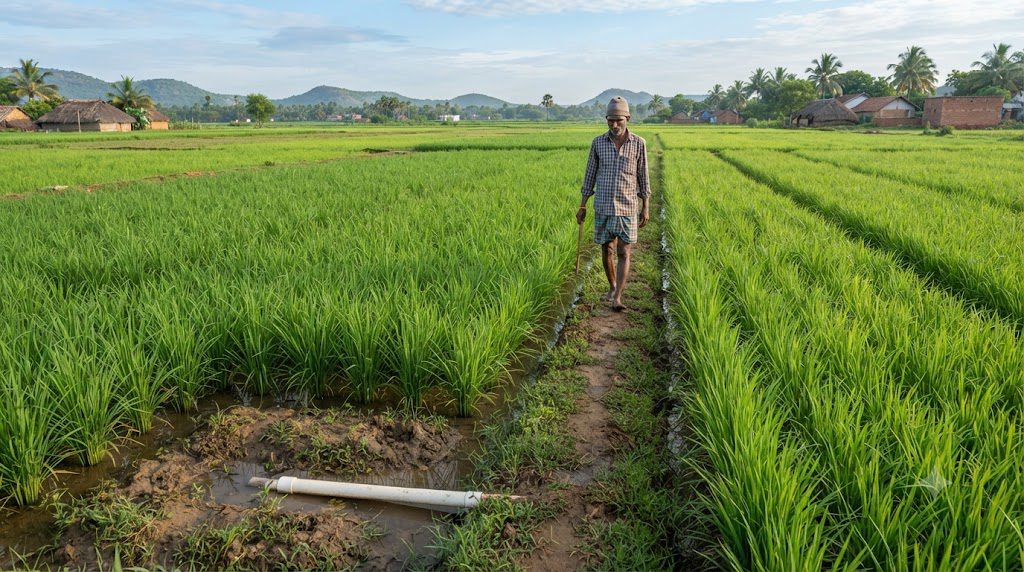
Table of Contents
What Is Alternate Wetting and Drying?
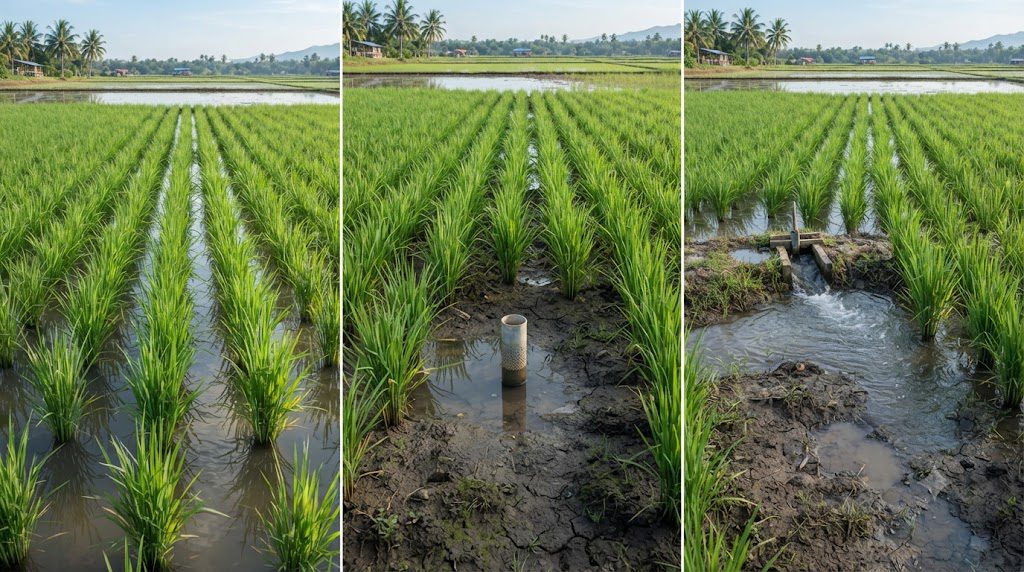
Instead of keeping standing water in the paddy at all times, the farmer lets the water level fall below the soil surface and then irrigates again. The cycle of drying and re-flooding repeats through the season.
A technical brief published through CGIAR describes the practice as defined by the periodic drying and re-flooding of the rice field, used in irrigated lowland rice to save water and reduce greenhouse gases. You can read it in the CGIAR AWD brief.
Alternate wetting and drying was developed by the International Rice Research Institute (IRRI) in the Philippines. You will often see it shortened to AWD.
What “Safe” AWD Means
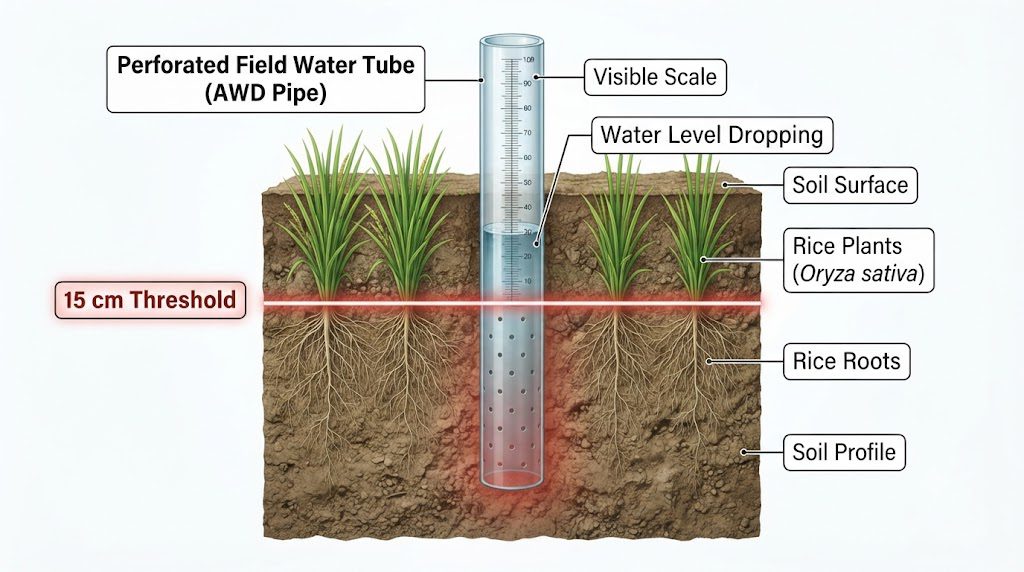
The term “safe AWD” matters because careless drying can hurt yield. Under the safe version, irrigation resumes when the water level falls to 15 cm below the soil surface.
The Climate Technology Centre and Network explains that at this threshold the rice roots can still capture water from the saturated soil, so yield does not decline. See the CTCN technology entry.
Why Alternate Wetting and Drying Matters Worldwide
Two problems meet in the rice paddy: water shortage and climate pollution.
Flooded paddies are a large methane source. The CTCN entry notes that flooded rice fields are the second largest human source of methane after ruminant livestock. Methane-producing microbes thrive when standing water blocks oxygen from the soil.
Water is the second problem. Falling groundwater and unreliable canals push many rice regions toward shortages, so any method that uses less water without cutting yield draws attention.
Evidence at Global Scale
A study in Nature Food analyzed more than 1,100 field observations. As reported by Rice Today, the findings showed improved water productivity in 37% of the world’s irrigated rice fields, especially in India, Bangladesh and central China. The write-up is on the Rice Today website.
The same report notes that some soil conditions, such as alkaline soils, may need extra management to avoid yield losses. That caution matters and returns later in this guide.
How Alternate Wetting and Drying Works on the Farm
Alternate wetting and drying needs a simple tool and a simple rule. The tool is a field water tube, and the rule is the 15 cm threshold.
The Field Water Tube
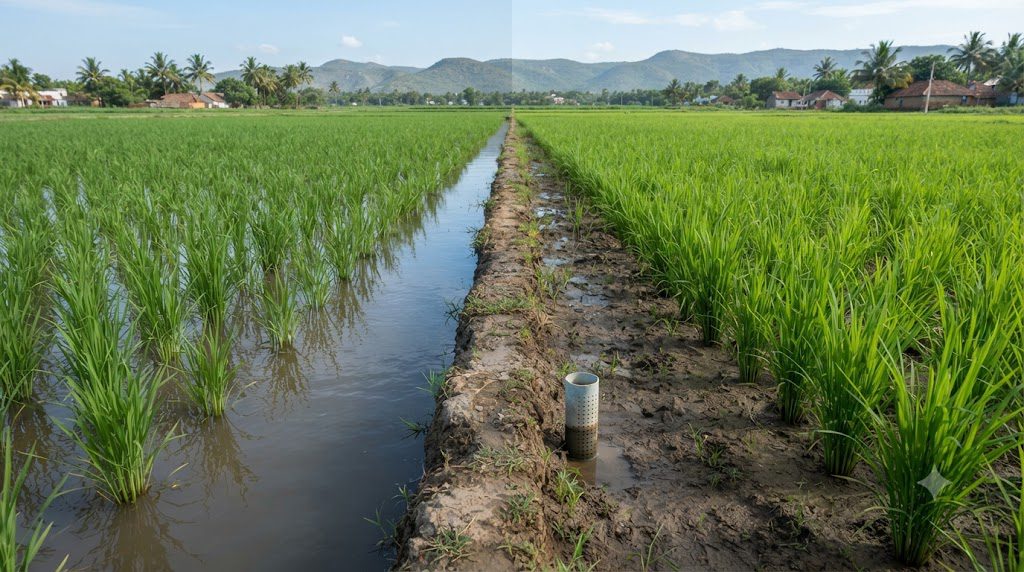
Farmers monitor the water table with a perforated tube pushed into the soil. IRRI explains in a statement carried by a Philippine news outlet that a practical way to apply the method is to watch water depth using a simple perforated field water tube. See the Edge Davao report.
You look inside the tube to see where the water is. When it drops to the threshold, you irrigate.
Why Drying Cuts Methane
Methane forms in oxygen-free soil. When the soil dries and air enters, the microbes that make methane slow down. Re-flooding then restarts the cycle, but the total methane over the season is lower.
7 Proven Ways Alternate Wetting and Drying Helps Rice Farmers
“Proven” needs care. Several benefits are well measured, while others vary by site. Each point states how strong the evidence is.
1. Alternate Wetting and Drying Saves Irrigation Water
The CTCN entry reports that AWD reduces water use by up to 30% without affecting yield. That figure comes from controlled and on-farm work and is a ceiling, not a guarantee.
Real farm landscapes show smaller savings. A study in the Philippines reported by Rice Today found that safe AWD cut water use by 8% to 13%, about 117 to 171 millimeters per season, with no harm to yield. Read it at Rice Today.
Evidence strength: strong, but plan on the lower, realistic numbers.
2. Alternate Wetting and Drying Cuts Methane Emissions
The CGIAR brief states that the practice reduces methane emissions by 48% without reducing yield. In West Africa, AfricaRice reports a 41% reduction in methane and a 39% reduction in the global warming potential of rice cultivation under safe AWD.
The AfricaRice data are in its safe AWD technology sheet.
Evidence strength: strong across several regions.
3. Alternate Wetting and Drying Maintains Rice Yield
Yield is the farmer’s main worry, and the evidence is reassuring when the method is done correctly. Both the CTCN entry and the Philippine landscape study report no yield penalty under safe AWD.
Some sources claim yield gains. An IRRI statement quoted in the Edge Davao report mentions about 500 kilograms more grain per hectare. Treat gains as possible but not guaranteed, because many trials show yields simply holding steady.
Evidence strength: good for “no loss,” weaker for “more yield.”
4. It Can Lower Pumping Costs
Fewer irrigations mean less pumping. The same IRRI statement reports about 25% less irrigation water and roughly 30 liters less diesel per hectare compared with farmer practice.
If you pump groundwater, fuel and electricity may be your biggest water-related cost, so this benefit can pay for itself quickly.
Evidence strength: logical and reported by IRRI, but savings depend on your pump, depth and fuel price.
5. It May Reduce Weed Pressure
The AfricaRice sheet reports that safe AWD reduced weed biomass by 36% in its trials, which lowered labor for weeding. Results depend on the dominant weed species, so do not assume the same for your field.
Evidence strength: promising but site-specific.
6. Drying Can Improve Root Health
Rice Today’s landscape study discussion suggests that intermittent drying may improve soil health and root vigor. Dry spells allow air into the soil, which can support deeper roots.
Evidence strength: plausible, with less direct measurement than water and methane.
7. Alternate Wetting and Drying Is Cheap to Try
A perforated tube and a ruler cost very little compared with new machinery. The CTCN entry notes that the method has been field-tested and validated by farmers in Bangladesh, Indonesia, Lao PDR, the Philippines, Myanmar and Vietnam.
Low cost means low risk. You can test it on one plot before changing your whole farm.
Evidence strength: practical and well supported by adoption across countries.
How to Start Alternate Wetting and Drying: A Practical Guide
These steps follow the general approach described by IRRI and partner institutions. Details vary by country, so confirm local guidance with your extension service.
Step 1: Check That Your Field Qualifies
You need reliable irrigation so you can re-flood on time. The CGIAR brief states that the method is not recommended in rainfed rice because water supply is uncertain.
The AfricaRice sheet adds that it is not recommended for schemes with sandy soils and deep groundwater. Check both conditions before you start.
Step 2: Prepare the Field Well
Level fields and strong bunds matter, because uneven fields dry in patches. AfricaRice lists proper land preparation among the preconditions for high yield under this method.
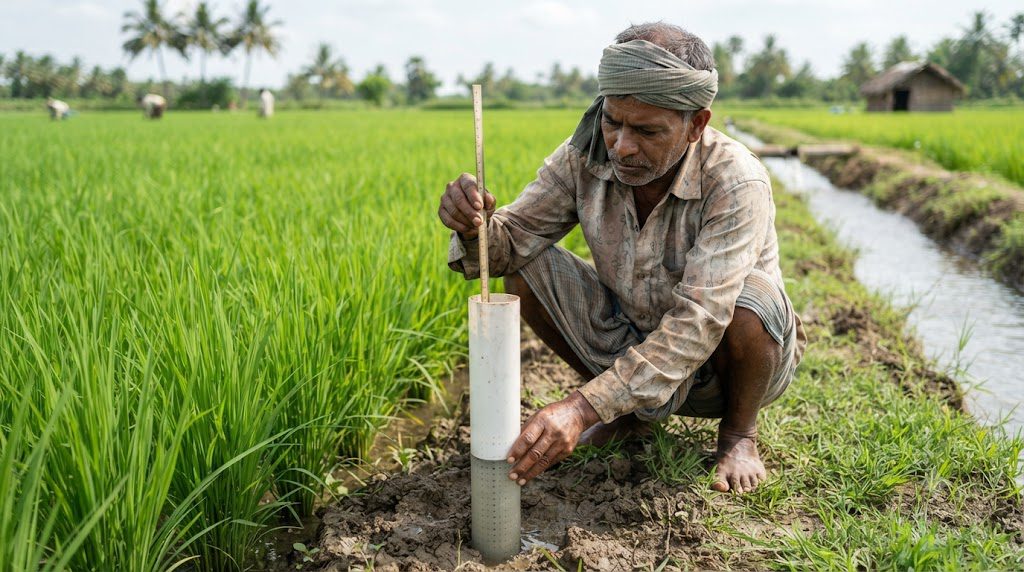
Step 3: Install a Field Water Tube
Use a perforated plastic tube and push it into the soil so you can see the water level below the surface. Typical designs use a tube about 30 cm long with holes along the buried part. Ask your extension office for the exact local design.
Step 4: Keep the Field Flooded Early
After transplanting, keep water on the field for the first stage while seedlings establish. AfricaRice’s guidance describes a specific water depth after transplanting before drying begins. Follow your local schedule.
Step 5: Let the Water Drop, Then Irrigate
Once the crop is established, let the water level fall to the 15 cm threshold, then irrigate and re-flood. This is the core loop of alternate wetting and drying.
Step 6: Keep Water on at Flowering
Rice is most sensitive to water stress around flowering. Standard IRRI guidance is to keep the field flooded during this period, so check your local advice and do not let the field dry then.
Step 7: Record Results
Note the number of irrigations, pump hours, fuel or electricity use and the harvest weight. Compare with a neighboring plot or your own past season. For related planning, read our guides on saving irrigation water in dry seasons and rice crop management basics.
When Alternate Wetting and Drying Does Not Work
Honest advice includes the failures. This method is not a fit for every paddy.
Unreliable Water Supply
If you cannot re-flood on time, drying becomes stress. That is why rainfed rice is a poor candidate.
Sandy Soils and Deep Groundwater
Water drains fast in sandy soil, so the field may dry faster than planned. The AfricaRice sheet specifically advises against it in these conditions.
Alkaline Soils
The Rice Today report on the Nature Food study notes that alkaline soils may need extra adjustments to prevent yield losses. Test your soil first. Our post on reading a soil test report can help.
Adoption Barriers for Alternate Wetting and Drying
The same Rice Today article says the practice makes rice farming more sustainable, but widespread adoption remains challenging. Farmers may fear yield loss, and shared canal systems may make timing hard.
Water Rights and Shared Canals
If neighbors control your water schedule, you cannot choose your own drying days. Cooperation among farmers on the same canal is often essential.
Alternate Wetting and Drying and Climate Programs
Because the method cuts methane, some programs reward farmers for adopting it. The CGIAR brief mentions that carbon accounting methodologies assume a methane reduction for AWD.
Payment rules, verification costs and prices vary and change often. Read every contract carefully and make sure payments cover your extra monitoring costs.
Combine It With Good Nutrient Management
The CGIAR case study notes that with efficient nitrogen use and organic inputs applied to dry soil, emissions can fall even further. Poor nutrient timing can undercut the gains, so plan fertilizer around your water schedule.
Alternate Wetting and Drying vs Continuous Flooding
A side-by-side view helps you decide whether to switch. The numbers below are the ranges reported in the sources above, not promises for your farm.
| Factor | Continuous flooding | Safe AWD |
|---|---|---|
| Water use | Highest | 8% to 13% lower in a farm landscape study, up to 30% in other work |
| Methane emissions | High | 41% to 48% lower in reported trials |
| Yield | Baseline | No significant loss when done correctly |
| Weeds | Standing water suppresses some weeds | One trial reported 36% less weed biomass |
| Management effort | Low | Needs tube checks and timing |
| Best suited to | Any irrigated paddy | Irrigated fields with reliable re-flooding |
The table shows why the method appeals to farmers who pay for water or fuel. It also shows the cost: you must check the field and keep to the schedule.
Common Mistakes With Alternate Wetting and Drying
Most failures come from a handful of avoidable errors. Learn them before you start.
Letting the Field Dry Too Far
Going past the 15 cm threshold is the biggest risk. Beyond it, roots can no longer reach the saturated soil and yield can fall. If you are unsure, irrigate earlier rather than later.
Drying During Flowering
Water stress at flowering can damage grain set. Keep the field flooded at this stage, even if your earlier schedule involved drying.
Ignoring Fertilizer Timing
Applying nitrogen to a dry field can cause losses. Time applications so that irrigation follows, and follow local fertilizer advice.
Copying a Neighbor’s Schedule
Soil texture, canal reliability and variety all change the right schedule. A plan that suits one farm may fail on another, so watch your own tube.
Skipping Records
Without notes on irrigation counts and yield, you cannot tell whether alternate wetting and drying worked on your land. Keep a simple log for each season.
Is Alternate Wetting and Drying Worth the Effort?
For farmers who pay for pumping, the answer is often yes. Fewer irrigations lower fuel or electricity bills, and the reported yield results are steady.
For farmers on free canal water, the financial case is weaker, so the decision may depend on water shortages, climate incentives or community rules. Run a one-plot trial for a full season, count the costs honestly, and then decide.
Frequently Asked Questions About Alternate Wetting and Drying
1. Does the method reduce rice yield?
Under safe AWD, studies report no significant yield loss. Letting the field dry beyond the safe threshold can hurt yield.
2. How much water can I save?
Reports range from 8% to 13% in a real farm landscape study up to 30% in other work. Your result depends on soil, season and irrigation system.
3. Is it good for the climate?
Yes, on average. Reported methane reductions range from 41% to 48%, though results vary by site.
4. Can I use it in rainfed fields?
It is not recommended, because uncertain water supply can make drying risky.
5. Do I need special equipment for alternate wetting and drying?
Mostly a perforated field water tube and a way to irrigate on time. Some regions also offer sensors or training programs.
6. Can AWD reduce irrigation and pumping costs?
Yes. Using less irrigation water can reduce pumping requirements, fuel consumption, or electricity use. The article notes that reported savings depend on factors such as pump type, groundwater depth, and energy prices.
7. What equipment is needed for alternate wetting and drying?
A basic AWD setup requires a perforated field water tube that allows farmers to monitor the water level below the soil surface. A reliable irrigation system is also important so the field can be re-flooded when required.
8. Can alternate wetting and drying be used in rainfed rice?
The article does not recommend AWD for rainfed rice because an unreliable water supply can make it difficult to re-flood the field at the right time.
9. Is AWD suitable for sandy soils?
Not necessarily. The AfricaRice guidance cited in the article advises against AWD in sandy soils and areas with deep groundwater, where water may drain too quickly.
10. Should rice fields be dried during flowering?
No. Rice is particularly sensitive to water stress around flowering. The article recommends keeping the field flooded during this period according to local guidance.
Final Thoughts on Alternate Wetting and Drying
The method is one of the few farm practices that can save water, cut emissions and protect yield at once. The evidence from multiple countries is encouraging, and the entry cost is low.
It is not universal. You need dependable irrigation, suitable soil and a firm rule about flowering. Start on one plot, record everything, and let your own numbers guide the next season.