
Table of Contents
The Growing Popularity of Agric Technology
Whilst agriculture has always been the bedrock of human civilisation, in recent times the industry experienced a complete facelift. AgriTech: The driver of evolution. At the heart of this evolution is agri tech, a game-changer that is redefining how farmers grow their crops, manage them and harvest them.
Whether they are smallholder farmers or large farming enterprises, the use of agricult tech is enhancing efficiency, reducing waste and boosting productivity.
Historically, agriculture faced dependence on heavy manual labour, seasonality, and non-controllable weather patterns. Today, farmers are surrounded by data-driven tools, automation and intelligent systems that make farming more precise and predictable. This transition is particularly crucial as the world’s population keeps rising, leading to an ever-growing need for agricultural output.
Modern tool farming practices have been designed and integrated into advanced systems to monitor soil health, manage irrigation and protect crops from pests and diseases. This way, farmers can achieve higher yields while reducing costs and environmental impact. Agric technology is not just a luxury;ry it has now become more of a necessity.
Why Agric Technology Matters Today
The significance of agric tech is a solution to real-life farming problems. Challenges such as climate change, water scarcity and soil degradation have rendered conventional farming practices less dependable. Agrictech provides an efficient and scalable solution, enabling farmers to respond to changing conditions.
Smart irrigation systems, for example, ensure that crops get the right amount of water at the right time to avoid overwatering and drought stress. Advanced sensors, for example, can be used to measure the nutrient levels in soil so that farmers appfertilisersers more accurately. Not only do these innovations help boost crop yields, but they also prevent resource waste.
Another big benefit is incorporating modern farming techniques like infrared dryers, GPS-based equipment, and automated machinery. Soon, this will lessen the need for manual labour and increase precision in farming operations. Farmers can now make informed decisions based on real-time data instead of guesswork with agric technology.
Benefits of Agric Technology: Enhanced Productivity and Efficiency
Increase in Productivity. Agric technology is essential and one of the most important benefits of it. Farmers are able to control greater amounts of land with reduced effort through advanced tools and technologies. Here, automation is a key since machines can plant, water and even harvest with high accuracy.
So every process concerning the farm is well optimised by modern farming systems. For example, precision farming techniques enable farmers to use inputs (seeds, fertilisers, pesticides) only where needed. This approach is targeted and helps enhance yield while reducing waste.
Additionally, agric technology minimises human error and enhances uniformity in agricultural procedures. It also helps in improving the quality of crops and market value. Farmers can save time and energy with the help of a tool which they spend cutting grass.
Better Resource Management
Agric technology also has the great advantage of using resources efficiently. Water, soil and fertilisers help to farm, but when we use them carelessly i, it causes environmental damage and reduces productivity. Agric technology presents tools that enable farmers to maximise their use of these resources.
An illustration of this is the usage of smart irrigation systems that use sensors and weather data to know how much water crops need. This helps avoid wasting water and enables efficient watering. Soil monitoring tools do the same, but aid in understanding nutrient levels and fertiliser application.
Modern farming practices also promote sustainable agriculture through integration. Farmers can not only improve crop yield but also protect the environment by decreasing resource wastage. Ultimately, this balance is essential for agricultural sustainability.
Improved Decision-Making
Agric technology is characterised by data-driven decision-making. Farmers can now monitor weather conditions, soil health and crop performance in real-time. They utilise this data to make informed decisions that ultimately lead to increased productivity.
Through the aforementioned tools, such as weather forecasting, farmers receive quick and timely information to plant seeds or harvest crops. Farmers are able to detect diseases and pests on time with crop monitoring systems using this data. These insights allow farmers to take action before crop damage occurs.
Because of the new technologies revolutionising agriculture, farmers can study trends and anticipate results. This can lead to not only an increase in crop yield but also mitigate the risks of farming. Agric tech gives farmers the information they need to make agriculture less trial-and-error and a little less luck-based.
Techniques in Agric Technology Precision Farming
Precision agriculture is amongst the best methods in agricultural technology. This straddles GPS, sensors and data analytics to perform farming activity with high accuracy. This method strives to maximise resource management and provide the best treatment of the crops [5].
Precision farming – this enables farmers to monitor each part of their field through the use of up-to-date tools and farming methods. They can focus on areas where more effort is required and take corrective actions. This precise approach significantly helps to enhance crop yield.
Another potential benefit of precision farming is decreased input costs, lower use offertiliserss and pesticides. This preserves the environment and saves money all in one go. Agric technology enables farmers, regardless of scale, to practice precision farming.
Use of Drones in Agriculture
Drones are one of the juego among all the technological advancements. They are equipped with cameras and sensors for crop monitoring, pesticide spraying, etc., in the field. They give a bird’s-eye view of the farm, allowing farmers to quickly locate problems.
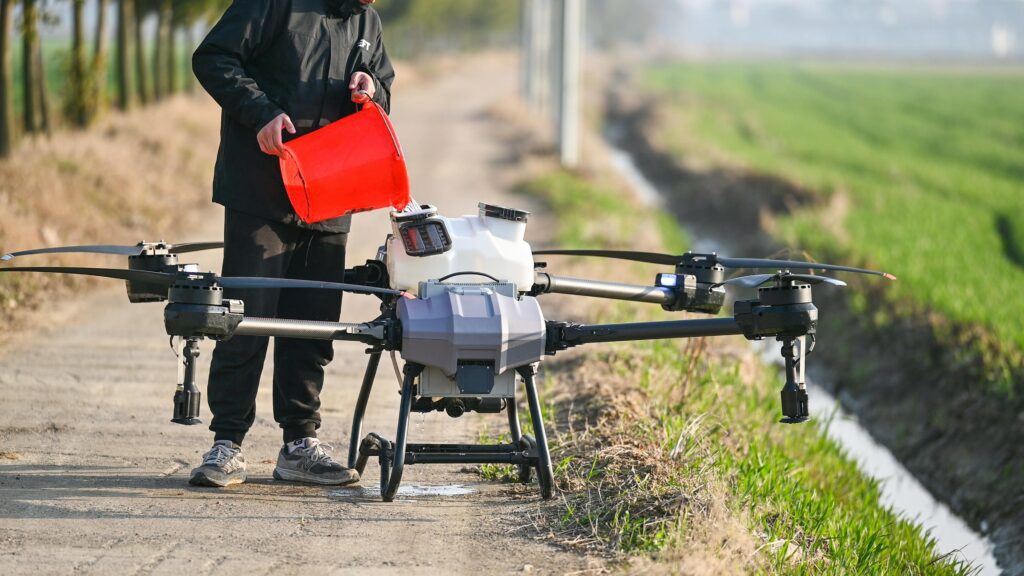
Farmers are able to diagnose problems like pest invasions or nutrient deficiencies at an early stage with drones. This enables them to act quickly and prevent loss of crops. Drones-Promoting Productivity and Efficiency in Modern Farming.
Drones further aid in improving crop yield by making sure crops are taken care of. They are capable of covering large areas in a short period of time, making them perfect for modern agriculture. The incorporation of drone technology into agric tech has led to ongoing innovation.
Smart Irrigation Systems
Agric technology and irrigation systems: water management is a crucial part of every farm. These systems rely on sensors and automated controls to deliver water exactly when and where it is needed.
Modern farming techniques help farmers save water and grow their crops to the maximum level. Smart irrigation systems maintain soil moisture levels,s which are important to increase the yield of the crop.
They also minimise the need for labour, thus saving time. Mobile apps that allow farmers to remotely control irrigation mean farming has never been easier. Water management in agriculture is changing due to agricultural technology.
Challenges in Agric Technology
High Initial Costs
Agric technology has its challenges, despite the many benefits it offers. The high upfront cost of new systems and advanced machines is still one of the largest hurdles to cross. Small-scale farmers struggle to invest in these technologies.
Financial resources are a relative necessity to adopt modern farming tools, and these funds may not always be readily available for this purpose. The overall returns are usually far better for farmers in the long term, despite it initially being a costly investment,t which leads to enhanced crop yield and higher profits over time.
Steps are being taken to provide subsidies and financial support from the government anorganisationson for agritech adoption. This is a way to bring sophisticated farming tools within reach of more farms.
Lack of Technical Knowledge
The other challenge is the technical knowledge of farmers. Agric technology requires the use of complex tools and systems, which in turn require training and expertise.
These technologies also require farmers to know how to effectively operate and maintain them. If they do not possess appropriate knowledge, they may use modern farming tools very little.
This gap can be mitigated through training to raise awareness of the importance of these aspects. Educating farmers has made it easier to adopt agricultural technology, which in turn improves yield.
Solutions to Overcome Challenges
Government Support and Subsidies
Governments can also help promote agricultural technology by providing financial assistance and subsidies. In this way, not only is the burden on the farmers reduced, but they are also encouraged to follow modern farming.
Support programs can help farmers invest in modern farming tools and provide access to advanced equipment. This, in turn,n helps increase the crop yield and productivity of agriculture.
Training and Education
Educators are part of the success of embracing agric ty embrace. Farmers can be trained on how to leverage these tools well.
Workshops, online courses and field demonstrations can offer hands-on knowledge. Farmers, with proper training, can be ensured to adopt modern farming technology and enhance production.
Future Trends in Agric Technology
Here are some of the key trends shaping the future of agriculture: Iis asas much about enhancing the efficiency, sustainability and resilience of food production systems. By understanding these developments, farmers and stakeholders can better prepare for the future.
Artificial Intelligence and Machine Learning
AI and machine learning are gaining significance in agriculture. Big data analytics processes massive amounts of information to extract insights that enable improved decision-making for farmers. AI-based systems can forecast weather conditions, identify disease in crops and suggest the best times for sowing.
Machine learning algorithms can also learn over time and become more accurate as they process additional data. This enables farmers to constantly adjust their practices and growth yield. Modern tools for farming are becoming more intelligent and effective thanks to the integration of AI.
Robotics and Automation
Another important trend in agricultural technology is robotics. We have machines that plant, weed, and harvest with very low human intervention. Robots are designed to work precisely, decreasing errors and increasing production.
Automation also helps to solve labour shortages, which are becoming a greater concern for many agricultural regions. Farmers are relying on robots to keep productivity as labour is in short supply. More modern toolfor s farming are dependent upon Quick books kash flow and similar kinds of systems.
Blockchain in Agriculture
Agricultural supply chain transparency and traceability with blockchain technology. It provides a secure and immutable way of recording transactions, making it impossible to modify the data.
Through blockchain, consumers can track the source of their food, and farmercanld guarantee better pricing while cutting down on fraud. This instils trust among producers and consumers alike, thus increasing the efficiency of the supply chain.
Climate-Smart Agriculture
Climate change presents one of the greatest challenges facing agriculture in the modern world. Climate-smart agriculture aims to adapt farming practices to changes in the environment while also lowering greenhouse gas emissions.
Here, agric technology enables farmers to access tools they can use to track climate conditions and change the way they farm based on those insights. This can include drought-resistant crops, efficient irrigation systems and data-driven planning.
The Role of Startups and Innovation Hubs
Innovations: Startups and technology hubs are accelerating agricultural advances. New solutions are being developed by these organisations to meet specific agricultural challenges. There are numerous innovations from mobile apps offering market-level information to platforms linking farmers with buyers.
These startups usually partner with governments and research institutions to commercialise their solutions. This partnership serves to support the widespread use of progressive farming practices.
Impact on Rural Development
Agric tech is changing the face of agriculture and aiding rural development as well. It enhances the lives of farmers and their communities by increasing productivity and income.
The access that technology provides will also open up new educational and job opportunities for those in rural areas. Youth drawn to agriculture—especially when modern tools provide creative solutions.
Digital Platforms and Market Access
Increase accessibility for farmers to access markets and sell their products. They can directly connect farmers to buyers, while cutting out the middlemen.
Farmers can sell their produce at much higher prices by using mobile apps and online marketplaces. This enhances profitability and will increase the adoption of agric tech.
Sustainable Farming Practices
Today, sustainability has become a cornerstone of agriculture. On the role of agric technology in sustainable practice: Reduce resource and environmental impact.
Technology is improving techniques such as organic farming, conservation agriculture and integrated pest management. These practices ensure soil health, save water and conserve biodiversity.
Role of Education and Research
Agric tech is accelerated by education and research institutions. They innovate new techniques, run experiments, and educate the next generation of farmers.
This ensures the innovations are practical and effective with collaboration between researchers, farmers, and technology providers. The process of exchanging knowledge with each other is continuous, encouraging the progress of the agriculture segment.
Global Perspectives on Agric Technology
Across the world, agricultural technology is being adopted at different ppaces And some countries have more access to sophisticated tools and infrastructure than others (Developing vs Developed Country).
But this gap is being addressed through international cooperation and funding programs. This way, we ensure that technology does not benefit just a few farmers.
Ethical Considerations in Agric Technology
This raises ethical considerations as technology is increasingly being integrated into agriculture. Questions about data privacy, equitable access and environmental impact will need to be addressed.
Inclusivity is not just about scaling up, but also ensuring that smaller farmers are not left behind. Policies and regulations must ensure fair access to technology without prejudicing the interests of all stakeholders.
FAQs
- What is Agric Technology, and what do you need to know?
Agric Technology: Use of Systems and Tools in Cultivation. Modern farming tools are important to improve crop yield, reduce costs and increase efficiency.
2. How can agricultural technology improve crop output?
Agric technology also helps farmers improve crop yield. Using data-driven tools, smart irrigation, and precision farming ensures optimal crop growth and resource utilisation.
3. What are modern tools where fossil fuels come into play?
Agric technology includes things like drones, GPS-based tractors, smart irrigation systems and soil sensors.
4. Is Agri tech really meant for smaller farmers?
Yes, with good training, these small farmers can adopt the use of agricultural technology and modern farming tools to yield more crops.
5. Where does agricultural technology face challenges?
The biggest challenges are high costs and a lack of technical expertise, which we can overcome with proper subsidies and education.
Conclusion
New technological innovations propel agriculture toward a new era. Agric technology — not only is it changing the way we farm, but it’s leading to the agriculture of tomorrow. Farmers can solve old problems and increase productivity by applying modern farming techniques.
Agric technology is a potent solution for sustainable farming as it has the potential not only to increase crop yield but also to conserve precious resources. Despite the fact that issues such as cost and lack of knowledge could hinder transition, they can be easily resolved through proper support and education.
Embrace Agric Technology — It is High Time for Farmers, Students, and Agricultural Enthusiasts. Implementing these techniques enables us to achieve food security and environmental protection, leading to emotional ecosystem stability.
Pingback: Precision Livestock Farming: Smart Technology Guide 2026 -
Pingback: Digital Twins in Agriculture: 5 Proven Ways They're Transforming Farming in 2026 -