
Editor’s note: FarmSutras does not run a dairy herd, and this article is a research summary, not first-hand farm experience. It was drafted with AI assistance (Claude, by Anthropic) from the primary sources listed at the end, then edited by the author. It is educational and does not replace advice from a registered veterinarian.
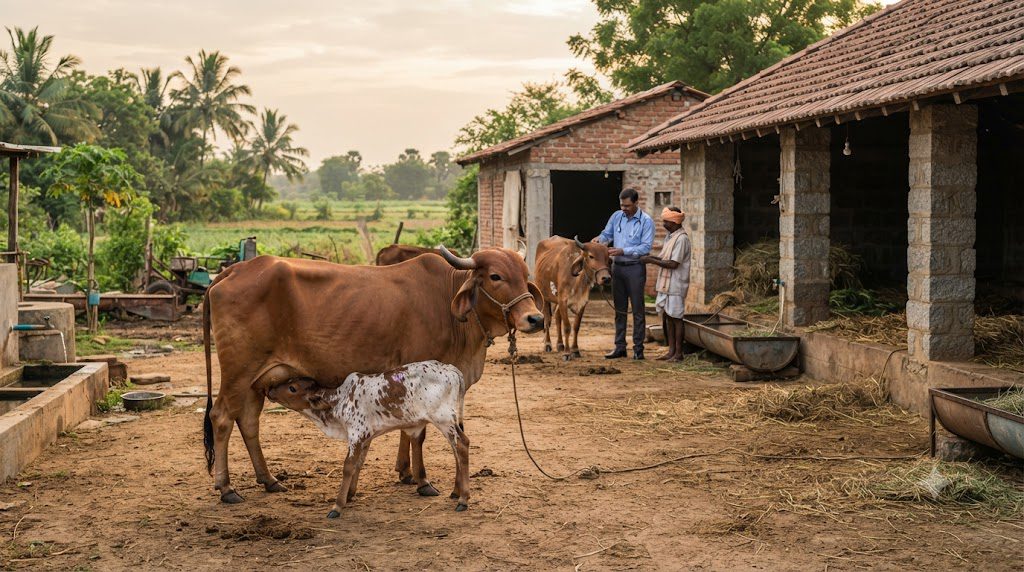
Brucellosis in cattle is a bacterial disease that makes cows and buffalo lose their calves, and it can make the people who care for them seriously ill.
Many farmers never see the full picture. An infected cow usually aborts only once, then looks healthy while still shedding bacteria.
This guide explains how the infection spreads, how vets confirm it, what India’s national programme offers, and seven practical steps. It stays close to veterinary references and government data.
Table of Contents
What Is Brucellosis in Cattle?
Brucellosis in cattle, also called contagious abortion or Bang’s disease, is caused almost exclusively by the bacterium Brucella abortus, according to the MSD Veterinary Manual. Water buffalo are affected too.
The bacteria settle in the reproductive tract and udder. They cause abortion, stillborn or weak calves, retained placenta and lower milk yield.
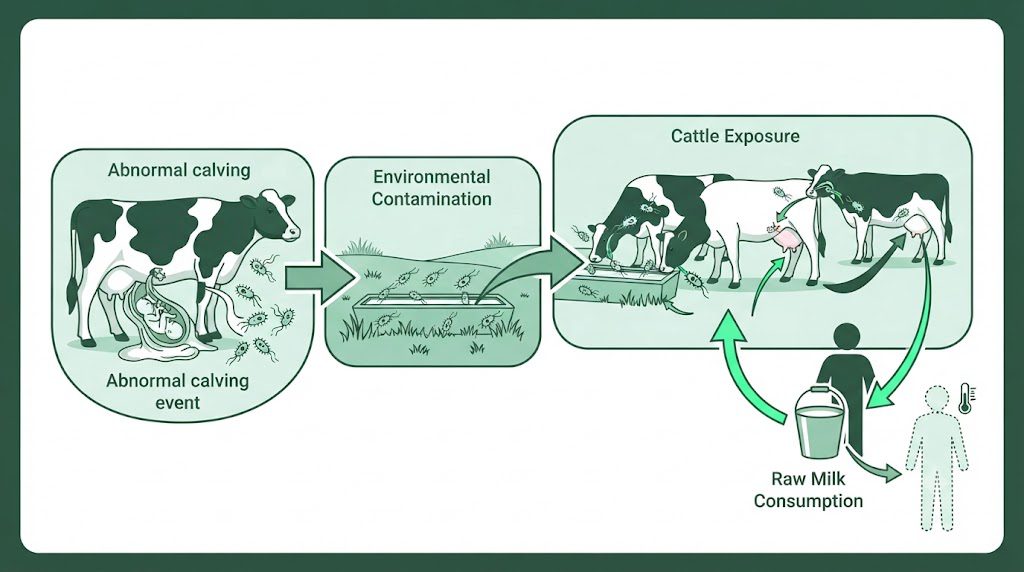
The disease is also a zoonosis, which means it passes to people. The same manual says human infection follows contact with aborted fetuses, placentae and birth fluids, or drinking contaminated milk.
No practical treatment exists for infected animals. Prevention therefore carries the whole weight of control.
Why Brucellosis in Cattle Matters for Indian Farmers
Indian studies disagree on how common the disease is. A 2023 meta-analysis of 69 studies covering 140,908 bovines estimated pooled prevalence at 16.6% in cattle and 14.2% in buffalo, but it found large differences between studies.
An earlier peer-reviewed review found reported figures from about 1% to 60%. It concluded that national prevalence is likely 12% or less, and noted that the highest figures came from non-randomised samples.
Treat both numbers as a warning, not a measurement. Only testing can tell you your own herd’s status.
The cost is real. An Indian economic analysis estimated a median loss of US$3.4 billion across livestock. Cattle and buffalo made up 95.6% of it, roughly US$6.8 per cow and US$18.2 per buffalo.
India launched the National Animal Disease Control Programme (NADCP) in September 2019. It targets one-time vaccination of female bovine calves aged 4 to 8 months, according to a August 2026 Government of India briefing.
The same briefing reports outbreaks falling from 22 in 2019 to 15 in 2025. Those are reported outbreaks, so read them as a floor, not a count of infected animals.
How Brucellosis in Cattle Spreads
Routes inside the herd
Natural transmission happens when animals swallow bacteria that are present in large numbers in aborted fetuses, fetal membranes, and uterine and amniotic fluids, says MSD.
Cattle can also pick it up from contaminated feed or water, or by licking the genitals of an infected animal. Spread from bulls during mating appears to be rare.
Infected cows shed bacteria in milk, in most cases for life. They can keep shedding at later calvings even after one abortion.
The organism survives for more than two months in cool conditions, but direct sunlight kills it within hours. That detail shapes how you clean up, as step 5 explains.
How the infection reaches a clean farm
MSD names replacement animals as the greatest danger for uninfected herds. Contaminated semen placed in the uterus can also carry the bacteria.
Buying a pregnant or freshly calved cow of unknown status is the classic mistake. A systematic review in Frontiers in Veterinary Science links rising bovine infection in India to increased trade and rapid livestock movement.
Signs of Brucellosis in Cattle
In cows and heifers
Abortion is the most obvious sign. Others include stillborn or weak calves, retained placenta and a fall in milk production.
In an unvaccinated herd, many cows can abort within a short period. Vets call this an “abortion storm.”
Overall health is usually not affected by an uncomplicated abortion, so the cow may look well afterwards.
In bulls
The infection can reach the testicles, epididymides and seminal vesicles, and testicular abscesses may occur. Bacteria are present in the semen, and chronic infection may cause arthritic joints in some animals.
Why the signs are easy to miss
An infected cow usually aborts only once. Later pregnancies look normal, yet bacteria still appear in the placenta, birth fluids and milk.
A single unexplained abortion deserves action. Never write it off as bad luck.
How Vets Diagnose Brucellosis in Cattle
Diagnosis combines clinical signs, blood or milk tests and laboratory culture. Your veterinarian chooses the test mix.
| Test | What it does | Where it fits |
|---|---|---|
| Serum agglutination test | Detects antibodies in blood, milk, whey and semen | Standard serological method |
| Rose Bengal (card) test | Quick screening for presumptive cases | Markets and laboratories |
| Milk ring test | Screens herd milk | Dairy herds; many false positives, so positive herds need individual blood tests |
| ELISA | Detects antibodies in milk and serum | Supplemental testing |
| Culture | Grows the bacteria from placenta, udder secretions or fetal stomach contents and lung | Confirmation |
Timing matters. A positive serum test usually comes before an abortion or a normal calving, but it can be delayed in about 15% of infected cows, per MSD. One negative result is not a guarantee.
Tell your vet about vaccination history. A small percentage of calves vaccinated with Strain 19 keep antibodies for years, which can confuse test results.
Never collect samples bare-handed. Let a veterinarian or trained laboratory worker handle aborted material.
Can You Treat Brucellosis in Cattle?
MSD states that no practical treatment is available. Control relies on finding infected herds and keeping infection out of clean ones.
Where countries have eradicated the disease, they did it by repeated testing and culling of reactors. Herds are retested until two or three successive tests are negative.
Indian farmers face a harder reality. The 2018 review cited above notes that segregation and slaughter of infected animals is difficult to carry out in India.
That is why calf vaccination and farm hygiene matter most. Be wary of anyone selling a “cure.”
7 Critical Steps to Prevent Brucellosis in Cattle
These steps combine MSD’s control guidance with India’s NADCP rules. Use them together, because no single step is enough.
Step 1: Vaccinate female calves at 4 to 8 months
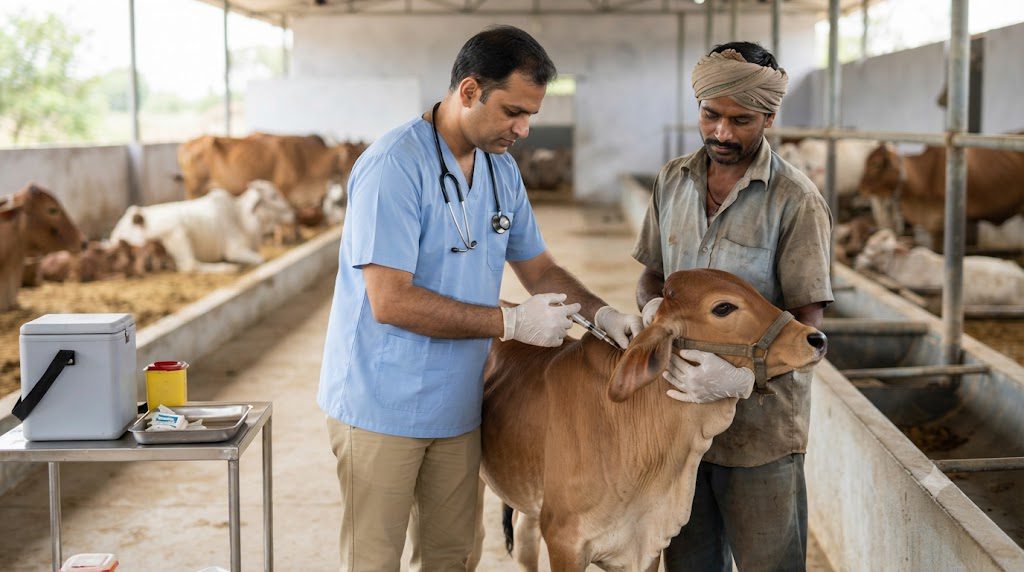
Under NADCP, female bovine calves aged 4 to 8 months receive a one-time, lifetime brucellosis vaccination. The Department of Animal Husbandry and Dairying runs the programme.
In 2025, post-vaccination monitoring found seroconversion of 75.63% in cattle calves and 67.17% in buffalo calves. So a share of vaccinated calves did not develop antibodies, and vaccination cannot be your only defence.
Ask your veterinarian which vaccine strain is used. MSD notes that Strain 19 and RB51 are the two in use worldwide.
Only trained vaccinators should handle the live vaccine, because a needle-stick or splash is a recognised risk to people. Do not vaccinate adult or pregnant animals unless your veterinarian advises it.
Step 2: Ear-tag and register every animal
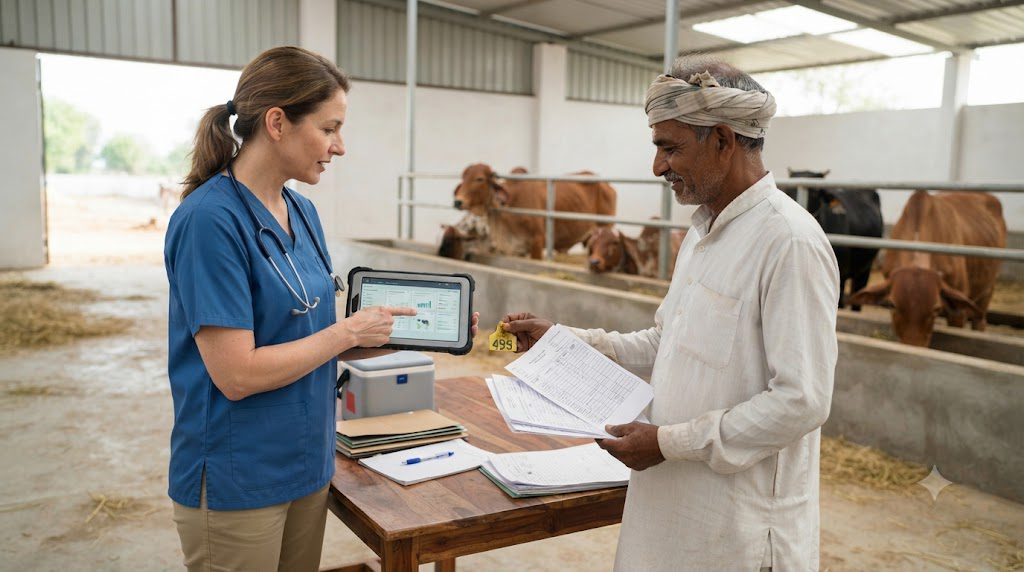
The Bharat Pashudhan portal gives each registered animal a unique 12-digit Tag ID linked to its vaccination data. More than 39 crore livestock were registered by July 2026.
A tag and a record prove which calves were vaccinated. They also make buying decisions safer.
Step 3: Isolate and test every new animal
MSD advises that additions should be vaccinated calves or non-pregnant heifers. Pregnant or freshly calved cows should come from brucellosis-free herds and test negative.
If a seller cannot show vaccination and test records, treat the animal as unknown status.
Keep arrivals apart for about 30 days and retest before mixing. Good cow breeding practice starts with knowing where your animals come from.
Step 4: Treat every abortion as infectious
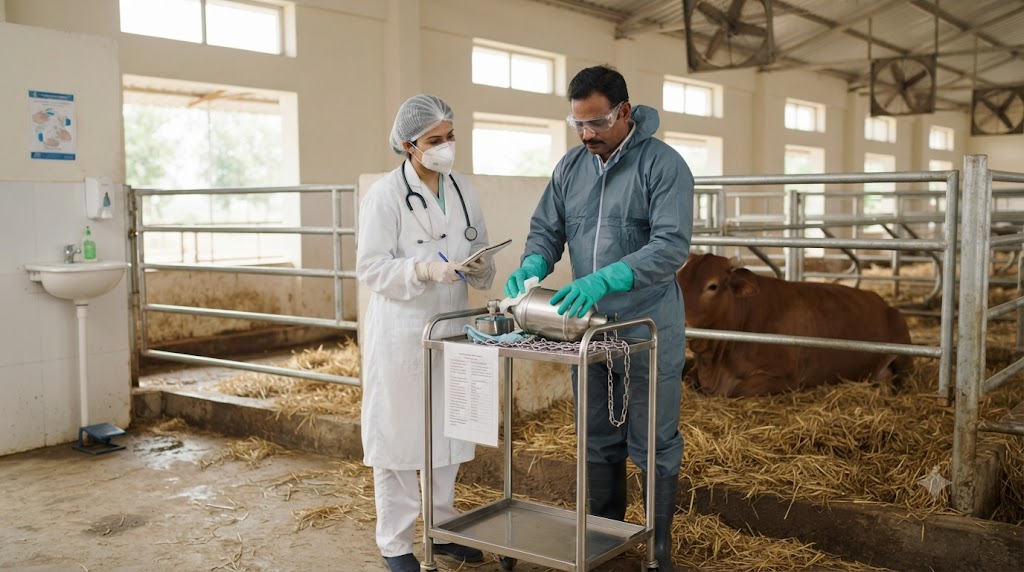
Separate the cow at once. Wear gloves, an apron and eye protection, and keep children away.
The WHO recommends protective barriers and correct handling and disposal of afterbirths, carcasses and organs in its brucellosis fact sheet.
Call your veterinarian before burying anything. Stomach contents and lung tissue from the fetus help confirm the cause.
Step 5: Clean the calving area and let sunlight help
Remove contaminated bedding and fluids, then disinfect with a veterinary-approved product. Keep the pen dry and open to sunlight where you can, since light kills the bacteria within hours.
The visitor, vehicle and equipment discipline in our dairy biosecurity guide applies here as well.
Step 6: Protect people at home and in the dairy
The WHO says most cases in the general population come from raw milk and its products, and that pasteurisation is a key preventive step. Where pasteurised milk is not available, thorough boiling is the standard household precaution.
Fresh cheese and other products made from raw milk carry the same risk as the milk itself.
Vets, vaccinators, milkers and anyone who helps at calving carry the highest exposure.
Step 7: Keep records and call for veterinary help
Record calving dates, abortions, vaccination dates, tag IDs and test results. Choose semen from tested bulls when you use artificial insemination.
The government briefing lists 4,019 Mobile Veterinary Units across 29 states and union territories, reachable on toll-free number 1962.
Who Does What in Controlling Brucellosis in Cattle?
Control works best when farmers, veterinarians and the government each do their part. This table summarises the split described in the sources above.
| Role | Main tasks |
|---|---|
| Farmer | Isolates new and aborting animals, wears protective gear, keeps tags and records, boils or pasteurises milk |
| Veterinarian | Confirms the diagnosis, advises on testing and vaccine strain, guides safe disposal of aborted material |
| NADCP and state animal husbandry departments | Supply calf vaccination, ear-tagging and registration, surveillance, and Mobile Veterinary Units on 1962 |
If one of the three is missing, brucellosis in cattle finds the gap. A vaccinated calf is a good start, but it cannot protect a farm that then buys unscreened adults.
Brucellosis in Cattle and Human Health
The WHO calls brucellosis one of the most widespread zoonoses. Symptoms are flu-like, including fever, weakness, malaise and weight loss, and mild cases are easy to miss.
The US Centers for Disease Control and Prevention publishes clinical detail for patients and doctors. Symptoms can take days or months to appear, and doctors treat the illness with antibiotics.
The government briefing quotes the NDDB control model, which stresses vaccination, safe waste disposal, biosecurity and public awareness. It adds that human brucellosis often goes undetected.
If you work with cattle and develop recurring fever with joint pain, tell your doctor about your animal contact.
What to Do If You Suspect Brucellosis in Cattle
- Isolate the animal and stop moving cattle on or off the farm.
- Put on gloves, an apron and eye protection before touching any aborted material.
- Call your veterinarian or the 1962 Mobile Veterinary Unit line.
- Contain the fetus, placenta and soiled bedding until the vet gives disposal advice.
- Do not drink or sell raw milk from the animal until your vet clears it.
Follow your state’s animal-health reporting rules, and test the wider herd as your veterinarian advises.
What We Still Do Not Know
Prevalence figures vary widely between Indian studies, and government outbreak counts measure reports, not infections.
Vaccination also has limits. MSD says resistance may not be complete, and the 2025 seroconversion rates show that some calves do not respond.
Nobody can promise zero risk. The honest goal is to lower the risk of brucellosis in cattle on your farm, step by step, and to check the result with tests.
Finally, the 2018 review found a shortage of rigorous economic studies on Indian dairy farms. Your own herd records will tell you more than any national average.
Questions to Ask Your Vet About Brucellosis in Cattle
A short visit is more useful when you arrive with questions. Consider asking:
- Has my herd ever been tested, and which test did you use?
- Which calves in my herd were vaccinated, and are the records on the portal?
- Should I test the animals I plan to buy, and how long should I isolate them?
- How should I dispose of aborted material on my land?
- Is the milk from my herd safe for my family and my customers?
Write the answers down and keep them with your herd records.
Frequently Asked Questions
1. Is brucellosis in cattle curable?
MSD states that no practical treatment is available. Vaccination, testing and hygiene are the tools that work.
2. At what age should calves be vaccinated?
Under NADCP, female bovine calves are vaccinated once between 4 and 8 months of age.
3. Does the disease affect buffalo?
Yes. MSD lists water buffalo as affected, and NADCP monitoring covers buffalo calves too.
4. Can people catch it from cattle?
Yes, through raw milk, contact with birth fluids and aborted material, or accidental exposure to live vaccine.
5. Can I drink milk from an infected cow?
Not raw. Ask your veterinarian before using or selling any milk from a suspected animal.
6. Can a vaccinated animal still get infected?
Yes. MSD says resistance may not be complete, and some vaccinated calves become infected when exposure is heavy. Vaccination lowers the risk without removing it.
7. Does sunlight really kill the bacteria?
MSD reports that direct sunlight kills the organism within a few hours, while it can survive for more than two months in cool conditions.
8. How common is brucellosis in cattle in India?
Studies range from about 1% to 60%, and a 2023 meta-analysis gave 15.1% for bovines overall. Official outbreak reports are far lower, so test your own herd.
Key Takeaways
- One abortion is a warning sign, not bad luck.
- No practical treatment exists, so prevention is everything.
- Vaccinate female calves once, between 4 and 8 months.
- Isolate and test every new animal before it joins the herd.
- Protect people: gloves at calving, and no raw milk.
For more herd-health guides, browse our livestock category. Questions or corrections? Use our contact page.