
Table of Contents
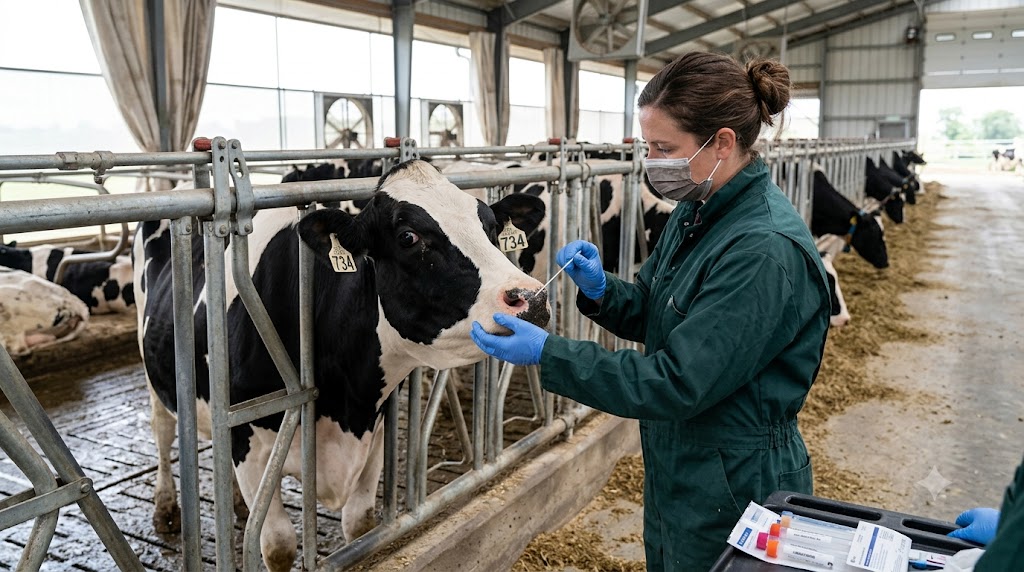
H5N1 in dairy cattle stopped being breaking news in 2024 and became a permanent feature of U.S. dairy operations instead. Two years after the virus first crossed into cattle, federal testing mandates are still active, state agriculture departments are still updating quarantine lists monthly, and the underlying question for producers hasn’t gone away: what does responsible, compliant dairy management look like with a virus that isn’t leaving?
Why H5N1 in Dairy Cattle Is Still a 2026 Story
On March 25, 2024, USDA, FDA, and CDC jointly announced the first-ever confirmed detection of highly pathogenic avian influenza (H5N1) in U.S. dairy cattle, according to the American Veterinary Medical Association’s ongoing tracking of the outbreak. By the time AVMA’s most recent update was published, confirmed cases had spread across 19 states, from Arizona and California to Wisconsin and North Carolina.
The virus hasn’t been eradicated since. As of early 2026, CDC’s situation summary still describes H5N1 as widespread in wild birds globally and continuing to cause outbreaks in both poultry and U.S. dairy cows, with sporadic human infections among dairy and poultry workers.
California illustrates how the situation ebbs and flows rather than resolving cleanly: the California Department of Food and Agriculture released all state dairies from quarantine in late February 2026, only to note the state remains classified as “affected” and subject to ongoing testing through the spring migratory season, when wild bird activity typically increases transmission risk.
That pattern, isolated progress without full resolution, is precisely why H5N1 in dairy cattle still belongs in a producer’s active management plan rather than the file of problems already solved.
How H5N1 Actually Spreads Among Dairy Cows
Unlike in poultry, where H5N1 is typically catastrophic and highly lethal, the virus behaves differently once it reaches cattle. According to AVMA, most affected cows recover with supportive care, and the mortality and culling rate has stayed low, averaging 2% or less. That relatively mild course in cattle is part of why the virus can spread through a herd without producers immediately recognizing what they’re dealing with.
USDA’s epidemiological investigation identified clear, preventable risk factors for how the virus moves between farms. APHIS’s “Secure Our Herds” guidance points specifically to:
- Personnel shared between multiple dairy premises
- Shared vehicles and equipment that aren’t cleaned between farms
- Frequent visitor traffic on and off the property
Confirmed evidence also shows the virus spreads cow-to-cow within an infected herd, not just from a single wild-bird introduction event, according to AVMA’s tracking of the outbreak. That distinction matters operationally: once H5N1 enters a herd, standard perimeter biosecurity against wild birds isn’t enough on its own, because internal spread between animals becomes the dominant transmission pathway.
The virus has also demonstrated it isn’t confined to cattle and poultry. In November 2024, USDA’s National Veterinary Services Laboratories confirmed H5N1 in pigs on an Oregon backyard farm where poultry and livestock shared water sources and housing, according to AVMA — the first detection of the virus in U.S. swine, and a reminder that mixed-species operations carry compounded risk.
What Infected Cows Actually Look Like
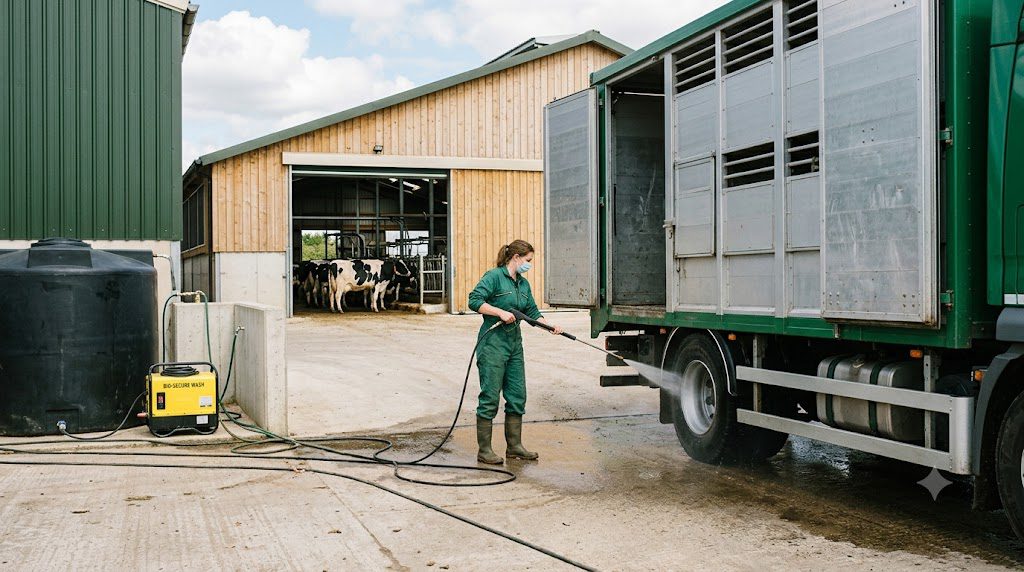
Recognizing infection early depends on knowing what to watch for, since H5N1 in dairy cattle doesn’t always present as an obvious, severe illness. Reported signs include:
- A sudden, sharp drop in milk production
- Thickened, discolored milk resembling colostrum
- Reduced feed intake and lethargy
- Mild fever
Because these signs can resemble other common dairy health issues, such as mastitis, producers in affected or bordering regions should treat unexplained production drops as a reason for testing rather than an automatic assumption of a more routine cause.
Is the Milk Supply Safe?
This is the question most likely to reach a dairy producer from customers, retailers, or the public, and the evidence here is more reassuring than the outbreak headlines might suggest. The FDA’s retail dairy product surveys tested pasteurized milk, cheese, butter, and ice cream collected directly from retail locations; in FDA’s second nationwide survey, all 167 samples tested negative for viable H5N1 virus.
The safety mechanism is straightforward: pasteurization effectively inactivates the virus. Wisconsin’s Department of Agriculture, Trade and Consumer Protection confirms that milk from H5N1-affected animals is diverted or destroyed before it can enter the commercial food supply, meaning infected milk isn’t reaching pasteurization in the first place. CDC continues to classify the general public health risk from H5N1 as low.
Interstate Movement Rules Are Changing Again
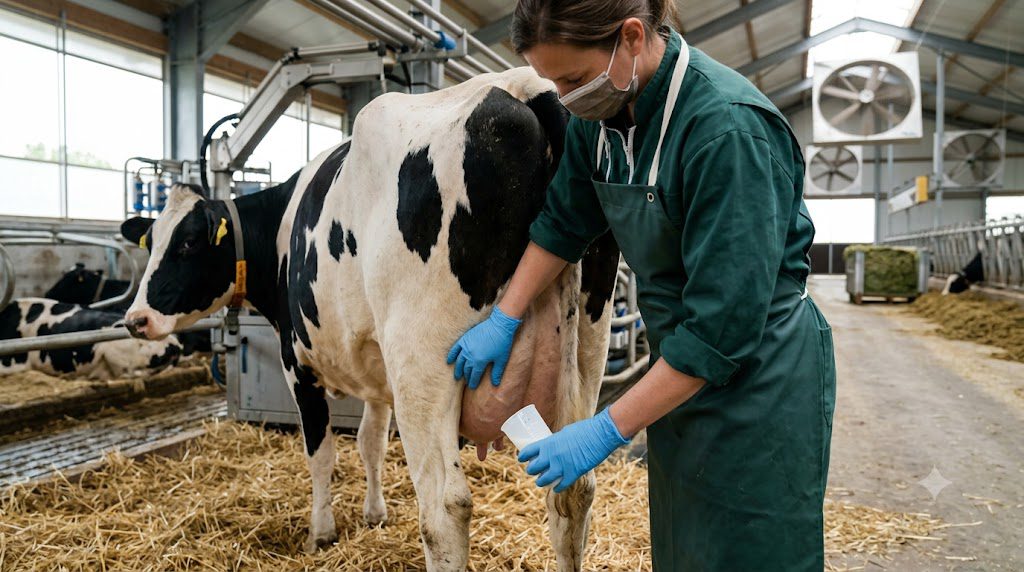
Movement compliance is where H5N1 in dairy cattle creates the most direct operational burden, and the rules have shifted meaningfully through 2026. USDA’s original April 2024 Federal Order required testing of lactating dairy cattle before any interstate movement.
That blanket requirement has since been relaxed for lower-risk states: as of the most recent update, lactating dairy cattle moving from states with “Unaffected State Status” under the National Milk Testing Strategy are no longer required to test before crossing state lines.
Achieving and keeping “Unaffected” status isn’t passive, though. It requires ongoing testing and surveillance to actively confirm the absence of HPAI in a state’s dairy herds, according to Wisconsin’s DATCP guidance, and Wisconsin itself has been testing monthly bulk tank milk samples from Grade A dairies since May 2025 specifically to maintain and monitor that status.
Producers should check their own state’s current classification before assuming testing requirements have simply gone away, since status can change as new detections occur.
Biosecurity Steps for Dairy Operations
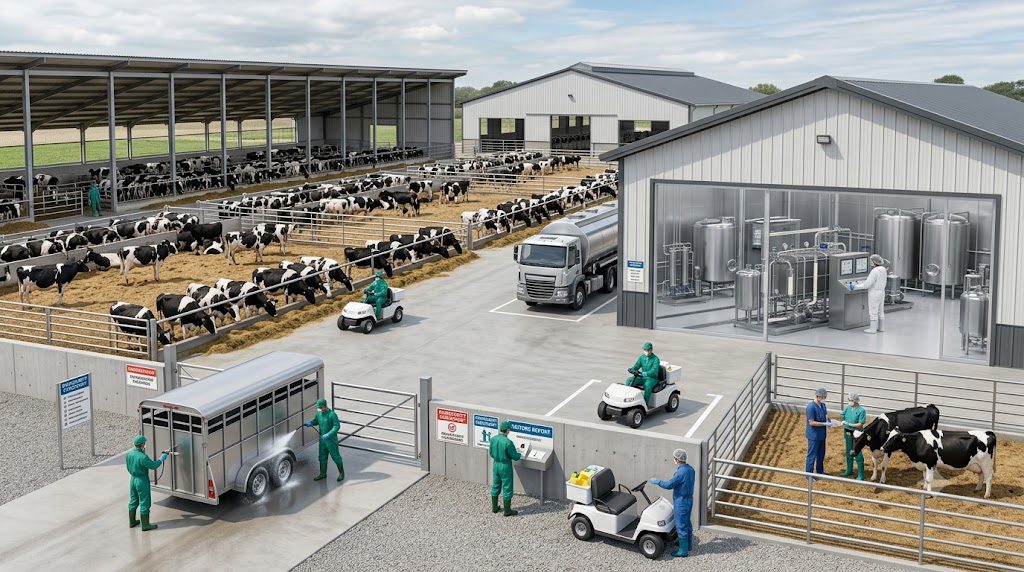
Given how the virus actually spreads, based on the risk factors identified above, the most effective producer-level response follows directly from USDA’s own findings:
- Limit shared personnel between premises. Where multiple farms use the same milking or veterinary staff, tighten hygiene protocols between visits.
- Dedicate or thoroughly disinfect shared equipment and vehicles. Uncleaned equipment moving between farms is a specifically named transmission risk.
- Restrict and log visitor traffic, particularly visitors who have recently been on another dairy or poultry operation.
- Test new animals before introducing them to the herd, as CDFA specifically recommends, rather than assuming a healthy appearance rules out infection.
- Monitor milk production and quality daily for the early signs described above, since early detection limits within-herd spread before it becomes extensive.
- Separate species on mixed operations. The Oregon swine case shows that shared housing and water sources between poultry and livestock create a compounded transmission pathway worth eliminating where practical.
Producers building out a broader biosecurity framework may also find it useful to compare these dairy-specific measures against poultry-focused practices covered in Farm Sutras’ guide to bird flu prevention for poultry farms (link this once that draft is published — see note below).
For producers weighing the broader cost-benefit case for proactive disease prevention generally, our guide to modern animal husbandry and scientific breeding techniques covers related herd management fundamentals that support early detection and biosecurity discipline.
Dairy producers thinking about herd resilience beyond disease response specifically may also find our guide to sustainable livestock farming solutions useful, since diversified, well-managed herds tend to absorb disruptions like this one more easily than tightly margined single-stream operations.
Farmers evaluating hardier cattle genetics as part of a longer-term resilience strategy can also review our overview of indigenous Indian cattle breeds and their disease-resistance advantages.

What’s Still Uncertain
A fair, balanced account of H5N1 in dairy cattle has to acknowledge what current guidance doesn’t yet resolve. Public health agencies continue actively monitoring the virus for mutations that could increase transmissibility between humans, and researchers have not ruled out further spillover into additional species beyond the cattle, poultry, and swine cases already confirmed.
Testing infrastructure and state-level status also remain a moving target: a state currently classified “Unaffected” can lose that status if new detections occur, and the compliance burden on producers shifts accordingly with little advance notice.
There’s also a real, if less discussed, economic dimension. Sudden production drops, milk diversion requirements, and testing logistics all carry direct costs for affected operations, even though the culling rate itself has stayed comparatively low. Producers should treat H5N1 preparedness as an ongoing operating cost, not a one-time compliance checkbox.
The Real Economic Cost to Dairy Operations
Balanced coverage of H5N1 in dairy cattle has to move past mortality rates and into what actually hits a producer’s bottom line, because the low culling rate understates the financial impact considerably.
A peer-reviewed study published in npj Vaccines found that clinically affected cows lose approximately 900 kilograms of milk over a 60-day period, with total economic losses from milk loss, mortality, and culling costs estimated at roughly $950 per clinically affected cow.
That per-cow figure scales into a genuinely significant macroeconomic story. A modeling study published in Nature’s Communications Earth & Environment simulated the outbreak’s broader economic impact and estimated domestic U.S. GDP losses ranging from 0.06% to 0.9%, with losses to the dairy sector specifically ranging between 3.4% and 20.6% depending on the severity scenario modeled.
The same study noted that current government subsidies covering roughly 1.2% of output losses may be insufficient to fully incentivize the surveillance and biosecurity investment needed to mitigate the risk of more dangerous strains emerging.
This is a useful corrective to the mortality-focused framing common in outbreak coverage: even a low-lethality version of H5N1 in dairy cattle carries real, compounding costs through reduced production, testing logistics, and diverted or destroyed milk, which is exactly why the biosecurity steps outlined above pay for themselves well before an actual severe illness event occurs.
Where Vaccine Development Actually Stands
Producers frequently ask whether a vaccine will simply solve this problem, and the honest answer is: not yet, and not soon enough to change near-term management decisions. As of 2026, no licensed H5N1 vaccine is currently available for cattle, despite the clear urgency researchers have identified.
Development work is genuinely active, though. Researchers at the University of Nebraska-Lincoln’s Center for Virology have built a broad-spectrum H5N1 vaccine candidate tested across mice, ferrets, pigs, and dairy cattle, showing complete protection in lethal mouse-challenge testing, according to coverage of the research program.
Separately, the dual-route vaccine candidate described in the npj Vaccines study combines intramuscular and intranasal delivery specifically to target both systemic and mucosal immunity in cattle. Both research teams describe a market-ready product as still several years away, with cost kept low enough for routine use on already tight dairy margins as an explicit design goal, not an afterthought.
Until a licensed vaccine reaches the market, biosecurity and testing compliance remain the only tools producers actually have, which is the core argument for treating the steps outlined earlier in this article as a durable operating standard rather than a stopgap.
Frequently Asked Questions About H5N1 in Dairy Cattle
1. Can H5N1 in Dairy Cattle Infect Humans?
Yes. H5N1 can infect humans, although reported cases remain sporadic and have primarily been associated with direct exposure to infected dairy or poultry animals. The blog notes that CDC currently considers the risk to the general public to be low.
2. Is Milk From H5N1-Infected Cows Safe to Drink?
Milk from infected cows is diverted or destroyed before entering the commercial food supply. The FDA’s retail testing cited in the article also found no viable H5N1 virus in the tested pasteurized dairy products.
3. What Are the Common Signs of H5N1 in Dairy Cattle?
Common signs include a sudden drop in milk production, thickened or discolored milk, reduced feed intake, lethargy, and mild fever. These symptoms can resemble other dairy health problems, so unexplained production changes may require testing.
4. How Does H5N1 Spread Between Dairy Cows?
H5N1 can spread from cow to cow within an infected herd. Transmission risks can also increase through shared personnel, contaminated vehicles and equipment, and frequent visitor movement between dairy premises.
5. Do Dairy Cattle Need H5N1 Testing Before Interstate Movement?
It depends on the current classification of the state under the National Milk Testing Strategy. Dairy cattle moving from states with Unaffected State Status may not require pre-movement testing, but producers should check current state and federal requirements before transporting cattle.
6. How Serious Is H5N1 for Dairy Cattle?
H5N1 generally causes less severe disease in cattle than in poultry. The blog reports that most affected cows recover with supportive care and that the mortality and culling rate has remained at 2% or less.
7. How Can Dairy Farmers Prevent H5N1 From Spreading?
Farmers can reduce transmission risks by limiting shared personnel, disinfecting vehicles and equipment, controlling visitors, testing newly introduced animals, monitoring milk production, and separating species on mixed livestock operations.
8. What Is the Earliest Warning Sign of H5N1 in Dairy Cows?
A sudden and unexplained decline in milk production, particularly when accompanied by thickened or colostrum-like milk, is an important warning sign. Producers should consider testing rather than automatically assuming the problem is mastitis.
9. Can H5N1 Spread From Dairy Cattle to Other Animals?
Yes. The blog describes confirmed H5N1 detection in U.S. swine and highlights the additional risks that can occur when poultry and livestock share housing or water sources. Separating species can therefore be an important biosecurity measure.
10. What Should Dairy Farmers Do If They Suspect H5N1?
Farmers should monitor affected animals closely, treat unexplained milk-production declines as a potential testing trigger, review biosecurity practices, and check current federal and state requirements. Interstate movement should not be planned without confirming the state’s current H5N1 classification and applicable testing rules.
Actionable Takeaways
- Confirm your state’s current H5N1 classification under the National Milk Testing Strategy before planning any interstate cattle movement.
- Treat unexplained drops in milk production as a testing trigger, not an automatic mastitis assumption.
- Audit shared personnel, vehicles, and equipment across any premises you operate or work with, since these are USDA’s specifically identified transmission risks.
- If you run a mixed-species operation, separate housing and water sources between poultry and cattle or swine wherever feasible.
- Revisit this guidance periodically rather than treating it as settled; both viral behavior and regulatory status have continued shifting well into 2026.
Conclusion
H5N1 in dairy cattle is no longer a short-term outbreak issue for U.S. dairy producers. It has become an ongoing biosecurity and herd-management concern that requires regular monitoring, testing, and attention to changing state and federal requirements.
The most practical approach is to focus on early detection and preventing transmission. Monitoring milk production and milk quality, controlling visitor movement, disinfecting shared equipment, limiting personnel movement between farms, and testing animals when required can help reduce the risk of wider herd spread.
Milk safety also remains an important part of the discussion. Pasteurization effectively inactivates H5N1, while milk from infected animals is diverted or destroyed before entering the commercial food supply.
Because testing requirements and state H5N1 classifications can change, dairy farmers should avoid relying on outdated information. Regularly checking current USDA and state agriculture guidance, combined with strong day-to-day biosecurity practices, is essential for managing H5N1 responsibly in 2026.