
Table of Contents
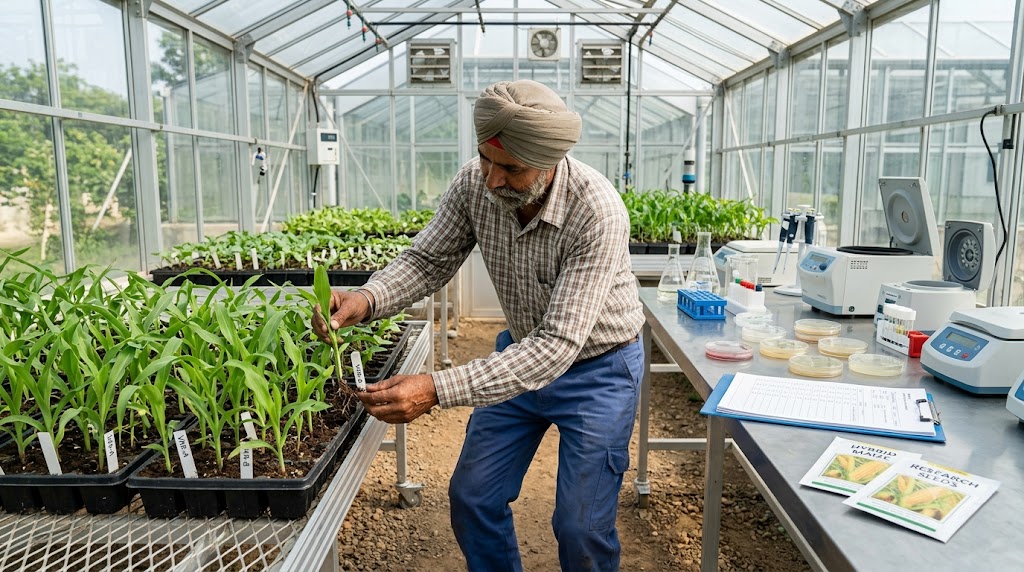
Gene-edited crops sit at an unusually active regulatory crossroads in 2026, and most coverage of the topic hasn’t caught up to what actually changed. In December 2024, a federal court vacated the USDA rule that had governed how these crops get approved for four years, and the agency’s replacement rule is expected sometime in 2026 — which means the ground under this entire category is shifting as you read this, not settling into place.
That legal development matters more than most agritech headlines, because it directly affects how long it takes a new gene-edited variety to reach a farm near you, and how much it costs a company to bring one to market. This article covers what gene-edited crops are, what’s already commercially approved, exactly what changed in the regulation and why, and where legitimate scientific and public debate still stands — with every factual claim linked to its primary source.
What Are Gene-Edited Crops?
Gene-edited crops are plants whose DNA has been precisely altered using tools like CRISPR-Cas9 to add, remove, or change specific genetic sequences — without necessarily introducing DNA from an unrelated species, which is what distinguishes the technique from older transgenic GMO methods.
According to the FDA’s own explainer on genome editing in agricultural biotechnology, genome editing lets plant breeders make precise changes at a specific location in a plant’s DNA — adding, removing, or altering genetic material to produce traits like disease resistance or improved growth habit.
The FDA specifically cites cacao plants engineered with stronger disease resistance and tomatoes bred with shortened stems for space-efficient indoor farming as real examples already in development.
The Innovative Genomics Institute, a nonprofit research institute affiliated with UC Berkeley and co-founded by CRISPR pioneer Jennifer Doudna, draws the technical distinction clearly: conventional GMOs typically involve transgenics, where genes are moved between unrelated species, while CRISPR allows scientists to alter a plant’s own existing DNA sequences to bring out a desired trait already present within that species’ genetic diversity.
Why Gene-Edited Crops Are a Bigger Story in 2026 Than Usual
1. The federal rule governing approval was vacated in December 2024, and its replacement is due in 2026. According to a Congressional Research Service report published via the Library of Congress, the U.S. District Court for the Northern District of California vacated USDA’s SECURE rule in December 2024, and APHIS has listed an anticipated replacement rule — titled “Regaining Lost Efficiencies for Products of Biotechnology” — with publication projected for 2026.
2. More than 200 biotech crops went through review under the now-vacated rule. Reporting from Science, the journal of the American Association for the Advancement of Science, notes the vacatur isn’t retroactive — crops already approved stay approved — but the process for new approvals has reverted to a more burdensome, pre-2020 standard in the meantime.
3. Approval costs for the older, stricter path can exceed $100 million per crop. The same Science reporting cites agricultural scientists estimating that full USDA and EPA review for a genetically engineered crop under the older framework can take years and cost more than $100 million — a cost gene editing’s exemption pathway was specifically designed to avoid.
4. Real commercial approvals are already happening under the current uncertainty. As recently as February 2026, USDA-APHIS granted non-regulated status to two gene-edited hemp varieties developed at the University of Wisconsin-Madison — one resistant to powdery mildew, the other bred to eliminate THC entirely — showing the system is still functioning, just under revised terms.
5. The legal fight itself reflects a real, ongoing policy disagreement, not settled consensus. According to reporting from the American Society of Plant Biologists’ policy blog, the lawsuit was brought by anti-GMO advocacy groups including the Center for Food Safety, who argued APHIS acted improperly in exempting certain gene-edited plants from full review — a position the plant science community broadly disputed, but one that a federal court ultimately found persuasive enough to vacate the rule.
How CRISPR Gene Editing Actually Works
CRISPR-Cas9 functions as a programmable pair of molecular scissors. According to the Innovative Genomics Institute’s 2024 review of the field, scientists design a guide RNA sequence that directs the Cas9 protein to a precise location in a plant’s genome, where it cuts the DNA.
The plant’s own repair mechanisms then fix the cut, and researchers can use this process to disable a gene entirely — a “knockout” that removes an unwanted trait — or, with newer techniques, introduce a specific, targeted change.
This is meaningfully different from the decades-old transgenic approach. A peer-reviewed regulatory overview published on PMC, the National Institutes of Health’s full-text archive, explains that USDA’s revised regulations specifically exempt genome-edited organisms from oversight when the edit could have occurred through conventional breeding and doesn’t introduce foreign genetic material — the core technical distinction the entire regulatory framework hinges on.
Gene Editing vs. Traditional GMOs: The Real Difference
| Factor | Traditional Transgenic GMO | Gene-Edited (CRISPR) Crop |
|---|---|---|
| Genetic source | Often introduces DNA from a different species | Typically alters the plant’s own existing DNA |
| Development cost | Can exceed $100 million per crop under full review | Often qualifies for USDA exemption, dramatically lower cost |
| Regulatory path (pre-2024) | Full USDA/EPA review required | Could qualify for exemption if deemed low plant-pest risk |
| Public perception | Faces the most consumer and regulatory scrutiny historically | Generally viewed as less controversial, though not universally accepted |
| Current U.S. legal status | Regulatory framework long-established | Regulatory framework in active transition as of 2026 |
The honest takeaway: gene editing was specifically designed as a faster, cheaper regulatory path precisely because it doesn’t introduce foreign DNA — and the December 2024 court decision is a direct challenge to whether that faster path holds up legally going forward.
The U.S. Regulatory Landscape, Explained Honestly
Three federal agencies share oversight of gene-edited crops under what’s called the Coordinated Framework for the Regulation of Biotechnology, according to USDA’s own regulation page:
- USDA-APHIS regulates the movement and environmental release of gene-edited organisms under its authority to prevent plant pest risk.
- FDA oversees food safety questions related to genome-edited crops and animals.
- EPA regulates gene-edited plants that produce their own pesticidal compounds, under pesticide law.
Here’s the part that makes 2026 genuinely different: USDA-APHIS’s own regulatory page confirms that under the revised regulations, certain modified plants are exempt from review specifically because they could have been developed through conventional breeding and are unlikely to pose increased plant pest risk — but that framework is the exact one a federal court vacated in December 2024.
Following the vacatur, APHIS announced it would reestablish regulatory processes, and per the Congressional Research Service, the agency’s anticipated replacement — “Regaining Lost Efficiencies for Products of Biotechnology” — is projected for publication sometime in 2026.
Until that’s finalized, the practical regulatory path for new gene-edited crop approvals sits in a genuine gray zone between the old exemption system and full pre-2020 review.
If you’re evaluating a gene-edited seed product this year, this is worth asking your seed representative about directly: whether the specific variety was approved before or after the December 2024 vacatur, since that affects the legal certainty behind its non-regulated status.
What’s Actually Approved and On the Market
According to the Congressional Research Service’s 2024 report, several gene-edited crops have already been approved for commercialization in the United States, including soybean, canola, rice, maize, mushroom, tomatoes, and camelina.
Specific commercial and research examples include:
- Non-browning mushrooms, developed by a Penn State researcher and widely cited as the first CRISPR-edited food to clear USDA review, back in 2016 — a genuinely early proof point for the exemption pathway.
- Disease-resistant cacao, cited directly by the FDA as an active area of genome editing work aimed at protecting chocolate’s primary crop from disease pressure.
- Space-efficient tomatoes with shortened stems, also cited by the FDA, designed for indoor and urban farm environments where plant footprint matters.
- THC-free, powdery-mildew-resistant hemp, developed at the University of Wisconsin-Madison and granted non-regulated status by USDA-APHIS as recently as February 2026.
This is a narrower, more conservative list than some marketing materials in this space suggest — and that’s intentional. The claims above are drawn specifically from a government regulatory record and FDA public communications, not company press releases, which is a meaningfully higher bar of verification for a topic this legally sensitive.
What Using a Gene-Edited Variety Actually Involves
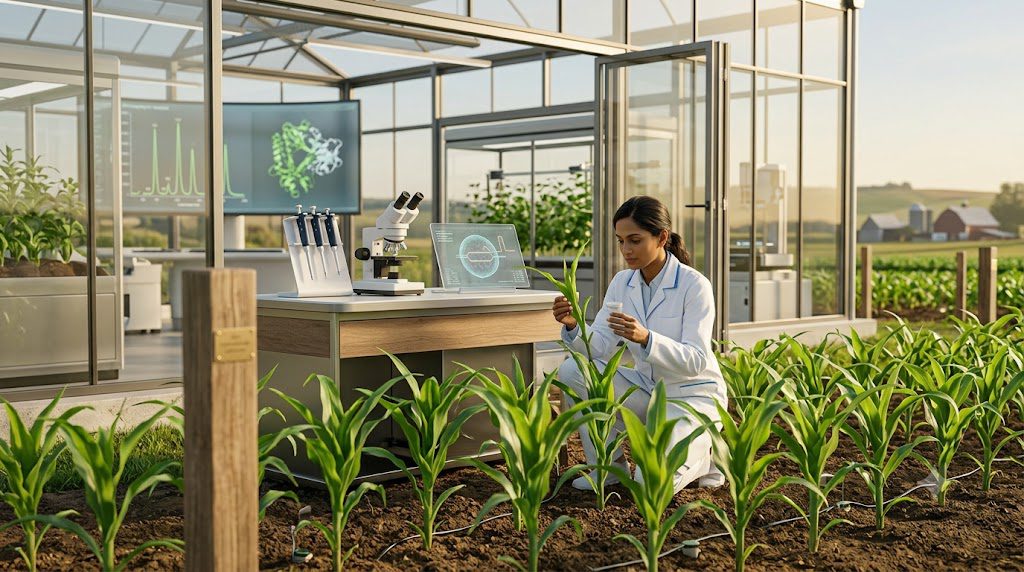
For farmers, using a gene-edited crop is not simply a matter of buying a seed because it has a CRISPR-developed trait. The practical decision is similar to evaluating any new seed technology: farmers need to understand the variety, its specific trait, regulatory status, performance data, cost, and suitability for their farming conditions.
Before purchasing a gene-edited variety, check these key points:
Check the Specific Variety and Trait
First, identify exactly what genetic change has been made and what agricultural benefit it is supposed to provide. A disease-resistance trait, for example, should be evaluated differently from a drought-tolerance, quality, or growth-related trait.
Do not assume that every gene-edited crop provides the same type of benefit simply because CRISPR or another gene-editing technology was used.
Verify Its Regulatory Status
Ask the seed developer or supplier for documentation showing the variety’s regulatory status. In the United States, USDA-APHIS, FDA, and EPA can have different responsibilities depending on the characteristics and intended use of a biotechnology-derived product.
For a farmer, the important point is to verify the status of the specific product, rather than relying only on general statements such as “CRISPR crops are exempt.”
Compare Field Performance With Existing Varieties
A new genetic trait does not automatically mean better farm economics. Compare available field-trial or independent performance data with the variety you already grow.
Look at factors such as:
- Yield under local growing conditions
- Disease or pest performance
- Water and fertilizer requirements
- Harvest characteristics
- Crop quality
- Input costs
- Expected market price
- Performance across different seasons or environments
USDA research on agricultural biotechnology shows that the economic effects of biotech varieties can vary by crop, year, location, and trait.
Calculate the Full Cost Before Switching
Seed price is only one part of the decision. Farmers should consider the complete production cost, including seed, crop protection, fertilizer, irrigation, labor, machinery, and any additional management requirements.
The relevant question is not simply, “Is this gene-edited seed more expensive?” It is whether the specific trait creates enough measurable value to justify the total cost of adoption.
Ask Whether the Trait Is Commercial or Still Experimental
This distinction matters. Some gene-editing projects remain in research or field-testing stages rather than being commercially available to farmers. For example, USDA research continues to develop and evaluate gene-edited crops with traits such as drought tolerance, pathogen resistance, and changes in root development.
Therefore, farmers should ask whether the variety being discussed is:
- Commercially available
- In field trials
- Still under research
- Awaiting regulatory review
Start With Evidence, Not the Technology Label
CRISPR is a breeding technology, not a guarantee of higher yield or greater profit. The useful question for a farmer is whether the specific variety and specific trait solve a real production problem on that farm.
Where reliable field data are available, compare the gene-edited variety with a conventional variety under similar conditions before making a large-scale switch.
This approach is particularly important because gene-edited crops are still developing as a commercial category, even though agricultural biotechnology more broadly is already widely used in U.S. farming. USDA data show that genetically engineered corn, soybeans, and cotton have reached very high adoption levels, but those figures should not automatically be interpreted as adoption rates for gene-edited crops specifically.
Benefits Backed by Real Data
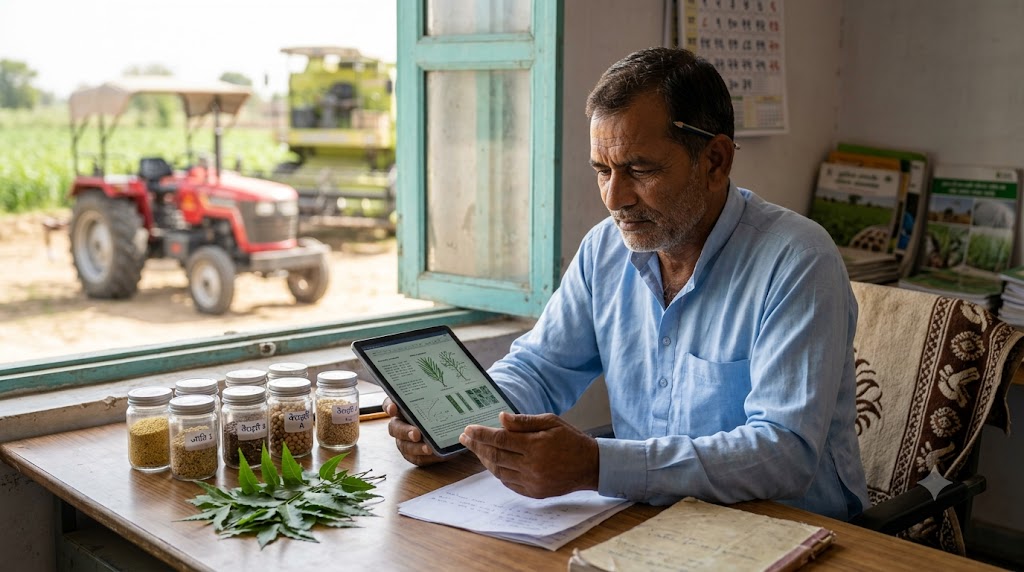
The FDA’s own materials point to concrete, named benefits rather than generic claims: cacao plants with meaningfully stronger disease resistance against a pathogen that currently kills significant portions of global cacao crops, and tomato varieties engineered for shortened growth that specifically suits space-constrained indoor and urban agriculture — a benefit tied directly to the vertical and controlled-environment farming trend already covered on this site.
The regulatory cost argument is also concrete, not speculative: because gene editing frequently avoids introducing foreign DNA, it can qualify for USDA’s exemption pathway instead of the full review process that Science reporting pegs at potentially $100 million and multiple years per crop — a cost structure that has historically locked smaller developers and public-sector researchers out of transgenic crop development entirely.
Legitimate Concerns and Open Controversies
A trustworthy account of this topic has to include the real disagreement, not just the upside.
The regulatory challenge itself reflects a genuine policy dispute. The lawsuit that led to the SECURE rule’s vacatur was brought by established advocacy organizations, not fringe actors, arguing that USDA’s exemption process didn’t adequately account for potential risks. A federal court agreed enough to vacate the rule — that’s a real legal finding, not a marketing objection.
Consumer perception remains genuinely mixed. Industry-facing sources like Synthego’s overview of CRISPR in agriculture acknowledge directly that public concern over “naturally occurring” definitions and food safety perceptions around genetic modification persist regardless of the specific technique used — gene editing hasn’t fully escaped the branding challenges that transgenic GMOs faced for decades.
Regulatory uncertainty has real economic costs for developers. With the replacement rule still pending as of this writing, companies bringing new gene-edited varieties to market face genuine uncertainty about which regulatory standard will apply to their product by the time it’s ready for commercial release.
Not every claimed benefit has reached commercial scale yet. Several of the most-cited examples — including some drought-tolerance and yield-improvement traits discussed broadly in industry coverage — remain in earlier research or field-trial stages rather than being commercially available to farmers today. It’s worth asking directly whether a specific trait you’re being pitched is commercially released or still in development.
How to Evaluate Gene-Edited Seed for Your Farm
- Ask directly whether the variety received its USDA-APHIS determination before or after December 2024, given the regulatory transition currently underway.
- Request the specific USDA regulatory status review documentation for the variety, rather than relying on a seed company’s summary of its own approval.
- Separate FDA food-safety clearance from USDA plant-pest clearance if the crop is food-destined — they are different reviews addressing different questions.
- Compare the specific trait’s real-world field performance data against your existing variety before switching, the same due-diligence standard that should apply to any new seed purchase.
- Watch for the 2026 APHIS replacement rule directly, since it may change permitting timelines and requirements for future variety releases beyond what’s already approved.
This due-diligence mindset is consistent with the broader shift toward precision, input-efficient agriculture already covered on this site — treating a new seed technology as a data-backed decision rather than a marketing one.
Common Misconceptions
- “Gene editing and GMOs are the same thing.” They overlap conceptually but are treated as legally and technically distinct — gene editing typically doesn’t introduce foreign-species DNA, which is the specific distinction the USDA exemption framework is built around.
- “All gene-edited crops are unregulated.” Only certain modifications that meet specific low-risk criteria qualify for exemption; others still require full APHIS regulatory status review.
- “The regulatory situation is stable and settled.” It is actively in transition as of 2026, following the December 2024 court vacatur — treating current guidance as permanent would be a mistake.
- “This is entirely new technology with no historical grounding.” As the Innovative Genomics Institute notes, gene editing sits in a direct lineage with older breeding techniques like cross-pollination and mutation breeding — CRISPR is more precise, not conceptually unprecedented. This context connects meaningfully to the value of traditional farming knowledge already discussed on this site — plant breeding for desired traits is a centuries-old practice that gene editing makes faster and more targeted, not a wholesale departure from it.
FAQs About Gene-Edited Crops
1. What Are Gene-Edited Crops?
Gene-edited crops are plants whose DNA has been precisely changed using technologies such as CRISPR-Cas9. Scientists can add, remove, or modify specific genetic sequences to develop useful traits such as disease resistance or improved growth characteristics.
2. Are Gene-Edited Crops the Same as GMOs?
No. Gene-edited crops and traditional transgenic GMOs are related but technically distinct. Traditional GMOs often introduce DNA from another species, while gene editing usually changes the plant’s existing DNA without introducing foreign genetic material.
3. How Does CRISPR Gene Editing Work in Agriculture?
CRISPR-Cas9 uses a guide RNA to direct the Cas9 protein to a specific location in a plant’s DNA. The DNA is then cut, allowing the plant’s natural repair system to create a targeted genetic change.
4. What Gene-Edited Crops Are Approved in the United States?
The blog identifies approved or commercially developed categories including soybean, canola, rice, maize, mushrooms, tomatoes, and camelina. It also highlights gene-edited hemp varieties that received non-regulated status from USDA-APHIS in February 2026.
5. How Are Gene-Edited Crops Regulated in the U.S.?
Three major federal agencies have roles in biotechnology regulation. USDA-APHIS deals with plant-pest risks and environmental release, the FDA addresses food-safety questions, and the EPA regulates plants that produce pesticidal substances.
6. Why Did the U.S. Gene-Edited Crop Regulations Change?
A federal court vacated the USDA’s SECURE rule in December 2024 following a legal challenge to its exemption process. The previous approvals were not automatically cancelled, but the regulatory pathway for future products became more uncertain while USDA works on a replacement rule.
7. What Are the Benefits of Gene-Edited Crops?
Gene editing can be used to develop traits such as stronger disease resistance and growth characteristics suited to specific farming environments. It can also potentially reduce development costs when a crop qualifies for an exemption from more extensive regulatory review.
8. Are All Gene-Edited Crops Unregulated?
No. Only certain genetic modifications that meet specific regulatory criteria may qualify for an exemption. Other products can still require regulatory review, so farmers should check the specific regulatory status of a variety rather than assuming that all gene-edited crops are unregulated.
9. What Should Farmers Check Before Buying Gene-Edited Seeds?
Farmers should check the variety’s USDA-APHIS regulatory status, ask when its determination was made, request supporting regulatory documentation, and compare real-world field performance with existing varieties. The blog also recommends monitoring USDA’s replacement biotechnology rule during 2026.
10. What Is the Future of Gene-Edited Crops in 2026?
The regulatory framework remains in transition. USDA-APHIS is expected to finalize a replacement rule in 2026, while commercially approved gene-edited crops are already available in several categories. Farmers and developers therefore need to pay attention to both new regulatory requirements and the performance of individual varieties.
Final Thought
Gene-edited crops in 2026 sit in a genuinely unresolved regulatory moment, not a settled one — a federal court vacated the rule that governed approvals for four years, more than 200 crops went through that now-vacated process, and the replacement rule is still pending.
Real products are already commercially approved, from disease-resistant mushrooms to newly cleared THC-free hemp, and the underlying case for gene editing’s cost and speed advantage over traditional GMOs is well-documented.
But treating this as a fully settled, uncontroversial technology would misrepresent where things actually stand. If you’re considering a gene-edited variety this season, ask specifically about its approval timeline relative to the December 2024 vacatur — that single question tells you more about your legal footing than any marketing material will.
Related reading on this site: Agric Technology: Transforming Agriculture for Greater Productivity in 2026 and Modern Farming Methods: The Final Revolution for Indian Agriculture, which touches on drought-resistant seed technology as part of the broader climate-smart farming shift.