
Table of Contents
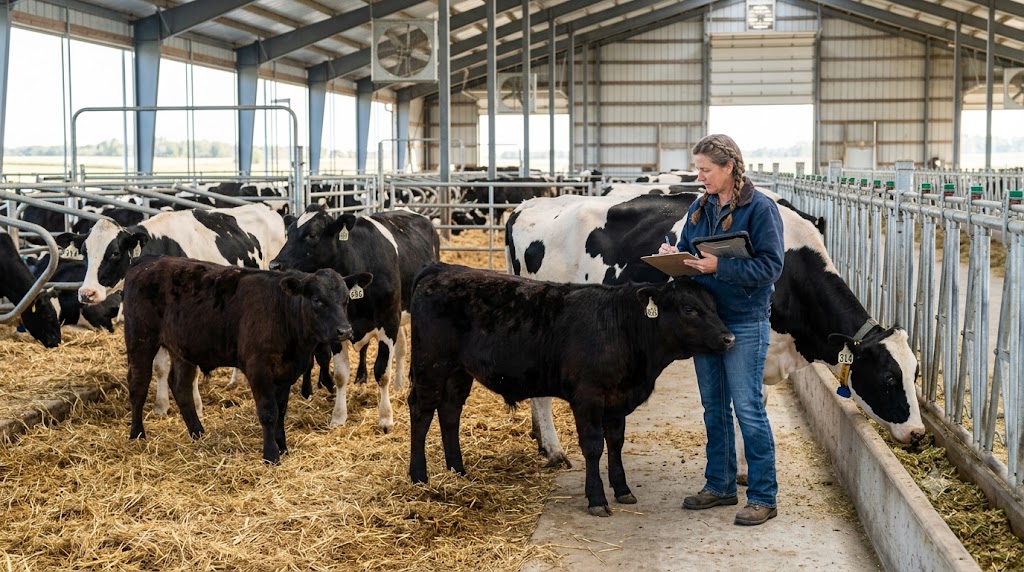
Beef-on-dairy crossbreeding has quietly become one of the most consequential shifts in U.S. cattle production in the past decade, and 2026 is shaping up to be the year it stops being a niche strategy and becomes standard dairy management.
The idea is simple: instead of breeding every cow in the herd to produce a dairy replacement, producers breed their lower-performing cows to beef bulls, producing crossbred calves that sell for dramatically more than a traditional dairy bull calf. What’s changed recently isn’t the concept — it’s the scale, the data behind it, and the economics forcing even skeptical producers to take it seriously.
What Is Beef-on-Dairy Crossbreeding?
Beef-on-dairy crossbreeding means breeding a dairy cow, typically a Holstein or Jersey, with semen from a beef breed bull rather than a dairy bull. The resulting calf carries beef genetics for traits like carcass weight, muscling, and marbling, while still coming from a dairy dam.
These calves are raised for beef production rather than as future milking cows, giving producers a second, higher-value revenue stream from cows that wouldn’t otherwise contribute genetics to the next generation.
This isn’t a new idea in concept, but it was rare in practice before the late 2010s. According to Michigan State University Extension, breeding dairy cows with beef semen was not considered a common practice in the United States prior to 2017, and the shift since then has been dramatic enough to reshape parts of both the dairy and beef supply chains, as documented by research from Michigan State University Extension.
Why Beef-on-Dairy Crossbreeding Is Suddenly Everywhere
Two forces converged to turn beef-on-dairy crossbreeding from a fringe practice into mainstream dairy strategy, and both are still accelerating in 2026.
First, a genuine beef supply gap. The U.S. beef cattle inventory has fallen to its lowest level in more than seventy years, driven substantially by drought-related herd liquidation over the past several years, according to reporting from Purdue University’s College of Agriculture.
That contraction created sustained demand for feeder cattle that the shrinking beef herd alone can’t fill, and beef-on-dairy crossbreds have stepped directly into that gap. Crossbred calf production climbed from roughly 50,000 head in 2014 to more than 3.2 million head in 2024, based on CattleFax estimates cited by the American Farm Bureau Federation.
Second, sexed semen technology matured. Sexed semen lets producers select for calf sex with roughly 90% accuracy, as explained in Purdue’s coverage of the trend. That precision means a dairy producer can concentrate female calf production among their genetically best cows using sexed dairy semen, while freeing up the remainder of the herd, cows that wouldn’t have made ideal replacements anyway, to be bred to beef bulls instead.
The scale of that shift shows up clearly in semen sales data: domestic beef semen sales rose 283% between 2017 and 2024, according to Michigan State University Extension’s analysis of National Association of Animal Breeders data, while conventional dairy semen sales declined over the same period.
The Genetics and Technology Making It Possible
Beef-on-dairy crossbreeding today looks meaningfully different from earlier, more casual crossbreeding attempts, largely because of three technical developments working together.
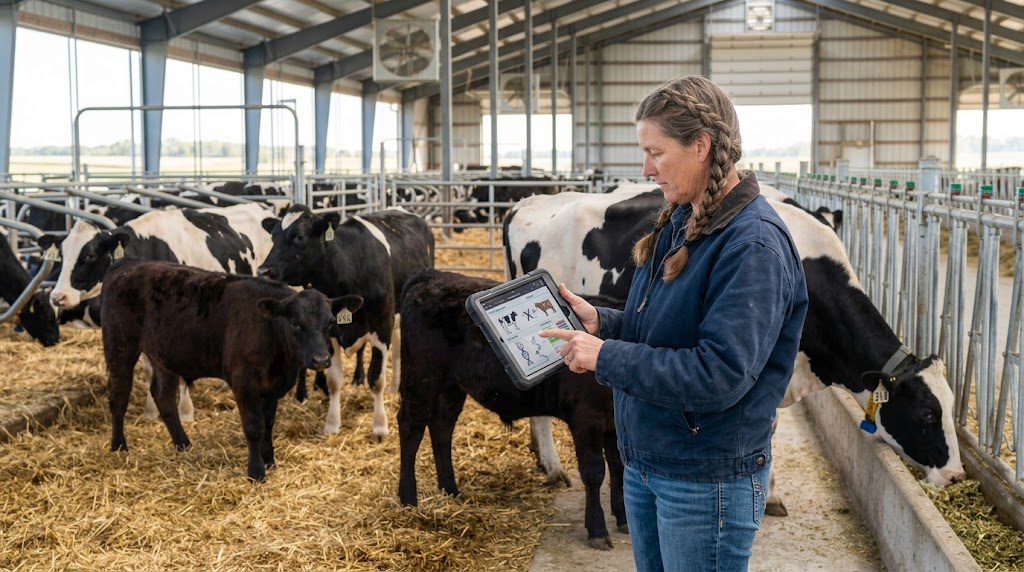
Sexed semen allows the top tier of a dairy herd to be bred specifically for replacement heifers, rather than leaving calf sex to chance. Genomic selection lets producers evaluate genetic merit before an animal ever calves, sharpening decisions about which cows should produce replacements versus beef-cross calves. And a newer development, heterospermic beef semen, combines genetic material from multiple bulls in a single straw.
According to NAAB President Jay Weier, speaking on the Council on Dairy Cattle Breeding’s Cowcast podcast and reported by Dairy Herd, the appeal of heterospermic semen is that it narrows the range of outcomes across a herd, producing more consistently strong calves without requiring producers to identify which specific bull sired each one. Dairies now purchase more than 80% of all beef semen sold in the United States, a striking reversal from a decade ago when beef semen was used almost exclusively within beef herds.
A Real Farmer’s Experience: Six Years of Beef-on-Dairy in South Dakota
Numbers and industry trends only tell part of the story. Doug Ode, who operates a 500-cow dairy in South Dakota with his brother Gregg, has been breeding the bottom third of his dairy herd to Angus bulls for six years, as reported by Farm Progress.
Rather than treating every cow as a replacement-heifer candidate, the Ode operation identifies its lower-performing females and directs beef semen specifically to them, concentrating dairy genetics among the herd’s strongest cows while converting the rest into a second income stream through crossbred calf sales.
This kind of tiered breeding decision, rather than an all-or-nothing approach, appears repeatedly in how the practice is actually implemented on working farms: producers aren’t abandoning dairy replacement breeding, they’re layering beef-cross breeding on top of it for the portion of the herd where it makes the most economic sense.
What the Research Actually Shows About Calf Value
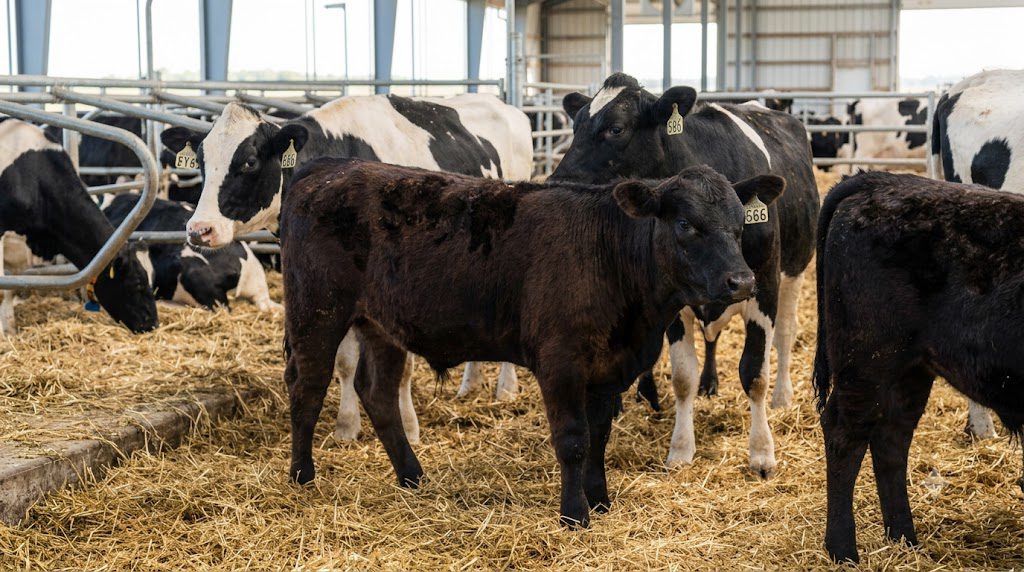
The premium beef-cross calves command over traditional dairy bull calves is well documented, though the size of that premium is more nuanced than headlines often suggest.
A peer-reviewed analysis published in the Journal of Dairy Science and indexed on PubMed evaluated nearly 1,300 crossbred calves and found that calves sired by double-muscled or continental beef breeds carried meaningfully higher market value than either purebred dairy calves or crosses from other sire breeds, with the specific premium varying by sire breed and end use.
Separately, a comprehensive Irish study of close to one million calvings, led by researcher Berry and colleagues and summarized by animal nutrition firm Dellait, found that beef-on-dairy crosses from continental sire breeds showed faster growth rates, better feed conversion, and higher carcass conformation scores than pure dairy calves, translating into an economic premium that can exceed $100 per calf.
It’s worth being direct about a less flattering data point, too. Michigan State University Extension’s analysis found that while the dollar-value premium for beef-dairy cross calves over dairy bull calves has grown over the past six years, that premium has actually shrunk in percentage terms, because dairy bull calf prices have also risen substantially due to the same tight cattle supply driving the whole market higher.
In other words, beef-on-dairy crossbreeding remains genuinely profitable, but producers evaluating it purely on hype rather than current market data may overestimate the relative advantage compared to a few years ago.
How to Choose the Right Beef Bull for Your Dairy Herd
Selecting the right beef bull matters as much as the decision to crossbreed at all. Penn State Extension recommends prioritizing three traits above others: conception rate, frame size, and ribeye area.
Conception rate deserves more weight than producers often give it. Even a 1% drop in conception rate can cost a dairy operation roughly $25 per cow, according to Penn State Extension’s guidance, making it a far more expensive variable than it first appears.
Calving ease can be treated more flexibly than in typical beef-on-beef breeding. Because dairy cows naturally give birth to larger-framed calves than beef cows do, producers have more room to prioritize other traits over calving ease specifically, per the same Penn State Extension guidance.
Frame size needs active management, not neglect. One of the more common problems Penn State Extension identifies in feedlots is beef-dairy cross calves with excessively large frames, since a larger frame requires more feed and time to finish, and bone weighs more than muscle, meaning more waste and less usable product at slaughter. Selecting bulls with moderate, not maximal, frame size tends to produce a more efficient, better-valued animal at finishing.
Risks and Trade-Offs Worth Weighing Before You Start
Beef-on-dairy crossbreeding isn’t risk-free, and a fair accounting matters here.
- Shrinking percentage premiums. As noted above, the relative price advantage over dairy bull calves has narrowed even as dollar-value premiums have grown, per Michigan State University Extension’s data.
- Reduced heifer inventory if overapplied. Breeding too large a share of the herd to beef bulls, rather than a carefully chosen lower tier, can eventually squeeze the supply of replacement heifers a dairy needs to sustain itself.
- Frame-size mismanagement. As covered above, poor bull selection can produce oversized, inefficient feedlot animals that erode the very premium producers are chasing.
- Market volatility. The economics driving this trend, tight cattle supply and strong beef demand, are cyclical. The American Farm Bureau Federation’s market analysis notes that while cattle-on-feed numbers have grown, declining feedlot placements and calf inventories point toward continued tightness in coming years, but cattle cycles do eventually turn, and today’s exceptional premiums shouldn’t be assumed permanent.
What This Means for the Broader Cattle Market
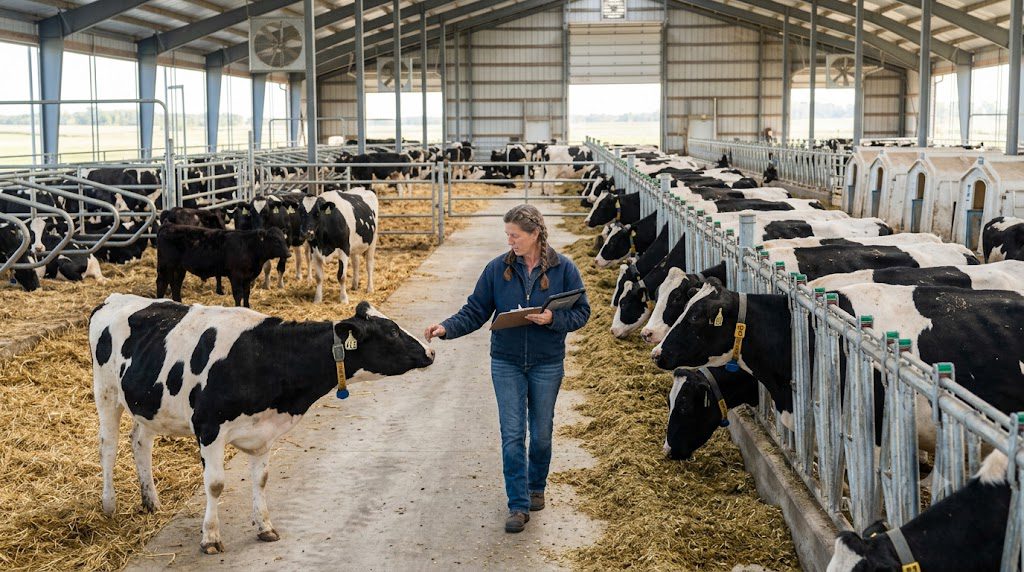
Beef-on-dairy crossbreeding isn’t just a dairy farm income strategy anymore, it’s actively reshaping the structure of the U.S. beef supply chain. The American Farm Bureau Federation’s market intelligence team notes that the recent expansion in dairy cow inventories is helping counterbalance ongoing declines in the traditional beef breeding herd, underscoring the dairy sector’s growing role in supplying the broader beef market.
That dynamic increases the strategic importance of dairy-origin cattle to feedlots and packers, not just to the individual dairy producers making the breeding decisions.
A Practical Roadmap for Getting Started
For a dairy producer weighing whether to begin beef-on-dairy crossbreeding, the practical sequence generally looks like this:
- Rank your herd by genetic merit using genomic testing where available, identifying which cows should be prioritized for dairy replacement breeding.
- Reserve sexed dairy semen for your top-tier cows to secure enough quality replacement heifers.
- Select a beef bull or program prioritizing conception rate and moderate frame size over maximum growth potential, following the trait priorities outlined by Penn State Extension above.
- Breed your lower-tier cows to beef genetics, whether through conventional or heterospermic beef semen.
- Establish a marketing outlet for the resulting calves before calving season, since local sale barns, direct feedlot contracts, and specialized beef-on-dairy buyers vary significantly by region.
- Track outcomes over multiple calving cycles rather than judging the strategy on a single season, since calf prices and premiums shift with broader cattle market cycles.
Producers already thinking about breed selection more broadly may also find it useful to compare how indigenous and crossbred genetics perform across different production goals, a topic covered in Farm Sutras’ guide to indigenous Indian cattle breeds and their advantages, and in our broader overview of modern animal husbandry and scientific breeding techniques.
For producers looking at beef-on-dairy crossbreeding specifically as a way to diversify farm income, our guide to sustainable livestock farming solutions covers other approaches to building resilient, multi-stream farm revenue.
Does Beef-on-Dairy Crossbreeding Apply Outside the U.S.?
Most of the data and case studies behind this trend, including everything cited above, come from the U.S. market specifically, and that matters for how directly the strategy translates elsewhere.
The U.S. beef-on-dairy boom is built on a specific combination of factors: a large, well-developed feedlot and packing infrastructure ready to absorb crossbred calves, a beef cattle herd at a multi-decade low, and no cultural or legal restriction on raising dairy-origin cattle specifically for beef.
That combination doesn’t exist uniformly worldwide. In India, for example, cow slaughter is restricted or banned outright in most states, and the market structure around beef production is fundamentally different from the U.S. feedlot model this trend depends on.
For Indian dairy producers, the more directly applicable takeaways from beef-on-dairy crossbreeding research aren’t about replicating the U.S. beef-calf market, but about the underlying genetic principles: using sexed semen to concentrate replacement-heifer breeding among top-performing cows, and applying genomic selection to make more informed breeding decisions across the herd.
Buffalo-beef and goat-based crossbreeding programs, which operate under different regulatory and market conditions, may be a more directly relevant application of the same sexed-semen and genomic-selection technology discussed here.
Producers evaluating these principles for a different regulatory environment should treat the exact calf-value figures in this article as U.S.-market specific rather than universally applicable, and consult local agricultural extension services before adopting similar breeding strategies.
The Resource-Efficiency Argument Behind the Trend
Beyond the direct income premium, beef-on-dairy crossbreeding carries a resource-efficiency argument worth understanding on its own terms. Raising a beef-cross calf from an existing dairy cow requires no additional breeding herd, no separate beef cow-calf operation, and no additional land base dedicated purely to maintaining beef breeding stock.
The dairy cow’s existing feed, housing, and reproductive cycle already account for those costs as part of milk production; the beef-cross calf is, in a real sense, a byproduct captured rather than a new resource commitment created from scratch.
This is part of why the Dellait analysis referenced earlier frames beef-on-dairy crossbreeding as supporting a more resource-efficient production model, not just a more profitable one.
A dairy-origin beef calf typically reaches market weight faster and more efficiently than a calf born to a dedicated beef cow, particularly when sired by a continental breed selected for growth and feed conversion, meaning the same land and feed inputs that were already supporting milk production now generate two revenue streams instead of one.
For producers and policymakers thinking about livestock’s environmental footprint, this efficiency angle is a meaningfully different argument than the emissions-reduction strategies covered elsewhere in agricultural sustainability discussions, since it’s about avoiding duplicate resource use rather than reducing emissions from an existing system.
How Genomic Testing Tools Fit Into the Decision
None of the ranking-and-selection steps described in the roadmap above work well without some form of genomic or performance data to base them on. Genomic testing panels, now widely available through breed associations and commercial labs, let producers evaluate a heifer calf’s genetic merit for milk production, fertility, and health traits within weeks of birth, rather than waiting years to observe her actual performance in the herd.
That early data is what makes it possible to confidently identify which cows belong in the sexed-semen, replacement-heifer tier and which belong in the beef-cross tier, rather than guessing based on visual assessment or pedigree alone.
Producers without an existing genomic testing program in place should treat adopting one as a prerequisite step, not an optional add-on, before scaling up a beef-on-dairy program. Investing in a handful of technology decisions like this is part of a broader shift toward data-driven farm management discussed in Farm Sutras’ roundup of farm technology tools worth investing in, where precision inputs, whether for breeding decisions or irrigation, consistently outperform blanket, one-size-fits-all approaches.
Frequently Asked Questions
1. What is beef-on-dairy crossbreeding?
Beef-on-dairy crossbreeding is the practice of breeding dairy cows, such as Holsteins or Jerseys, with beef-breed bulls. The resulting calves have beef genetics and are generally raised for beef production rather than as dairy replacements.
2. Why are dairy farmers using beef semen?
Dairy farmers use beef semen to produce calves that can have greater beef value than traditional dairy bull calves. It can also allow farmers to focus dairy replacement breeding on their genetically stronger cows.
3. What are beef-on-dairy calves?
Beef-on-dairy calves are crossbred calves produced by mating a dairy cow with a beef-breed bull. They combine dairy maternal genetics with beef genetics for traits such as muscling, growth, and carcass characteristics.
4. How does sexed semen help with beef-on-dairy breeding?
Sexed semen allows dairy farmers to produce more female calves from selected cows for future herd replacements. Other cows can then be bred with beef semen, helping farmers manage replacement needs and calf production more selectively.
5. Which beef breeds can be used for dairy cows?
Beef breeds such as Angus and other suitable beef genetics can be used in dairy herds. The choice should consider traits such as conception rate, frame size, growth, carcass quality, and the requirements of the local market.
6. Are beef-on-dairy calves more valuable than dairy bull calves?
Beef-on-dairy calves can receive a price premium over traditional dairy bull calves. However, the actual value varies according to calf quality, sire breed, local market conditions, and cattle prices.
7. Does beef-on-dairy crossbreeding affect milk production?
The breeding strategy itself does not directly reduce the milk production of the cow. Farmers can use beef semen selectively on lower-priority cows while using dairy semen on cows selected for producing future replacements.
8. What are the main benefits of beef-on-dairy crossbreeding?
The main benefits include potentially higher calf value, better use of lower-performing dairy cows, access to beef genetics, and an additional source of income from calves that are not needed as dairy replacements.
9. What are the risks of beef-on-dairy crossbreeding?
Important risks include selecting unsuitable beef genetics, producing calves with excessive frame size, reducing the supply of dairy replacement heifers, and relying too heavily on current calf premiums because cattle markets can change.
10. Is beef-on-dairy crossbreeding profitable?
Beef-on-dairy crossbreeding can be profitable, but profitability depends on semen costs, conception rates, calf prices, feed and management costs, genetics, and local market conditions. Farmers should evaluate the economics using their own herd and current market prices rather than assuming a fixed return.
Final Thought
Beef-on-dairy crossbreeding is a rare case where a genuine technological shift, sexed semen and genomic selection, arrived at exactly the moment the broader cattle market needed it most. The producers seeing the strongest results, like Doug Ode’s six-year track record in South Dakota, aren’t treating it as an all-or-nothing conversion of their herd; they’re applying it selectively, to the cows where it makes the most economic sense, while protecting the genetic core of their dairy operation.
That selective, data-informed approach, more than the underlying genetics themselves, is what separates producers capturing real value from this trend from those chasing a headline.
Sources cited in this article: Purdue University College of Agriculture; American Farm Bureau Federation (Farm Bureau Intel Markets); Michigan State University Extension; Dairy Herd; Farm Progress; Penn State Extension; Dellait Animal Nutrition and Health; PubMed/Journal of Dairy Science.