
Table of Contents
Introduction
Agriculture has evolved far beyond the days of traditional ploughs and manual labour. Revolutionising agriculture through smarter, faster and more efficient ways to grow crops & manage farms. Technology is already improving productivity and sustainability. As global demand for food continues to rise and arable land becomes increasingly scarce, technology is set to change farming from large agricultural industries to small-scale farmers.
Population growth has thus increased demand for food in the last few years. This has forced farmers to begin using more sophisticated solutions that not only boost yield but also help cut costs and environmental impact. Here, we start to introduce Organic Tech Farming and Smart Farming as more modern and sustainable methods of farming.
Today’s agriculture is no longer simply soil and seed; it now encompasses sensors, data analysis, automation and digital tools. These innovations enable farmers to make informed decisions based on real-time data, weather conditions, and soil health. This is making farming more precise, efficient and profitable than ever.
Farm Tech: Why It Holds the Key to The Future
Climate change, water shortage and limited space for arable land are superseding age-old technologies. Farmers require more intelligent solutions to combat these problems.
Smart Farming, with the help of advancements like IoT devices, drones and AI-powered tools, is empowering farmers to keep an eye on crops, identify diseases at early stages andmaximisee irrigation. For a different case, Organic Tech Farming helps in having these innovations and using them in environmental way that reduces the use of harmful chemicals and maintains soil fertility.
Technology on the farm is not a trend — it is essential. It alleviates risk, enhances efficiency and raises profit for farmers. Additionally, it promotes organic farming for the environment from which future generations will derive a sense of benefit.
Benefits of Farming Tech
Improved Crop Yield and Productivity
How is making a difference: Crop yield increase. Soil sensors and data analytics, for example, allow farmers to obtain an understanding of exactly what their crops need. This will help to apply the required amount of water, fertilizers and nutrients at the right time.
Organic tech Farming assures that productivity is done without harming the environment at the same time. While incorporating modern technology, farmers can also maintain soil health by using natural fertilisers and environmental practices.
Smart Farming is all about precision. Farmers can track crop growth instantaneously and adjust to maximise productivity. That helps eliminate waste while increasing success rates. Technological advancements, for instance, drip irrigation systems can transport water directly to the roots of plants so that it minimises wastage and achieves efficiency.
Efficient Resource Management
Efficient resource management is another great benefit that Farming tech offers. Water, soil and energy are finite resources that need to be utilised efficiently for sustainable agriculture.
Smart Farming tools can help farmers track water consumption and wastage. Automated irrigation systems help ensure that crops only receive as much water as they need. Sensors are similarly able to identify soil moisture levels, thereby avoiding instances of overwatering.
Resource efficiency with environmental protection is an integral part of Organic. Farmers also utilise compost, natural pest control methods, and renewable energy sources to reduce their environmental impact. Not only does this save resources, but it also lowers costs in the long run.
Cost Reduction and Higher Profits
Adoption can result in huge cost savings. It may require a heavy initial investment, but in the long-run it pays off. Also, automation allowsfor reducinge manual work, and precision farming significantly reduces fertilisers and pesticides.
Farmers can analyse data to make informed decisions through Smart Farming. This minimises the chances of crop failure and ensures better returns. Weather forecasting tools, for instance, can assist farmers in organising their activities better.
Moreover, Organic Tech Farming will enable farmers to cultivate more salable and superior organic products that can be sold at a higher price in the market. It furthers profitability and noble practices.
Techniques in Farming Tech
Precision Farming
Farming tech relies heavily on Precision farming. It is using data and technology to manage crops more precisely. With the help of GPS, sensors and software tools, farmers can keep track of field conditions to make accurate decisions.
Precision farming (P2F) in the Smart Farming sector allows the application of inputs such as fertilisers and water only where they are needed. This minimises waste and optimises efficiency. Variable rate technology, for example, allows farmers to change how much fertiliser they use in different areas of a field.
Precision Techniques to Ensure Effectiveness of Natural Inputs. Organic also benefits from the precision techniques that ensure that natural inputs are utilised effectively. This improves soil health and decreases environmental impact.
Use of Drones and Automation
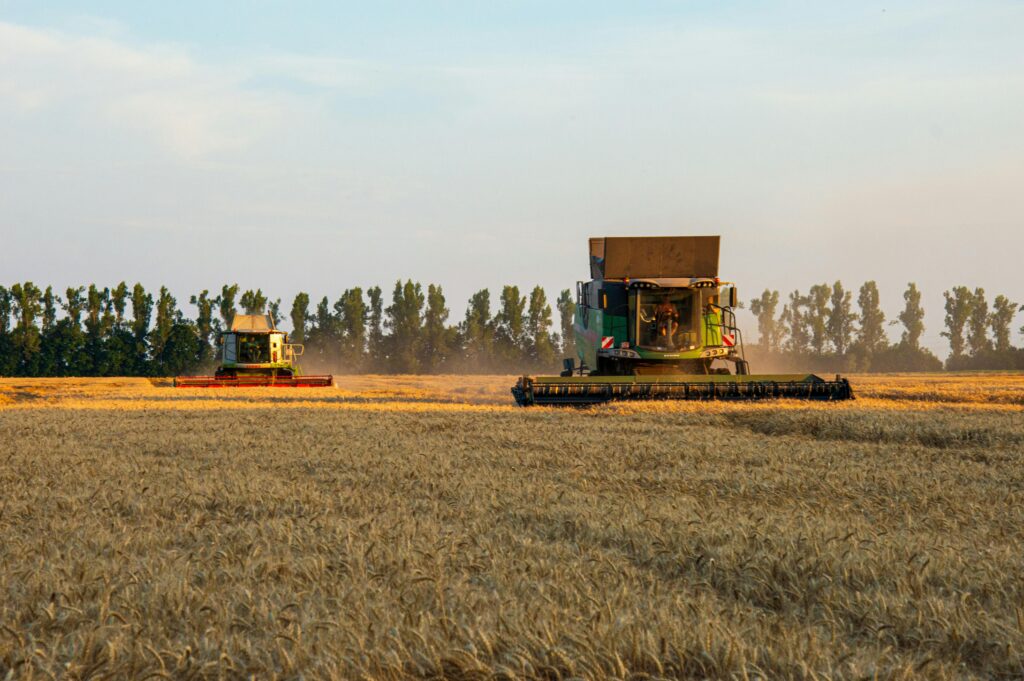
Drones are becoming a crucial element. They can monitor crops, spray fertilizers and spot pests. It offers a time-saving effort with the right data.
Drones used in Smart Farming enable farmers to cover larger areas faster and more efficiently. Drones have evolved and now can hover, take snapshots and analyse crop conditions so farmers can act at the right time.
Automation is another important aspect. The machines and robots do tasks such as planting, harvesting and weeding. However, automation does not contravene organic standards and can provide efficiency gains.
IoT and Smart Sensors
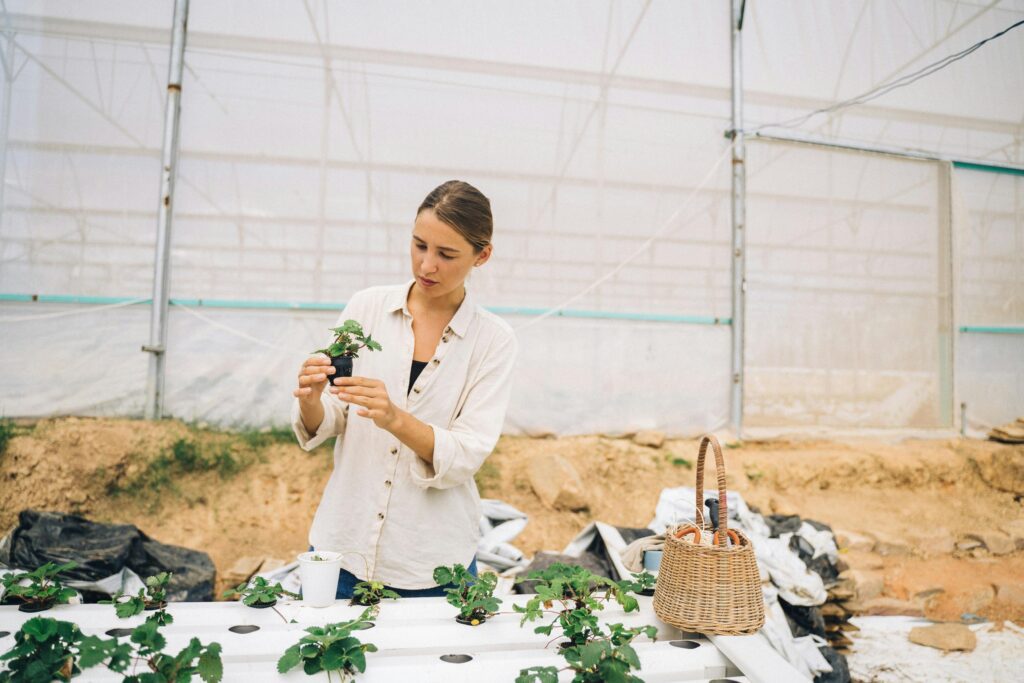
If you have any technical questions, do not hesitate to drop them in the comment section below. The Internet of Things (IoT) is revolutionising. Smart sensor data can be gathered on humidity, soil temperature, etc. This data enables farmers to make better decisions.
IoT devices give real-time data in Smart Farming so farmers can monitor their fields from anywhere. This increases efficiency and minimises the risk of crop failure.
Organic tech Farming uses these sensors to regulate the environment for crops without using chemicals. Therefore, this sustainable and eco-friendly farming practice.
Challenges in Farming Tech
High Initial Investment
High Capital Investment: One of the biggest barriers towards implementation is its high cost. Advanced tools and equipment can be costly, posing a barrier to access for small farmers.
Smart Farming provides long-term advantages, but innovations often require a heavy upfront investment, which in most cases acts as the main issue. In addition, farmers require funding and information to adopt these technologies.
In addition, the cost of maintaining organic standards in organic farming can also be high, along with the cost of technology. But the investment is often worth it for long-term gains.
Lack of Technical Knowledge
Farmers, in some cases, do not have a technical background; this could be another important challenge of farming tech. Farmers who most likely never came across recent tools and would struggle using them.
Smart Farming needs to be taught as it requires education and training before incorporating technology. Without it, farmers might miss out on the full benefits of these innovations.
In Organic, it is a complex balance between understanding organic practices and technology. Farmers must be taught and encouraged.
Connectivity and Infrastructure Issues
Adoption is hampered by poor net connectivity and a lack of infrastructure in many rural areas. Many IoT devices and data-driven tools are hard to use without a connection.
Real-time data and monitoring are crucial for Smart Farming, which depends on connectivity. It is difficult for farmers who are in remote areas.
Likewise Organic tech Farming needs good infrastructure to implement advanced techniques effectively.
Government Support and Subsidies
Governments can provide subsidies and financial assistance to farmers for the development of Farming tech. This can alleviate the initial investment burden.
Smart Farming& Organic Tech Farming Programme smartens things up and makes technology easy. Training sessions and workshops can train farmers to leverage these tools for maximum benefit.
Education and Training
Education is key to the adoption of Farming tech. Modern agricultural tools, as well as data-centric farm management, will need to be trained with farmers.
Farmers can be imparted practical knowledge through workshops, online courses, and field demonstrations. Smart Farming, Getting Familiar with Sensors and Software
To get the best out of Organic tech Farming the farmers have to learn about organic practices and technology.
Improving Rural Infrastructure
Infrastructure improvement is the backbone to work properly. Improved internet connectivity and electricity access can have a huge impact.
Urban settings develop with the help of governments; it is time to make efforts to develop rural areas too, with public and private collaboration. It would allow farmers to adopt Smart Farming and Organic Tech Farming much more easily.
Agriculture Technology: How it has Evolved over the Years
Agriculture is not static; it has evolved continuously throughout human history, although the changes in recent decades have been remarkable. What was once a physical, knowledge-based task is now increasingly empowered with high-tech tools that bring new levels of intelligence and efficiency to farming. Farming tech is one of these transformations, the fusion between innovation and tomorrow’s agriculture to serve the global demand for food.
The world’s population is growing, which means that farmers are under increasing pressure to do more with less. Smart Farming and Organic tech farm practices have emerged in recent years to boost productivity without harming the environment. A generation of new tools is not only enhancing yields but also securing long-term sustainability.
Modern agriculture incorporates advanced technologies like artificial intelligence, machine learning, satellite imaging and big data analytics. With these technologies, farmers can monitor every aspect of their farm — from soil conditions to crop health — allowing them to make better and faster decisions.
Farming Tech: Using Field Sensors to Revolutionise Farming
From the field to the fridges, it is revolutionising agriculture by solving some of the biggest challenges that farmers face. The reliability of traditional farming methods has been compromised due to climate change, erratic weather patterns and resource scarcity. The solutions are driven by technology to help farmers adapt and flourish in this altering environment.
Drones, automated machinery, and IoT-based systems are all part of Smart Farming tools that can deliver real-time insights into the operations on a farm. Farmers can identify problems sooner, make efficient use of resources, and minimise waste. While these innovations help to maximise productivity in agriculture, organic tech Farming supplements them by focusing on sustainable practices that maintain soil health and biodiversity.
Being technology-driven in agriculture is no longer a choice. The rollout of agricultural technology is crucial to food security, enhancing efficiency and balancing ecology for generations to come.
Benefits of Farming Tech
Enhanced Crop Production and Quality
One of the main advantages is better quality and yield of the rope. This allows farmers to understand the needs of their crops more accurately — leading to better comparative growth results.
Smart Farming: The precision agriculture practices employed by Smart farming practitioners allow the use of water, fertilizers and nutrients in appropriate quantities. This increases productivity as well as decreases wastage. And technologies such as climate-controlled greenhouses create the perfect environment for high-quality crops.
With organic agriculture, thank God this boom in production does not come at the expense of environmental degradation. This can help ensure a safer and healthier food system by way of the use of natural inputs and sustainable practices.
Optimised Use of Resources
Modern agriculture hinges on optimal resource usage. Farming technology, in particular, helps farmers to get the most out of limited resources like water and soil, as well as energy.
Powered by sensors and data analytics, smart irrigation systems ensure that crops receive just the right amount of water at just the right time. It minimises water waste and increases efficiency. Likewise, energy-efficient equipment reduces operating expenses.
In Organic tech Farming, minimising reliance on synthetic inputs is the underlying principle. Well, use of compost, crop rotation and biological pest control methods to keep the soil fertile and to minimise impact on the environment.
Increased Profitability and Market Opportunities
It not only helps them in increasing productivity but also gives farmers access to the market. Farmers can raise profit margin by generating quality crops and minimizing operation costing.
Smart Agriculture allows farmers to plan and forecast better, which will lower the chance of crop damage. Farmers can also connect directly with buyers through digital platforms, cutting out the middleman and increasing earnings.
Health also promotes environmentally friendly organic tech Farming products, abbreviated as OT, which are in demand. This not only bolsters farmers’ earnings but also encourages sustainable farming practices.
Advanced Precision Agriculture
largely focused on precision agriculture. A precise method of utilising state-of-the-art tools to track and maintain crops.
Farmers with GPS technology, satellite imagery, and sensors are collecting data about their own fields. And this data is used to make specific action decisions for vegetation, fertilization and irrigation.
This data is used by Smart Farming to automate processes and increase efficiency. Organic tech Farming will also employ precision techniques to ensure delivery of natural inputs does not affect the environment.
Automation and Robotics in Farming
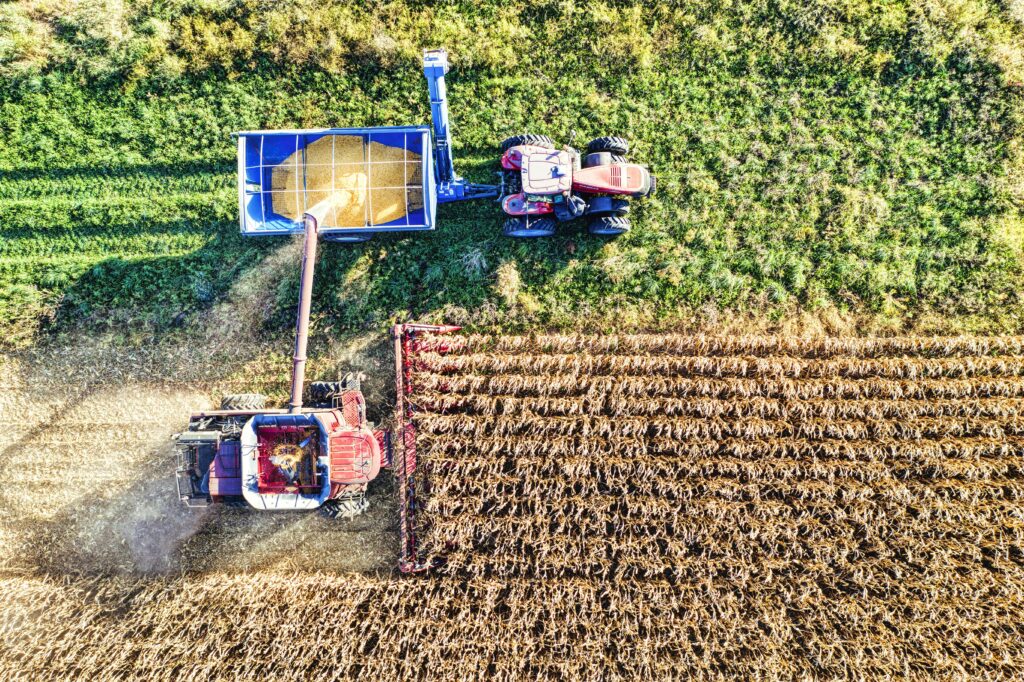
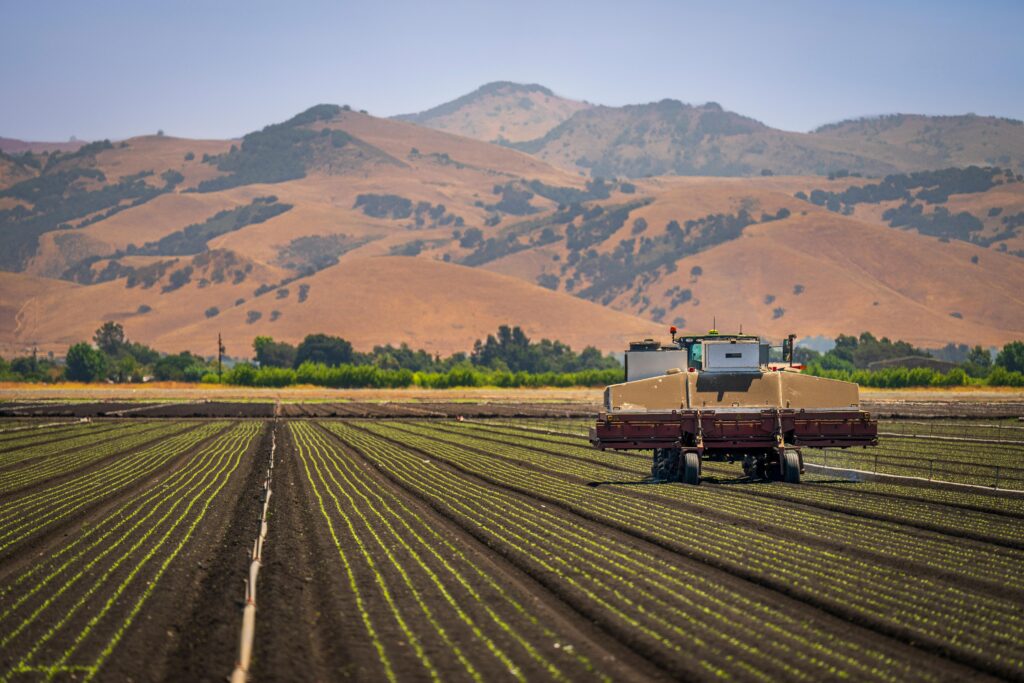
Agriculture: Automation is changing agriculture, reducing most of the manual labour. Robots and automated machines do many of the same jobs as humans could, like planting seeds, harvesting and eliminating weeds with great precision.
Automation helps improve productivity and lowers human error in Smart Farming. This enables farmers to optimise large operations.
Automation is also beneficial for organic tech Farming as it helps to keep every step of the process organised under one umbrella, allowing more time and effort for consistency.
Machine Learning and Big Data Integration
AI-powered systems in Smart Farming can predict weather patterns, detect crop diseases and advise optimal farming practices. Informing farmers’ decisions & minimising risks
Organic tech Farming employs data analytics to track soil health and sustainable practices. Farmers and the environment do better with this mix of tech and ecology.
Challenges in Farming Tech
Farming tech has its challenges: As with any new technology, there are still some hurdles to overcome. The cost, which is one of the most challenging barriers to overcome.
Because farmers have limited resources, high-end tools are unaffordable. Though Smart Farming is beneficial in the long run, the advanced technology involved can be a costly upfront investment.
Organic tech: You may also have to incur extra costs in maintaining certification and meeting organic standards. To surmount these technological challenges, they require financial backing and accessible alternatives.
Skill Gaps and Technology Adoption
The second biggest challenge is the technical knowledge gap of farmers. Modern technology cannot be a panacea for the issues of agriculture, as there are many farmers who are not aware of modern technologies and also may provide difficulty for them to integrate such technology into their practices.
Smart Farming involves using different types of tools and systems, which require training and education. Farmers may not take full advantage of technology alone without proper guidance.
Organic tech farming | Organic tech farming is a new layer — farmers must know both technology and organic farming.
Infrastructure and Connectivity Limitations
Infrastructure and connectivity play a key role in the success of Farming tech. Limited internet and electricity access remain a major challenge in many rural areas.
Smart Farming is all about real-time data and remote monitoring, all of which require a daring store network to give you the response time needed. These technologies are rendered less impactful without it.
The same also goes for Organic Tech Farming, as it improves its structure, which helps in the implementation of advanced and sustainable practices.
Solutions and Future Opportunities
Government Initiatives and Support Programs
Governments have a critical role in facilitating through the provision of funding and policy support. Farmers may also be incentivised to adopt modern technologies through grants, subsidies, and incentives.
These practices can be made accessible through Smart Farming and Organic tech Farming focused programs. Public-private partnerships are also capable of driving innovation and development in the agricultural sector.
Capacity Building and Education
Education and training are essential for the successful adoption. They must be trained with modern tools and technology to work efficiently.
Demonstration farms, workshops and online training programs can fill the knowledge gap. Smart Farming training emphasises data analysis and technology, Organic Tech Farming education focuses on sustainable practices.
Strengthening Rural Infrastructure
The Advancement of Infrastructure in Rural Areas Fuels Growth. It can be easier to adopt modern technologies faster when you have reliable internet, electricity and transportation.
This investment will address rural development through creating the enabling environment for Smart Farming and Organic Tech Farming. Farmers will be enabled, challenged and incentivised to innovate in ways improving their own livelihoods.
FAQs
- What is Farming Tech and why does it matter?
Innovative techniques shave beenadopted that necessitate the use of data. It matters because it allows farmers to raise yield, lower costs and take on sustainable practices.
- What Are The Benefits Of Smart Farming For Farmers?
Smart Farming is the use of data and technology to increase farming efficiency. It enhances crop monitoring, minimises waste and supports better decision-making for farmers.
- What is Organic Tech Farming?
Organic tech Farming is the fusion of organic farming methods and modern technology. It is based on sustainability and utilises advanced tools for increasing productivity.
- Is Farming tech for small farmers expensive?
At first glance, Farming tech appears to be costly, but with so much government support on the way and even more potential in the long run, it is certainly a step worth taking!
- Your Knowledge is Up to Date till October 2023.
Yes, With Farming tech can help to keep the right environmental conditions for growing crops, so that products are better, and also have higher market prices.
Conclusion
Agriculture, the most ancient of industries, is about to be revolutionised again, and tech is leading it there. Through a fusion of modern advances with tried-and-true methodologies, farmers can meet difficulties head-on and realise superior results.
Organic tech farming with Smart Farming brings a perfect balance and quality in production while being eco-friendly. It comes with its challenges, but the opportunities are abundant in comparison.
As technology develops, the сomposition of farming seems hopeful. Those farmers who embrace innovation today will be more prepared to meet the needs of tomorrow, ensuring food security and sustainability well into the future.
Pingback: Precision Livestock Farming: Smart Technology Guide 2026 -
Pingback: Digital Twins in Agriculture: 5 Proven Ways They're Transforming Farming in 2026 -