
Avian influenza in poultry farms is no longer a once-a-decade emergency. As of 2026, highly pathogenic avian influenza (HPAI), commonly called bird flu, has become a near-permanent threat circulating in wild bird populations across six continents, spilling into commercial and backyard poultry operations with unusual frequency and, more recently, into dairy cattle as well.
For anyone raising chickens, turkeys, ducks, or layers, understanding how this virus spreads onto a farm and exactly what to do about it is now a core part of running a livestock operation, not an occasional precaution.
This guide breaks down what avian influenza actually is, why it’s surging again, how it spreads onto a farm, and the concrete, actionable biosecurity steps that reduce your risk the most.
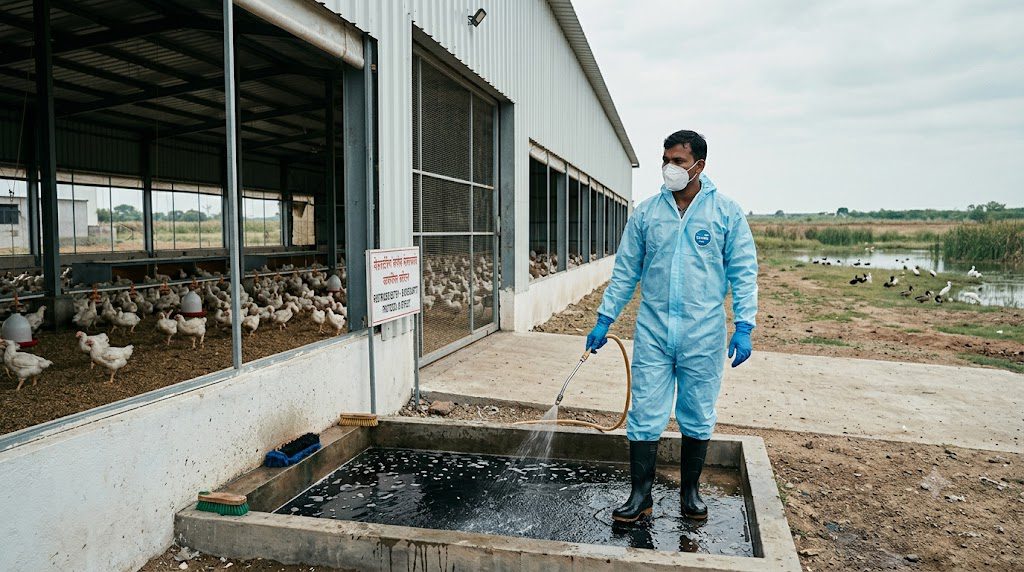
Table of Contents
- What Is Avian Influenza?
- Why Avian Influenza in Poultry Farms Is Surging in 2026
- How Avian Influenza Spreads Onto a Poultry Farm
- Early Warning Signs of Avian Influenza in Poultry
- 9 Critical Biosecurity Steps Against Avian Influenza in Poultry Farms
- What to Do If You Suspect Avian Influenza on Your Farm
- Avian Influenza in Poultry Farms vs. the Dairy Cattle Spillover
- The Economic Cost of Avian Influenza in Poultry Farms
- Should Poultry Farms Vaccinate Against Bird Flu?
- Frequently Asked Questions
- Final Thought
What Is Avian Influenza?
Avian influenza is a viral disease that primarily infects birds, caused by influenza A viruses. Strains are classified as either low pathogenic (mild or no visible symptoms) or highly pathogenic avian influenza, which spreads fast and can kill nearly an entire flock within days.
The strain driving most current outbreaks is H5N1, specifically the 2.3.4.4b clade. It behaves differently from older bird flu strains: it survives longer in the environment, infects a wider range of wild bird species without necessarily killing them, and has jumped into mammals including foxes, sea lions, cats, and dairy cattle far more often than earlier strains ever did.
For poultry specifically, HPAI is devastating. Mortality in infected chicken flocks commonly approaches total flock loss within 48 hours of clinical signs appearing, which is exactly why prevention matters more than treatment. There is currently no widely available treatment for infected commercial flocks, and the standard response is culling to stop further spread.
Why Avian Influenza in Poultry Farms Is Surging in 2026
A few overlapping factors explain why bird flu on poultry farms has become such a persistent problem this year:
- The virus is now endemic in wild bird populations. Rather than flaring up occasionally, H5N1 circulates continuously among migratory waterfowl, meaning every migration season reintroduces the virus to new regions.
- Migratory patterns keep bringing it back. Outbreaks in commercial poultry consistently spike in autumn and winter as wild birds migrate along established flyways, but 2026 has seen unusually high case counts even outside the traditional peak season.
- Mammalian spillover has expanded. The detection of the virus in dairy cattle herds, and more recently in cattle outside North America, has raised concern among veterinary authorities that the virus is adapting in ways that increase its overall reach.
- Backyard and smallholder flocks are increasingly affected. Outbreaks are no longer limited to large commercial operations; biosecurity gaps on small and backyard farms have become a significant transmission pathway.
None of this means an outbreak is inevitable on your farm. It means the baseline risk every poultry keeper is operating under has gone up, and biosecurity that used to be “nice to have” is now essential.
How Avian Influenza Spreads Onto a Poultry Farm
Understanding the transmission pathway is the foundation of prevention. The virus almost always arrives on a farm through one of these routes:
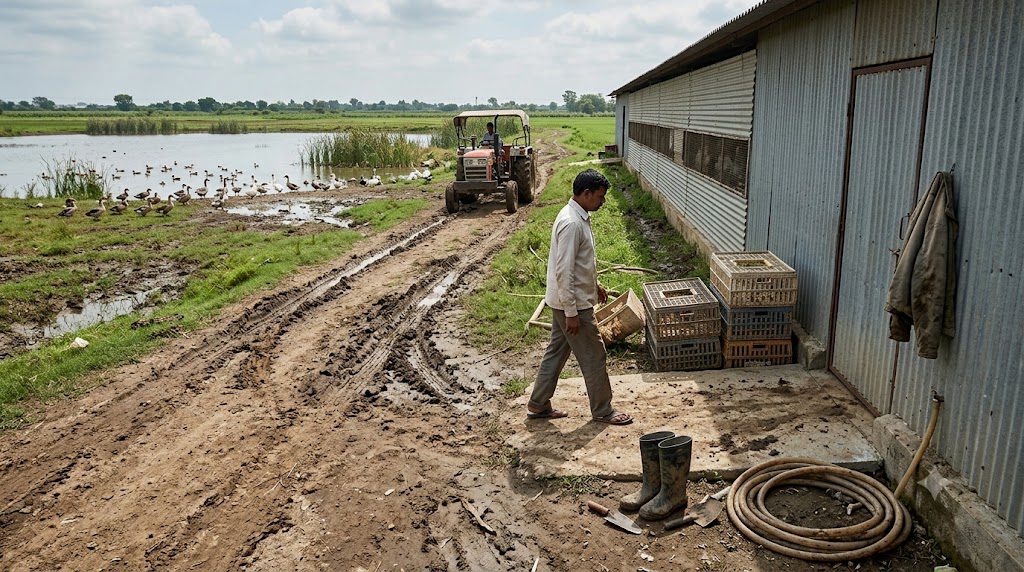
Direct contact with wild birds. Waterfowl such as ducks and geese can carry and shed the virus without showing symptoms themselves, contaminating shared water, feed, or open range areas.
Contaminated surfaces and equipment. The virus can survive on boots, tires, feed bags, crates, and tools long enough to travel from an infected farm or wild bird site to a clean one.
People moving between farms. Farm visitors, delivery drivers, and even farm workers who keep birds themselves at home are a documented transmission risk if biosecurity protocols aren’t followed consistently.
Airborne particles over short distances. In dense poultry regions, windborne dust and feather particles from an infected farm can occasionally reach nearby operations, particularly during high-wind culling and cleanup operations.
Contaminated water sources. Ponds, open water tanks, or irrigation runoff shared with wild waterfowl are a recurring source of introduction, especially on free-range and pasture-based operations.
Early Warning Signs of Avian Influenza in Poultry
Catching bird flu in poultry early, even by a day, can be the difference between losing one shed and losing an entire operation. Watch for:
- Sudden, unexplained drop in egg production
- Soft-shelled or misshapen eggs appearing suddenly
- Swelling around the head, eyelids, comb, and wattles
- Purple discoloration of the comb, wattles, or legs
- Sudden, high mortality with few or no prior symptoms
- Lack of energy, reduced appetite, and huddling
- Nasal discharge, coughing, or difficulty breathing
- Diarrhea and noticeable drop in water consumption
If you see a cluster of these signs, especially sudden death with minimal warning, treat it as a suspected case immediately rather than waiting to see if it resolves.
9 Critical Biosecurity Steps Against Avian Influenza in Poultry Farms {9-critical-biosecurity-steps}
These are the specific, evidence-based measures veterinary and agricultural authorities consistently recommend for reducing poultry farm biosecurity risk.
1. Restrict Farm Access and Control Visitor Movement
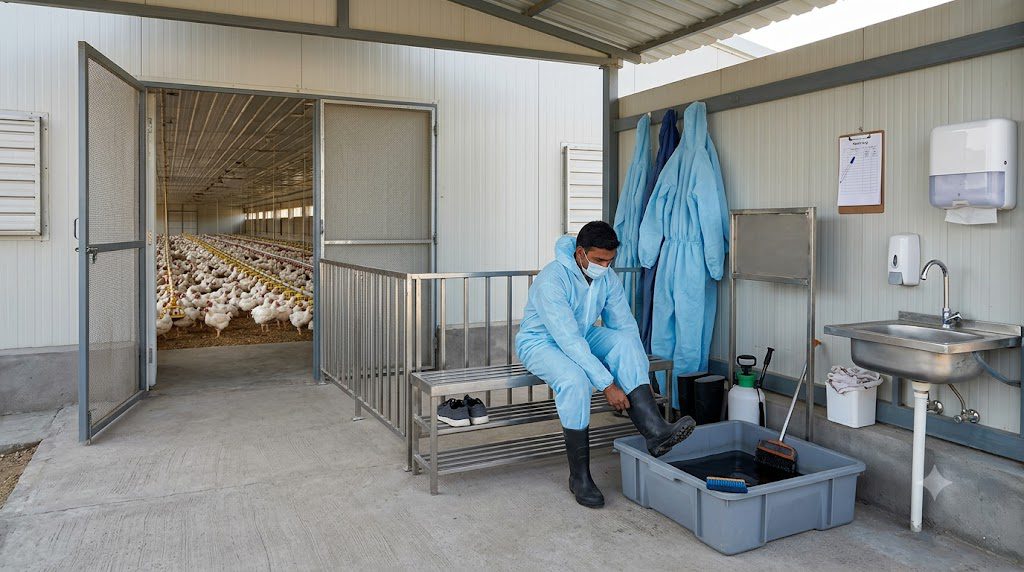
Limit who enters your poultry area to essential personnel only. Maintain a visitor log, require footwear changes or disposable boot covers at entry points, and avoid visits from anyone who has been on another poultry farm within the last 48 hours.
2. Separate Domestic Poultry from Wild Birds and Waterfowl
Keep feed, water, and litter stored where wild birds cannot access them. Where possible, move free-range birds to covered or netted areas during high-risk migration seasons, since direct or indirect contact with wild waterfowl remains the single biggest introduction risk for bird flu in poultry.
3. Disinfect Footwear, Vehicles, and Equipment
Set up a dedicated disinfection station with footbaths with an approved disinfectant, changed regularly, at every entry point to poultry housing. Vehicles that must enter the farm should be sprayed down, particularly tires and wheel wells, before crossing into clean zones.
4. Monitor Flock Health Daily and Report Symptoms Immediately
Daily observation of feed intake, water consumption, egg production, and mortality gives you the earliest possible signal that something is wrong. Delaying a report by even a few days can allow the virus to spread well beyond a single shed before anyone intervenes.
5. Manage Water Sources to Prevent Wild Bird Contamination
Cover open water tanks, avoid drawing water directly from ponds or streams shared with wild waterfowl, and treat or test water sources regularly if surface water is unavoidable on your operation.
6. Quarantine New or Returning Birds
Any new bird brought onto the farm or any bird returning from a show, sale, or exhibition should be isolated for at least two weeks and observed for symptoms before being introduced to the main flock.
7. Control Rodents, Insects, and Other Disease Vectors
Rodents and insects can mechanically carry contaminated material between infected and clean areas. A consistent pest control program reduces this secondary transmission risk considerably.
8. Use Dedicated Clothing and Equipment per Poultry House
Where a farm runs multiple sheds or flocks, dedicate separate boots, coveralls, and tools to each unit rather than moving the same equipment between houses. This single change dramatically slows how fast an introduction in one shed can reach the rest of the farm.
9. Stay Updated on Regional Outbreak Alerts and Reporting Protocols
Follow updates from your national veterinary or agriculture authority on active outbreak zones nearby. Knowing when migratory risk is elevated in your region lets you tighten biosecurity proactively rather than reactively.
Building a Farm-Specific Biosecurity Plan Against Avian Influenza
A generic checklist only goes so far. The farms that manage avian influenza risk best are the ones that turn general biosecurity advice into a written plan specific to their own layout, flock size, and location.
Map your risk zones. Walk your property and identify every point where wild birds, visitors, vehicles, or shared water could realistically come into contact with your flock. These become your priority intervention points rather than treating the whole farm equally.
Assign clear responsibility. On multi-person operations, one person should own biosecurity compliance, checking footbaths are stocked, visitor logs are filled in, and disinfection routines are actually happening rather than assumed.
Set a seasonal risk calendar. Because HPAI risk on poultry farms tracks closely with wild bird migration, tighten protocols measurably during known high-risk windows in your region rather than applying the same intensity year-round. Ask your local veterinary extension office when regional risk typically peaks.
Keep simple written records. A daily log of mortality, feed intake, and water consumption doesn’t need to be elaborate, but having a written baseline makes it far easier to spot the kind of sudden deviation that signals a problem early, rather than relying on memory.
Review after every regional outbreak. Even if your own farm isn’t affected, a nearby confirmed case is a signal to re-audit your own protocols rather than assuming distance alone provides protection.
For smallholder farms across India and other regions where poultry is often raised alongside other livestock in close quarters, a written plan matters even more, since informal setups tend to have more uncontrolled contact points between species, visitors, and shared resources than larger, more segmented commercial operations.

What to Do If You Suspect Avian Influenza on Your Farm {what-to-do-if-you-suspect-avian-influenza}
If your flock shows the warning signs above, do not wait for symptoms to worsen before acting.
- Isolate the affected shed or area immediately and stop all movement of birds, eggs, equipment, or people in or out of it.
- Contact your local veterinary or animal husbandry authority without delay. In most countries, HPAI is a notifiable disease, meaning suspected cases are legally required to be reported.
- Avoid moving birds, manure, or equipment off the property until authorities have assessed the situation.
- Cooperate with sampling and testing. Confirmation typically requires laboratory testing, and acting on a suspected case early gives authorities the best chance of containing spread to neighboring farms.
- Prepare for culling if confirmed. While difficult, rapid depopulation of an infected flock remains the most effective way to prevent avian influenza in poultry farms from spreading further, and many countries offer indemnity payments to offset losses when biosecurity protocols were being followed.
Avian Influenza in Poultry Farms vs. the Dairy Cattle Spillover {avian-influenza-vs-dairy-cattle-spillover}
One of the more unusual developments in recent outbreak seasons is that H5N1 has moved beyond birds and into dairy cattle herds, a host species it was never previously considered a natural threat to. This matters for poultry keepers for a simple reason: mixed farms that run both poultry and dairy cattle now need biosecurity protocols that account for cross-species transmission, not just bird-to-bird spread.
Practically, this means separating footwear, equipment, and even staff assignments between poultry housing and dairy operations where possible, and treating any unexplained illness in either species as a potential signal worth investigating together rather than in isolation.
Farms already following precision livestock monitoring practices have an advantage here, since early detection tools built for tracking feed intake and activity can also flag the kind of sudden behavioral changes that often precede a confirmed outbreak.
The Economic Cost of Avian Influenza in Poultry Farms {the-economic-cost}
The financial impact of avian influenza in poultry farms goes well beyond the birds lost to the virus itself. Culling an infected flock, cleaning and disinfecting housing, and observing mandatory downtime before restocking can keep a shed out of production for weeks or months.
Egg and meat prices in affected regions often rise sharply during major outbreak periods as supply tightens, which creates ripple effects for hatcheries, feed suppliers, and processors connected to affected farms.
For smallholder and backyard poultry keepers who make up a meaningful share of poultry production in many countries,s a single outbreak can wipe out a flock that represents a significant portion of household income, which is exactly why low-cost biosecurity measures like footbaths, visitor logs, and covered feed storage matter just as much on a small farm as on a large commercial one.
If you’re building a broader animal husbandry system that includes poultry alongside other livestock, factoring biosecurity costs into your overall farm risk planning is worth doing before an outbreak forces the issue.
Should Poultry Farms Vaccinate Against Bird Flu? {should-poultry-farms-vaccinate}
Vaccination remains one of the most debated tools in the fight against avian influenza in poultry farms. Some countries have moved toward limited poultry vaccination programs, particularly for high-value breeding stock and layer operations, while others remain hesitant.
The concerns on the vaccine-hesitant side are twofold: vaccinated flocks can make it harder to distinguish a vaccinated bird from a naturally exposed one during surveillance testing, and some trade partners restrict imports of vaccinated poultry products. On the other side, proponents argue that in regions with sustained, high circulation of the virus, vaccination could meaningfully reduce the scale of culling and economic loss.
For most individual farms, this decision sits with national veterinary authorities rather than the farmer alone, since vaccine availability, strain matching, and export implications are typically managed at a policy level rather than farm by farm.
What every poultry keeper can control directly, regardless of national vaccine policy, is the strength of their day-to-day biosecurity, ty which remains the most effective defense against avian influenza in poultry farms currently available anywhere in the world.
Frequently Asked Questions
Can avian influenza in poultry farms spread to humans? Yes, though human infections remain rare and are almost always linked to close, prolonged contact with infected birds or heavily contaminated environments. No sustained human-to-human transmission of the current H5N1 strain has been documented.
Is there a cure for bird flu in chickens? No. There is no widely available treatment for HPAI in commercial poultry. Prevention through biosecurity and, where confirmed, rapid culling of infected flocks remain the primary tools for managing outbreaks.
How long can the avian influenza virus survive outside a bird’s body? The virus can persist for extended periods in cool, moist conditions, including in contaminated water, soil, and on equipment, which is why disinfection protocols at farm entry points are so critical.
Are backyard chicken keepers at risk from avian influenza? Yes. Backyard and small-scale flocks are increasingly implicated in outbreaks, often because biosecurity measures common on commercial farms- controlled access, dedicated equipment,nt and wild bird separation- are less consistently applied.
Does cooking eggs or poultry meat kill the virus? Properly cooking poultry meat and eggs to standard safe temperatures inactivates the virus, and there is no evidence that properly cooked poultry products transmit avian influenza to humans.
How often should biosecurity protocols be reviewed on a poultry farm? Ideally before each seasonal migration period and immediately after any confirmed outbreak in your region, since risk levels shift significantly with wild bird movement patterns.
What’s the difference between low pathogenic and highly pathogenic avian influenza? Low pathogenic strains typically cause mild or no visible symptoms in poultry, while highly pathogenic avian influenza causes severe illness and can result in near-total flock mortality within days, which is why HPAI specifically is the strain driving culling and containment responses worldwide.
Can indoor or fully enclosed poultry operations still get avian influenza? Yes, though the risk is generally lower than free-range systems. Indirect introduction through contaminated feed, equipment, rodents, or people moving between infected and clean sites can still bring the virus into an enclosed shed, which is why footwear and equipment hygiene matter even when birds never go outside.
Should I stop keeping poultry entirely because of avian influenza risk? For most keepers, no; the far more practical response is tightening biosecurity rather than exiting poultry keeping altogether, since the vast majority of flocks with consistent biosecurity practices in place never experience an outbreak even in high-risk regions.
Final Thought
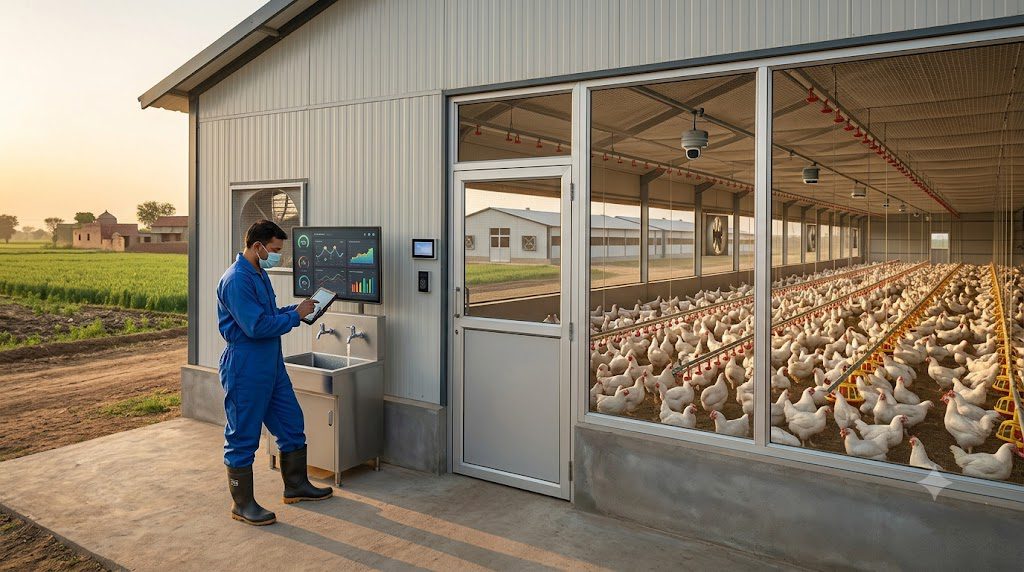
Avian influenza in poultry farms has shifted from a periodic emergency into a persistent, year-round risk that every poultry keeper from large commercial operations to backyard flocks now has to plan around. The virus itself can’t be controlled at the farm level, but the pathways it uses to reach your birds largely can be. Consistent biosecurity, early symptom recognition, and fast reporting remain the most reliable tools available, and in an outbreak environment like 2026’s, they are no longer optional extras but core parts of running a poultry operation responsibly.