
Table of Contents
New world screwworm prevention in cattle has gone from a historical footnote to an active, urgent priority for producers across the southern United States. A pest that was declared eradicated from the U.S. in 1966 is back, moving north through Mexico, and it has already reached Texas and New Mexico cattle herds in 2026.
If you raise cattle anywhere near the affected region or you’re simply watching the outbreak from farther north wondering whether it’s coming your way this is no longer a distant problem you can set aside.
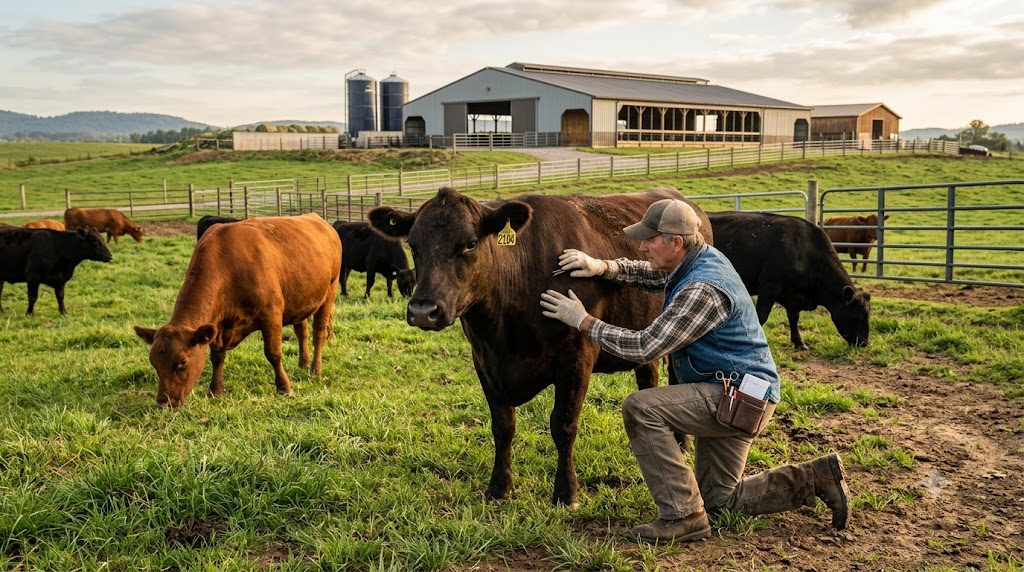
Why New World Screwworm Prevention in Cattle Is Suddenly Urgent Again
In June 2026, the USDA confirmed the first U.S. animal case of New World Screwworm (NWS) in a calf in South Texas, marking the return of a pest the country spent decades and enormous resources eliminating. Since that initial detection, additional cases have surfaced in cattle, goats, and even a dog linked to New Mexico, triggering movement restrictions and emergency response measures across the region.
The scale of the underlying outbreak is what makes new world screwworm prevention in cattle so pressing right now. Central American countries and Mexico have reported more than 209,400 NWS cases in animals since the pest’s re-emergence, alongside over 2,500 human cases, according to the CDC’s outbreak situation summary numbers that explain why the parasite eventually crossed into U.S. territory despite years of containment effort along the southern border.
Trade impacts have already followed. Canada temporarily restricted livestock imports originating from Texas following the confirmed U.S. detections, and USDA has stood up a dedicated New World Screwworm Directorate within APHIS specifically to coordinate the federal response.
Industry leaders stress that current detections remain isolated rather than a widespread infestation, but the direction of travel north, and accelerating is exactly why new world screwworm prevention in cattle belongs in every producer’s routine now, not after the pest reaches a new county.
What New World Screwworm Actually Is
New World Screwworm (Cochliomyia hominivorax) is the larval stage of a parasitic fly, not a disease in the conventional sense. Adult female flies lay eggs directly in open wounds on warm-blooded animals anything from a small scrape to a fresh umbilical cord. Once the eggs hatch, the larvae burrow into living tissue and feed on it, rather than on dead or decaying flesh the way most maggots do.
This is the detail that makes NWS so dangerous compared to ordinary wound-infesting flies: the wound doesn’t just get infected, it actively grows larger and deeper as more larvae hatch and feed, often leading to severe secondary infection and death if left untreated.
NWS can infest cattle, sheep, goats, swine, horses, pets, wildlife, and in rare cases, people which is why new world screwworm prevention in cattle is being coordinated as a One Health issue between USDA, CDC, and the Department of the Interior rather than treated as a purely veterinary concern.
How New World Screwworm Infects Cattle
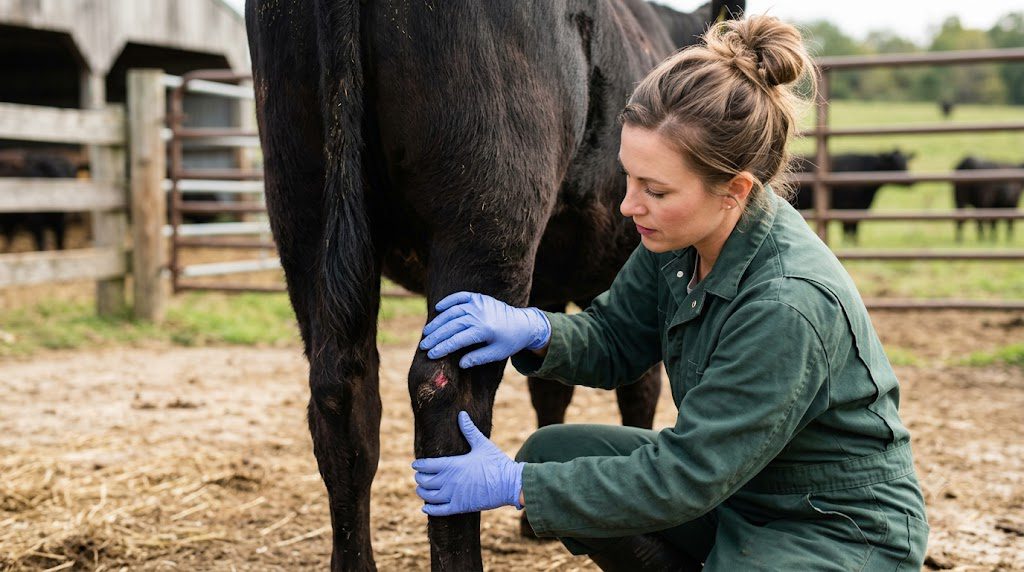
Understanding the infection pathway is the foundation of effective new world screwworm prevention in cattle. The most commonly infested sites are the navels of newborn calves and the vulva or perineum of their dams, particularly following any trauma during calving. Beyond calving-related wounds, any open injury from fencing, dehorning, castration, branding, or fighting creates an entry point.
A single female NWS fly mates only once in her lifetime but can lay hundreds of eggs across her lifespan, which is precisely the biological weakness the U.S. exploited to eradicate the pest previously, and the same weakness current containment strategy relies on again.
Because the fly needs a wound to reproduce successfully, reducing wound frequency and treating any wound immediately are the two most direct levers producers actually control.
8 Critical Steps for New World Screwworm Prevention in Cattle
These eight measures form the current best-practice foundation for new world screwworm prevention in cattle, based on guidance from USDA-APHIS, state animal health commissions, and extension veterinary programs responding to the 2026 outbreak.
1. Treat Every Wound Immediately
No wound is too small to matter. Treat umbilical cords of newborn calves and any cut, scrape, or surgical wound with an approved insecticide as soon as it occurs, rather than waiting to see whether it becomes a problem.
2. Time Routine Procedures Carefully
Castration, dehorning, branding, and ear tagging all create wounds that attract NWS flies. In affected or high-risk regions, producers are advised to schedule these procedures during cooler months when fly activity is lower, and to apply wound treatment immediately afterward as a standard part of the procedure, not an afterthought.
3. Inspect Animals Frequently
Daily or near-daily visual inspection of newborn calves, recently calved cows, and any animal with a known wound allows early detection before larvae cause extensive damage. Early detection remains the single most effective defense against New World Screwworm, according to USDA officials monitoring the current outbreak.
4. Use FDA-Authorized Preventive Treatments
Since the outbreak began, FDA has issued a series of Emergency Use Authorizations for drugs specifically labeled for NWS prevention and treatment in cattle, including Dectomax/Dectomax-CA1 for dairy and beef cattle and Bimectin injection as a generic preventive option. Work with your veterinarian to identify which currently authorized product fits your herd and region, since labeling and species coverage differ between products.
5. Control Other Wound-Causing Parasites
Ticks and other external parasites that cause skin lesions create additional entry points for NWS flies. Maintaining a solid parasite control program is now a component of new world screwworm prevention in cattle, not a separate concern.
6. Inspect Pens, Equipment, and Fencing for Injury Risks
Sharp edges on fencing, feeders, and handling equipment are a frequent, preventable source of the exact wounds NWS flies target. Routine equipment inspection reduces the number of injury opportunities before they happen.
7. Follow Animal Movement and Certification Requirements
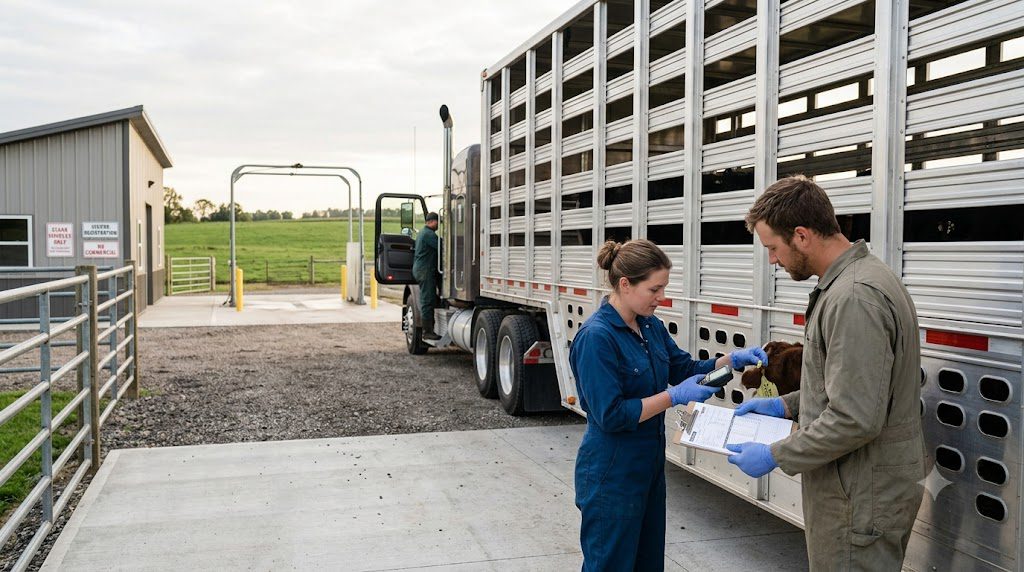
In and around affected zones, moving livestock requires inspection and a completed NWS Movement/Treatment certificate documenting the preventive product used and the animal’s official identification. Producers should confirm current requirements with their state animal health commission before transporting animals, since restrictions are actively evolving as the outbreak response continues.
8. Inspect Vehicles and Equipment When Leaving Infested Areas
NWS flies can be transported on vehicles and equipment moving out of an infested zone. Visual inspection of vehicles before leaving affected areas is part of official guidance and a simple habit that closes an easily overlooked transmission pathway.
Warning Signs Every Producer Should Know
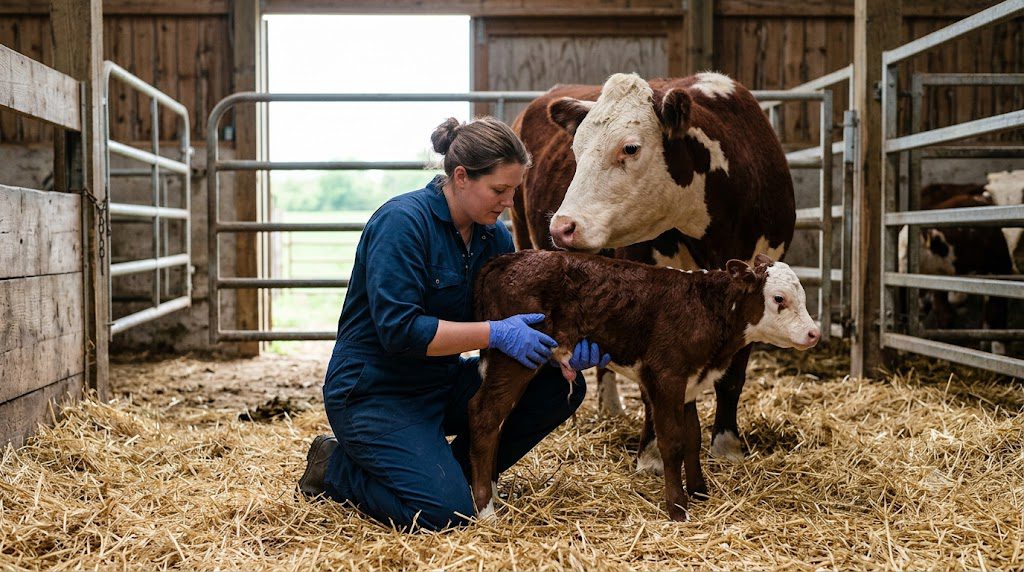
New world screwworm prevention in cattle depends on recognizing infestation (myiasis) early. Watch for:
- A wound that appears larger, deeper, or more irritated than expected for its cause
- Visible larvae or maggots within a wound
- A foul odor coming from a wound
- Animals separating from the herd, head-shaking, or showing signs of discomfort around a wound site
- Discharge or bleeding from a wound that isn’t healing normally
- Behavioral changes in newly calved cows or newborn calves specifically around the navel or birth-related wounds
Any of these signs warrants immediate closer inspection rather than a wait-and-see approach, given how quickly NWS larvae can enlarge a wound.
What to Do If You Suspect a Screwworm Infestation
If you find larvae consistent with NWS, do not attempt to simply treat and move on. Report it immediately to your state animal health official and local USDA-APHIS office. Rapid reporting allows officials to respond quickly and address the infestation before a localized population becomes established which is the entire basis of the sterile insect eradication strategy that worked previously and is being deployed again now.
While waiting for official guidance, isolate the affected animal from the rest of the herd where practical, and follow your veterinarian’s specific treatment recommendation rather than an informal home remedy, since treatment protocols are tied to currently authorized products and dosing.
Approved Treatments and the EUA Drug Landscape
Because there is no single, long-standing FDA-approved drug specifically for NWS in every species, FDA has been issuing a rolling series of Emergency Use Authorizations throughout 2026 as the outbreak response scales up covering cattle, dogs, horses, sheep, goats, and swine at different points through the year. Two products currently hold conditional FDA approval specifically labeled for NWS prevention and treatment in cattle.
It’s worth understanding the legal distinction here: a conditionally approved drug has a reasonable expectation of effectiveness but has not yet met the full “substantial evidence” standard required for standard approval, and federal law does not permit off-label use of these conditionally approved products.
In practice, this means new world screwworm prevention in cattle now requires producers to work directly with a veterinarian to use the correct product, at the correct dose, for the correct species and life stage rather than assuming any insecticide on the shelf will do.
Movement Restrictions and Trade Impact
Beyond the direct animal health risk, new world screwworm prevention in cattle now intersects directly with interstate and international trade. Canada’s temporary restriction on livestock imports from Texas following the confirmed detections illustrates how quickly a localized outbreak can affect market access well beyond the affected region.
Within the U.S., moving livestock out of a designated NWS-infested zone requires a certified inspection and completed movement certificate, as detailed by the Texas Animal Health Commission.
Producers operating anywhere near an affected or bordering region should expect these requirements to shift as the outbreak response evolves, and should check current guidance through their state animal health commission or screwworm.gov before any planned movement, rather than relying on requirements that were accurate even a few months earlier.
The Economic Case for Prevention Over Reaction
New world screwworm prevention in cattle is far cheaper than managing an established outbreak, and the historical comparison makes the point clearly. Before eradication in 1966, NWS cost the U.S. livestock industry hundreds of millions of dollars annually in treatment, labor, and production losses figures that would run into the billions in today’s terms across a modern, larger national herd.
The 2026 outbreak response reflects that lesson directly. USAHA’s preparedness white paper on the current outbreak notes that if NWS became endemic again in the United States, the cattle industry would face prolonged costs tied to extended eradication efforts, with implications reaching national food security rather than staying contained to individual affected operations.
That’s the scale federal agencies are actively working to prevent through sterile fly releases, movement controls, and early detection incentives and it’s the same logic that applies at the individual farm level.
A few minutes spent treating a newborn calf’s navel or inspecting a wound costs almost nothing compared to the labor, veterinary bills, and potential animal loss involved in treating an established infestation, let alone the quarantine and movement restrictions that follow a confirmed case.
For producers weighing whether new world screwworm prevention in cattle is worth the added routine effort, the answer mirrors what we’ve covered in our precision livestock farming guide: prevention and early monitoring consistently cost less than reacting to a problem that’s already taken hold, and that gap widens considerably with a pest capable of spreading as fast as NWS has in 2026.
New World Screwworm Prevention for Smallholder and Backyard Herds
Most current NWS guidance is written for commercial cattle operations, but smallholder and backyard livestock keepers face similar exposure with fewer resources to manage it. A single family cow, a handful of goats, or backyard livestock kept near wildlife corridors are just as vulnerable to NWS as a large commercial herd, and often receive less frequent veterinary oversight to catch an infestation early.
For smallholders, the realistic core of new world screwworm prevention in cattle and other livestock comes down to the same fundamentals at smaller scale: treat every wound immediately regardless of how minor it looks, inspect animals daily rather than weekly, and build a relationship with a local veterinarian or extension office before an emergency happens rather than during one.
Farmers already applying close daily observation habits from our goat and poultry farming guide are better positioned to catch early signs of myiasis than operations relying on infrequent checks.
The History Lesson: How the U.S. Eradicated Screwworm Once Before
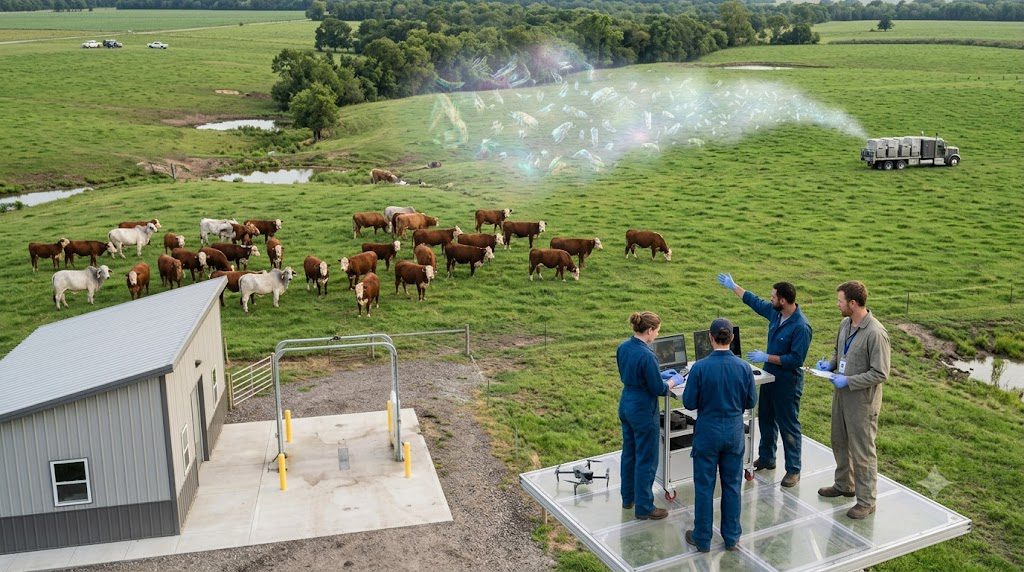
New world screwworm prevention in cattle today is being built on a strategy that has already worked once. The U.S. eradicated NWS in 1966 using the sterile insect technique: releasing mass-reared sterile male flies into affected areas, where they mate with wild female flies. Because female NWS flies mate only once in their lifetime, matings with sterile males produce no viable offspring, and the wild population progressively collapses.
The same technique successfully eliminated a small NWS outbreak that reached the Florida Keys in 2017, confirming the method still works at a smaller, contained scale.
The current outbreak response including sterile fly releases, movement controls, and coordinated surveillance is applying the identical playbook against a considerably larger and faster-moving incursion than the 2017 event, which is why USDA officials frame speed of detection and reporting as the decisive factor in outcome.
What’s Next in the 2026 Outbreak Response
Two threads will determine how new world screwworm prevention in cattle evolves over the coming months. First, the pace and scale of sterile fly production and release a resource-intensive process that determines how quickly the wild population in affected zones can be suppressed.
Second, how far north detections continue to spread; each new confirmed case beyond the current Texas and New Mexico zone would meaningfully expand the geographic scope producers need to actively prepare for, rather than passively monitor from a distance.
Government agencies continue to express confidence that aggressive containment will prevent the severe economic scenarios modeled in earlier outbreak studies, but that outcome depends directly on producer-level compliance with movement restrictions and reporting requirements which makes individual-farm new world screwworm prevention in cattle a meaningful part of the broader national response, not just a personal risk-management decision.
Frequently Asked Questions
What is New World Screwworm? New World Screwworm (Cochliomyia hominivorax) is the larval stage of a parasitic fly that lays eggs in open wounds on warm-blooded animals; the larvae then feed on living tissue, causing rapidly worsening wounds if untreated.
Where has New World Screwworm been detected in the U.S. in 2026? The first confirmed U.S. animal case was in a calf in South Texas in June 2026, with additional cases detected in cattle, goats, and a dog linked to New Mexico.
Can New World Screwworm infect humans? Yes, though rarely. Human cases have been reported in Central America and Mexico during the current outbreak, and one travel-associated human case was confirmed in the U.S. in August 2025; there have been no reports of locally acquired human infestations within the United States.
What should I do if I find maggots in a wound on my cattle? Report it immediately to your state animal health official and local USDA-APHIS office, isolate the animal where practical, and follow veterinary guidance using a currently FDA-authorized treatment rather than an informal remedy.
Are there approved drugs for New World Screwworm prevention in cattle? Yes. Several products, including Dectomax/Dectomax-CA1 and Bimectin injection, have received FDA conditional approval or Emergency Use Authorization specifically for NWS prevention and treatment in cattle as of 2026.
How did the U.S. eradicate screwworm previously? Through the sterile insect technique, releasing mass-reared sterile male flies to mate with wild females, whose resulting unfertilized eggs cause the wild population to collapse over time the same method being deployed again in the current outbreak.
Will New World Screwworm keep spreading north in the U.S.? That depends on the pace of sterile fly releases and containment measures in the affected zone; USDA officials express confidence that aggressive response will prevent widespread spread, but each new confirmed case beyond Texas and New Mexico would expand the geographic area producers need to actively prepare for.
Final Thought
New world screwworm prevention in cattle has shifted, in the space of a single year, from a historical case study into an active daily responsibility for producers across the southern United States and an emerging concern for everyone else watching the outbreak’s northward progress.
The pest hasn’t changed since 1966 it still needs an open wound to reproduce, and it’s still vulnerable to the same sterile insect strategy that beat it before. What’s different this time is how quickly a producer’s own vigilance, wound care, and reporting habits feed directly into a national containment effort.
Treating every wound immediately and reporting anything unusual without delay isn’t just good herd management right now it’s the frontline of the entire response.