
Table of Contents
Carbon credits for farmers have moved from a theoretical climate-finance concept to an actual line item on some farm balance sheets the global carbon credit market tied to agriculture and land use is projected to grow from roughly $7.5 billion in 2025 to $9.67 billion in 2026, and farmers enrolled in verified programs are reporting earnings in the range of $10 to $50 per acre.
That’s a real number, but it comes with real caveats most marketing pages skip over. This guide breaks down how this actually works, what you can realistically expect to earn, which practices qualify, and where the risks in this still-maturing market actually sit.
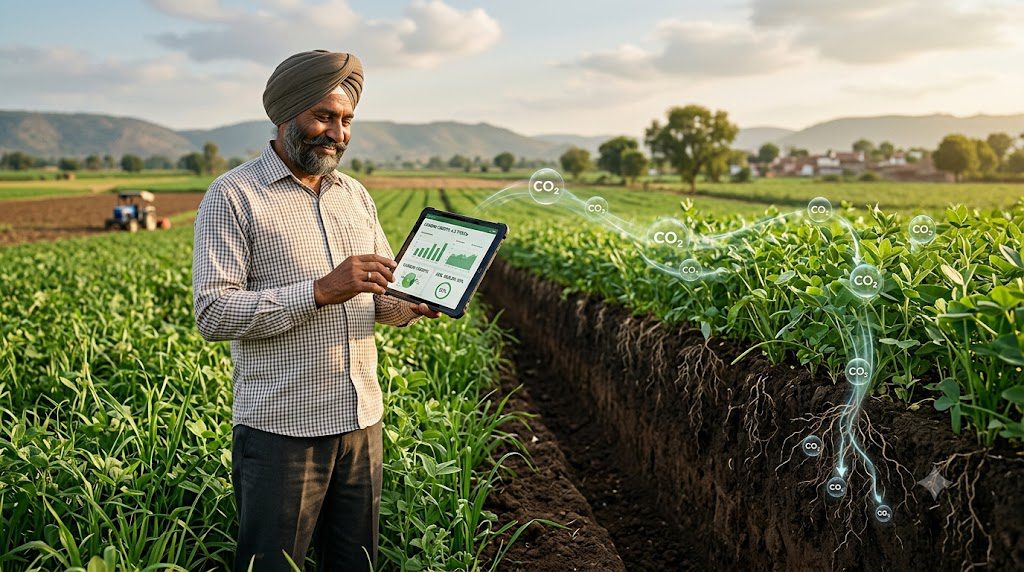
What Are Carbon Credits for Farmers?
A carbon credit represents one metric ton of CO₂ either removed from the atmosphere or prevented from being emitted. For farmers, this typically means storing more carbon in soil and vegetation than a baseline conventional operation would through practices like reduced tillage, cover cropping, or improved grazing management and having that additional stored carbon measured, verified, and converted into a sellable credit.
Companies looking to offset their own emissions buy these credits on voluntary carbon markets, and the payment flows back to the farmer who did the underlying work. In principle, it turns soil health improvements you might already be making into a secondary income stream rather than a purely internal benefit.
Why Carbon Credits for Farmers Are Trending in 2026
A few forces are driving renewed attention this year:
1. Corporate net-zero deadlines are approaching. Many large companies set 2030 emissions targets years ago, and buying verified agricultural carbon credits is one of the more credible ways to close the remaining gap, driving real demand into the market.
2. Measurement technology has improved. Digital measurement, reporting, and verification (MRV) tools including satellite monitoring and hyperspectral soil sensing are making it faster and cheaper to verify claims, which was previously one of the biggest bottlenecks in the entire system.
3. Federal conservation funding overlaps with carbon-qualifying practices. Many of the same practices that earn carbon credits cover cropping, reduced tillage, managed grazing also qualify for USDA conservation cost-share funding, meaning farmers can potentially stack multiple income sources for the same underlying work.
4. AI is shortening verification cycles. Machine learning models analyzing soil and satellite data are reducing the time and cost of third-party verification, which had historically made smaller farms uneconomical to enroll.
How the Carbon Credit Market Actually Works
The mechanics behind this system follow a fairly standard sequence:
- Baseline measurement : A program establishes what your soil carbon and emissions levels were before any new practices were adopted.
- Practice adoption : You implement one or more qualifying practices (covered in detail below).
- Monitoring period : Typically spans one or more growing seasons, using soil sampling, satellite data, or a combination of both.
- Third-party verification : An independent auditor confirms the measured carbon change meets the program’s standards.
- Credit issuance and sale : Verified tons of sequestered or avoided carbon become credits, sold to corporate buyers, with proceeds paid to the farmer, often minus a program or broker fee.
The entire cycle can take anywhere from several months to a few years depending on the program, which is one reason this works better as a secondary income stream than a primary one, at least in the current market.
What Farmers Actually Earn: Realistic Numbers
This is the question most farmers actually want answered, and the honest range is wide: roughly $10 to $50 per acre per year, depending on your soil type, the specific practices adopted, the program you enroll in, and current market pricing for credits.
Factors that push earnings toward the higher end:
- Higher-carbon-sequestering practices like agroforestry, which tends to yield the highest carbon credit value per hectare among common approaches
- Stronger, more granular verification data, which buyers pay a premium for due to higher confidence in the claims
- Enrollment in programs with direct corporate buyer relationships rather than heavily brokered marketplaces
Factors that push earnings toward the lower end or make enrollment not worth it:
- Land already under long-standing no-till or cover crop management, since many programs only pay for additional carbon gained above an existing baseline not carbon you were already storing
- Smaller acreage, where fixed verification and enrollment costs eat a larger share of total payout
- Regions or soil types with naturally slower carbon accumulation rates
The realistic framing: this is supplemental income tied to documentation and patience, not a windfall. Treat any pitch promising dramatically higher guaranteed payouts with real skepticism.
A rough sense of scale, region-independent:
| Farm Size | Estimated Annual Range (at $10–$50/acre) |
|---|---|
| 100 acres | $1,000 – $5,000 |
| 500 acres | $5,000 – $25,000 |
| 1,000 acres | $10,000 – $50,000 |
| 5,000 acres | $50,000 – $250,000 |
These figures are illustrative, not a quote actual payouts depend entirely on your specific soil, practices, and program terms, and larger operations often negotiate better per-acre rates due to lower per-unit verification costs. Treat this table as a way to sanity-check any specific offer you receive, not as a promise.
7 Practices That Qualify for Carbon Credits
Most programs draw from an overlapping set of qualifying activities:
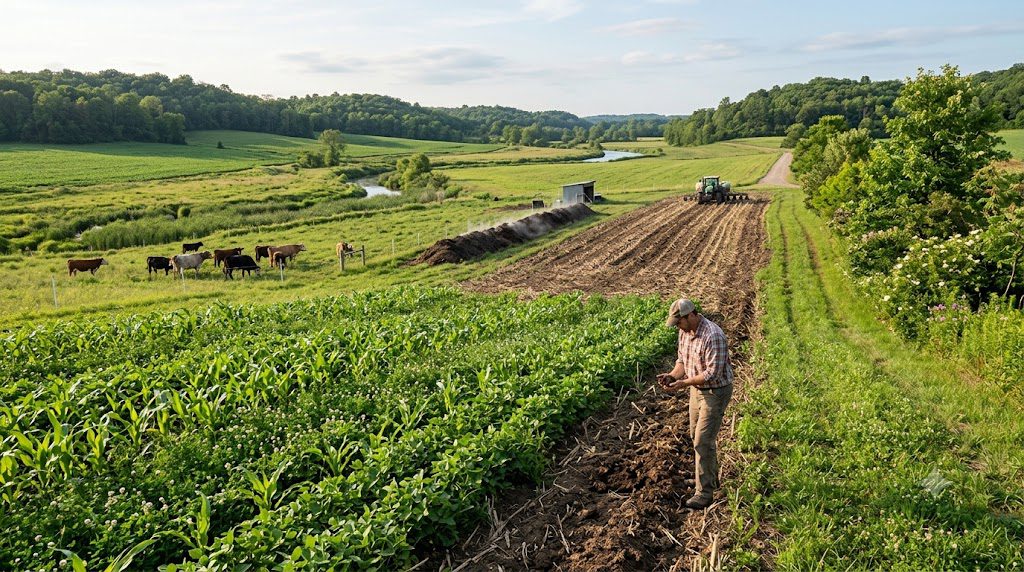
- Cover cropping : Keeping soil covered between cash crops to add organic matter and reduce erosion.
- Reduced or no-till cultivation : Minimizing soil disturbance to preserve stored carbon and soil structure.
- Managed grazing : Rotating livestock through paddocks to improve pasture carbon storage and forage recovery.
- Agroforestry and tree planting : Integrating trees or perennial buffers, which sequester carbon in both soil and woody biomass.
- Compost and biological amendments : Adding organic matter inputs that boost microbial activity and soil carbon.
- Nutrient management optimization : Applying fertilizer more precisely to reduce nitrous oxide emissions, a potent greenhouse gas.
- Wetland and riparian restoration : Restoring natural water features on farmland, which store carbon and often qualify for separate conservation incentives.
Notably, several of these overlap directly with soil-health practices covered elsewhere on this site if you’re already piloting cover crops, reduced tillage, or managed grazing for other reasons, checking carbon program eligibility is a low-effort add-on rather than a separate initiative.
The Verification Problem, Explained
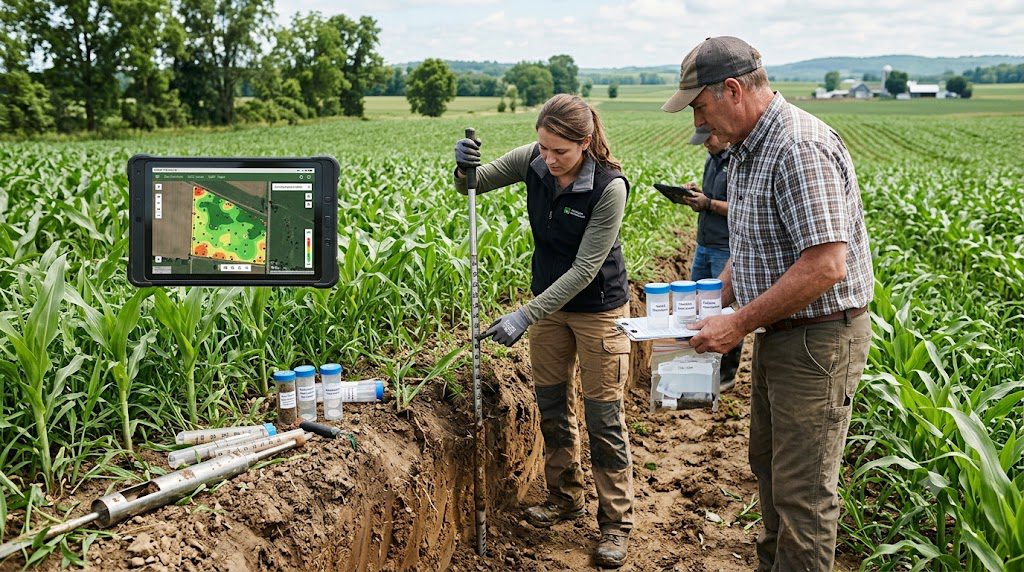
Verification sometimes shortened to MRV (measurement, reporting, verification) is the part of this system that determines whether a credit is actually trustworthy, and it’s also the part most prone to disputes.
What verification typically involves:
- Soil sampling at set depths and intervals to measure organic carbon changes directly
- Satellite and remote-sensing data to track land use and practice adoption at scale
- Independent third-party auditors who review the data against a program’s specific methodology
Why this matters for you as a farmer: programs with weaker verification standards may pay faster but often pay less per credit, since buyers discount low-confidence claims. Programs with rigorous, data-heavy verification tend to command higher prices per ton but require more upfront documentation and patience.
Real Risks: What Past Carbon Credit Scandals Teach Us
This market has real credibility problems worth knowing about before you sign anything. A widely reported 2023 investigation found that a major forest-carbon certifier had significantly overstated the actual climate impact of many of its credits a finding that damaged buyer confidence across the broader carbon market and exposed real gaps in oversight.
What this means practically for farmers considering enrollment:
- Ask specifically which verification standard and methodology a program uses, and whether it’s been independently reviewed or criticized
- Understand that “carbon credit” isn’t a single regulated product quality and rigor vary enormously between programs
- Be cautious of any program unwilling to explain its measurement methodology in plain language
The agricultural side of this market is generally considered more measurable than some forestry offset categories, since soil sampling is more direct than modeling avoided deforestation but “more measurable” doesn’t mean “risk-free.”
A practical due-diligence checklist before signing with any program:
- Ask which specific verification protocol they use and whether it’s publicly documented
- Ask whether payments are contingent on final verification or advanced against expected results
- Ask what happens if a monitoring period shows lower carbon gains than projected do you owe money back, or simply earn less?
- Search for independent reviews or news coverage of the program beyond its own marketing materials
- Request references from other farmers currently enrolled, not just testimonials curated by the company
None of these questions are unreasonable to ask a legitimate program, and a company that resists answering them plainly is telling you something important on its own.
Government vs. Private Carbon Programs
Farmers generally have two broad paths into this space:
Government-adjacent conservation programs: USDA cost-share programs like the Environmental Quality Incentives Program (EQIP) and Conservation Stewardship Program (CSP) don’t pay for carbon credits directly, but they fund many of the same qualifying practices, effectively reducing the cost of adopting them before you separately pursue carbon credit income. Details are available through the USDA Farm Service Agency and your local Natural Resources Conservation Service office.
Private carbon marketplaces and aggregators: Companies specializing in agricultural carbon credits handle measurement, verification, and sale to corporate buyers, typically taking a percentage of proceeds. These vary significantly in transparency, payout timing, and minimum acreage requirements, so comparing at least two or three before enrolling is worth the time.
Some farmers combine both using conservation cost-share to offset the cost of adopting a new practice, then separately enrolling that same acreage in a private carbon program once a baseline and monitoring period are established.
Naming names, briefly: aggregators and platforms operating in this space include companies like Indigo Ag, Nori, Truterra, and CIBO, alongside programs run directly by agribusiness and food companies. Each has different minimum acreage requirements, payment timelines, and fee structures this guide won’t rank them, since the right fit depends heavily on your region, crop, and existing practices, but it’s worth requesting a sample payout estimate from more than one before signing anything.
Tax and Recordkeeping Considerations
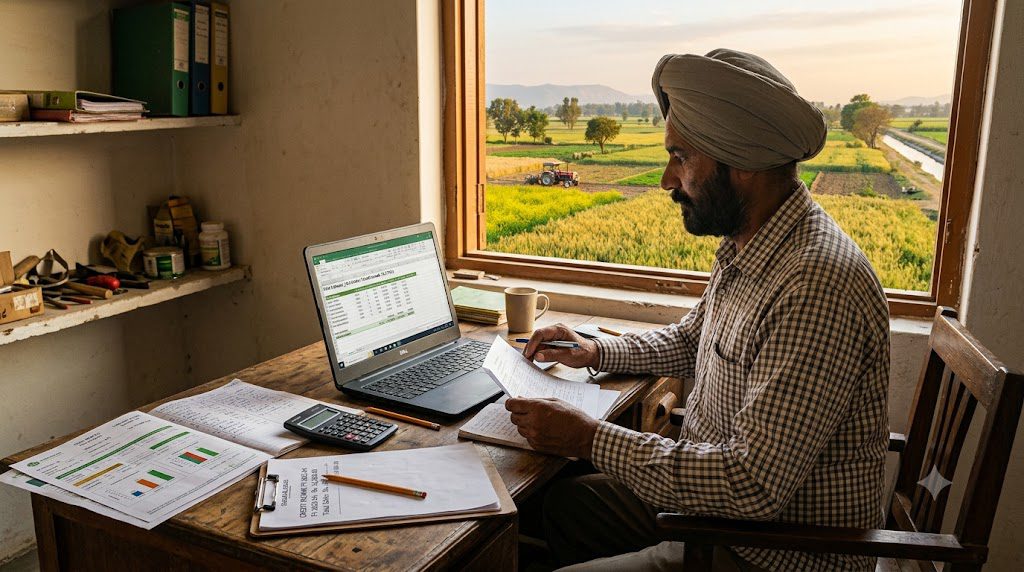
Carbon credit income is a relatively new category for most farm tax preparers, and treatment can vary. A few things worth raising with your accountant before you enroll:
- Payment classification : Whether carbon credit payments are treated as ordinary farm income or under a different category can affect your tax liability, and guidance has been evolving as the market matures.
- Timing of income recognition : Because verification and payment can lag practice adoption by a year or more, the tax year in which income is recognized isn’t always obvious.
- Record retention : Keep every baseline soil test, verification report, and contract on file. If a program’s methodology is later challenged or audited, having your own documentation protects your position independent of what the program itself retains.
This isn’t a substitute for professional tax advice carbon credit taxation is genuinely still settling into standard practice, and an accountant with recent experience in this specific area is worth seeking out rather than assuming your usual farm tax approach covers it.
How Carbon Credit Pricing Actually Moves
Unlike a commodity crop with a daily quoted price, carbon credit pricing is opaque and program-specific. A few factors that move the number you’re actually offered:
- Credit quality tier : Credits backed by rigorous, granular soil measurement typically sell for more than those based on modeled estimates, since buyers pay a premium for confidence in the underlying claim.
- Co-benefits : Practices that also improve biodiversity, water quality, or community outcomes can command a price premium in some voluntary markets beyond the carbon value alone.
- Buyer demand cycles : Corporate purchasing often clusters around fiscal year-end sustainability reporting deadlines, which can create seasonal pricing patterns.
- Overall market maturity : As MRV technology improves and standardization increases, most analysts expect average per-ton pricing to rise over time, though this isn’t guaranteed and has fluctuated before.
How to Get Started: A Step-by-Step Path
- Get a soil carbon baseline test before changing anything, so you have documented proof of your starting point.
- Research 2–3 carbon programs and compare their verification methodology, payment timing, contract length, and fee structure.
- Check for stacking eligibility with existing USDA conservation programs to reduce your net cost of adopting new practices.
- Start with one practice on a defined field rather than committing your whole operation to an unproven program.
- Keep detailed records of practice changes, input use, and any soil testing, since documentation quality directly affects your payout.
- Reassess after your first monitoring cycle before expanding acreage or switching programs.
Common Mistakes Farmers Make With Carbon Credits
- Assuming existing sustainable practices automatically qualify. Many programs only pay for carbon gains beyond your prior baseline, not carbon you were already storing.
- Signing long-term contracts without comparing alternatives. Some programs lock you in for a decade or more read the exit terms carefully.
- Treating this as guaranteed, predictable income. Payment timing and per-ton pricing both fluctuate with market conditions and verification outcomes.
- Ignoring the fee structure. Brokered marketplaces can take a meaningful cut of gross credit value before it reaches you ask for the net, not gross, payout estimate.
Beyond the Payout: Reputational and Market Access Benefits
The direct per-acre payment isn’t the only financial angle worth considering. A growing number of buyers grain elevators, food processors, and retail supply chains are starting to ask suppliers for documented sustainability practices as a condition of contracts, independent of any carbon credit sale.
In practice, this means the same soil testing and practice documentation you’d build for a carbon program can also:
- Strengthen your position in supply chain contracts that increasingly ask for sustainability documentation
- Support land value or lease negotiations, where documented soil health improvements are becoming a more visible factor in some regions
- Provide a paper trail if state or regional incentive programs expand eligibility criteria in the future, since baseline data doesn’t need to be recreated later
None of these are guaranteed dollar amounts the way a carbon credit payment is, but they’re a reason to keep good records even if a specific carbon program doesn’t pencil out for your operation this year.
FAQs About Carbon Credits for Farmers
How much can a farmer really earn from carbon credits? Most current programs pay in the range of $10 to $50 per acre per year, depending on soil type, practices adopted, and the specific program’s pricing. Higher-sequestering practices like agroforestry tend to earn more per hectare than lower-intensity changes.
Do I need to change my whole farm to qualify for carbon credits? No. Most programs let you enroll specific fields or practices rather than requiring farm-wide changes, which makes piloting a lower-risk way to test whether a program is worth expanding.
Can I get carbon credits if I already use no-till or cover crops? It depends on the program. Many only pay for carbon gains above your documented baseline, so land already under long-standing sustainable management may not qualify for as much additional payment as land making a fresh transition.
Are carbon credits for farmers reliable, given past market scandals? Agricultural soil carbon credits are generally considered more directly measurable than some forestry offset categories, but verification quality still varies significantly by program. Checking a program’s specific verification methodology before enrolling is essential.
How long does it take to get paid after enrolling in a carbon program? Timelines vary widely, but expect the full cycle from baseline measurement through verification and payment to take anywhere from several months to a few years, depending on the program’s monitoring period and how quickly third-party verification is completed.
Can renters or tenant farmers enroll land they don’t own? This depends on the program and your lease terms. Some programs require landowner sign-off since carbon credits are tied to the land itself, not just the operator, so reviewing your lease agreement and the program’s specific enrollment requirements before applying is important.
Final Thought
Carbon credits for farmers are a real and growing income opportunity, but they work best as a secondary revenue stream layered onto sound soil management not as a primary business plan or a reason to make major farming decisions on their own. Get your baseline data, compare programs carefully, and let the income follow good practice rather than the other way around.
Pingback: Microbial Biofertilizers: 7 Powerful Ways to Reduce Fertilizer Costs in 2026 -
Pingback: AI Soil Carbon Monitoring: 6 Critical Facts Before You Trust the Claims -