
Table of Contents
Introduction
The demand for strawberries is increasing; hence, strawberry farming has emerged as a highly remunerative and rapidly growing farming business in both the USA and India.
It gives quick returns, and the results of farming this crop have been phenomenal in states like California, Florida, Oregon, Himachal Pradesh, Mahabaleshwar, and Jammu because strawberries will grow in almost all kinds of climates provided with the proper care.
Whether grown on open fields, raised beds, or protected structures, strawberries reward farmers with a fast harvest and lucrative market prices.
This has today created a niche opportunity to spread the cultivation of strawberries for different produce varieties, including exotic ones, amidst rising global interest, especially in fresh varieties.
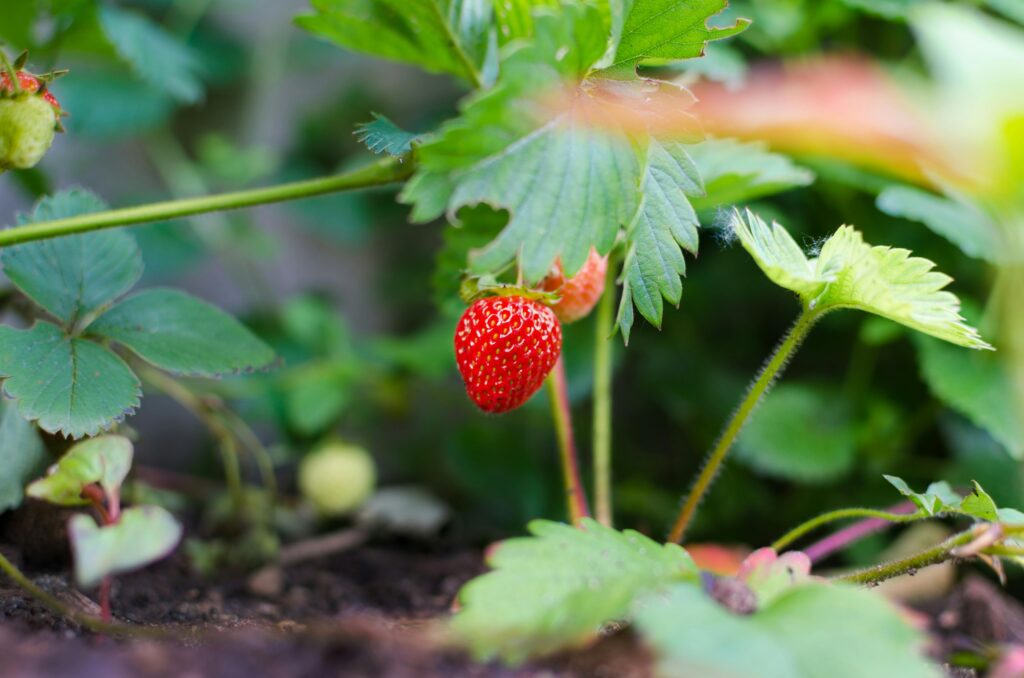
At the core of such development are healthy strawberry plants, which determine yield, fruit size, sweetness, and shelf life. Some new specialty varieties, such as white strawberries, have recently become popular with premium buyers and gourmet food places, offering farmers more ways to earn extra money.
In this comprehensive guide, farmers will appreciate the practical techniques, field-tested tips, and professional strategies to enhance productivity and, hence, the development of their strawberry business in a sustainable manner.
This shall aim at providing clear, actionable insights that both beginners and experienced growers can apply toward long-term success.
Benefits of Strawberry Farming
High Market Demand and Strong Profit Margins
Strawberries have consistent demand in both the USA and India, hence being an assured source of income for farmers. They sell extremely well in supermarkets, organic stores, hotels, and dessert businesses.
Because consumers want fresh, succulent berries, farmers get very good prices for high-quality produce. Exotic varieties like white strawberry fetch even more, which helps growers target niche and luxury markets.
With proper grading, packaging, and cold storage, farmers can further increase profit margins and build strong brand value.
Short Duration of Harvesting and Fast Return on Investments
The biggest advantages of strawberry farming include a fast harvest cycle wherein plants fruit within a very short period of 60–90 days. This ensures that the farmer recovers his investment quickly compared to long-duration fruit crops.
Farmers in the US harvest strawberries year-round in controlled environments, while Indian farmers can take advantage of favorable natural winter climates. Quick returns minimize financial risks, particularly for small farmers and beginners.
The income that is generated can be reinvested in better irrigation, mulching, and expansion of growing areas.
Suitable for Small, Medium, and Large-Scale Cultivation
Strawberries will thrive in everything from small balconies, to backyard gardens, to large commercial farms. Indian farmers use raised beds and polyhouses, while farmers in the United States have used advanced greenhouses and hydroponics.
The crop requires moderate water, manageable space, and good sunlight, hence making it adaptable to a wide number of regions. With the help of vertical farming, NFT channels, and container-based systems, farmers can yield high yields with limited land.
This is what makes strawberries suitable for all types of growers, from beginning to large agri-businesses.
High Value-Addition and Processing Potential
Strawberries are one of the best fruits for value-added processing, enabling farmers to increase their income and reduce loss. Strawberries can be processed into jams, syrups, squashes, ice cream, smoothies, dehydrated berries, and bakery toppings.
Frozen strawberries and health-oriented strawberry products have a major market share in the USA, whereas desserts and beverages are the largest demand generators in India. Processing provides stability against fluctuating prices in the fresh market and spreads the risk of farmers’ income.
Premium products prepared with the white strawberry generate higher returns due to their scarcity and unique taste.
Growing Popularity of Exotic Varieties Like White Strawberry
White strawberries are becoming an attraction in the world due to their pale color and red seeds, with a sweet, tropical-like taste. These berries are highly prized by gourmet restaurants, premium supermarkets, and online specialty fruit brands operating in the USA and India.
The unique look of white strawberry fruits makes them stand out in the luxury dessert and gift markets. Farmers producing white strawberries often receive value for their produce, considerably higher than that commanded by common varieties.
This emerging demand enables growers to differentiate themselves and develop a strong, high-value identity in the marketplace.

Techniques for Successful Strawberry Farming
Selection of Best Varieties for Higher Yield and Market Value
Selection of the right variety is one of the most crucial steps in successful strawberry farming as it determines productivity, fruit quality, and profitability.
In the USA, Albion, Chandler, Camarosa, and Seascape are some of the preferred varieties by farmers since they give consistent yield and are fairly resistant to diseases. In India, the most widely adopted varieties are Sweet Charlie, Winter Dawn, and Festival because of their adaptability and sweetness.
White strawberry is an excellent niche variety for those growers who want to cater to gourmet markets or restaurants. For the procurement of planting material, a grower should always select certified runners or tissue culture strawberry plants as they would provide better uniformity and lower risk of diseases.
Many experienced growers recommend planting a mix of early, mid, and late-season varieties to spread out the harvesting period and continue steady supplies on the market. Small trial plots should also be used each season to test new varieties and compare performance under local conditions.
Proper selection gives farmers an edge and contributes directly to higher profit margins.
Preparing Nutrient-Rich Soil and Raised Beds for Optimal Growth
Soil preparation is imperative to laying a strong foundation for successful strawberry farming. Strawberries grow best on loamy, well-drained soils with a pH between 5.5 and 6.5.
To accomplish healthy soil conditions, farmers should incorporate organic matter like compost, cocopeat, or well-rotted manure before planting. Raised beds are used both in the USA and India due to their positive effect on aeration, drainage, and root development.
Raised beds protect strawberry plants from root diseases, waterlogging, and sudden changes in temperature. Black plastic mulch has been cast over raised beds by farmers in order to conserve moisture, suppress weeds, and keep berries clean.
Proper soil preparation also involves correcting nutrient imbalances, mainly nitrogen, calcium, and potassium, to support balanced growth. Soil testing is highly recommended for correct nutrient planning.
Varieties like the white strawberry need particularly stable nutrient levels in order to maintain color and flavor. Rich and well-prepared beds ensure strong root systems and result in healthier, more productive plants.
Drip Irrigation and Mulching for Efficient Water Management
The main factor for managing water in strawberry farming is that plants have shallow root systems and require consistent moisture. Drip irrigation is thus widely preferred because it brings water directly to the root zone, minimizing wastage and reducing disease risks.
It also allows for fertigation-the supplying of nutrients to the plants in a liquid form along with water. This can be given efficiently throughout the season. Mulching, hence, goes hand in hand with drip irrigation to help conserve soil moisture and reduce weed growth.
Black plastic mulches are most used, especially in commercial farms, due to their property of warming the soil and keeping it cleaner for fruits. In cooler regions, organic mulches such as straw may also be used.
Proper irrigation and mulching help in steady growth, besides improving size, uniform coloring, and shelf life of the fruits. Such sensitive varieties, like white strawberry, benefit significantly from mulched beds as they reduce fruit-to-soil contact, which prevents discoloration or fungal infections.

Challenges in Strawberry Farming
Managing Pest and Disease Pressure Throughout the Season
Strawberry farming is highly vulnerable to pests and diseases attacks because of the soft texture and high water content of the crop. Thrips, aphids, mites, and whiteflies are some of the common pests that can cause considerable damage to leaves and flowers within a very short period, thus reducing yield.
Diseases like powdery mildew, fruit rot, anthracnose, and leaf spot are also prevalent in all strawberry-producing regions of the USA and India. The aforementioned problems accentuate under humid or rainy conditions.
Strawberry plants are very tender, and the fruits may rot in no time if not taken care of properly. This task becomes all the more challenging in the case of white strawberry, which bruises very easily and requires extra care in handling.
Farmers should take precautionary measures by using disease-free planting material, suitable spacing, removal of infected foliage, and good hygiene in the field to prevent huge loss of crops. If not regularly monitored, an entire field may be damaged within a week or so.
Coping with Climate Sensitivity and Temperature Fluctuations
The prime challenge in strawberry farming is weather fluctuations, as strawberries are very responsive to climatic changes. Strawberries grow well in a cool to moderate environment, and sudden heat waves, frost, or rains out of season badly hamper crop performance.
High temperatures tend to dry out the plants quickly and reduce fruit size as well as sweetness. On the contrary, frost causes much harm to flowers and young fruits. Heavy rains increase humidity, and the crop becomes prone to fungal infections.
Farmers in the USA have often used low tunnels or high tunnels as protection, whereas farmers in India employ shade nets and small polyhouses. These help maintain stable conditions and protect the crop from extreme temperature fluctuations, which becomes highly important for white strawberry cultivation.
Temperature and humidity management guarantee healthy plants for better-quality fruits throughout the season.
Maintaining Soil Fertility and Nutrient Imbalance
One of the biggest challenges in strawberry cultivation is maintaining soil fertility, especially since it is a nutrient-demanding crop. Continuous cultivation leads to nutrient loss, which adversely affects overall plant health and fruit production.
Excessive nitrogen causes excessive vegetative growth, makes plants more prone to pest attacks, and lessens sweetness in the fruits. Calcium and potassium deficiencies lead to weak fruits, tip burn, and poor shelf life.
Variants, such as white strawberry, need an exact balance of nutrients for maintaining quality. Regular soil testing, addition of organic matter, and scheduled fertigation avoid nutrient imbalance.
Crop rotation supports long-term soil health as well. In the event of improper fertility, plant performance rapidly declines.

Solutions for Improving Productivity
Implementing Integrated Pest Management for Healthier Crops
This is where IPM comes into play: keeping the pressure of pests and diseases as low as possible while maintaining healthy strawberry plants. It involves cultural, biological, and chemical strategies applied only when necessary.
A farmer should start with choosing clean, disease-free runners and maintain field hygiene. Regular monitoring helps to detect early pest activity. Biological control, such as neem oil, predatory insects, and organic bio-pesticides, reduces dependence on chemicals and keeps the environment healthier.
When chemical pesticides become necessary, usage must be judicious to avoid building up resistance. This becomes all the more important in sensitive varieties like white strawberry, which require minimal chemical exposure. IPM practices build long-term crop health while reducing costs and improving yields.
Using Protective Structures to Stabilize Climate and Boost Yield
Low tunnels, high tunnels, shade nets, and polyhouses are the protective structures that stabilize the climate and protect crops from extreme weather conditions.
In the USA, high tunnels and greenhouses are used in commercial strawberry farming to extend the growing season and to provide protection against frost. The most used systems in India are shade nets and polyhouses, which reduce heat stress and protect plants from heavy rain.
Controlled conditions promote continuous flowering and fruiting. Sensitive varieties like white strawberry prefer such a protective system because they need conducive temperature and humidity.
Though there is some investment in protective structures, the return is unquestionably higher because of the improvement in yield quality and reduction in crop loss.
Soil Fertility Enhancement with Organic Matter and Balanced Fertilization
Healthy soil forms the basis of successful strawberry farming. Addition of organic matter-compost, vermicompost, or manure-improves soil structure and microbial activity. Soil with good structure supports the vegetative growth of the plants by enhancing root development and nutrient uptake.
Through balanced fertilization with drip fertigation, strawberry plants are able to receive the right nutrients at the right time. Calcium, potassium, and micronutrients play the major role in fruit development and firmness.
Overuse of fertilizers should be avoided because it usually leads to poor quality of fruits or excessive growth of leaves. Premium varieties like white strawberry have a greater demand for such a balanced nutrient program.
Additionally, mulching, crop rotation, and periodic testing of soils improve the health and productivity of the soil.

FAQs on Strawberry Farming
1. What is the best season to start strawberry farming?
In India, the ideal time for planting strawberries is from October to November. In the USA, this is usually done in late fall or early spring, depending on the region.
These cooler periods favor vigorous root development and a healthy flowering. Planting at an appropriate time of the year ensures enhanced fruit size, sweetness, and longevity. For sensitive varieties such as white strawberries, stable temperatures are very crucial.
2. How much water do strawberry plants need?
Strawberry plants require consistent moisture; however, they can never be allowed to stay in waterlogged soil. Drip irrigation is ideal because it provides controlled water supply directly to the roots.
Diseases and fruit cracking problems are a consequence of overwatering, while inconsistent fruit size arises from underwatering. Consistent moisture improves sweetness and increases shelf life, especially for varieties like white strawberry.
3. When should one expect strawberry plants to start yielding?
Under optimum conditions, the strawberry plants initiate the fruiting process within 45-60 days after planting. The ever-bearing type may bear fruits throughout the season. Growth speed depends on climate, soil quality, irrigation, and plant nutrition.
The exotic-type white strawberry could take a little bit longer because of its fragile nature.
4. Do white strawberries need special care?
White strawberries are more specific to their needs due to their thin skin and sensitive color, requiring balanced sunlight, stable temperatures, and clean, mulched beds to avoid discoloration. Nutrient balance is critical, especially for calcium and potassium.
With proper care, white strawberries offer high returns on the market.
5. How can farmers increase yield in strawberry farming?
Applications for increasing yield should involve the use of certified runners, land preparation with rich soil, drip irrigation, and mulching to control moisture. Fertigation ensures a regular supply of nutrients, while protective structures stabilize climatic conditions and extend harvesting seasons.
It also involves monitoring pests and adhering to field hygiene parameters, which, together, help improve yields.
Conclusion
Strawberry cultivation has emerged as one of the most promising enterprises for farmers in the USA and India owing to its fast returns, high demand, and excellent profits.
With the right combination of variety selection, soil preparation, drip irrigation, mulching, integrated pest management, and climate control, the crop tends to deliver outstanding performance.
Healthy strawberry plants form the backbone of any productive farm, whereas special varieties such as white strawberry are opening a premium segment of their own for better income.
The nine power tips highlighted in this blog help farmers adopt a structured approach toward farming, mitigate risks, and enhance both yield and quality of fruits. Be it open field or protected cultivation, strawberries are responsive to modern methods and regular care.
Farmers can thereby establish a sustainable and high-yielding production system by applying these practical steps. Time has come to implement these strategies and start building a prosperous strawberry farm offering long-term profits and growth.