
Table of Contents
Introduction
Growing Trends in the Agricultural Industry
Farming is always considered to be the backbone of human civilization. However, the way and means of farming have transformed vastly. Initially, farming involved extensive human and animal labor. Thus, farming used to be slow, physically taxing, and extremely uncertain.
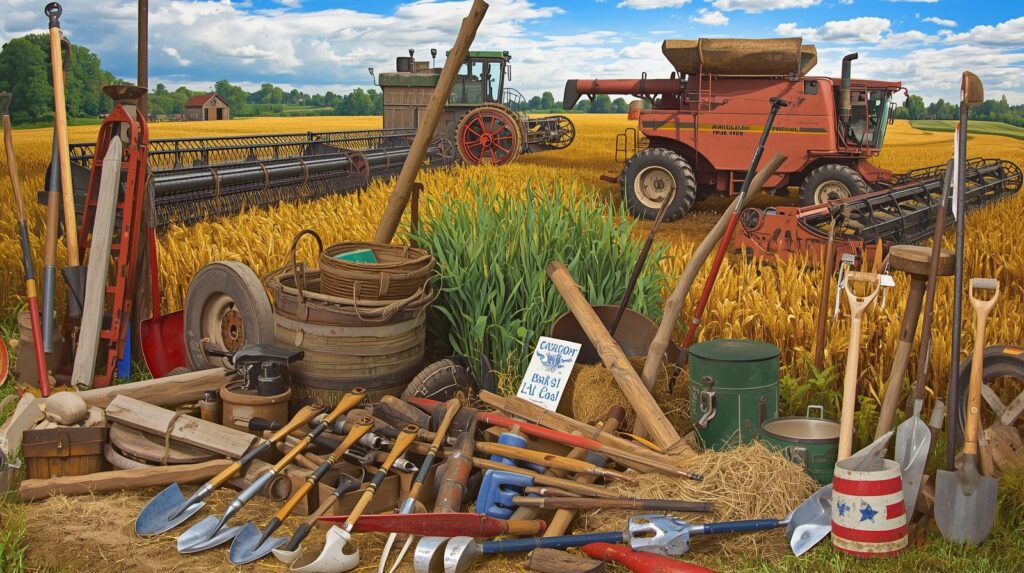
However, the use of self-driven machines has vastly transformed the way farming is done by injecting speed, accuracy, and reliability into farming. Tractors, seed drills, harvestors, and processing sets have reduced human labor and helped more land to be farmed by covering large acres of land.
Powered machinery has become essential in contemporary agriculture. With an increase in population, there is also a corresponding increase in the demand for food. However, labor is in short supply. There is an expectation on farmers to work with limited resources.
Powered machinery has bridged this gap. It has improved efficiency and ensured proper farm activities such as ploughing, sowing, irrigation, and harvesting. It has also ensured agricultural business viability. Smaller and medium-scale farmers are expected to generate more income as agriculture has become more viable.
The Importance of Solar Power in Agriculture
Even though powered machinery enhances productivity, fuel machinery has also enhanced reliance on diesel and electricity, leading to high fuel costs and pollution.
Solar power cell systems are important in determining the future of agricultural productivity, as these systems harness solar power, which is abundant and renewable and can be found mainly in rural and agricultural areas where sunlight is plentiful throughout most of each year.
Integration of solar power cell systems with powered machinery will ensure significant reductions in fuel bills and achieve energy autonomy.
In agriculture, solar-powered energy has been useful in running irrigation pumps, providing light, cold storage units, and processing units. These energy sources provide constant power to places where electricity from power grids is not available or accessible.
Most importantly, solar energy halts the creation of greenhouses and damages to the environment due to fossil fuels. Climate change has significantly influenced agricultural productivity; therefore, it has become essential to rely on environmentally sound energy sources.
The Need for Sustainable and Smart Agriculture
Sustainability is also a major issue in farming due to soil degradation, lack of water, and climate change. The use of solar-powered irrigation systems, for example, ensures water efficiency, which helps to prevent over irrigation and ensures the conservation of groundwater.
The use of solar power to provide irrigation to crops helps to reduce the environmental impacts associated with farming, such as soil degradation and the emission of greenhouse gases to the atmosphere.
Lastly, it ensures sustainability of the environment by reducing climate change due to the use of solar power that does not emit greenhouse gas emissions to the atmosphere.
Smart farming is also concerned with ensuring long-term sustainability. Those farmers who utilize motorized farming equipment powered by renewable sources can more easily deal with the challenges associated with increasing fuel costs and power outages.
By promoting the use of renewable energy, solar powered systems are being made more available through subsidies and training initiatives by farming and governmental agencies.
Purpose and Coverage This Blog
This blog will discuss how the concept of using solar-powered systems along with powered machinery is changing the face of agriculture. The blog will enable farmers, students, and readers to understand in detail about innovative ways, methods, problems, and solutions for agriculture through solar-based systems.
This blog will present a complete picture on how agriculture can be made more productive, sustainable, and progressive. The next section will lead readers through techniques, problems, and solutions for using powered machinery in agriculture.
Real-Life Adoption Trends in Agriculture
In developing countries like India, the use of powered machinery along with the adoption of solar-powered systems is slowly increasing. Small and medium-scale farmers who used bullocks and manual farm equipment are now adopting the use of solar-powered pumps, mini tillers, and compact tractors.
In the agricultural field, this is being observed in states where the intensity of sunlight is high and the availability of electricity is low. The farmer now cuts down on fuel consumptions and waiting times during peak seasons.
A farmer who uses an irrigation pump powered by the sun is now able to irrigate his crops at early morning hours or evening hours without any worries about power cuts or the cost of fuel.
However, such a scenario is not only a reality in large agricultural units. Small landowners can now benefit from hiring centers and farm cooperatives established by custom manufacturers, where small-scale owners can have access to powered agricultural machinery that is also cost-effective.
Solar-powered agricultural systems are community-based, meaning that the expenses are shared. In fact, such scenarios are giving impetus to a strong rural economy and agricultural growth.
Role of Policy and Awareness in Shaping the Future
The government policies and awareness campaigns have been very important in encouraging the use of powered equipment for farming.
The subsidies for solar powered technologies, the training sessions from the agricultural extension officers, and the farm demonstrations have really been important in instilling confidence in the farmers regarding the use of renewable energy.
By seeing the impact on other farms, it really becomes easy for the farmers to adopt the technologies quickly.
Educational and agricultural universities are also spreading the use of solar-powered mechanization, and this is being incorporated into the teaching of these universities. This way, the next generation of farmers will know how to work efficiently with power machinery.
This is bringing agriculture closer to finding that middle ground where productivity, profitability, and sustainability all work together.
Benefits
Efficiency: Cost & Future Benefits
One of the most significant advantages of the adoption of powered machinery in the agricultural sector is that it will greatly help in lowering farming costs in the long run. The conventional method of farming is done through manual labor and the use of diesel engines, which is proving to be quite costly.
Powered machinery will greatly help in cutting down on the use of human resources and fuel. This will prove to be even more economical when coupled with solar powered systems. Solar energy is free, and there will not be much of a cost involved once the setup is done.
For agricultural purposes, where profit margins are not often predictable, predictability of expenses is paramount. Farmers who employ solar-powered irrigation pumps or farm machinery have predictable energy costs. In the long run, the money saved can be invested elsewhere.
Though the installation cost appears high, the ROI is clear after a number of years. This financial aspect makes it easy for farmers to employ new ideas, knowing it will pay off. The financial burden felt by farmers is alleviated by this aspect.
Employee Productivity and Efficiency
With the use of powered machines, farmers can execute their operations faster and more accurately, thus increasing productivity. Ploughing, planting, weeding, and harvesting, for example, that took farmers days to complete can now be accomplished within hours.
Efficiency is an important factor in agricultural production, as any delay may expressly impact the agricultural output. Solar-powered systems guarantee unbroken supply, thus facilitating the use of powered machines when they are most required in agricultural production.
For instance, irrigation of the crops at the right time with the aid of solar-powered irrigation pumps ensures optimal levels of soil moisture, resulting in healthy crops. mechanized planting also ensures proper planting of crops, and this boosts the germination rate of the crops.
With the reduction of human error and the effects of human fatigue, the accuracy of the farming processes also goes higher with the use of mechanized farming tools.
Less Physical Labor and Improved Lives of Farmers
Agriculture has been linked with manual labor. mechanized machinery has eased this because it has automated most manual tasks. Agriculture is an industry whereby labor shortages are increasingly being witnessed.
It becomes important in such an industry because it helps agricultural personnel be productive without straining. Solar powered systems play a part in this process because they ensure machinery is usable even in such industries.
Reducing physical work can lead to improved well-being for farmers, letting them concentrate on agricultural planning, crop control, and market for agricultural produce instead of relying on tiring manual labor.
This is particularly beneficial for old farmers and women, who may suffer physical limitations. This will also encourage youth to participate in farming, thus solving the problem of a low turnout of youths in agriculture.
Environmental Protection and Resource Conservation
The benefits of powered machineries with respect to the environment can be more visible when considered along with solar-powered machineries. Environmental problems associated with machineries running on fuel include air pollution, emission of greenhouse gases, and deterioration of soil.
Solar-powered machineries work on clean energy; hence, agricultural activities cease to be harmful to the environment due to pollution.
Solar irrigation systems assist in saving water by offering an effective way of irrigating crops. Solar irrigation systems also promote the effective use of water by irrigating crops.
Stiffer environmental regulations and changing climatic conditions demand that agricultural equipment be environmentally friendly. Using environmentally friendly equipment ensures that agricultural practices remain stable.

Techniques
Solar Power Tractors and Tillage Machines
Solar-powered tractors are being developed as an alternative option to diesel tractors. These tractors are equipped with solar panels, which help recharge batteries to power their motor.
Use of powered machinery like solar tractors is highly suitable for small and medium-scale farms because of their high fuel expenses. In agricultural farming, usage of such machinery ensures efficiency in soil preparation without causing harm to the environment.
Solar Irrigation Systems
Irrigation is among the most energy-hungry agricultural practices. Solar-powered irrigation systems are commonly employed to water agricultural land through the operation of water pumps.
In relation to the use of machinery, these systems make it possible to have a steady supply of water even in remote localities. With solar water pumps, crop growth can now be supported year-round without relying solely on monsoons and inefficient power energy, which are not always readily available.
Solar Power Station — Best for Small Farm Power Backup
A portable solar station gives you:
- Lighting at night
- Power for tools (cutters, chargers)
- Backup during outages
Product Recommendation:
Solar Power Station + Portable Battery

Check Price: https://amzn.to/4aKIj0R
Harvesting and Post-harvest Processing
Use of powered machinery is very important during the harvesting and post-harvest processing activities. Solar-powered harvesters, threshers, and dryers have reduced post-harvest losses. For instance, solar dryers are used to preserve foods like grains, fruits, and veggies without the use of fossil fuels.
This method is used to improve the quality and shelf-life value of food and the earnings of the farmer.

Challenges
Higher Initial Investment Costs
Notwithstanding the many advantages, the use of powered machinery that is coupled with solar-powered technology is rather costly. Small-scale farmers may not be in a position to invest in these tools.
The high costs of solar panels, batteries, and sophisticated machinery can be prohibitive, particularly in developing agriculture. Additionally, difficulties in seeking credit and funding further worsen the situation.
Technical Knowledge and Maintenance
The use of powered equipment demands some technical know-how. The farmer might encounter some challenges when installing, maintaining, and troubleshooting solar-powered equipment.
The absence of skilled personnel in rural areas might result in downtime and low efficiency. It might not be possible to tap into the maximum potential of solar equipment without proper training.
Renewable Energy Dependency and Energy Storage
Solar power systems rely on sunlight, hence their reduced efficiency during rainy seasons. Battery storage is expensive, requiring careful management. The irregular power supply may also impact the performance of power-driven machinery during critical agricultural operations.

Solutions
Financial Assistance and Govt. Schemes
Governments and agricultural agencies are responsible for promoting the use of powered machinery. Subsidies, soft loans, and grants could ease the burden on farmers.
The promotion of public and private partnerships would make solar-powered systems more feasible. This would boost agricultural and rural development.
Training & Capacity Building
Offering training programs and workshops will enable farmers to learn how to make effective use of and maintain powered equipment. Servicing centers will also aid in servicing requirements.
Informed farmers will be more inclined to adopt solar-powered agricultural systems, resulting in their successful application in agriculture.
Hybrid Energy Solutions
Integrating solar power with conventional power or standby power ensures a continuous power supply. With the hybrid system, powered equipment will work properly even when the sunlight is low. This process enhances efficiency and maximizes productivity based on the agricultural seasons.

FAQs
1. In what way does the use of powered machines increase agricultural yields?
Power machinery eliminates labor-intensive processes, saves time, and is more precise. In conjunction with solar power systems, it guarantees adequate energy and therefore makes farming more economical and efficient.
2. Are Solar Powered Systems appropriate for Small Farmers?
Yes, solar power systems are appropriate for small-scale farmers, especially when subsidies are involved. They reduce agricultural costs by offering several long-term advantages.
3. What kinds of agriculture equipment are powered by solar energy?
Examples of powered machinery that may be possible with solar powered systems are irrigation pumps, tractors, harvesters, dryers, and units involved in processing.
4. Does solar-powered equipment have any requirements for maintenance?
Solar panel cleaning, checking of batteries, and basic maintenance are essential for a smoother process. Proper maintenance enhances the longevity of power-operated agricultural equipment used on farms.
5. How environmentally sustainable is solar-powered agriculture?
However, the use of sun-powered systems increases the reduction of carbon and fuel dependency. Use of powered machines through renewable energy promotes sustainable agriculture and conservation.
Conclusion
Linking the use of powered machinery with the concept of solar-powered technology is a revolutionary change that is underway in the agricultural sector.
Considering that the agricultural sector faces challenges such as cost, labor, and climate change, the need for a sustainable and effective solution like agricultural mechanization through solar technology is a reality that cannot be ignored.
In the entire blog, we have discussed how powered machinery increases efficiency, minimizes labor, increases productivity, and promotes the conservation of the environment.
Although the factors like high capital cost and the lack of technical expertise remain some issues in the adoption process, appropriate solutions like subsidies, training activities, cooperative mechanisms, and the use of hybrid systems are making it easier and more accessible.
In favor of agriculture is the fact that innovation must be accessible too, and this is where solar powered solutions come in. Students and those involved in agriculture are encouraged to learn more about these solutions and adopt the appropriate powered machinery for their use.
This is the future that the adoption of the solar powered solutions for agriculture now makes possible.