
Table of Contents
Introduction
Comprehending Mushrooms Raising in the Contemporary Agricultural Period
Mushroom Cultivation has proven to be one among the most efficient and lucrative aspects of modern agricultural entrepreneurship, particularly adopted by farmers and amateurs who desire maximum throughput even from smaller land areas.
In contrast to other agriculture products, mushroom farming does not require fertile soil, sunlight, or adequate water sources, making this venture even more desirable in both rural and urban areas.
A well-controlled agricultural activity, mushroom farming encompasses more factors pertaining to environmental management, such as temperature, humidity, and cleanliness, in contrast to soil quality.
In recent years, mushroom farming has grown from being a domestic endeavor practiced by individual families to becoming full-scale commercial agriculture due to the increasing demand for healthful and medicinal food products.
In recent years, the increasing consumption of mushrooms in India and around the world has become quite prominent owing to their higher protein quality, lesser amounts of fats, and higher mineral values.
Specifically for students, agricultural hobbyists, and progressive farmers seeking innovative agricultural practices, mushroom farming represents the coming together of science, technology, and agriculture.
If the basics are not comprehensively understood right from the start, there would be little emphasis on physical hard work required for successful mushroom farming, which requires much more emphasis on efficiency, discipline, and adherence to routine procedures.
Why White Button Mushroom Dominates the Global Market
The white button mushroom is the most frequently grown and used species in the world; it accounts for a huge market share in the world mushroom market. The reasons for its popularity include its mild taste, tender nature, long storage life, and ease of processing.
Whether it is a home cook or an upscale restaurant, this species blends well with all cuisines. The scientific name of this species is Agaricus bisporus; it grows well in a controlled atmosphere; thus, it is ideal for year-long cultivation.
Its popularity also stems from the fact that growers require no market uncertainty; thus, prices never decline to zero. The ease of knowledge absorption is another factor; it is much easier to learn about white button mushrooms than any other species.
Whether a new person is embarking on the venture of mushroom farming, it is much less risky to start with white button mushrooms.
High-Quality White Button Mushroom Spawn (Most Important)
Spawn quality decides 70% of your success. Low-grade or old spawn leads to slow colonization, contamination, and uneven pinning.
What to look for:
- Fresh production date (not older than 15–20 days)
- Clean, uniform mycelium growth
- Certified lab-produced spawn
Recommended Product:
Premium White Button Mushroom Spawn (Lab Certified)
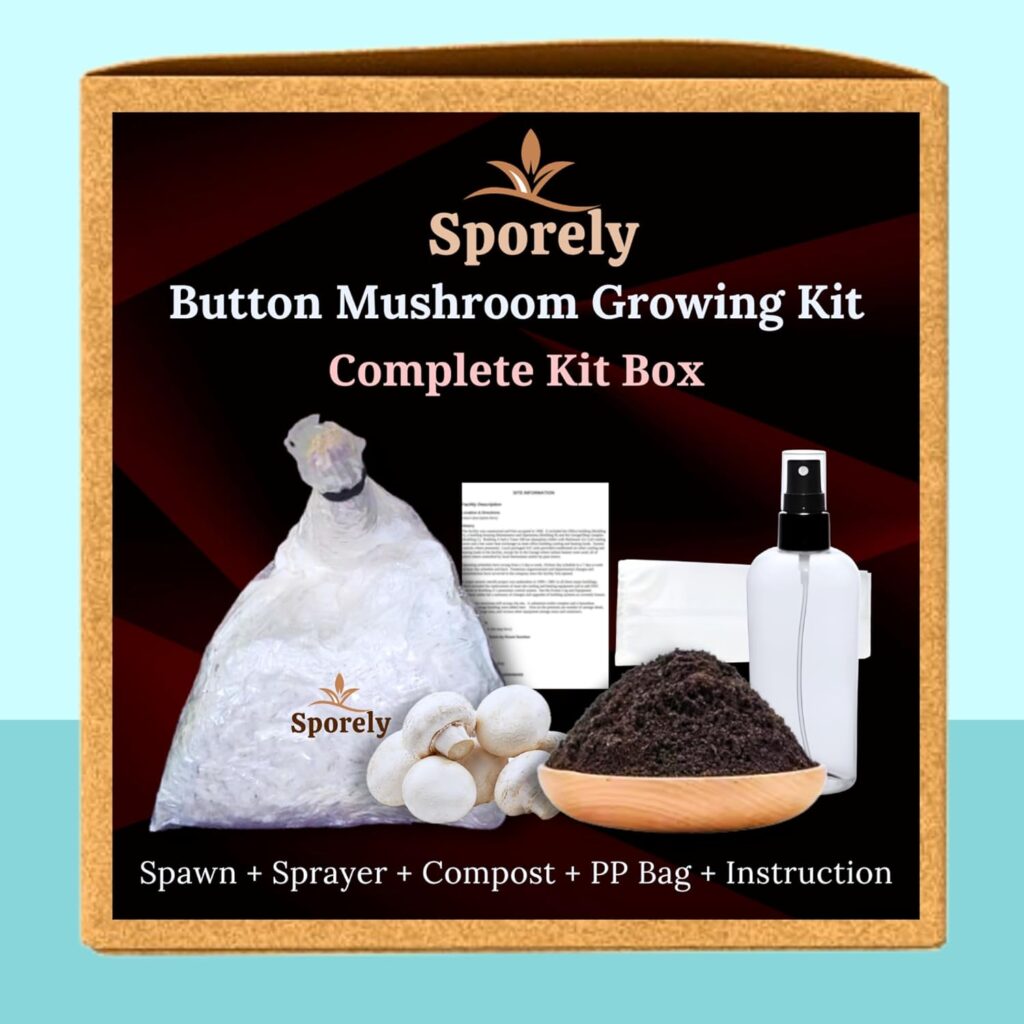
Buy Here: https://amzn.to/3OwAdRY
Economic and Practical Relevance of Agaricus bisporus
Agaricus bisporus cultivation goes beyond being a crop to being a viable business model that has immense earning potential.
Perhaps the most significant benefit of Agaricus bisporus cultivation, therefore, is the fact that the crop can be derived from agricultural waste like wheat Straw and poultry droppings.
Every individual who decides to cultivate Agaricus bisporus, therefore, has the potential to make a sustainable impact on the planet.
Employment opportunities, another factor that many people overlook when thinking of Agaricus bisporus, can be generated by the different processes involved in Agaricus bisporus, including compost making, spawning, casing, harvesting, and packing.
Agaricus bisporus, being a practical example of applying microbiology on a farming scale, has immense potential for students looking to gain hands-on experience.
Finally, the awareness regarding the importance of nutrition has led to a massive increase in the demand for white button mushrooms, making Agaricus bisporus a viable option.
The earlier the economic importance of Agaricus bisporus is known, the more serious these individuals will take the practice of Agaricus bisporus, hence making the activity a successful one.

Benefits
Nutritional and Health Benefits of Mushroom Cultivation
One of the major reasons why mushroom production has gained so abruptly is the presence of incredible nutritional qualities possessed by mushrooms.
The white button mushroom has been declared rich in high-quality protein, dietary fiber, B-complex vitamins, potassium, phosphorus, and crucial antioxidants, and is very low in fats and calories.
This includes making it a perfect food for those who need to keep a check on their weight, diabetic conditions, and those facing any sort of heart-related conditions.
However, starting from the nutritional benefits, Agaricus bisporus increases immunity levels, helps have healthy digestion, and increases the benefits of healthy metabolism levels as well.
Considering the nutritional benefits it possesses for farmers and growers, it directly increases the commercial value as consumers are increasingly opting for those products that have an incredible combination of both taste and nutritional benefits as well.
The production of mushrooms acts as a source of food security because it can be produced very quickly in a period of 30-45 days and can also be reused several times in a bed.
Economic Benefits for Small & Medium Farmers
Cultivating mushrooms is one of those highly promising enterprise ideas that are less costly and highly rewarding. Also, since this crop is not weather or season-dependent, as in the case of other vegetables, white button mushrooms could be cultivated throughout the year.
The major expenses involved in this kind of farming are spawn, compost, and land, which are less costly and not at all expensive like other commercial vegetables. As there is a steady demand for Agaricus bisporus, there are not many issues with regard to disposing of or marketing this produce.
Scaleability is also one major advantage of this enterprise. Many successful mushroom farmers start this business at the home level and subsequently set up a commercial farm. This would be highly beneficial for youth in rural areas, and one would not require much land or costly machinery.
Environmental Sustainability and Resource Efficiency
From an environmental perspective, mushroom production is among the most sustainable agricultural practices that are currently available.
The method uses agricultural wastes such as wheat straw, paddy straw, and poultry manure, which are then turned into a nutrient-rich food source, as opposed to disposing or burning them. This directly impacts the recycling and reduction of environmental pollution that is caused by these wastes.
Compared to crop production, water use during the production of white button mushrooms is much lower, making it an appropriate agricultural practice for areas that lack water.
Furthermore, decomposed mushroom compost can also be turned into a valuable lawn fertilizing compost that promotes soil nutrient richness and proper compost structure.
Growing Agaricus bisporus mushrooms reduces the use of pesticides, which directly impacts food safety as well as environmental pollution caused by these pesticides.
Employment Generation & Skill Development Chances
Mushroom cultivation opens many jobs in terms of employment because of the various processes involved. Processes like compost preparation, spawning, casing, harvesting, grading, and packaging need well-skilled and semi-skilled labor.
Mushroom cultivation therefore is an excellent approach to solving the issue of jobs in the countryside and among the youth. White button mushroom cultivation alsousing skill development in terms of handling sanitation practices, handling temperature, and ensuring quality is maintained.
For agricultural or biotechnology students, the other advantage of handling Agaricus bisporus is that they learn hands-on training pertaining to the application of microbiology and control environment agriculture.
Trainings and workshops pertaining to the training of mushroom cultivation increase the technical expertise of the trainees. With time, the growers gain expertise that can be sold through consultancy services, spawn training, and training services other than the training pertaining to agriculture.

Techniques
Site Selection and Infrastructure for Mushroom Cultivation
Beginning a mushroom farming project successfully includes the selection of the correct area and appropriate infrastructure. In contrast to field crops, mushrooms do not need soil but an appropriate climate or controlled atmosphere.
A clean and properly enclosed area like a shed or room with a basement or a mushroom house would be suitable for growing mushrooms. The space should provide options for temperature control, humidity control, and ventilation control because they directly influence the production of mushrooms.
In the case of growing white button mushrooms, proper insulation is necessary since the appropriate temperature range for the growth of Agaricus bisporus is preferred for better production.
This ensures easy cleaning and an appropriate atmosphere with cement floors and walls for the growth area since cultivation results in an increased risk of contamination.
Drainage systems also help prevent the buildup of moisture in the area, thus promoting the development of diseases among the mushrooms.
Small farmers can also use cost-effective infrastructures for growing mushrooms with careful planning and control over the correct atmosphere or climate for production.
Compost Preparation: The Nitty-Gritty of White Button Mushrooms Cultivation
Compost preparation is the most important and technical procedure involved in white button mushroom production. High-quality compost ensures that all necessary nutrients are available to Agaricus bisporus for its growth.
Generally, compost preparation involves wheat straw, poultry manure, gypsum, and water, done by both long compost processes and short compost processes. Composting requires access to proper microbial action to transform raw materials into a selective growth medium for mushrooms.
Many farmers are generally unsuccessful when it comes to mushroom production, not by virtue of poor spawns but by virtue of poor composts. Compost preparation by a farmer helps minimize costs as well as helps a farmer gain proper knowledge about his crop.
High-quality compost leads to mushrooms of equal size, a larger yield, and also helps minimize diseases during crop production.
Spawning Process and Spawn Management
A spawn refers to the process whereby mushroom spawn is placed in the compost. Spawn serves as seed in mushroom production. Spawn should be obtained from accredited and trusted suppliers.
In white button mushroom cultivation, grain spawn of Agaricus bisporus can be used in mushroom production because it colonizes faster. The process of spawning should be done when the compost temperature goes low to avoid damaging the spawn.
Again, to achieve even development of mycelium, it is important to evenly distribute mushroom spawn in compost. To avoid losing an entire agricultural crop, all procedures involved in this process should be done with cleanliness in mind.
This requires farmers to avoid rushing through processes in mushroom cultivation.
Casing Technique
Casing is a distinct and critical procedure in white button mushrooms, which affects yield in mushrooms. The process involves applying a layer of moist material on top of colonized compost, which in most cases is peat moss or a mixture of soil.
The layer does not supply any nutrient at this point but provides moisture, which is essential in inducing fruit body formation in Agaricus bisporus mushrooms. Balancing factors such as depth, moisture content, and cleanliness in casing is essential.
The adjustments that follow this point, which include temperature, humidity, and CO2, need to be closely controlled in mushroom growth. Even a slight change in these factors contributes greatly towards mushroom growth. The aspect of casing makes a difference between poor and effective growers of mushrooms.
Harvesting, Handling, Yield Optimization
Harvesting is the most enjoyable aspect of growing mushrooms, and this should be carried out carefully. For white button mushrooms, harvesting is carried out at the button stage, before the opening of the cap.
Harvesting mushrooms at the right time will contribute to their quality and value. It is important to twist the mushrooms rather than cutting them to avoid damaging the other pins. Harvesting mushrooms while handling them extensively will help reduce any risks associated with contamination.
Agaricus bisporus is known to give off multiple flushes that can be harvested from the same bed. With proper handling of water, sanitation, and environmental factors between flushes, the total yield will be maximized.
Farmers should follow the activity of the crops closely to increase their yield without spending much.

Challenges
Environment – A Concept Routinely Linked to Human Well-being
One of the most difficult aspects of mushroom growing is the fact that mushrooms are highly sensitive to the environment. Whereas the white button mushroom cannot withstand any change in temperature, humidity, or air movement.
This can therefore lead to the destruction or loss of yield. Environmental factors have specific requirements at every stage. This makes environmental controls difficult for new growers, especially if they reside in areas with hot or cold summers or winters.
Many naive growers think that mushrooms are simple crops that require little effort, but such reasoning is flawed. Some pests, such as mites, are effectively dealt with by drying the infected mushrooms.
However, temperature changes pose one of the most significant threats. Growers who think little of environmental controls usually cite “bad luck” after the destruction or loss of yield.
High Risk of Contamination and Disease Outbreaks
Contamination can be considered a “silent killer” in mushroom growing. The white button mushroom is highly susceptible to competing mold species, bacteria, as well as insects.
Contaminating species include green mold, cobweb mold, and bacterial blotch, which can progress aggressively in a matter of days to destroy an entire crop.
For Agaricus bisporus, growth occurs in rich compost soil; however, this soil also supports the growth of microorganisms if cleanliness is not maintained. Most mushroom growers quit because they treat mushroom growing rooms as in regular farming rather than clean growing facilities.
A contaminated growing facility can be difficult to treat; destroying growth beds may be the only way to eliminate contaminated growth. Mushrooms require growers who can be patient in growing their produce.
Technical Knowledge Gaps Among Beginners
A key factor hindering the success of mushroom farming is the lack of technical expertise, especially among novice mushroom farmers. Many people venture into mushroom farming after watching short tutorials or workshops, thinking that they have enough information.
The idea is flawed. White button mushroom cultivation requires knowledge in compost science, microbiology, environmental dynamics, and precision in terms of timings.
Without knowing how Agaricus bisporus reacts to various factors, mushroom farmers will not even have the chance to review what has gone wrong.
Factors such as the wrong amount of moisture in the compost, imbalance in spawning, and casing could go wrong, and instead of trying to investigate the causes, novice mushroom farmers will simply quit the entire process.
The technical nature of mushroom farming has to be recognized by all involved, since failures will result in lost investments and frustration.
Initial Investment and Infrastructure Constraints
Mushroom farming may appear to involve less startup capital, but growing button mushrooms may require medium-scale startup capital if it is to be carried out successfully.
Mushroom farming may also require facilities such as temperature regulation, insulation, mushroom shelves, misting systems, and compost, and for Agaricus bisporus, climate regulation is a must, and this is usually a cost, especially for farmers who may want to corner the market by using low-quality infrastructure and recycled equipment, which may have a negative effect on consistency.
The space is also a limiting factor in mushroom farming, and this is especially true for rural and urban settings, and this may also show the reality of mushroom farming, which may be affordable but not cheap for consistency.
Market Fluctuations and Post-Harvest Loss
Though there are no issues with the production aspect of mushroom farming, there are market-related issues that may limit the profitability of this business.
White button mushrooms have a short shelf life and are highly perishable mushrooms unless they are stored properly and then sold through adequate marketing channels. Incompatibility with vehicle speeds and lack of cold storage space and adequate marketing connections can directly influence the current post-harvest losses of such mushrooms to a considerable extent.
Prices of mushrooms are highly dependent on markets and fluctuate as per current supply and demand. Single buyer connections of Agaricus bisporus farm producers influence them to face risks and dangers unnecessarily and recklessly.
Most producers lack marketing approach plans and only concentrate on agricultural production; this is very unwise and unimportant.

Solutions
Implementation of High Standards of Personal Cleanliness and Preventive Practices
The best way to handle contamination in mushroom production is to prevent it through good hygiene practice. This can be achieved through constant disinfection of growing rooms, equipment, and tools. This will help prevent diseases.
White button mushroom producers can prevent the spread of disease in beds by separating infected beds. Wearing clean clothes and avoiding unnecessary access to growing rooms will also be helpful.
Preventative measures in mushroom production through good hygiene practice may be time-wasting, but it will save producers significant losses. Successful Agaricus bisporus growers make cleanliness part of their daily routine rather than just doing it.
The Role of Affordable Technology for Environmental Monitoring
Technologically, modern tools have made it easier and more cost-effective for small-scale farmers to achieve environmental control. The use of simple digital temperature indicators, humidity indicators, exhaust fans, and humidifiers would greatly improve the success of mushroom farming.
Timers and humidity sensors make it easy to maintain a stable environment for the cultivation of white mushrooms. Even with the absence of sophisticated automation, it would still not be impossible to achieve stable conditions by regular monitoring.
This would definitely help farmers who monitor temperature and humidity conditions daily. This approach would improve the success of Agaricus bisporus production.
Training, Practice, and Gradual Scaling
The best approach to overcoming this learning curve is to start small and grow. Newbies should start by developing a few mushroom beds before moving on to larger production. Training or an internship with mycologists speeds up learning.
Learning comes with failure, but experimentation with guidelines helps mitigate potential dangers. Growing white button mushrooms is not an easy task, and with time, growers acquire knowledge that textbooks lack.
Starting small and growing helps farmers accumulate confidence and knowledge in Agaricus bisporus mushroom farming.
Enhancing Marketing and Value Addition Strategies
To address the challenges faced in marketing, it is necessary to combine mushroom cultivation with an intelligent marketing approach. Buildingdirect channels between farmers and hotals, restaurants, and retail stores enables farmers to negotiate favorable prices.
Value addition to mushrooms like slicing, drying, or packaging white button mushrooms can improve their shelf life and earn farmers better revenue. To address post-harvest losses in mushroom cultivation, farmers should investigate the concept of cold storage or joint marketing.
By regarding Agaricus bisporus as a business, farmers can better manipulate their revenues. Intelligent marketing of mushrooms can turn survival farming into a sustainable business.

FAQS
1. Is growing mushrooms suitable for beginners?
Yes, cultivating mushrooms is a beginner-friendly activity, particularly if one is working on white button mushroom. After learning the fundamentals, one can cultivate Agaricus bisporus.
2. How much space is required to cultivate white button mushrooms?
White button mushroom culture is not space-consuming. The growth of mushrooms can be initiated even in small room or basement setups.
3. What is the optimal growing temperature for Agaricus bisporus?
Mushroom production for Agaricus bisporus requires varying temperatures during different stages, and reduced temperatures are needed during the fruiting stage for optimal production.
4. How long does a mushroom cultivation cycle last?
The average duration for completing the mushroom culturing process of white button mushroom takes 30-45 days from compost preparation to harvesting.
5. Can mushrooms be profitably cultivated on a long-term scale?
Yes, mushroom cultivation is profitable. This is considering the steady market demand for white button mushrooms. Additionally, the value addition market for Agaricus bisporus makes it profitable.
Conclusion
Mushrooms are a very viable prospect for farmers, students, and agri-preneurs looking to make sustainable returns out of less. With proper management of compost, climate, and sanitation, white button mushrooms can be made to yield well and give good returns in the market.
Agaricus bisporus is proven to be a variety that works well, thus making the best starter and/or advanced variety for any person looking to deal with mushroom farming. Though contamination, technicality, and marketplace variability are a reality, a rational response to these will help minimize these aspects.
With a proper mindset to learn, scale, and market, any person can tap the very viable agri-business idea that is mushroom farming. The timing for most people to actually do something here has arrived, and the decision to diversify in the promising field of mushroom farming has to come next.