
Table of Contents
Introduction
CAD has surely become one of the most crucial facets of modern technology developments, and its influence in various fields is simply unstoppable. Probably the most extraordinary field in which CAD is making huge waves, however, includes drones.
From their early days-when the use of drones first started during military operations and among hobbyists-to today, drones have spread to innumerable industries: agriculture, infrastructure inspection, search and rescue, and, of course, photography.
The infusion of CAD into drone technology brought about a sea change by strengthening the design, functioning, and applications of drones, such as in photography.
In this blog, we will see how Computer-Aided Design is changing the course for drone technology and drone photography. From design and prototyping to real-world applications, CAD has come to revolutionize how drones are constructed and put to use.
We shall delve into the many advantages CAD brings on board to drone technology, certain techniques that make this integration possible, the challenges thrown at industries by using CAD in drones, and potential solutions to overcome the same.
By the end of this blog, you’ll have a complete understanding of how important of a role CAD plays in transforming drone technology and drone photography and how to use it in your field.
Benefits of Computer-Aided Design in Drone Technology and Drone Photography
1. Improved Precision and Accuracy
One of the deep-seated benefits derived from using Computer-Aided Design in drone technology is the precision introduced into the design process. During the making of the drones, even the tiniest detail may mean everything.
CAD provides a way for the engineers to make detailed 3D models of drone parts so each piece would perfectly fit together before any physical production has taken place. This reduces the likelihood of errors and reduces the amount of time devoted to prototyping and testing.
In this context of drone photography, such precision at work guarantees the optimization of drones for flight stability and camera mounting, which is crucial for capturing quality images and videos.
For instance, when designing a drone with a special camera for aerial photography, CAD can simulate different flight conditions in order to optimize the aerodynamics of the drone and the stability of the camera, thus ensuring that the drone will capture clear, stable images even in conditions unfavorable to photography.
2. Customization and Flexibility
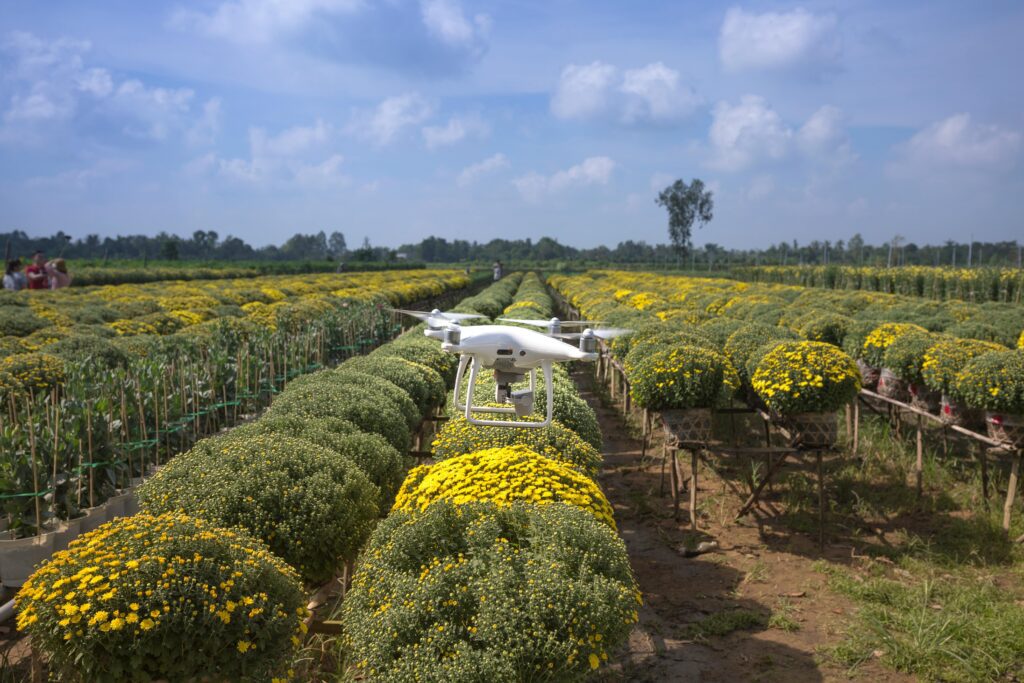
CAD software makes it easy to make modifications in the design of drones and permits easy changes to suit particular needs. Whether the drone is used for surveying, search and rescue, or photography, CAD enables the adaption of a design to meet particular requirements.
A drone intended for agricultural monitoring may require particular sensors or cameras, and CAD enables an engineer to easily implement those features into its design.
This is particularly true for drone photography, which immensely benefits from the customization abilities of CAD. Most drones used for aerial photography have highly specialized designs that accommodate professional-grade cameras and gimbals.
By using CAD, designers of drones can make changes with ease and optimize the structure of the drone to ensure it houses these heavy or high-end camera systems without compromising flight performance.
3. Faster Prototyping and Testing
Until recently, prototyping a drone required actually building and testing models, which could take several weeks or even months. Manufacturers can build detailed 3-D models of their designs using CAD to rapidly prototype and virtually test their ideas.
Simulations in CAD can also be enhanced in order to see, well before any physical components are made, the flying capability, endurance, and camera performance that a drone will have under several scenarios.
This speed in prototyping significantly reduces the time to market for new drone models. In a field that is as rapidly developing as that of drone photography, being capable of testing designs virtually will mean that new drone models will be ready for use much sooner in professional photography.
4. Cost Efficiency
This will reduce the need for creating prototypes, saving money and time due to the highly accurate designs and virtual testing allowed by CAD. This will also reduce material waste and avoid many unnecessary manufacturing processes, which helps save money on production.
Savings from this can be passed to consumers or reinvested in further research and development for drone technology, particularly when it involves professional applications featuring high-end equipment for things like drone photography.
Besides the above, CAD allows the detection of potential design defects very early in the process and thus prevents expensive mistakes from occurring that might lead to costly redesigns.
This leads to a rise in efficient and cost-effective production, which also plays a significant role in maintaining competitive pricing in the drone market.
5. Improved collaboration and communication
CAD tools also enhance collaboration between different teams involved in the drone manufacturing process. This means that the engineers, designers, and even the drone photographers can easily look at the same digital model and provide input on how best to achieve the specifications needed.
Changes made to the design are instantly reflected in the model for greater collaboration and efficiency.
This becomes more important in drone photography, where the ultimate goal is not to produce a flying machine but to ensure the drone can capture stunning, stable, and clear imagery.
By using CAD, designers can work with photographers to ensure flight, payload capacity, and integration of cameras are perfectly optimized to capture high-quality aerial shots.
Techniques for Integrating Computer-Aided Design with Drone Technology
1. 3D Modeling and Simulation
One of the most vital techniques applied in CAD for drone technology is 3D modeling. This allows the designer to come up with a very detailed three-dimensional representation of the drone and its parts.
These models can be virtually manipulated and tested under various conditions that mimic reality to test the performance of the drone before it’s actually built. It is important in drone photography because designers can simulate how the camera setup will behave in the air and ensure that images or videos taken are up to standard.
Even during the simulation phase, CAD software could simulate how different weather conditions or flight paths would impact a drone’s stability, flying time, and camera performance.
With the integration of this technology, manufacturers can ensure their drones are optimized for specific tasks, such as aerial photography under various environmental conditions.

2. Advanced Materials and Structural Design
For instance, CAD has allowed drone designers to experiment with different materials and structural designs in an attempt to enhance the performance of the drone or increase its durability.
Through CAD, the engineers can study the weight distribution, strength, and flexibility of the materials used for the framing of the drone. This is because in some drones used for photography, stability needs to be very high to ensure sharp captures.
Designers can create drones with lightweight yet strong materials so that they are resilient enough to carry heavy camera equipment easily without compromising either the flight time or their stability.
CAD allows the testing of the aerodynamics of a drone, ensuring the design minimizes drag and enhances flight efficiency.
3. Integration of Sensors and Camera Systems
Photography by drones requires that these machines are fitted with high-performance sensors and camera systems. CAD plays a critical role in the design of the drone to carry such sensors and cameras effectively.
Through the work of CAD tools, designers ensure the frame of the drone supports various camera systems, gimbals, and stabilization mechanisms needed in professional photography.
CAD also allows for the precise incorporation of other sensors such as GPS, infrared, and LiDAR commonly used in drones for surveying, mapping, and photography.
Precise placement and integration of these components are quite critical for optimal performance, especially when the drone finds its application in professional photography where stability, precision, and high-quality visuals are required.
Challenges in Applying CAD to Drone Technology
1. Integration complexity of the design
While the CAD tools offer immense flexibility, the challenge is always there to integrate all the necessary components together into a cohesive and efficient design.
A drone has to strike a perfect balance between lightweight materials, powerful motors, high-end camera systems, and efficient flight controllers. Designing such a drone that can integrate all the elements and still perform shall be complex.
Added to this is the challenge for drone photographers in making sure the camera system and gimbal are integrated properly into the drone without adverse impact on the stability or flight time of the drone.
This necessitates an in-depth understanding of both drone mechanics and photography equipment, further complicating the design process.

2. Optimize battery life.
One of the biggest challenges of flying drones is battery life. While CAD can help optimize the placement of batteries within a drone, the perfect balance between power consumption, flight time, and payload capacity requires advanced simulations and iterative design.
This is especially true of drone photography, which often necessitates longer flight times to capture aerial shots across large areas.
The designers have to consider how much the drone can weigh and still support its battery for the amount of flying time required, all while keeping the platform stable for good camera performance.
CAD can test various configurations of batteries in the quest to find the perfect setup for the different types, but it remains one of the challenges that have to be met if drone technology is to advance further.
Solutions to Overcome Challenges in CAD-Driven Drone Technology
1. Collaborative Design Platforms
The most effective solutions that have proven to be useful in overcoming the potential complexity in designing drones include collaborative design platforms. This would involve engineers, designers, and drone operators working together on a real-time basis by offering feedback and suggestions on everything to do with design.
This level of collaboration ensures that every aspect is catered for, from flight performance to camera stability, before the prototype is actually built.
By using cloud-based CAD software, teams can quickly iterate on designs, adjusting the components comprising the drone in rapid succession until such a point that it best meets the needs of both the manufacturers and end-users, such as drone photographers.
2. Integration of AI and Machine Learning
Optimizing the battery life and integrating such a complicated design are being met by an increase in using CAD tools integrated with AI and machine learning algorithms.
Such technologies are able to analyze vast amounts of data from previous drone designs and simulations to predict which configurations result in the best performance.
Designers can use AI to optimize every feature in the drone, from weight distribution to power consumption, so it’s as efficient as possible for applications like drone photography.
AI-driven CAD tools have the potential to detect possible design flaws that might have been missed during the design process by hand, hence improving efficiency and accuracy in drone manufacturing.

Frequently Asked Questions
1. How does Computer-Aided Design improve drone technology?
Computer-Aided Design (CAD) improves drone technology by enabling engineers to create precise 3D models, allowing for accurate and efficient design processes.
With CAD, manufacturers can simulate real-world conditions, test components virtually, and fine-tune every detail, from the drone’s structure to its motor and sensor placement. This leads to enhanced performance, fewer design errors, and faster prototyping, reducing time and costs.
Additionally, CAD ensures that all parts of the drone are well-integrated, improving reliability and functionality. For example, when designing drones for photography, CAD ensures the camera system is securely mounted and balanced, crucial for stable flight and high-quality images.
2. What is the role of CAD in drone photography?
In drone photography, CAD plays a pivotal role by ensuring drones are designed to handle high-end cameras, gimbals, and stabilization systems. CAD enables precise customization of the drone’s structure to accommodate heavy camera equipment without sacrificing stability or flight performance.
It also allows for virtual testing to ensure that the drone can operate smoothly in various conditions, such as strong winds or fluctuating temperatures, which is essential for professional-grade aerial photography.
Moreover, CAD helps optimize the aerodynamics of the drone, ensuring stable flight paths for capturing clear, sharp images and video footage.
3. Does CAD reduce the cost of building drones?
Yes, CAD reduces the cost of building drones by streamlining the design process, minimizing the need for costly physical prototypes, and identifying design flaws early.
Engineers can test and refine drone models virtually, which reduces material waste and avoids expensive trial-and-error during manufacturing. CAD also helps optimize drone components, leading to more efficient designs that require fewer resources to build.
By speeding up the prototyping phase and enabling more accurate production, CAD helps manufacturers save on both time and money, which can ultimately be passed on to consumers in the form of lower prices.
4. What are the main difficulties in linking CAD with drone technology?
There are several challenges when linking CAD with drone technology, particularly due to the complex nature of drone designs. One of the primary difficulties is integrating multiple components—such as the drone’s motors, sensors, cameras, and battery systems—into a cohesive and functional design.
Drones need to be lightweight, durable, and capable of carrying a range of payloads without compromising flight performance. However, balancing these factors in the design process can be tricky.
For example, while CAD allows for precise modeling of components, ensuring that the drone’s structure is robust enough to support heavy payloads, yet light enough to maintain flight efficiency, is a delicate balance.
Another challenge is optimizing battery life without affecting the drone’s stability or overall weight. Larger batteries provide longer flight times but also add weight, which can affect the drone’s flight performance, especially when carrying heavier equipment for tasks like drone photography.
CAD can assist by testing different battery configurations and placements, but optimizing this aspect is still a complex task.
Additionally, while CAD offers powerful simulation capabilities, it may not always account for every real-world variable, such as unpredictable weather or unforeseen mechanical failures, making it difficult to predict the drone’s behavior in all conditions.
The complexity of ensuring that all components interact seamlessly and perform optimally is another barrier in applying CAD to drone technology.
Finally, the cost of advanced CAD software and the requirement for skilled professionals to operate it can also pose challenges, especially for smaller companies or startups with limited resources.
Despite these hurdles, advances in AI-driven CAD tools and collaborative platforms are helping to streamline the design process and address many of these challenges.
5. How does CAD influence the future of drone photography?
CAD is shaping the future of drone photography by allowing for the creation of highly specialized drones that meet the increasing demands of professional photographers.
CAD allows for the design of drones that can carry heavier camera systems, longer-lasting batteries, and advanced stabilization equipment, ensuring that photographers can capture sharp, stable images even in challenging conditions.
It also enables greater customization, so drones can be tailored to specific photography needs, such as aerial landscape shots or real estate photography.
Furthermore, CAD’s ability to optimize aerodynamics and balance flight performance will lead to more efficient drones with extended flight times, offering photographers even more flexibility to capture stunning aerial shots.
Conclusion
There is little doubt that CAD is actually revolutionizing the world of drone technology and such a specialized niche as drone photography.
Allowing for greater precision, customization, and efficiency within the design process, CAD opens doors to crafting highly optimized drones that meet the very demanding requirements both of drone operators and photographers.
That capability for simulation, testing, and modification of designs within virtual space acts like an assurance that drones perform much better, meeting specific needs with greater ease.
While CAD is further developed, there is little doubt that the technology will continue to contribute to the further development of drones, opening up new possibilities in such industries as agriculture, infrastructure inspection, and of course, drone photography.
By embracing CAD, manufacturers can create drones capable of being more durable, affordable, and efficient.