
Table of Contents
Introduction
Animal husbandry is among the oldest and most vital supports to human civilization. From cattle and sheep domestication thousands of years ago to scientifically managed farms, animal husbandry today is a refined system that sustains livelihoods both in rural and urban areas.
In simple terms, animal husbandry encompasses raising, breeding, and managing animals for food, fiber, and other resources useful to humans. It is not just about raising the animal; it’s also about maintaining health, improving productivity, and ensuring sustainable agricultural development.
In today’s world, animal husbandry fulfills global food needs, supports millions of people, and promotes the agricultural economy. Due to the increase in population, there is continued rapid demand for milk, meat, eggs, leather, and wool.
To meet all these demands in a sensitive and effective manner, today’s farmers practice efficient, scientifically supported breeding techniques and feeding practices, along with enhanced disease management. This makes animal husbandry a combination of traditional wisdom and modern innovation.
Understanding the types of animal husbandry helps us appreciate how this field contributes to nutrition and economic stability. Each type — such as dairy farming, poultry farming, fishery, apiculture, pig farming, and goat rearing — serves unique purposes and benefits.
Furthermore, animal breeding forms the foundation of these types, allowing farmers to enhance desirable traits like milk yield, growth rate, and disease resistance. With selective breeding and hybridization, farmers can produce stronger, more productive livestock, ensuring better returns and sustainability.
Today, animal husbandry has ceased to be solely an agricultural occupation; it is a scientific practice that links animal husbandry with the care of the environment and economic development.
By understanding these 6 powerful types of animal husbandry, you will appreciate how each one benefits human livelihoods and scientific animal breeding to support this system.
Whether you are a student, farmer, or enthusiast, you can gain a deeper understanding of these systems and appreciate how animal husbandry shapes the future of sustainable farming and food security.
Advantages of Animal Husbandry
Animal husbandry encompasses a number of benefits that go beyond food production in view of economic growth, improved livelihoods, and sustainability of the agricultural ecosystem.
This will make it certain that farmers raise a constant source of income through manifold animal products like milk, eggs, meat, wool, and leather, among others.
The contribution of animal husbandry does not stop here; it also plays a very important role in soil fertility, employment generation, and national development.
1. Ensures Food Security and Nutrition
One of the major benefits derived from animal husbandry is its direct contribution to food security. The livestock products, such as milk, meat, and eggs, are rich in vital proteins, fats, vitamins, and minerals.
These nutrients are important for the growth and development of a human being, particularly in those parts of the world where plant-based diets are predominant. For example, dairy farming provides milk for calcium intake, while poultry farming ensures a constant supply of protein-rich eggs and meat.
By diversifying the sources of food, animal husbandry plays an important role in fighting malnutrition and ensuring a more balanced diet for millions.
2. Strengthens Rural Economy and Employment
Animal husbandry is a key income source for farmers, particularly in rural areas where agriculture is the main livelihood. The sale of milk, wool, meat, and hides brings daily or seasonal income, providing financial stability.
In India, for example, livestock farming contributes a significant percentage to the agricultural GDP. Women and small-scale farmers often find types of animal husbandry such as poultry, goat rearing, or apiculture highly profitable due to low investment and quick returns.
This inclusive growth empowers communities and promotes gender equality in the agricultural workforce.
3. Improved soil fertility and crop yields
Animal husbandry and crop cultivation go hand in hand. Animal wastes act as perfect manure and nourish the land with organic material and vital nutrients. The use of chemical fertilizers is thus minimized, ensuring the practice of sustainable agriculture.
Cow dung is commonly used in organic farming to enhance the physical structure and increase the water-holding capacity of the soil. In this manner, animal husbandry helps attain not only food but also a greener and better environmental balance.
4. Promotes Sustainable Resource Utilization
Animal husbandry makes the most of farm residues and by-products, as these are converted to valuable feed materials. This naturally decreases waste and increases the tendency toward circular farming.
Animals like cattle, goats, and pigs consume all the crop residues and return very useful products as output, like milk or manure. This efficient use of resources decreases environmental impact and promotes eco-friendly farming systems.
5. Advances Scientific Animal Breeding and Productivity
Scientific animal breeding is an integral part of modern animal husbandry. Through selective breeding and crossbreeding, farmers can enhance desired traits such as milk yield, body size, and disease resistance.
For example, crossbreeding local cattle with high-yielding foreign breeds has transformed dairy productivity in many regions. Such practices not only improve efficiency but also ensure long-term sustainability in livestock farming.
In the end, animal husbandry is much more than an economic activity. It feeds populations, maintains ecosystems, and develops rural areas. This sector will remain at the heart of efforts toward food security and agricultural sustainability as demand for animal products continues to increase globally.

Techniques and Types of Animal Husbandry
Different kinds of animal husbandry contribute to its importance in agriculture and rural livelihoods. Each type has a certain purpose-food production, income generation, resource recycling, and employment-altogether.
These categories are defined based on the kind of animals reared, their use, and the techniques applied for breeding and care. The following are six powerful and widely practiced types of animal husbandry that have shaped modern farming systems.
1. Dairy Farming
Dairy farming is one of the most prominent forms of animal husbandry, focusing on the production of milk and related dairy products, including cheese, curd, butter, and ghee. It involves raising cattle like cows and buffaloes in scientifically managed environments to maximize milk yield.
Proper feeding, regular veterinary care, and hygienic milking processes become very important in this regard.
Advanced animal breeding techniques, including artificial insemination, are used to produce high-yielding dairy breeds such as Jersey, Holstein Friesian, and Murrah. Dairy farming provides steady income throughout the year and plays a critical role in rural employment.
With innovations like automated milking systems and feed management technology, the efficiency and productivity of dairy farms have increased tremendously.
2. Poultry farming
Poultry farming involves the rearing of domesticated birds like chickens, ducks, geese, and turkeys for meat and egg production. Among all kinds of animal husbandries, poultry farming is one of the most profitable and fastest-growing ones because of the increasing demand for poultry products.
Modern poultry farms focus on providing a controlled environment, proper nutrition, and vaccination to assure the health of the birds and their ultimate yield.
By selective breeding, superior breeds of poultry have been developed that grow faster and lay more eggs. Broilers are reared for meat whereas layers are specialized for egg-laying purposes. It is also a source of low-input, high-return activity for many small-scale farmers in developing regions.
3. Fish Farming (Pisciculture)
Fish farming, also known as pisciculture, is a form of raising fish under controlled conditions mainly for commercial purposes. This type of animal husbandry will help meet the world demand for protein and provide livelihoods in both coastal and inland areas. Popular species include Rohu, Catla, Tilapia, and Carp.
Modern techniques include integrated fish farming, aeration systems, and water quality monitoring that help maintain productivity and ecological balance. Selective breeding of animals in aquaculture is done to improve growth rate, resistance to diseases, and adaptability to various conditions of water.
Fish farming offers not only nutritious food but also contributes to efficient utilization of water bodies.
4. Apiculture (Beekeeping)
Apiculture is the process of maintaining bee colonies for honey, beeswax, propolis, and royal jelly production. Apiculture is an environmentally friendly and sustainable animal husbandry method that promotes biodiversity through pollination.
Bees are very important in increasing crop yields; therefore, apiculture is a profitable venture as well as highly important to agriculture.
Farmers use modern hive designs and breeding techniques to enhance honeybee productivity. Crossbreeding and colony management are key aspects of this practice, ensuring healthier bees and better honey yield.
Since it requires minimal space and investment, apiculture has become a popular source of income for small-scale entrepreneurs and rural households.
5. Goat and Sheep Rearing
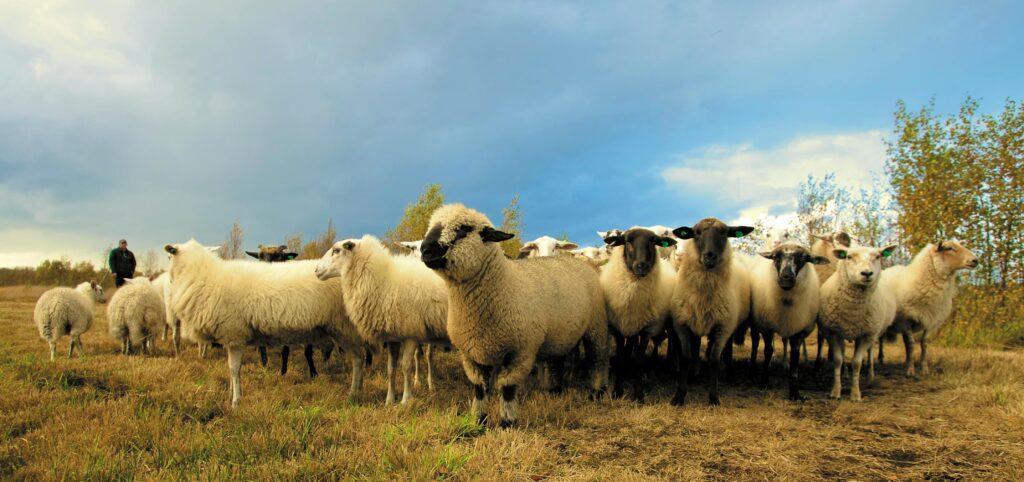
Goat and sheep rearing is one of the oldest, most varied types of animal husbandry there is. Goats offer milk, meat, and fibers such as cashmere and mohair, while sheep yield wool and mutton. They are hardy animals; they survive in harsh climates and generally need less maintenance.
Scientific animal breeding is also commonly practiced to develop superior breeds like Jamunapari goats or Merino sheep. In addition, farmers are able to maximize profits due to more advanced feeding and health care facilities.
Goat and sheep rearing also contribute much to the rural economy of arid and semi-arid areas where crop farming may not be ideal.

6. Pig Farming (Swine Rearing)
Swine rearing, or pig farming, is the practice of raising pigs primarily for meat production. Among all forms of animal husbandry, it is one of the most productive because of the high feed-to-meat conversion ratio; this means that with a given amount of feed, the pigs can give back higher pounds of meat compared to other livestock.
Properly housing, correct feeding of nutritional diet, and management of diseases are required in order to maintain healthy pigs. Breeding programs have been developed that have produced superior breeds such as Landrace, Large White Yorkshire, and Duroc.
Pig farming not only meets growing meat demands but provides valuable by-products like leather and manure.
Summary of the Six Types
The backbone of livestock agriculture includes six types of animal husbandry: dairy farming, poultry, fish farming, apiculture, goat and sheep rearing, and pig farming. Each has its techniques, benefits, and challenges, but all have contributed to economic growth and food security.
These practices, combined with scientific animal breeding, assure better productivity, animal welfare, and sustainability for future generations.
Challenges in Animal Husbandry
Animal husbandry contributes a great deal to food, jobs, and the economy but faces numerous challenges that undermine its sustainability and profitability.
Indeed, farmers have to put up with problems such as outbreaks of diseases, lack of appropriate modern technology, and inadequate infrastructural facilities to consistently improve their productivity.
It is in understanding these challenges that we can make appropriate, viable solutions to make livestock farming more efficient, ethical, and environmentally friendly.
1. Disease Outbreaks and Poor Veterinary Care
Livestock diseases pose one of the severest problems in animal husbandry. Contagious illnesses such as foot-and-mouth disease, brucellosis, avian flu, and swine fever can cause large-scale losses, especially in most densely populated farms.
In rural areas, due to poor access to veterinary services and vaccines, the risks of livestock diseases are higher. Poor disease surveillance mechanisms coupled with poor hygiene in farms results in outbreaks in this sector quite often.
For farmers whose main source of income is livestock, a single epidemic leads to their economic devastation.
2. Scarcity of Quality Feed and Fodder
Healthy and productive animals need a nutritionally balanced diet, but most parts of the world have a scarcity of quality feed and fodder. Drought, poor pasture management, and increasing competition for land between crops and livestock exacerbate the problem.
Insufficient animal feeding negatively impacts milk yield, growth rate, and reproductive efficiency. The shortage of feed directly impacts productivity in different forms of animal husbandry, such as dairy, poultry, and goat farming.
3. Lack of Scientific Knowledge and Breeding Practices
Scientific animal breeding has much to offer in terms of drastically improving the quality of livestock; however, most small-scale farmers still depend on traditional methods of unplanned breeding.
This lack of awareness and training depresses their ability to enhance traits such as disease resistance, fertility, or meat quality.
Artificial insemination centers and genetic improvement programs are often unreachable for remote areas, which increases the productivity gap between commercial and traditional farmers.
Without proper genetic planning, inbreeding occurs, thus weakening the animals and ultimately reducing their productive potential.

4. High Cost of Infrastructure and Technology
Modern animal husbandry calls for adequate housing, temperature control, waste disposal, and automated feeding systems. Establishment and maintenance of such a facility involve colossal investment.
Most small and marginal farmers cannot afford modern machinery or improved breeding devices. Thus, productivity remains low, and the sector remains labor-intensive. Inadequate access to institutional finance or subsidy mechanisms also discourages modernization attempts.
5. Climate Change and Environmental Stress
Climate change has become an issue of growing concern in the management of livestock. Rising temperatures, irregular rainfall, and a scarcity of water have an impact on animal health, feed availability, and their reproduction cycles.
For example, heat stress can drastically reduce milk production and fertility in cattle. Moreover, methane emissions from livestock add to greenhouse gases, putting farmers under pressure for eco-friendly types of animal husbandry.
A delicate balance between sustainability and productivity has become important for modern agriculture.
6. Market Fluctuations and Price Instability
Instability is attributed to seasonal variations, exploitation by middlemen, and changes in consumer preference. A majority of the farmers have to sell their milk, meat, eggs, and wool at relatively low prices due to a lack of direct access to buyers and organized markets.
Such instability in market prices deters long-term planning and investment in any improved animal breeding program.
7. Limited Access to Training and Government Support
Efficient animal husbandry requires awareness and the development of skills. These farming communities, especially in rural areas, must be made aware of scientific methods of rearing, feeding practices, and modern systems of prevention of diseases.
Similarly, training programs, extension services, and other government schemes seem to be scanty and poorly implemented. Without proper guidance, farmers fail to optimize operations or tap available subsidies and insurance benefits.
In summary, the challenges relating to animal husbandry are multi-dimensional: economic, environmental, and educational. Matters like these need broad cooperation among governments, research institutions, and farmers themselves.
Only with awareness, the adoption of technology, and scientific animal breeding can livestock farming be in a position to achieve efficiency and sustainability for feeding the increasing global population.
Solutions and Modern Innovations in Animal Husbandry
While animal husbandry faces serious challenges, the sector is fast changing with modern technology, scientific know-how, and sustainable practices.
Assisted by innovative breeding methods, digital tools, and government initiatives, today’s farmers are in a position to overcome traditional productivity and animal welfare barriers.
Some of the key solutions and strategies that will continue to reshape the future of livestock management in a responsible manner are given below.
1. Scientific Breeding and Genetic Improvement
Application of scientific animal breeding techniques is one of the most powerful solutions in animal husbandry. Artificial insemination, embryo transfer, and genetic selection are helping farmers to produce high-yielding and disease-resistant animals.
Breeding centers now provide improved access to superior genetic material from globally recognized breeds like Holstein Friesian cattle or Rhode Island Red poultry.
The effect of hybrid vigor can be realized in the growth rate, fertility, and ability of a plant to thrive under different climatic conditions. Continuous training and awareness on modern breeding techniques enable even small-scale farmers to employ such methods in order to enhance their output and profitability.
2. Better Feed Management and Nutrition
Balanced nutrition remains the keystone of successful types of animal husbandry. Scientists have drawn up high-quality feed formulations that meet the specific nutritional requirements of animals based on age, breed, and production goals. Silage, hydroponic fodder, and mineral supplements ensure a year-round supply of nutrients.
Feed efficiency can also be improved through precision feeding systems that calculate the exact amount of feed required, minimizing wastage.
Government programs like the National Livestock Mission in India provide support for fodder development and feed innovation, helping farmers maintain healthier and more productive herds.

3. Smart Technology and Digital Tools
Technology has now changed this form of husbandry to a data-driven science. IoT devices, sensors, and mobile apps enable farmers to track animal health, temperature, and milk yield in real time. Drones can scan pastures and monitor movement and feeding patterns with smart collars.
These innovations clear the way for early disease detection and efficient resource management. For example, wearable health trackers can alert farmers to early signs of infection or stress, preventing larger outbreaks. Data analytics also help in predicting breeding cycles and optimizing production schedules.
4. Sustainable and Eco-Friendly Practices
With growing awareness of climate change, farmers are now adopting eco-friendly ways of animal husbandry. Techniques such as integrated crop-livestock systems and manure biogas production are examples of circular farming.
The waste generated by the animals is converted into biofertilizers or clean energy, minimizing environmental pollution.
Farm operations are now incorporating rotational grazing, water recycling, and renewable energy use to lessen the carbon footprint. These methods are not only conserving resources but also making livestock management more viable for generations to come.
5. Improved veterinary and health services
Healthy livestock require access to veterinary care. Access to animal healthcare has reached even the most remote areas through mobile veterinary clinics, telemedicine platforms, and government-led vaccination drives.
Regular deworming, vaccinations, and health check-ups prevent disease outbreaks and reduce mortality rates.
Advanced diagnostic tools such as PCR tests and disease mapping software enable the quick identification of pathogens for quicker responses. It is these initiatives that are helping farmers maintain healthier animals and consistent productivity across different types of animal husbandry.
6. Financial Support and Government Schemes
Governments across the world have recognized the importance of animal husbandry in rural development. Various schemes provide subsidies for dairy farms, insurance for livestock, and financial assistance for infrastructure development.
Programs like the Rashtriya Gokul Mission in India aim to conserve indigenous breeds through scientific animal breeding and genetic improvement.
The role of MFIs and cooperatives is very significant in delivering low-interest loans for farmers to buy livestock or modern equipment. With such initiatives, small farmers can adopt new technologies as well as scale up their operations in a sustained manner.
7. Education, Training, and Extension Services
Knowledge forms the backbone of effective animal management. Continuous training programs, awareness campaigns, and farmer workshops are conducted to help bridge the knowledge gap between traditional and modern practices.
Demonstrations and field trials are frequently organized by agricultural universities and research institutes to showcase the best practices in animal husbandry and breeding.
Long-term stability, higher yields, and better animal welfare can be achieved by combining traditional wisdom with scientific innovation.
Educated farmers are most likely to observe better hygiene practices, use record-keeping systems, and adopt digital monitoring tools that add to increased productivity and sustainability.
The future of animal husbandry, therefore, looks bright with an amalgamation of science, technology, and sustainability.
It is quite within reach with the adoption of modern solutions in the branches of genetic improvement, smart farming, and renewable energy among farmers to overcome those long-standing barriers in keeping livestock management viable under a shifting landscape.
FAQs on Animal Husbandry and Breeding
1. Animal Husbandry: What It Is, Why It Is Important
Animal husbandry is the science and art of raising and managing livestock for human benefit. It involves feeding, breeding, sheltering, and caring for animals like cows, goats, sheep, poultry, and fish.
The importance of animal husbandry lies in its role in ensuring food security, providing income, and supporting the agricultural economy. It supplies essential products such as milk, meat, eggs, wool, and leather, all while contributing to sustainable rural livelihoods.
2. What are the main types of animal husbandry?
There are six main types of animal husbandry which are generally practiced:
1. Dairy Farming :It is for milk production.
2. Poultry Farming – Raising birds for meat and eggs.
3. Fish Farming (Pisciculture) – Rearing fish for commercial purposes.
4. Apiculture (Beekeeping) – Raising of bees for honey and wax.
5. Goat and Sheep Rearing – For meat, milk, and wool.
6. Pig Farming (Swine Rearing) – Raising pigs mainly for pork production.
Each type has a different function and is vital to nutrition and income generation, thus making them the basis for livestock agriculture.
3. How Does Animal Breeding Improve Productivity?
Animal breeding is crucial to enhance livestock productivity through the genetic improvement of existing breeds. Farmers, through various techniques like artificial insemination and strategic crossbreeding, are able to develop animals that give more milk, grow faster, and are less prone to diseases.
A case in point is crossbreeding indigenous cattle with high-yielding exotic breeds to result in superior dairy animals that will thrive even in challenging climates. Scientific animal breeding ensures consistent improvement in livestock performance while maintaining biodiversity.
4. What are the common challenges faced in animal husbandry?
These farmers practice animal husbandry and have to deal with many challenges, which might encompass the following aspects:
• Outbreaks of infectious diseases
• Shortage of quality feed and fodder
• Lack of scientific breeding knowledge
• High costs of modern equipment
• Climate-related stress and heat exposure
• Price fluctuations and limited market access
Overcoming these challenges requires awareness, modern techniques and veterinary support, along with sustainable practices adapted to local conditions.
5. How can farmers make animal husbandry more sustainable?
In addition, eco-friendly and resource-efficient methods of rearing animals can be adopted, such as the use of organic manure, recycling animal waste, integration of crop-livestock systems, and encouraging the use of renewable energy like biogas.
Efficient animal breeding programs should focus on developing hardy, disease-resistant breeds suited for the local environment. Besides, training programs, government assistance, and access to modern technology help make livestock farming profitable with minimal environmental degradation.
These frequently asked questions light up some of the important concepts and challenges concerning animal husbandry and animal breeding for the farmer, student, and enthusiast who wants to progress in knowledge regarding livestock.
Conclusion
Essentially, animal husbandry remains one of the most crucial pillars in global agriculture, linking together the survival of humans, food security, and economic progress.
From dairy and poultry farming to apiculture and fishery, all six strong varieties of animal husbandry have their contribution to our lives, providing nourishment, employment, and sustainability.
This is a practice that combines traditional farming wisdom with modern scientific innovation to shape the future of agriculture for generations in the future. Scientific animal breeding has changed the face of livestock.
With selective breeding, artificial insemination, and genetic enhancement, farmers are able to raise stronger, more productive, and disease-resistant animals. This ensures higher yields, better quality of animal products, and less mortality.
As technology continues to evolve, the efficiency and precision of livestock farming will only increase, making it more profitable and sustainable. However, the development of animal husbandry must also be combined with ecological balance and animal welfare.
Organic feed management, biogas production, and integrated farming systems are some of the sustainable practices that increase productivity while protecting the ecology.
Making the industry resistant to feed shortages, diseases, and climatic changes through proper innovation and education will determine the long-term success of this industry. Understanding the principles and types of animal husbandry opens new avenues for farmers, entrepreneurs, and students.
Be it establishing a dairy farm, managing poultry, or engaging in fishery, each enterprise represents economic development and community building.
The key to it all is continuous learning, responsible management, and the adoption of science-supported methods with the purpose of enhancing efficiency and sustainability.
Ultimately, the entire aspect of animal husbandry is much more than raising livestock; it is a way of life that contributes to the global food system. Innovation, respect for animal welfare, and sustainability are needed to make this field thrive and take care of both people and the planet.
The future of agriculture depends on how well we balance productivity and responsibility, and animal husbandry stands as a bridge to this sustainable future.