
Table of Contents
Introduction
Change in the Face of Modern Agriculture
Agriculture is no more a sphere of manual efforts and traditional approaches. The rapid development of farm equipment has totally changed the way farming operations are planned and carried out.
Starting from land preparation to harvesting and post-harvest handling, machinery takes center stage in enhancing efficiency and easing physical stress for farmers. A single farming operation, which required days using manual methods, can be done within a few hours with modern machinery.
This shift goes beyond the aspect of speed but is, in reality, about precision, uniformity, and sustainability. Today, a farmer can handle large pieces of land using minimal resources, and this makes agriculture quite profitable and predictable.
In addition to large-scale machines, farm implements and tools play a vital role in facilitating easier daily operations for small and medium-scale farmers.
Integration of technology into farming facilitates the transformation of agriculture, to the understanding of youth, from being labor-intensive to an intelligent and innovative profession.
Role of Tractors in Farm Mechanization
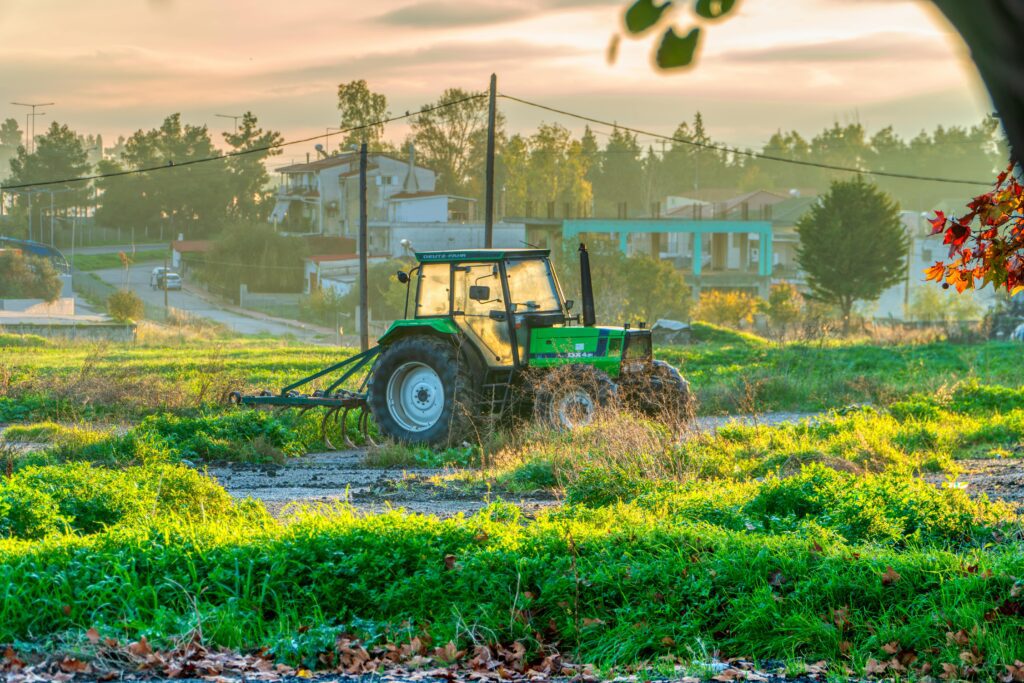
Among all the innovations, tractors remain the backbone of mechanized farming. Be it for plowing, sowing, hauling, or operating attachments, tractors become multi-purpose machines that support almost every farming stage.
Many farmers prefer used tractors simply because they have proved to yield reliable performance at more reasonable prices. These machines allow farmers to adopt mechanization without extreme financial stress.
Tractors also became power sources for various implements-a fact making them a smart long-term investment. If chosen correctly, even older tractor models can consistently deliver outputs for years.
Tractors combined with suitable farm tools and equipment achieve productivity, ensured soil health, and fuel efficiency. The increase in serviced and certified used options has been further encouraging farmers to shift toward mechanized systems sans the fear of compromised quality.
Why Understanding Agricultural Machinery Matters
Agricultural machinery is no longer an option, but a necessity for one connected with farming, agribusiness, or agricultural studies. Proper knowledge enables farmers to choose between machines according to the size of their land, type of crop, and financial budget.
It also saves them from maintenance costs and the further misuse of farm machinery that leads to a shorter life span. Students and agricultural professionals get insights into practical usage in yield and labor efficiency due to machinery.
Even policymakers and planners depend on data related to the machinery to update better rural development strategies. Farming confronts several challenges in the form of shortages of labor and climatic uncertainty, so intelligent use of machines is turning out to be a survival strategy.
When farmers bridge the gap between modern machines and traditional inputs, agriculture becomes more resilient, productive, and future-ready. This chapter lays the foundation for exploring benefits, techniques, challenges, and solutions pertaining to modern farming machinery in the sections to follow.
Benefits
Improved Productivity and Saving Time
Probably the most significant advantage of agricultural machinery is that there is a quantum leap in increasing the productivity and handling time.
Traditional farming operations depend much on human labor, which is slow, required to be executed with much physical energy, and always operates inconsistently.
With the machines, farmers can perform critical farm operations such as plowing, sowing, irrigation, and harvesting within fixed operating periods, directly affecting crop quality and yield. For short sowing and harvesting seasons, timely farming operations are crucial.
Machines allow farmers to avoid delays due to labor shortages or changes in weather. Tractors, harvesters, and seed drills ensure uniformity in operations across huge fields, reducing human error.
Even small-scale farmers gain advantages when some basic farm tools and other equipment are mechanized, as daily work loads become manageable then. Second-hand tractors have also been tried by many farmers, and not all farmers with big budgets have increased productivity.
Conclusively, faster operations free the farmer to plan crop cycles, marketing decisions, and farm expansion rather than constantly perform the hectic physical labor themselves.
Reduced Labor Dependency and Physical Strain
In rural areas, labor availability has become a serious problem, so agricultural machinery has emerged as a reliable substitute. This machinery dramatically reduces dependence on seasonal or immigrant labor, which is usually not available in times of need, besides being costly.
A single operator, using tractors or automated implements, can accomplish most tasks that used to require many workers. By reducing labor costs, this also decreases physical stress for farmers and agricultural workers.
Continuous work may lead to a decrease in health, stamina, and accrue injuries, particularly during peak seasons. Mechanized farm implements and equipment allow farmers to put in longer hours safely and efficiently without any exhaustion.
For older farmers, this mechanization comes as a great relief and extends their working capacity. Even used tractors-if properly serviced-give the same comfort and efficiency as relatively new ones.
By decreasing physical stress, machinery helps farmers in maintaining good health in the long run and sustain their farm operations efficiently.
Cost Efficiency and Long-Term Savings
While the initial investment in agricultural machinery seems high, the long-term financial benefits many times outweigh the costs. Machines reduce recurring expenses related to labor wages, crop losses, and inefficient resource use.
Precision-based operations ensure optimum utilization of seeds, fertilizers, and water, which directly cuts input costs. Farmers who adopt appropriate farm tools and equipment experience fewer breakdowns and reduced wastage over time.
For the budget-conscious farmer, used tractors offer a practical solution whereby strong performance is delivered at a fraction of the cost of their new counterparts. This is especially true when the ownership burden is taken away through the sharing of machinery via cooperatives or rental services.
Over several cropping seasons, the savings through improved efficiency, reduction in labor costs, and increased yields help farmers recover their investments. This makes mechanization not just a matter of convenience but one of financial prudence.
Improvement in crop quality and consistency.
Uniformity in produce is very much dependent on this consistency. Agricultural machinery enables the farmer to practice farming with consistency. Machines conduct a job with a lot of precision, and repetitions in the field are done at constant depth, spacing, and coverage.
The end result of this uniformity is better germination, well-balanced plant growth, and increased resistance to pest and disease infestations. Operations conducted manually always differ because of a person’s fatigue or skill levels and thus affect crop quality.
Mechanized farm tools and implements give standardized results, meeting market expectations. Tractors with improved attachments provide better maintenance of the soil structure with reduced crop damage during operations.
Farmers who practice farming using old secondhand tractors also turn out very good results when the attached equipment is properly calibrated and maintained.
Quality produce fetches better prices in the market, enhancing farm income and encouraging farmers to continue with the mechanized farming system.
Support for Sustainable and Scalable Farming
Modern farm machinery also contributes to sustainable farming methods, which enhance efficient use and reduce environmental degradation. Precision equipment ensures minimal use of fertilizers and chemicals, conserving soil health and water bodies.
Machines enable conservation practices such as minimum tillage and residue management, which are necessary for maintaining soil fertility over time. Diversification of crops also becomes easier with versatile farm machinery and equipment that can adapt easily to different farming conditions.
Farmers who start off with secondhand tractors can upgrade gradually as more income is generated, thus ensuring progressive continuity.
Mechanization makes farmers stay well balanced with productivity and sustainability to realize resilient farming systems for the future, which can withstand changes in market and climate conditions.

Techniques
Choosing the Right Machinery for Your Farm
The selection of the proper agricultural machinery is one of the most important decisions for a farmer. The right choice depends on many factors, which include the size of the land to be tilled, the topography and type of soil, crop pattern, and, above all, the economics or budget for such a purchase.
A small farm may not require heavy machinery and can operate with compact tractors, along with simple implements and tools for farming. Large farms, on the other hand, demand high-capacity machinery that can cover more area in less time.
Farmers should also consider fuel efficiency, ease of maintenance, and availability of spare parts before making a purchase. Most farmers could opt for used tractors as a starting point, especially when transitioning from manual farming to mechanization.
Such machines give dependable performance if properly inspected without creating financial burdens. Choosing machinery that serves the actual need a farm possesses prevents underutilization and saves avoidable expenses for better returns on investment over time.
Tractors and Attachments: Use Them Efficiently
Tractors are the heart of farm machinery, and their efficiency largely depends on how well they are matched with proper attachments. Implements like plows, harrows, seed drills, sprayers, and trailers extend tractor application to various stages of farming.
Proper matching of tractor power with implements is an important step to avoid excessive fuel consumption or mechanical stress. Farmers should periodically check on alignment, lubrication, and calibration for the smooth running of operations.
Even secondhand tractors perform well when such implements are properly maintained and operational. Coupling tractors with appropriate farm implements and equipment enables farmers to carry out multiple activities with a single machine, thereby saving on time and labor.
Efficient usage of tractors minimizes soil compaction, leading to better field conditions for crop improvement and long-term soil health.
Maintenance Practices That Can Be Followed for Long-Term Performance
The backbone of successful agricultural machinery usage lies in regular maintenance. Machines that are well-maintained deliver consistency in output, use less fuel, and face fewer breakdowns.
Basic practices such as timely oil changes and replacements of filters, coupled with proper cleaning after fieldwork, lend a long life to the equipment. Farmers should also know the guide of the manufacturer and make a list of records so that they are able to plan better.
This is all the more true for secondhand tractors, which need constant monitoring in order to function satisfactorily. Ignoring small problems mostly results in large repairs, hence causing costly downtime during vital farming periods.
Regularly inspecting farm tools and equipment, such as blades, belts, and hydraulic systems, avoids sudden failures. Preventive maintenance not only saves money but also guarantees that the machines are always ready at times when farming schedules require immediate action.
Training and Skill Development for Machine Operation
Advanced agricultural machinery is ineffective without proper operator skills. Farmers and workers need to be trained on the operation of machines to avoid accidents and misuse.
Knowledge of machine controls, load limits, and operational techniques definitely helps in enhancing productivity and reducing wear and tear. Training programs, workshops, and on-field demonstrations help farmers become confident in driving tractors and operating implements.
It comes in handy especially when farmers use pre-owned tractors because these things help them recognize problems with the performance of the machine in its early stages.
In turn, skilled handling of farm tools and equipment ensures precision in operation, better fuel economy, and prolonged life of the machine.
The time that would have been spent learning all modern methods and techniques transforms machinery from a simple tool into a powerful asset that enhances overall farm management.
Merging Traditional Knowledge with Modern Machinery
Successful farming does not involve the replacement of traditional methods with agricultural machinery, but rather the integration of such machinery into farming. Farmers who integrate generational knowledge with modern tools have better results than farmers who rely wholly on either method.
Indeed, knowing how the local soil behaves, the climatic cycles, and crop cycles provides a real basis for understanding how to more effectively use farm machines. For instance, a tractor can be driven at times when the soil has the right moisture content to minimize damage and enhance efficiency.
Traditional wisdom informs the effective application of farm equipment and machinery in order to ensure that mechanization complements the processes of nature rather than disrupting them.
In fact, even in the use of secondhand tractors, an experienced farmer will adjust the operation of the machines to the site conditions to maximize output. This is a balanced approach to farming that optimizes the respect of tradition with technological advancement.

Challenges
High Initial Investment and Financial Obstacles
High initial investment for purchase is one of the most common challenges associated with agricultural machinery. Advanced tractors and harvesters are pretty expensive, and their purchase mostly exceeds the budget of a small and marginal farmer.
Even though machinery improves efficiency, many farmers hesitate to invest due to uncertain returns from fluctuating crop prices and weather risks. While used tractors provide a more affordable entry point for farmers, they are still concerned about repair costs and machine reliability.
Access to credit, loans, or subsidies might not be smooth, particularly in remote areas. Investments in farm tools and equipment can burden a farmer if proper financial planning is not done.
Because of this financial hesitation, mechanization is often delayed, productivity growth is limited, and farmers depend upon traditional and labor-intensive methods for a longer period than necessary.
Lack of Technical Awareness and Knowledge
Another major barrier to the adoption of mechanized farming includes the lack of technical knowledge on the part of farmers.
Most users are unaware of the operation, calibration, and maintenance procedures for the machines; hence, the machinery is used inefficiently and results in frequent breakdowns. Machines are also bought without properly knowing whether it would work with the local crops or soil type.
This gap in knowledge appears more prominent when farmers purchase second-hand tractors, which need care in handling and periodic examination. Poor field performance, increased fuel consumption, and even crop damage can also occur due to the improper use of farm implements and machinery.
Inadequate training programs and technical support exacerbate the situation. Without proper guidance, farmers will blame the machinery rather than realizing the need to enhance their skills, which would decelerate the overall process of mechanization.
Issues of Maintenance, Repairs, and Spare Parts
Mechanical problems related to maintenance are major deterrents to agricultural machinery performance, particularly in peak farming seasons. While many machines require servicing periodically, very few rural areas have either an authorized service centre or trained mechanics to do the job.
Delays in repairs result in the farming operations coming to a grinding halt at critical stages, adversely affecting yields. This problem becomes much more serious in second-hand tractors, since wear and tear are more common if the previous maintenance history is not known.
Availability of genuine spare parts is also a problem since spurious or low-quality parts reduce the efficiency and lifespan of machines. Even basic implements and farm equipment become unserviceable if there are difficulties in locating replacement components.
The discouragement arising from poor maintenance infrastructure has been such that farmers do not use machinery to the fullest extent and have to make adequate provisions for manual backup, thereby reducing the overall benefits from mechanization.
Unsuitable Machine Selection for Farm Conditions
Inappropriate agricultural machinery for the given farm conditions often results in inefficiency and long-term damage. Large field machinery does not work well on small or uneven landholdings. Heavy tractors compact the soil where it is loose or wet.
Farmers often buy machines according to trends or because neighbors have them, but that is usually not based on real needs. This mistake often occurs when farmers choose second-hand tractors, with availability playing perhaps a greater role than suitability.
Poor matching of farm tools and equipment with tractor power will increase fuel consumption and mechanical stress. Unsuitable machinery does not only reduce productivity; it also increases costs of operation, which, in turn, diverts farmers away from mechanization because of poor results.
Issues of the Environment and Sustainability
While machinery improves efficiency in agriculture, poor utilization leads to environmental challenges. Inefficient mechanization can cause degradation of soil, waste of fuel, and increased carbon emissions.
Use of heavy machinery upsets the soil structure, leading to reduced microbial activities, which affects fertility in the long run. Absence of awareness about feasible practices makes farmers become dependent on machinery without paying heed to ecological balance.
Even second-hand tractors emit higher levels of pollutants and waste more fuels if these are not well-maintained. Unsuitable or obsolete tools and implements used in farming also contribute to resource wastage.
These environmental concerns can only be mitigated by balanced mechanization, proper selection of machinery, and adopting ecologically friendly methods of farming that prevent destruction of natural resources while sustaining productivity.

Solutions
Affordable Access, Through Financing, Subsidies, and Sharing Models
One useful workable solution for the cost barrier of agricultural machinery is access by flexible financing and shared usage models. For instance, governments, banks, and agricultural institutions increasingly offer low-interest loans, subsidies, and installment-based payment options to support mechanization.
Where a farmer plans correctly, loan repayments will fall in step with crop cycles and minimize financial pressures on the farmer. Another approach that farmers use effectively is that of custom hiring centers, renting machines instead of buying them.
This allows the small farmer to employ modern farm tools and equipment only when necessary, lacking all ownership costs. The majority of small-scale farmers also use used tractors successfully through cooperative ownership, sharing in the expenses as well as the maintenance.
Therefore, the access models make mechanization inclusive and feasible for resource-poor farmers. Shifting the focus from ownership to access enables the farmer to gain by the good machinery and its advantages while maintaining reasonable financial stability.
Training Programs and Demonstrations on the Field Site
Improving knowledge and skills is a long-term solution for maximizing the value of agricultural machinery. Training programs conducted by agricultural universities, extension services, and private companies enable farmers to understand machine operation, safety, and maintenance.
On-field demonstrations are particularly effective since farmers learn by observing real-time machine performance on similar soil and crop conditions. This hands-on exposure instills confidence and reduces misuse.
Training also helps farmers more accurately assess used tractors for purchase, recognizing signs of wear and maintenance needs. When farmers know how to handle farm implements and equipment properly, they witness fewer breakdowns and receive better output.
Skill development transforms machinery from a risk into a reliable partner, ensuring that investments actually result in measurable productivity gains.
Planned Maintenance and Local Service Support
A properly set-up maintenance routine is the key to sustaining performance, not only in service but also in agriculture. Farmers need to stick by a schedule of preventive maintenance, rather than waiting for a breakdown before anything is done.
Simple habits the farmers practice, such as cleaning up machines after use, checking on fluids, and proper storage, contribute much to extending the life of agricultural equipment. This addresses repair delays through the development of local service networks and training of rural mechanics.
This is particularly significant for farmers using used tractors. Timely servicing by the farmer prevents small issues from becoming major failures. Local maintenance centers can stock common spare parts for widely used farm implements and equipment, reducing machine downtime during peak seasons.
When routine maintenance is a planned activity rather than a reactive one, machinery becomes more reliable and farming operations uninterrupted.
Matching Machinery to Farm Size and Conditions
Correct machine selection is a strong remedy for inefficiency in the use of agricultural machinery. The size of the land to be cultivated, the crop type, the soil texture, and the availability of water are factors that should be considered by the farmers before buying or renting equipment.
Often, compact machines operate better on small and fragmented holdings, while large farms can maintain and utilize high-capacity equipment. Farmers who purchase used tractors should stress suitability rather than brand or appearance.
Well-matched implements and equipment on the farm reduce fuel consumption, minimize damage to the soil, and increase field performance. Agricultural advisors and extension officers are very welcome in providing farmers with informed choices.
Matching machinery with real farm needs provides consistent results and avoids the distress resulting from poor equipment performance.
Promoting Sustainable and Smart Mechanization
Sustainability-based technologies adequately balance the environmental issues associated with farm machinery. Minimum tillage, precision seeding, and efficient irrigation systems are some of the conservation-based techniques that farmers can adopt.
Such practices minimize the use of fuel and conserve soil health. Regular checks on emission and their servicing on time help used tractors to function more effectively and with less environmental impact.
The use of proper farm implements and appropriate equipment, which are designed for efficiency in resources, encourages sustainability over the long term. Smart mechanization does not involve too much machine use but rather the use of the right machine at the right time and for the right job.
This thoughtful approach ensures that gains in productivity do not come at the cost of environmental degradation.

Frequently Asked Questions
1. What is agricultural machinery, and why is it important for farmers?
The agricultural mechanization mainly denotes those machines employed for farming operations like plowing, sowing, irrigation, harvesting, and transportation. The use of this much-needed machinery by farmers saves time, reduces hard physical labor, and improves efficiency. \
If farm tools and implements are used rightly, farmers can tackle more land areas with ease and ensure consistent quality of crops. This helps in overcoming labor shortages and performing timely farm operations, thus directly affecting the yield and profitability.
2. Are used tractors a good option for small and marginal farmers?
Yes, used tractors are practical and cost-effective for small and marginal farmers. It ensures farmers adapt to agricultural machinery without having too much investment in it. If purchased from appropriate sources and maintained rightly, used tractors would ensure good performance and durability.
They can operate common farm equipment and implements with ease, thus making them quite suitable for most farm operations without burdening the farmer with excessively high costs.
3. How can farmers choose appropriate farm tools and equipment?
Farm tools and equipment are related to the size of the farm, nature of the crop, and soil condition, together with the investor’s budget. As a farmer, it is your role to determine whether the tool matches your tractor power and farming requirements.
Farmers may consult agricultural experts and attend field demonstrations to make informed decisions. Proper selection leads to the efficient performance of agricultural machinery with no extra operational costs.
4. What are the maintenance practices that an agricultural machinery needs?
This will involve routine changes of oil, cleaning of filters, hydraulic system checks, and storage. Extra attention is required in used tractors so that early wear-outs are identified.
The prevention of sudden breakdowns, reduction of repair costs, and extension of machine life is made possible through regular maintenance of the farm tools and equipment, particularly during peak farming seasons.
5. Can agricultural machinery support the quest for sustainable farming?
Yes, agricultural machinery can strongly support sustainable farming if used wisely. Precision-based machines reduce overuse of inputs like seeds, fertilizers, and fuels. Efficient farm implements and equipment promote soil conservation and efficient water management.
Even used tractors, maintained well, can be efficient with less environmental degradation to support long-term soil and resource health. What exactly is being proposed?
Conclusion
In building a smarter, stronger farming future. Modern farming is no longer a matter of convenience but of necessity for growth, efficiency, and sustainability when it comes to agricultural machinery.
From increasing the rate of production and decreasing dependency on labor to enhancing crop quality and profitability of the farm, machinery transforms the way agriculture is performed at each and every level of operation.
Coupled with appropriate farm tools and equipment, machines enable farmers to work smart instead of working hard, while managing time and resources effectively.
For farmers of limited budgets, used tractors offer access to mechanized farming within their financial reach and prove that progress does not always require high investment. However, successful mechanization is based on informed decisions, proper maintenance, and skill development.
The choice of machinery appropriate to local conditions, the use of sustainable practices, and investment in training can ensure a long life of benefits. Farmers who treat machines as strategic assets rather than quick fixes are the ones who experience consistent improvement in output and income.
With agriculture continuing to face labor shortages and climate uncertainty, embracing balanced and smart mechanization has become a way forward.
The time has come for every farmer, student, and stakeholder in agriculture to adopt modern tools judiciously and build a resilient farming system that is future-ready and assures productivity with sustainability.