
The names of rabi crops are wheat, barley, gram (chana), lentil (masur), field pea, rapeseed-mustard (sarson), linseed and safflower, plus winter vegetables like potato and cauliflower. Rabi crops are sown in October to December and harvested in March to June. This guide gives you the full list, month-wise sowing windows, and the brand-new MSP for the 2027-28 marketing season, announced by the Cabinet on 30 September 2026.
Quick answer
- Rabi season: sowing October to December, harvest March to June
- Main rabi crop: wheat
- Six MSP-mandated rabi crops: wheat, barley, gram, lentil, rapeseed-mustard, safflower
- Wheat MSP 2027-28: Rs 2,610 per quintal (up Rs 25)
- Mustard MSP 2027-28: Rs 6,613 per quintal (up Rs 413)
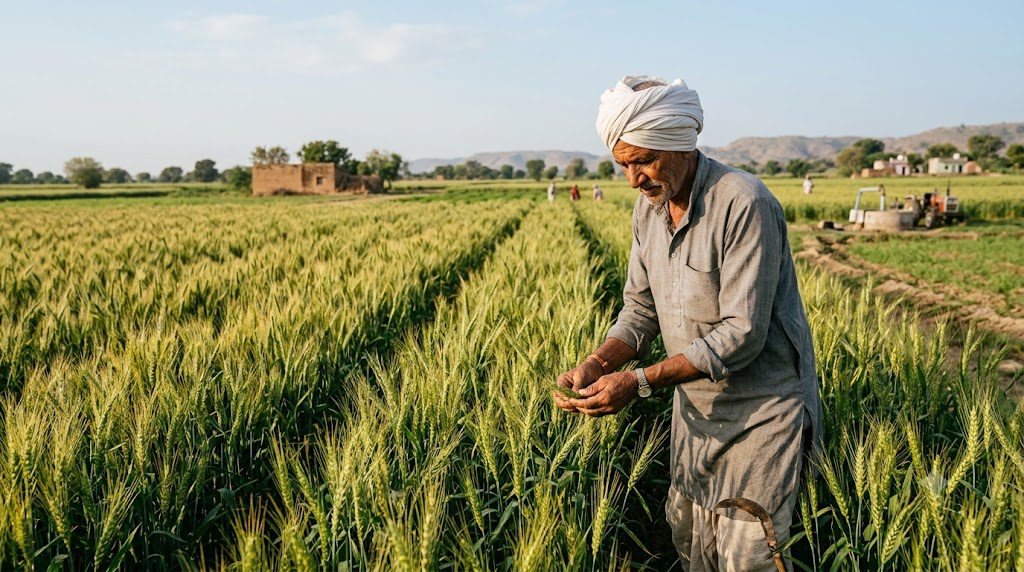
Table of Contents
What Are Rabi Crops?
Rabi crops are winter-season crops. Farmers sow them once the monsoon has withdrawn and the weather turns cool, and they harvest them in spring when temperatures start to rise. The crops need cool conditions for germination and vegetative growth, and warm, dry weather when the grain matures. Since there is very little rain between November and March in most of India, rabi crops depend on either stored soil moisture or irrigation.
The word rabi comes from Arabic and means spring, which points to the spring harvest. In the Indian crop calendar, rabi sits between the kharif season (monsoon crops) and the short zaid season (summer crops). Sowing of all six MSP-mandated rabi crops begins in October, and harvesting starts around March to April.
Understanding the season matters because the single biggest cause of poor rabi yield is mistimed sowing. A crop sown too early meets warm weather at germination, and a crop sown too late meets heat at grain filling. The rest of this article is built around getting that timing right.
Names of Rabi Crops in India (Complete List)
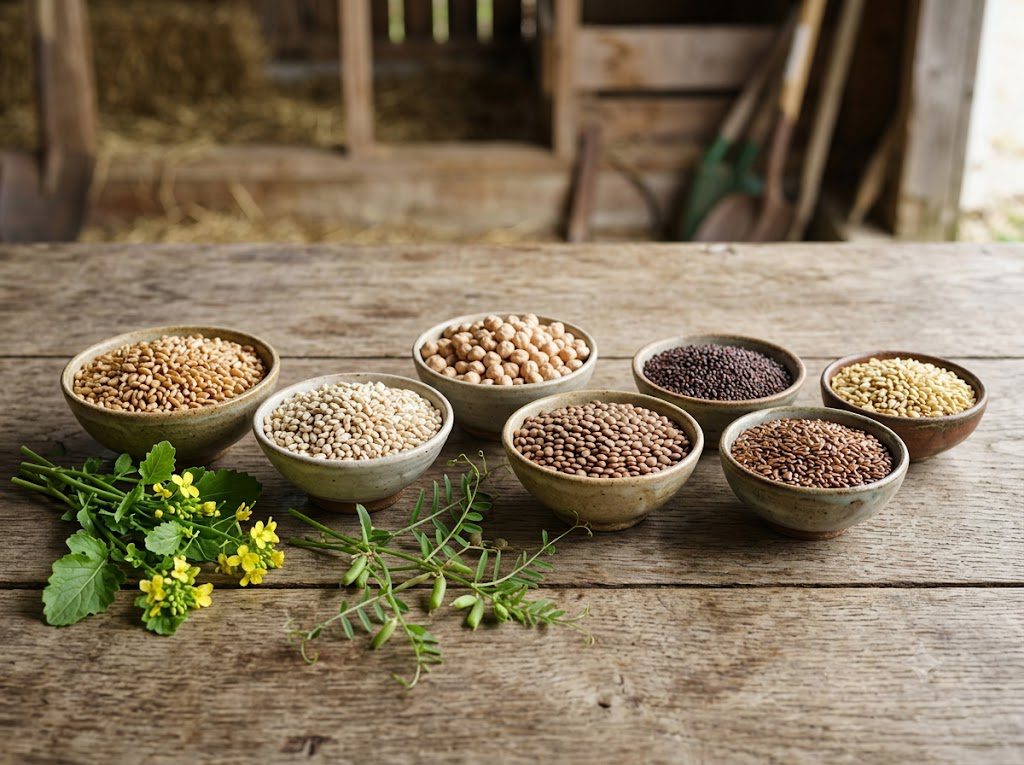
The names of rabi crops fall into five groups. The table below lists each group with common Hindi names, so you can match the English name to what your local mandi calls it.
| Group | Names of rabi crops (Hindi name) |
|---|---|
| Cereals | Wheat (gehun), barley (jau), oats (jai) |
| Pulses | Gram or chickpea (chana), lentil (masur), field pea (matar), lathyrus (khesari) |
| Oilseeds | Rapeseed-mustard (sarson, rai), toria, linseed (alsi), safflower (kusum) |
| Vegetables | Potato, cauliflower, cabbage, carrot, peas, spinach |
| Spices | Coriander (dhania), fenugreek (methi), cumin (jeera), fennel (saunf) |
Of all the names of rabi crops above, the Government of India fixes an MSP for six: wheat, barley, gram, lentil, rapeseed-mustard and safflower. That is why these six get the most attention in news and exam questions. Vegetables and spices have no MSP, so their price depends entirely on market demand.
Some ICAR advisories also include rabi sorghum, rabi maize and sunflower in the rabi plan for particular states. For example, the Maharashtra advisory recommends sowing rabi sorghum on residual moisture and finishing before 15 October. So the full list of rabi crops grown in India is longer than any one table, and it changes by region.
Sowing and Harvest Months for the Names of Rabi Crops
Exact dates depend on your state, altitude, irrigation and variety. The windows below are drawn from ICAR agro-advisories published for different states. Treat them as a guide and confirm the final dates with your state agriculture university or Krishi Vigyan Kendra (KVK) before you sow.
| Crop | Typical sowing window (source state) | Harvest |
|---|---|---|
| Wheat, timely sown | First fortnight of November in Punjab; complete by 25 November in Chhattisgarh | March to April |
| Wheat, late sown | 25 November to 15 December with early-maturing varieties (Chhattisgarh, Maharashtra) | April |
| Rapeseed-mustard | 15 October to 15 November (Jharkhand, Chhattisgarh) | February to March |
| Gram | 15 October to 15 November (Jharkhand); first fortnight of November in Uttarakhand | March to April |
| Lentil | 1 to 30 November as sole crop (West Bengal) | March |
| Linseed | October to mid-November (Chhattisgarh) | March |
Notice how much the dates vary. Mustard in West Bengal is advised from the third week of October to the second week of November, while the Maharashtra advisory puts mustard in the first fortnight of November. Copying a neighbouring state’s calendar is one of the most common mistakes. Use the advisory for your own agro-climatic zone.
MSP 2027-28 for the Main Names of Rabi Crops
On 30 September 2026, the Cabinet Committee on Economic Affairs approved higher MSP for all six mandated rabi crops for the 2027-28 marketing season. Here are the figures for the names of rabi crops covered by MSP, in Rs per quintal:
| Crop | MSP 2026-27 | MSP 2027-28 | Increase |
|---|---|---|---|
| Wheat | 2,585 | 2,610 | 25 |
| Barley | 2,150 | 2,286 | 136 |
| Gram | 5,875 | 5,958 | 83 |
| Lentil (masur) | 7,000 | 7,390 | 390 |
| Rapeseed-mustard | 6,200 | 6,613 | 413 |
| Safflower | 6,540 | 7,215 | 675 |
The government’s stated expected margin over the all-India weighted average cost of production is 106% for wheat, 96% for rapeseed-mustard, 92% for lentil, 59% for gram, 58% for barley and 50% for safflower. The Information and Broadcasting Minister said the production cost of wheat is Rs 1,264 per quintal. The estimated payout to farmers for the 2027-28 marketing season is Rs 90,962 crore.
What does this mean for you? Last year wheat rose by Rs 160, but this year it rose by only Rs 25, while safflower gained Rs 675, mustard Rs 413 and lentil Rs 390. The signal from the government is clear: it wants more area under oilseeds and pulses, in line with its stated aim of crop diversification.
Be careful, though. MSP is a floor price and not a guaranteed income. Your actual return depends on your yield, your input cost and whether your crop is actually procured at MSP in your state. Procurement arrangements differ by crop and by state, so check your nearest mandi and state procurement plan before you shift acres.
Kharif Crops vs the Names of Rabi Crops
Students often mix up the names of rabi crops and kharif crops, so this quick comparison helps.
| Point | Kharif crops | Rabi crops |
|---|---|---|
| Sowing time | June to July, with the monsoon | October to December |
| Harvest time | September to October | March to June |
| Water source | Mainly rainfall | Residual soil moisture and irrigation |
| Weather needed | Warm and wet | Cool for growth, dry for harvest |
| Examples | Paddy, maize, cotton, soybean, bajra | Wheat, gram, mustard, lentil, barley |
In many fields the two seasons connect. Paddy harvested in October is often followed directly by wheat, which is why paddy straw management and Happy Seeder sowing are such big topics in Punjab. If you are interested in older, low-input systems that fit between these seasons, read our guide on traditional farming methods in agriculture.
Crop-by-Crop Guide to the Names of Rabi Crops
Wheat
Wheat is the backbone of the rabi season. In Punjab, the first fortnight of November is the optimum sowing time, and long-duration varieties can be started from the fourth week of October. Maharashtra advises timely irrigated wheat in the first fortnight of November and late sowing up to 15 December if water is available.
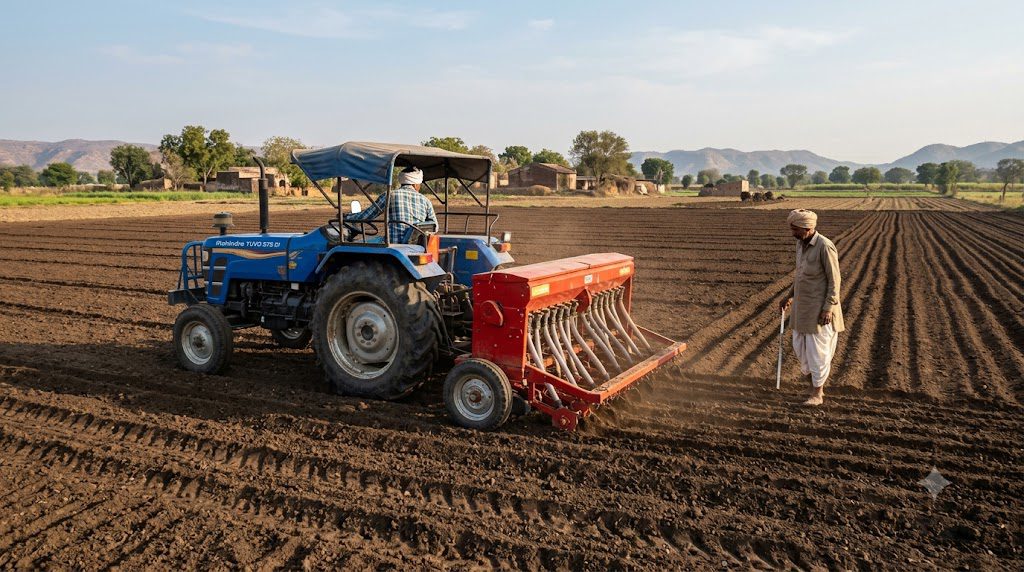
For seed rate, the Jharkhand advisory suggests about 100 kg per hectare for timely sowing and 125 kg per hectare for late sowing, in lines at 20 to 22 cm spacing. Half of the nitrogen and all of the phosphorus and potash go in at sowing, and the rest of the nitrogen is split at about 21 and 45 days after sowing. Punjab recommends sowing with a seed-cum-fertilizer drill at 4 to 6 cm depth, and 5 to 10 kg extra seed per acre when using a Happy Seeder. The Punjab advisory also says that if pink stem borer damage was seen in the previous paddy crop, wheat sowing should be avoided in October.
Rapeseed-Mustard
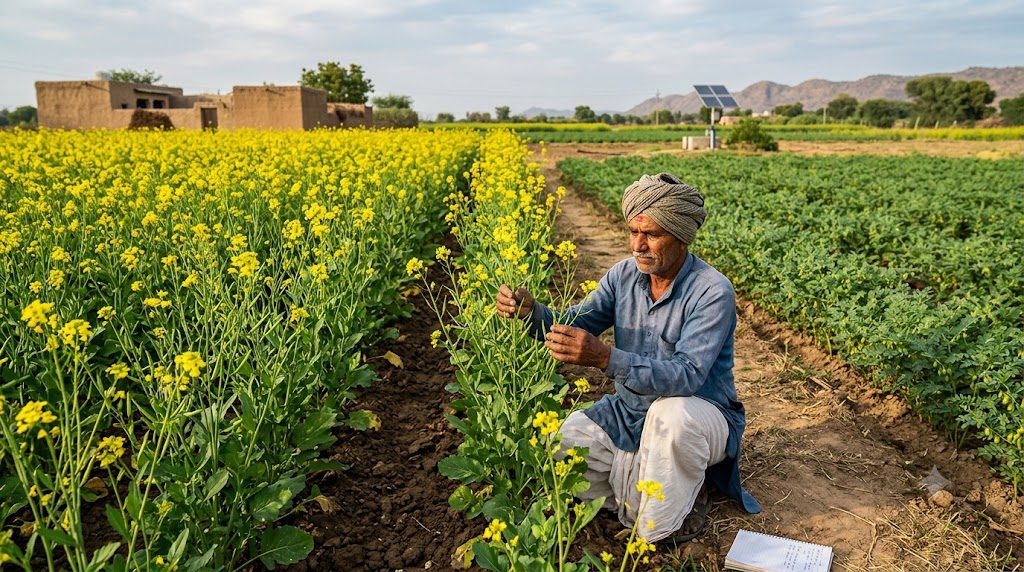
Mustard suits farmers who want a lower-water crop with a strong MSP. Jharkhand and Chhattisgarh both advise sowing between 15 October and 15 November. The Chhattisgarh advisory recommends 4 to 5 kg of seed per hectare, 45 cm row spacing, and half the nitrogen at sowing with the rest at the knee-high stage. Improved varieties named in the advisories include Pusa Mustard 25, Pusa Mustard 28, Pusa Mustard 30 and NRCHB 101. Toria, the earlier-sown yellow mustard, is advised in September in some states.
Gram (Chickpea)
Gram needs relatively little irrigation and fixes its own nitrogen, so it fits well after a heavy-feeding crop. Chhattisgarh advises treating seed with thiram at 3 g per kg, then with Rhizobium and PSB culture at 5 g per kg, and applying 20 kg nitrogen, 40 kg phosphorus, 20 kg potash and 20 kg sulphur per hectare at sowing. Jharkhand recommends a basal dose of 25:50:25:20 kg per hectare of NPKS. Gram pod borer is the major insect problem, so monitor your field from flowering. Named varieties include Akash, Phule Vikram and JAKI-9218 (desi) and PKV Kabuli-2 and Virat (kabuli) in the Maharashtra advisory.
Lentil (Masur)
Lentil is a small-seeded pulse that does well on lighter soils. West Bengal advises completing sole-crop sowing between 1 and 30 November, with varieties such as WBL-77 (Moitree), Pusa Ageti (L-4717) and PL-8. Uttarakhand recommends the first fortnight of November, with late sowing possible up to the second week of December using Pant Lentil 5, 7, 8 or 9. With the lentil MSP rising Rs 390 to Rs 7,390 per quintal, many farmers will look at it again this season.
Names of Rabi Crops by Region
The names of rabi crops that dominate change as you travel across India. In Punjab and the northern plains, wheat leads the winter season, with rapeseed-mustard as the other major crop in the Punjab advisory. In Chhattisgarh and Jharkhand, advisories list wheat, gram, mustard and linseed side by side. West Bengal’s advisory gives lentil, mustard, lathyrus and rabi maize a prominent place, while Maharashtra’s includes gram, wheat, mustard and rabi sorghum. So when someone asks for the names of rabi crops, the best answer for your own farm is the list in your state’s ICAR advisory, because soil, rainfall and irrigation decide which crops pay.
How to Choose the Right Rabi Crop for Your Field
Choose in this order, and do not skip a step.
- Water first. Wheat and potato need assured irrigation. Gram, mustard, lentil, barley and safflower manage with less water. If your canal or tubewell supply is uncertain, start there. Our article on irrigation systems like sprinkler and drip explains how to stretch limited water.
- Soil and last crop. Pulses add nitrogen for the next crop. Repeating the same crop on the same field every year builds up disease and weeds.
- A sowing date you can really hit. If your paddy comes off late, a late-sown wheat variety is safer than forcing a long-duration variety into December.
- Market and procurement. MSP only helps if the government agency actually buys your crop at your mandi. Ask your local mandi and agriculture office.
- Input philosophy. If you want to cut chemical costs, look at zero budget natural farming or our beginner’s guide to organic farming in India, and trial it on a small plot first.
Technology can also help with timing and water use. See our list of the top farm tech tools for agriculture for weather, soil and irrigation tools worth trying.
Common Mistakes to Avoid in the Rabi Season
- Sowing late without changing the variety. Late wheat needs an early-maturing variety and a higher seed rate, as the Jharkhand advisory shows.
- Sowing in wet, cloddy soil just because the calendar says so. Wait for proper moisture.
- Skipping seed treatment in gram and lentil, then blaming the seed for poor germination.
- Choosing a crop only for its MSP hike, without checking water, soil and procurement.
- Mixing up the names of rabi crops with kharif crops and planning the wrong season for a field.
- Copying another state’s dates. The sowing windows in Punjab, West Bengal and Chhattisgarh are not the same.
- Ignoring the previous crop’s pests. Always read the last crop’s problems before choosing the next.
FAQs on Names of Rabi Crops
1. What are rabi crops?
Rabi crops are winter crops sown in October to December and harvested in March to June, such as wheat, gram, mustard, lentil and barley. They rely on cool weather for growth and on soil moisture or irrigation for water.
2. What are the names of rabi crops in India?
The main names of rabi crops are wheat, barley, oats, gram, lentil, field pea, lathyrus, rapeseed-mustard, linseed and safflower, plus vegetables like potato, cauliflower and cabbage, and spices like coriander and fenugreek.
3. Which months are rabi crops sown and harvested?
Sowing runs from October to December. Harvest begins in March to April and can continue to June, depending on the crop and the state.
4. What is the difference between kharif and rabi crops?
Kharif crops are sown with the monsoon in June to July and harvested in autumn. Rabi crops are sown in winter and harvested in spring, relying on residual moisture or irrigation instead of rain.
5. Which is the main rabi crop of India?
Among the names of rabi crops, wheat is the main one, followed by gram, rapeseed-mustard and lentil.
6. What is the MSP of rabi crops for 2027-28?
Wheat Rs 2,610, barley Rs 2,286, gram Rs 5,958, lentil Rs 7,390, rapeseed-mustard Rs 6,613 and safflower Rs 7,215 per quintal, as approved by the Cabinet on 30 September 2026.
7. Which rabi crop has the highest margin over cost?
On the government’s own estimate, wheat has the highest expected margin over cost at 106%, then rapeseed-mustard at 96% and lentil at 92%. This is a policy estimate. Your actual profit depends on yield, cost and where you sell.
8. Can rabi crops be grown without irrigation?
Some can be grown with limited water or on residual moisture, such as gram, mustard, lentil, barley and safflower. Wheat and potato need assured irrigation for good yield.
9. What happens if wheat is sown late?
Yield usually falls because the crop meets heat during grain filling. ICAR advisories allow late sowing up to mid-December using early-maturing varieties and a higher seed rate, for example 125 kg per hectare in the Jharkhand advisory.
10. Which vegetables are grown in the rabi season?
Potato, cauliflower, cabbage, carrot, peas and spinach are common rabi vegetables, along with spices like coriander and fenugreek. Vegetables have no MSP, so market timing matters.
Conclusion
Rabi sowing is starting now, and this year’s MSP revision makes it worth comparing wheat against mustard, gram and lentil on your own water and soil. Bookmark this page for the names of rabi crops and the MSP table. Learn the names of rabi crops, match each crop to its sowing window, and confirm the final dates with your state advisory. If this guide helped, share it with a farmer who is planning this season’s acres.