
A farmer in Iowa doesn’t need a forecast. He needs a decision.
That distinction — between prediction and action — is where agricultural technology is heading in 2026. And the term capturing it is decision-grade intelligence: systems that don’t just tell you what might happen, but translate signals into clear, contextual actions before capital is deployed.
If you’ve been tracking ag-tech trends, you’ve heard the buzzwords. AI. Machine learning. Predictive analytics. But here’s what’s changing: the conversation has moved from “can we predict it?” to “can we act on it profitably?”
That shift matters for every farmer, agribusiness, and agricultural professional worldwide. Let me explain why.
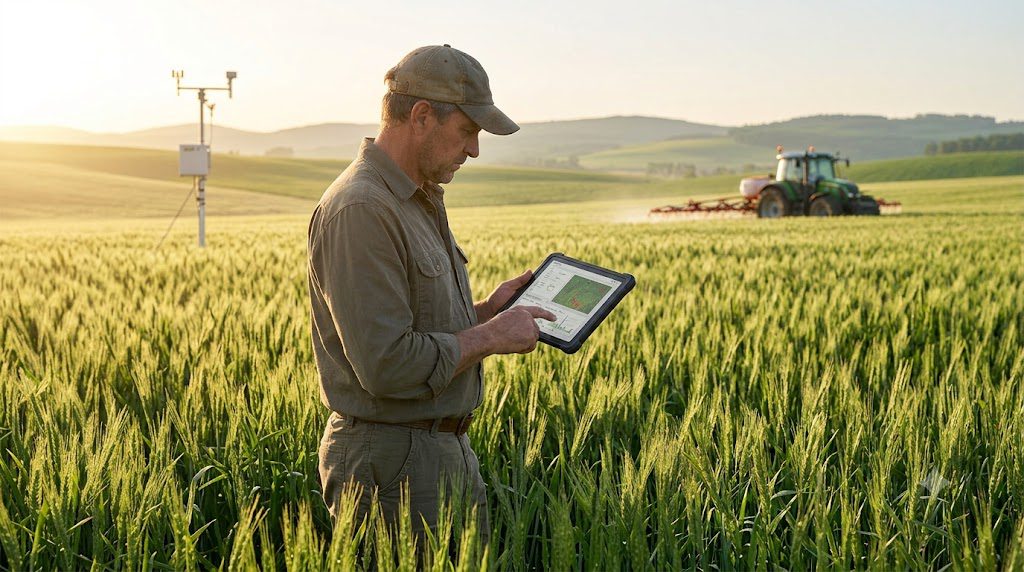
Table of Contents
What Decision-Grade Intelligence Actually Means
Strip away the marketing language. Decision-grade intelligence means using real-time data to change decisions before you spend money — acreage allocation, variety selection, supplier strategy, protection planning, logistics timing, contingency sourcing .
The old model was reactive. You saw a problem, you responded.
The new model is anticipatory. You detect a signal, you simulate scenarios, you act before the problem materializes.
A 2026 bibliometric analysis in Sage Journals found that “decision making” (111 occurrences) and “decision support systems” (81) are among the dominant research themes in agricultural technology. The researchers noted that “predictive models play a crucial role in managing uncertainties in agriculture and food supply chains” .
The message is clear: the industry isn’t just collecting data anymore. It’s building systems to act on it.
1. AI Has Grown Up: From Predictions to Outcomes
Boards don’t buy predictions. They buy outcomes.
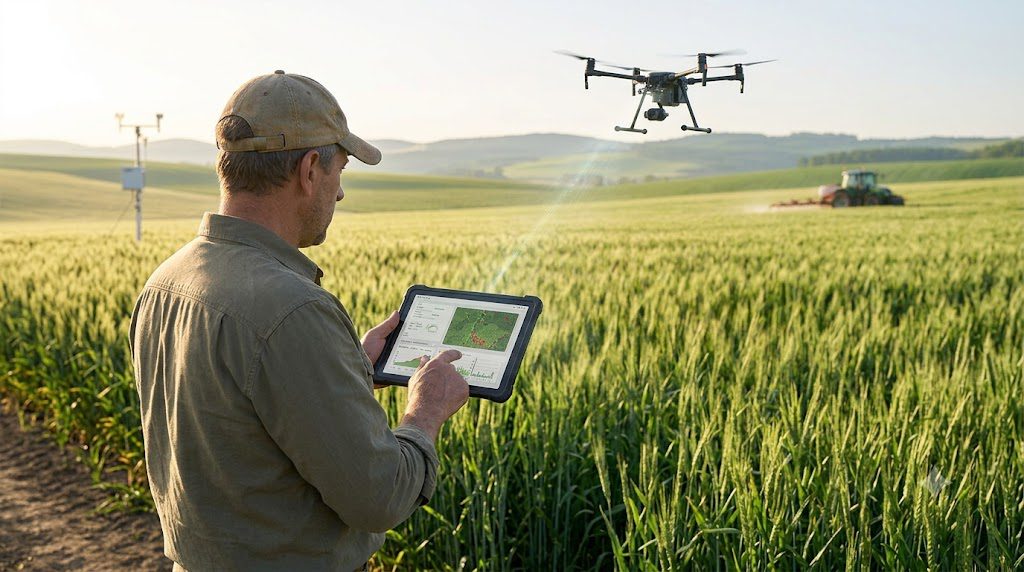
That’s the thesis behind the shift from “predictive AI” to “decision-grade intelligence.” As one industry analysis put it: “AI adoption will be driven by its ability to change decisions before capital is deployed” .
What does that look like in practice?
For a grain farmer: Instead of “this field might have a pest problem,” the system says “spray this 12-hectare block on Tuesday morning using product X at rate Y, and the ROI is positive based on current commodity prices.”
For a procurement manager: Instead of “fertilizer prices are rising,” the system says “lock in 60% of your nitrogen needs from Supplier A at today’s price, because a supply squeeze is forming 3-4 weeks out.”
This isn’t theoretical. A 2026 report from Paradox Intelligence documented how Google Search volume for “fertilizer shortage” jumped from a baseline of 10 to a score of 71 in just three months — a 610% increase — giving investors and procurement teams weeks of advance warning before mainstream coverage .
The data was there. The decision-grade insight was acting on it before the Bloomberg headline.
2. Climate Volatility Made Guessing Unsustainable
Farmers have always dealt with uncertainty. But the nature of uncertainty has changed.
Climate volatility is no longer episodic. It’s the operating environment. As BusinessLine’s 2026 agri-food outlook put it: “What were once episodic disruptions are converging into a permanent operating reality” .
The response is intelligence. Real-time monitoring. Predictive sourcing. Risk-adjusted planning.
A 2026 research paper in J-Stage described this as a “paradigm shift from isolated intelligent tools toward fully integrated, system-level agricultural intelligence with proactive and adaptive capabilities” .
Translation: the tools are getting smarter, and they’re working together.
3. The Global South Is Getting Real Tools
This isn’t just a wealthy-farm phenomenon.
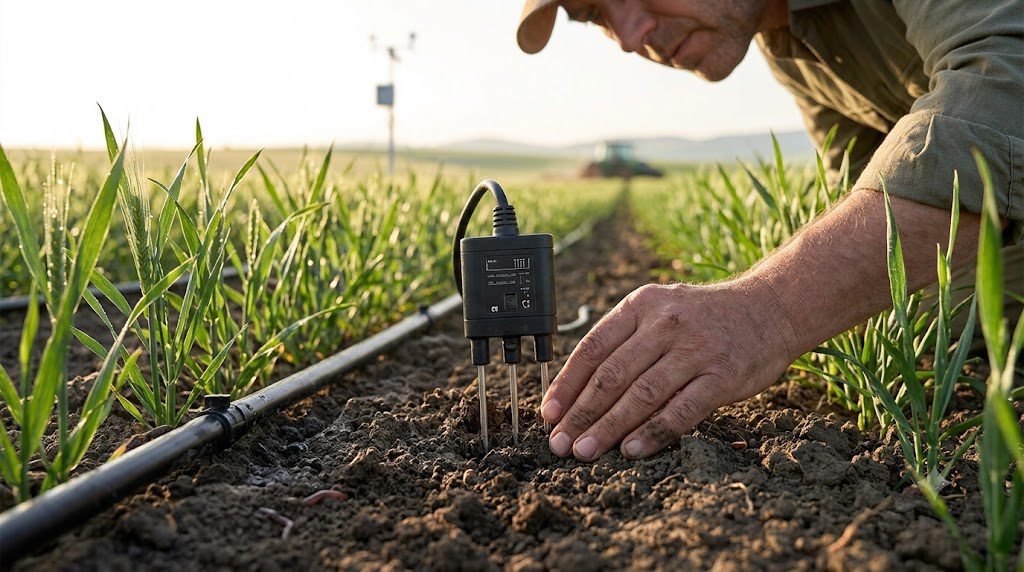
CGIAR, the world’s largest agricultural research partnership, announced a collaboration with Google.org in March 2026 to build an AI-powered “digital brain” for crop breeding. The system will analyze field data from across 89 countries and 150 field stations, using drones and smartphone images to identify high-performing crop varieties faster .
For farmers in the Global South, this means better varieties reaching their fields sooner. The system aims to address climate resilience, pest resistance, and nutritional quality — all things that matter when you’re farming on the margin.
Separately, ICRISAT licensed CRISPR-Cas9 gene editing technology in August 2026 to deploy across smallholder Asian and African farms. The humanitarian licensing agreement with Corteva and the Broad Institute creates a pathway for crops that tolerate drought, heat, pests, and diseases — without introducing DNA from unrelated species .
The tools that were once reserved for large commercial operations are scaling to smallholders.
4. Robotics Is Moving from Pilot to Practice
Autonomous equipment is no longer a novelty. The question is integration.
A 2026 analysis in maj.ir noted that “autonomous ground vehicles and robotic implements are increasingly common in specialty crops, vineyards and controlled-environment agriculture.” These systems excel at “repeatable, labor-intensive tasks — precision spraying, selective harvesting, mechanical weeding and crop scouting” .
The barrier isn’t the technology anymore. It’s the economics of connectivity.
As the report explains: “Robotic platforms depend on accurate maps, reliable connectivity and high-quality agronomic datasets — all of which vary widely across geographies.” Total cost of ownership remains sensitive to maintenance, spare parts, and software subscriptions .
For mid-sized farms, the question isn’t “can robots help?” It’s “can I afford the connectivity and infrastructure to make them work?”
5. Soil Sensors Are Becoming Standard Infrastructure
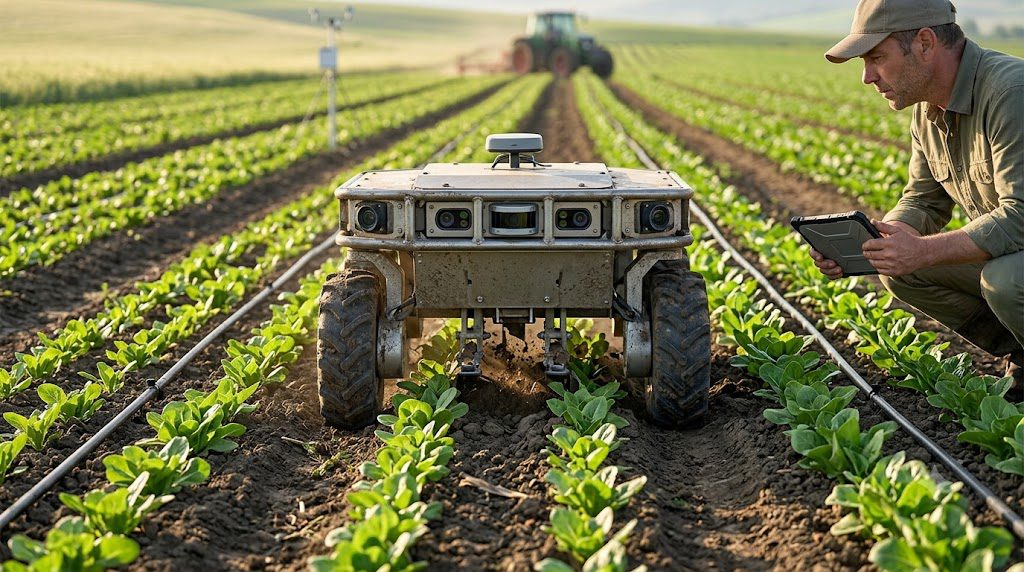
Soil monitoring has matured from occasional sampling to continuous sensing.
Modern probe systems now support multi-parameter measurement — moisture, temperature, salinity, pH, nutrient levels, and even carbon sequestration markers. The data feeds directly into farm management systems, enabling irrigation optimization, fertilizer micro-dosing, and early stress detection .
The shift from periodic sampling to continuous sensing has reduced waste and improved yields, particularly in water-constrained regions. But the business case depends on ultra-low-power hardware and reliable long-range connectivity that keeps operating costs predictable.
This is where the “decision-grade” framing becomes practical. A sensor reading is data. A sensor reading that triggers an irrigation event at 4 AM before the farmer wakes up is intelligence.
6. Traceability Is Becoming Table Stakes
Regulation is moving from rhetoric to operational requirement.
The BusinessLine analysis noted that “regulations such as EUDR signal a broader shift: compliance moving from reporting obligations to core operational requirements.” Traceability, geolocation evidence, and due diligence will be “embedded into daily operations, not handled as downstream documentation” .
The J-Stage paper described blockchain- and IoT-enabled traceability systems as one of four key research frontiers, ensuring “transparency and reliability in agri-food supply chains” .
For exporters, this isn’t optional. Evidence-ready supply chains are becoming the price of market access.
7. The Farmer Still Matters
Here’s the part the tech optimism often misses.
A 2026 Farm Progress analysis by agricultural economist David Kohl offered a grounded perspective: “Most successful businesses strike a balance between warriors and worriers. Warriors push the envelope, but they are countered by the worriers who challenge assumptions and encourage critical thinking” .
The best intelligence systems don’t replace judgment. They inform it.
Kohl also noted that “21% of agricultural operations do not have a next generation in place” — a reminder that technology adoption is inseparable from farm transition and generational change .
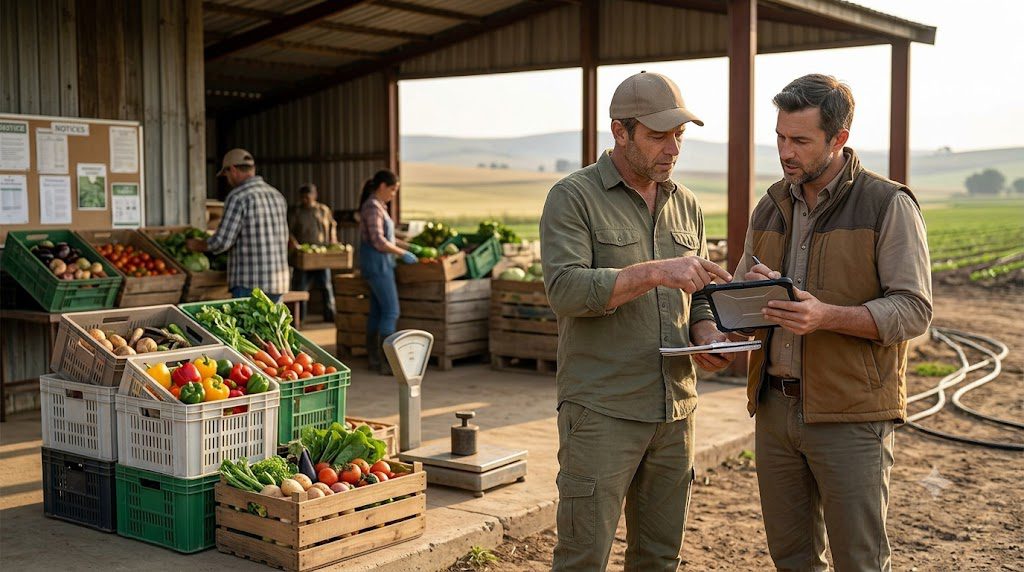
The tools are powerful. The decisions are still human.
What This Means for You
If you’re farming in 2026, here’s the practical takeaway:
Start with one decision. Pick the decision that costs you the most when you get it wrong — variety selection, spraying timing, input purchasing — and see if there’s a data source or platform that can inform it better.
Don’t buy technology. Buy outcomes. The “decision-grade” framing is useful because it forces clarity. What decision will this tool change? What’s the value of that change?
Connectivity is the hidden infrastructure. Sensors, robots, and analytics all depend on reliable data flow. Before you invest in hardware, understand your connectivity options and costs.
Watch the Global South. The CGIAR-Google partnership, ICRISAT’s gene editing licensing, and Quad-funded AI projects are creating tools specifically designed for smallholder conditions. These aren’t hand-me-downs from wealthy farms. They’re purpose-built .
FAQs About Decision-Grade Intelligence in Agriculture
1. What is decision-grade intelligence in agriculture?
Decision-grade intelligence in agriculture refers to using data, artificial intelligence (AI), and analytical tools to make better farming decisions. It helps farmers understand potential risks, evaluate different options, and take timely action based on weather conditions, soil health, crop performance, and market trends.
2. How does AI help farmers make better decisions?
AI analyzes information from weather forecasts, soil sensors, satellite images, and crop-monitoring systems to identify patterns and potential problems. Farmers can use these insights to plan irrigation, monitor crop health, manage inputs, and prepare for changing conditions. However, recommendations should always be evaluated against local farm conditions.
3. What is the difference between predictive AI and decision-grade intelligence?
Predictive AI focuses on estimating what might happen in the future, such as a possible pest outbreak or changing weather conditions. Decision-grade intelligence takes this information further by helping farmers evaluate possible actions, costs, risks, and expected outcomes before making a decision.
4. What are the benefits of decision-grade intelligence in farming?
Decision-grade intelligence can help farmers improve planning, identify risks earlier, and use resources more efficiently. It can support decisions about crop selection, irrigation schedules, fertilizer purchasing, and pest management. The actual benefits depend on data quality, technology costs, local conditions, and how effectively farmers use the information.
5. How are soil sensors used in smart farming?
Soil sensors measure specific parameters, such as soil moisture and temperature, depending on the device. Farmers can combine these readings with weather forecasts and crop requirements to make better irrigation decisions. Some specialized sensors measure additional properties, but calibration and appropriate interpretation are necessary for reliable results.
6. How Does Agricultural Robotics Improve Farm Operations?
Agricultural robotics helps farmers perform repetitive and time-consuming tasks with greater consistency and precision. For example, robotic weeders can remove weeds between crop rows, crop-monitoring robots can collect information about plant health, and specialized machines can support harvesting or targeted spraying. These technologies may reduce manual labour requirements, save time, and help farmers manage their fields more efficiently. However, agricultural robots are not suitable for every farm. Their performance depends on crop type, field layout, terrain, equipment costs, maintenance, and technical support. Farmers should evaluate the expected benefits and total operating costs before investing in robotic equipment.
7. Can Smallholder Farmers Benefit from Agricultural AI?
Yes, agricultural AI can help smallholder farmers access useful information and make better-informed farming decisions. Mobile applications, AI-powered advisory services, and digital weather tools can provide guidance about potential crop diseases, weather conditions, irrigation, and crop management. These tools may help farmers identify risks earlier and use available resources more effectively. However, their usefulness depends on the accuracy of the information, local farming conditions, affordability, internet access, and the availability of advice in regional languages. Smallholder farmers should choose tools suited to their crops and budgets and verify important recommendations with local agricultural experts or extension services.
8. How Does Climate Change Increase the Need for Agricultural Intelligence?
Climate change creates additional challenges for farmers through changing rainfall patterns, rising temperatures, droughts, floods, and heat stress. These conditions can affect crop growth, water availability, planting schedules, and overall farm productivity. Agricultural intelligence tools can help farmers interpret weather forecasts, monitor soil moisture, assess potential risks, and plan farming activities more carefully. For example, combining rainfall forecasts with soil-moisture readings can support irrigation planning during dry periods. However, these tools cannot predict every weather event or eliminate climate-related risks. Their effectiveness depends on reliable data, timely updates, and decisions that account for local conditions.
9. What role does AI play in crop breeding?
AI can help agricultural researchers analyze field-trial data, crop images, and plant characteristics to identify promising varieties. These insights can support the development of crops with desirable traits, such as improved productivity, heat tolerance, or disease resistance. However, successful crop development still requires scientific testing, breeding expertise, and appropriate evaluation under field conditions.
10. Why is connectivity important for agricultural technology?
Reliable connectivity allows soil sensors, agricultural machinery, mobile applications, and digital platforms to exchange information. This helps farmers access updated data and receive timely recommendations. In areas with weak internet or mobile network coverage, some technologies may become less effective, making offline functionality and affordable connectivity important considerations.
11. How does digital traceability benefit agriculture?
Digital traceability helps record information about agricultural products as they move from farms through processing, storage, and distribution. These records can improve transparency, support quality management, and help businesses demonstrate compliance with applicable regulations. The usefulness of traceability depends on accurate data collection, reliable recordkeeping, and the specific requirements of the relevant market.
12. Is agricultural technology affordable for every farmer?
No, agricultural technology is not equally affordable or suitable for every farm. Costs may include equipment purchases, installation, software subscriptions, connectivity, training, and maintenance. Before investing, farmers should compare these expenses with realistic potential benefits and consider starting with a small trial to determine whether the technology suits their farming operations.
13. How can farmers calculate the return on investment in agricultural technology?
Farmers can calculate return on investment by comparing the total cost of a technology with the financial benefits it generates over a suitable period. These benefits may include reduced input expenses, lower labour costs, improved crop quality, reduced losses, or increased revenue. Comparing results with a baseline and accounting for seasonal differences helps farmers assess whether the investment is worthwhile.
14. What are the main challenges of decision-grade intelligence?
The main challenges include poor-quality data, limited internet connectivity, high implementation costs, a lack of technical skills, and difficulties connecting different digital systems. Another challenge is ensuring that recommendations are relevant to local crops, soil, weather, and farming practices. Addressing these limitations is essential for turning agricultural data into reliable and practical decisions.
15. Will decision-grade intelligence replace farmers?
No, decision-grade intelligence is designed to support farmers rather than replace their experience and judgment. Digital tools can analyze large amounts of information and highlight potential risks, but farmers must consider actual field conditions, local knowledge, financial constraints, and practical requirements. Combining reliable technology with human expertise can lead to more informed agricultural decisions.
The Bottom Line
The future of agriculture will depend not simply on how much data farmers collect, but on how effectively they use it. Decision-grade intelligence connects information with practical action while keeping human judgment at the centre. Farmers and agribusinesses that combine reliable technology with experience, careful evaluation, and sound planning will be better positioned to manage risks and adapt to a changing agricultural landscape.