
The Namo Drone Didi scheme set out to do two things at once: put modern spraying technology within reach of Indian farms, and turn rural women’s Self-Help Groups into paid agri-drone service providers. Two years after formal launch, the scheme has real momentum and real documented gaps — and a Self-Help Group weighing whether to apply deserves an honest picture of both before committing.
This guide covers exactly how the subsidy and financing work, what training and equipment an SHG actually receives, how selection works, and how far the scheme has actually progressed against its own targets.
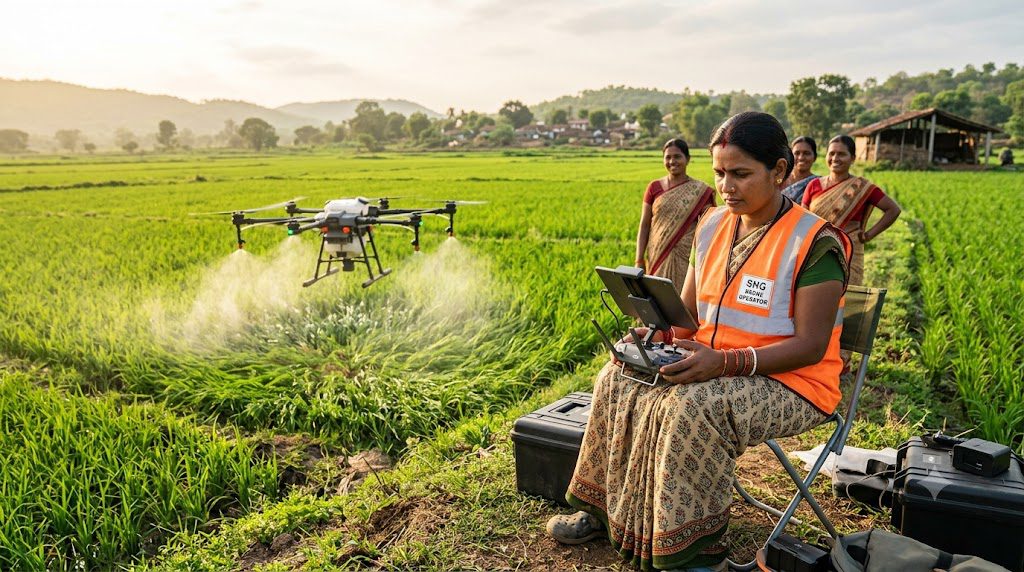
Table of Contents
- What Is the Namo Drone Didi Scheme?
- How the Subsidy and Financing Actually Work
- What’s Included in the Drone Package
- 10 Powerful Facts About the Namo Drone Didi Scheme
- How SHGs Are Selected
- Training: What “Becoming a Drone Didi” Actually Involves
- Real Progress vs the Target: An Honest Look
- Namo Drone Didi vs an Individual Farmer Buying a Drone
- Common Mistakes and Misunderstandings
- FAQs About the Namo Drone Didi Scheme
- About the Author
- Sources Cited in This Article
- Final Thought
What Is the Namo Drone Didi Scheme?
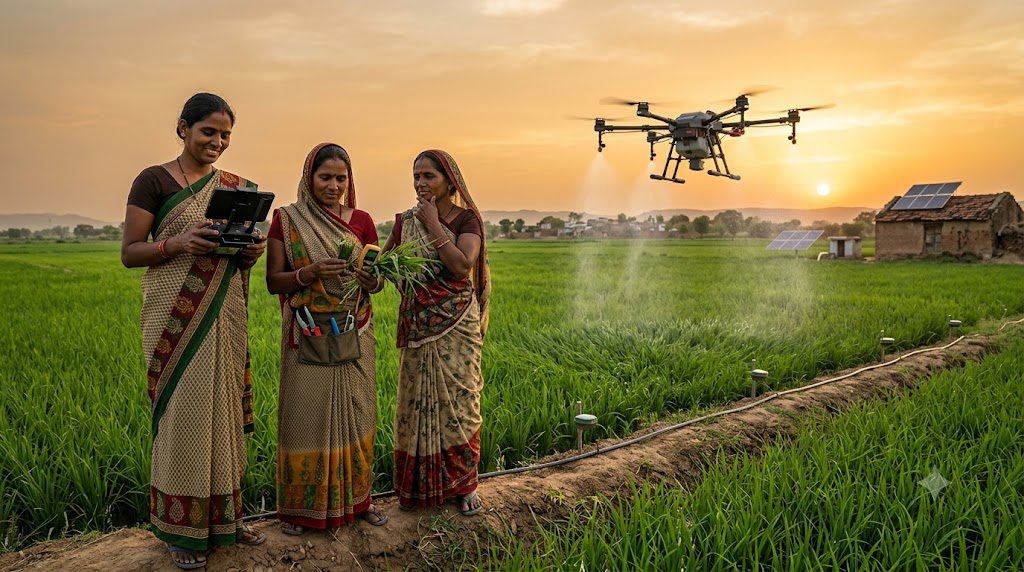
The Namo Drone Didi scheme is a Central Sector Scheme approved by the Government of India, providing drones to Women Self-Help Groups (SHGs) under the Deendayal Antyodaya Yojana – National Rural Livelihoods Mission (DAY-NRLM), with a total outlay of ₹1,261 crore for the 2023-24 to 2025-26 period, as confirmed in the government’s official announcement of the scheme’s approved outlay.
According to the official Lakhpati Didi government portal maintained by the Ministry of Rural Development, the scheme’s stated objectives are to promote advanced agricultural technology for improved efficiency and reduced operational cost, empower SHGs and their Cluster Level Federations (CLFs) as drone service providers, create new income and employment opportunities for rural women, and specifically to encourage the use of nano fertilizer while optimizing pesticide and fertilizer application — a direct, official link between this scheme and the input-efficiency technology it’s designed to help deliver.
The scheme is implemented jointly by the Department of Agriculture & Farmers’ Welfare, the Department of Rural Development, and the Department of Fertilizers, with Lead Fertilizer Companies (LFCs) playing a direct role in initial drone procurement and distribution.
How the Subsidy and Financing Actually Work
The core financial structure of the Namo Drone Didi scheme is straightforward but worth understanding precisely, since it combines a grant with a specific loan mechanism rather than covering the full cost outright.
Central Financial Assistance covers 80% of the cost of the drone package, including accessories and ancillary charges, up to a maximum of ₹8 lakh per SHG. This is confirmed directly in the Department of Agriculture & Farmers’ Welfare’s operational guidelines announcement.
The remaining balance — the gap between the total procurement cost and the subsidy — can be raised as a loan under the National Agriculture Infra Financing Facility (AIF), specifically available to Cluster Level Federations or SHGs, with an interest subvention of 3% applied to that AIF loan. SHGs also retain the option to access financing through other Ministry of Rural Development programs rather than being limited to the AIF route exclusively.
This structure means an SHG’s actual out-of-pocket cash requirement can be substantially lower than the full 20% balance, provided they successfully access the subsidized loan component — though, as with any loan-based financing, that still represents a real repayment obligation the SHG needs to plan around, not free money.
This grant-plus-subsidized-loan structure is similar in design to the financing model used in the PM-KUSUM solar pump scheme, where farmers likewise combine central subsidy with bank financing rather than covering the full cost upfront.
What’s Included in the Drone Package
The Namo Drone Didi scheme doesn’t just fund a bare drone — it funds a complete operational package designed to get an SHG functioning as a service provider from day one.
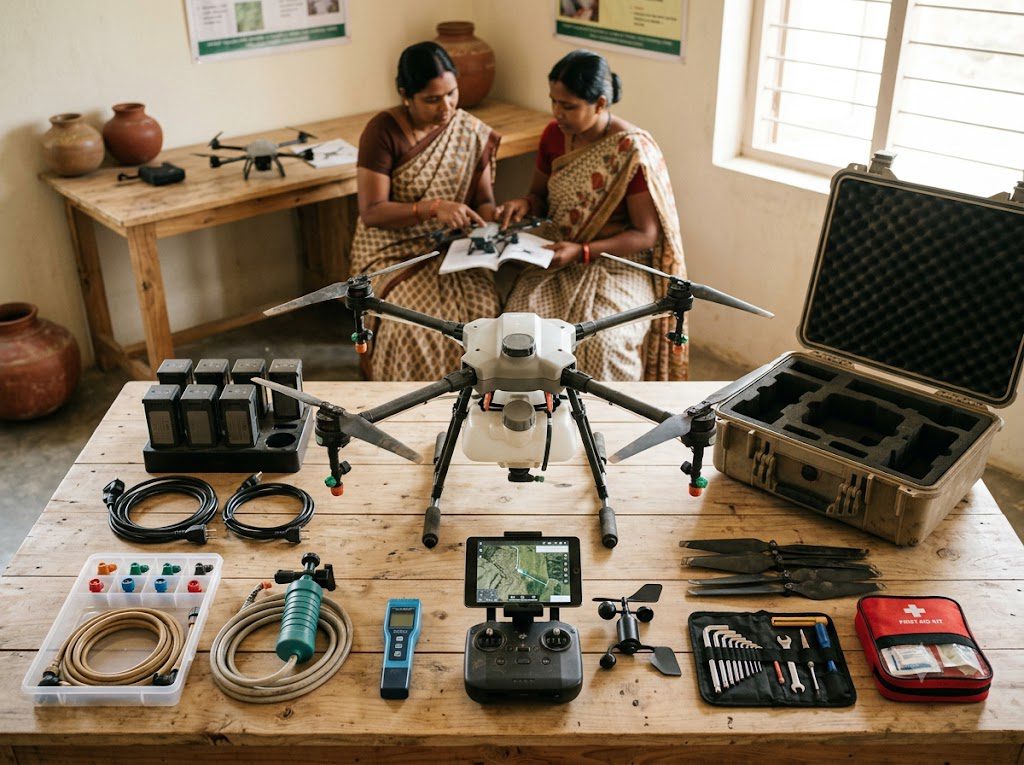
The package includes the drone itself with spray assembly for liquid fertilizer and pesticide application, a carrying case, batteries, a fast charger, and measurement accessories including a pH meter and anemometer for spray-condition monitoring.
The package comes with a one-year warranty, two years of Annual Maintenance Contract (AMC) coverage, and comprehensive insurance — infrastructure details that matter significantly for a rural SHG that may not have easy access to drone repair services otherwise.
10 Powerful Facts About the Namo Drone Didi Scheme
- The subsidy structure combines grant and loan. 80% central assistance up to ₹8 lakh, with a subsidized AIF loan option covering the balance.
- Two SHG members get trained, not just one. One member becomes a certified drone pilot; a second member — or an inclined family member — is trained as a drone maintenance assistant.
- The scheme has an explicit nano fertilizer connection. One of its five official objectives is specifically to encourage nano fertilizer adoption alongside optimized pesticide use.
- SHGs are expected to cover meaningful acreage. State guidance targets each SHG managing roughly 2,000 to 2,500 acres of drone-service business annually.
- Expected additional income is roughly ₹1 lakh per year per SHG — a figure tied to the broader Lakhpati Didi initiative’s goal of pushing SHG households past that annual income threshold, adding a new revenue stream alongside existing safety nets like crop insurance for farmers.
- Selection is demand-driven, not first-come-first-served. Clusters are chosen based on documented farmer demand for drone services before SHGs within that cluster are selected.
- An independent economic study has already been conducted. The Agricultural Development and Rural Transformation Centre (ADRTC), Bangalore, studied the business viability of the scheme’s earliest distributed drones.
- Multiple government departments share implementation responsibility. Agriculture, Rural Development, and Fertilizers departments all play defined roles, coordinated through an Empowered Committee at the central level.
- The scheme extends beyond a single-year rollout. With an outlay spanning 2023-24 through 2025-26, it’s structured as a multi-year program, not a one-time distribution event.
- Progress is publicly tracked and reported to Parliament. State-wise distribution figures have been disclosed in written parliamentary replies, giving this scheme an unusually high level of public data transparency compared to many state-level programs.
How SHGs Are Selected
Selection under the Namo Drone Didi scheme follows a specific, demand-first sequence rather than open enrollment. A State Level Committee — typically including representation from Lead Fertilizer Companies, the State Agriculture Department, the State Mission Directorate of DAY-NRLM, and agricultural research institutions such as ICAR bodies, State Agricultural Universities, or Krishi Vigyan Kendras — identifies clusters where farmer demand for drone spraying services is economically viable.
Only after a cluster is identified based on that demand are specific SHGs and their Cluster Level Federations selected within it. This structure is deliberate: it’s designed to avoid placing expensive equipment in areas without sufficient farmer demand to sustain a viable drone rental business, which protects both the SHG’s investment and the scheme’s broader return on public funding.
Training: What “Becoming a Drone Didi” Actually Involves
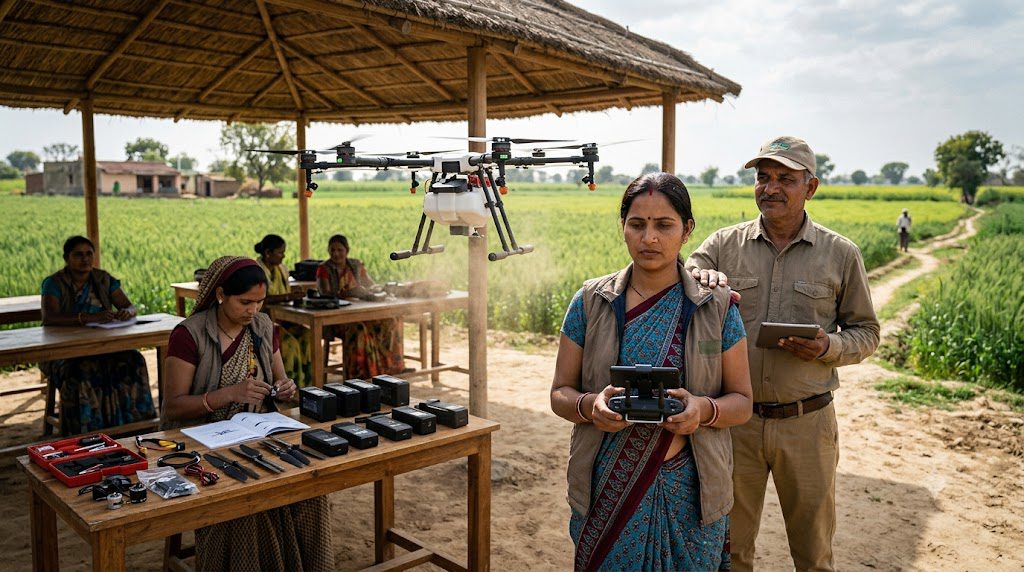
The path from SHG member to certified “Drone Didi” involves a structured 15-day training program covering both flight certification and agricultural application skills.
One selected SHG member completes drone pilot training — a mandatory component leading to a Remote Pilot Certificate through a DGCA-authorized Remote Pilot Training Organization (RPTO) — combined with additional training specifically on nutrient and pesticide application techniques for agricultural spraying.
A second member, or an interested family member with a mechanical or electrical aptitude, is separately trained as a drone maintenance assistant, responsible for basic repairs and upkeep.
This two-person model is a deliberate design choice: it reduces the SHG’s dependency on a single trained individual and builds basic in-house maintenance capacity rather than requiring every minor issue to be escalated to an external service provider.
Real Progress vs the Target: An Honest Look
This is the section a purely promotional account of the scheme would skip, and it matters enough to state plainly.
According to a Press Information Bureau release dated February 13, 2026, citing a written parliamentary reply, Lead Fertilizer Companies had distributed a total of 1,094 drones to SHGs as of January 2026 — and of those, only 500 were distributed specifically under the formal Namo Drone Didi Scheme framework, with the remainder distributed earlier by LFCs using their own internal resources ahead of the scheme’s official operational guidelines.
Against the scheme’s stated target of 15,000 drones for women SHGs, roughly 1,094 drones distributed represents approximately 7% of the total target, more than a year into the scheme’s active implementation window.
State-level distribution has also been highly uneven: the same PIB data shows Karnataka receiving 145 drones and Uttar Pradesh 128, while states like Goa received just 1 and several northeastern and hill states received fewer than 5 each.
This gap between target and actual distribution doesn’t necessarily indicate the underlying model has failed — the ADRTC Bangalore study on the earliest distributed drones reportedly found genuine business viability and income diversification benefits for participating SHGs, and the scheme’s remaining implementation window extends through 2025-26.
But an SHG or state official evaluating this scheme in 2026 should understand that publicly available data shows a program still in its early implementation phase relative to its own stated targets, with significant regional variation in how far it has actually reached.
It’s also worth noting what this data does and doesn’t tell us. The 1,094-drone figure reflects drones physically distributed and pilots trained — it doesn’t by itself indicate how many of those drones are being used consistently as an active rental business versus sitting idle after initial training.
The ADRTC study’s finding of genuine business viability is encouraging precisely because it addresses that deeper question directly, rather than just counting units shipped. A prospective SHG applicant would do well to ask their state DAY-NRLM office not just about drone availability, but about actual utilization rates among SHGs that have already received one in a comparable district, since that’s a better predictor of real income potential than the scheme’s national-level distribution numbers alone.
Namo Drone Didi vs an Individual Farmer Buying a Drone
| Factor | Namo Drone Didi (SHG Route) | Individual Farmer Drone Purchase |
|---|---|---|
| Subsidy available | 80% up to ₹8 lakh | Varies by separate individual drone subsidy schemes, generally lower percentage |
| Financing support | AIF loan with 3% interest subvention | Standard commercial financing |
| Training included | Yes, 15-day dual-role training | Not typically bundled |
| Business model | Rental service to multiple farmers | Personal or single-farm use |
| Maintenance support | AMC and insurance included in package | Farmer’s own responsibility |
| Income generation potential | Designed as an income-generating service | Cost-saving tool, not typically a revenue source |
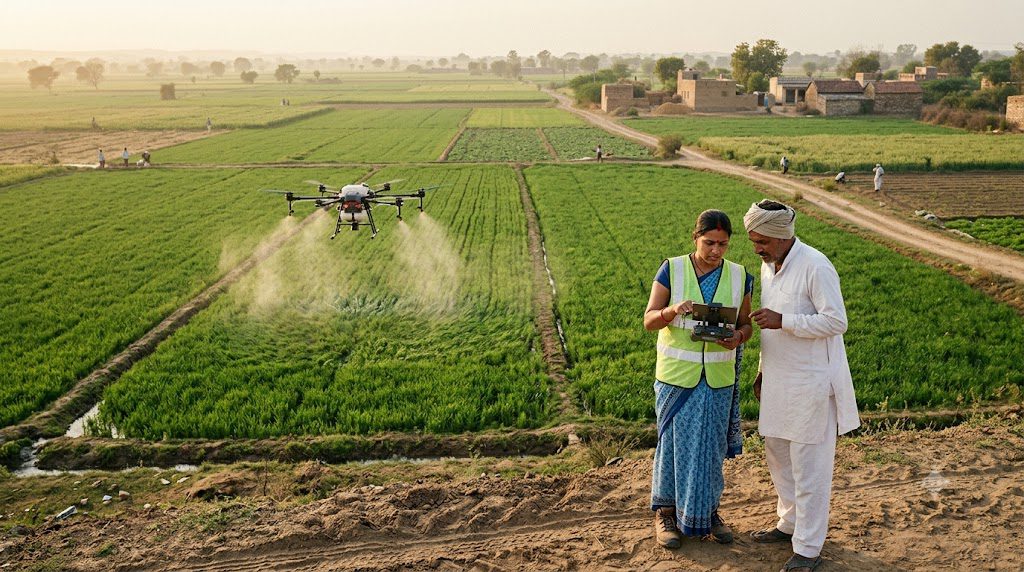
This structural difference is the core distinction worth understanding: Namo Drone Didi isn’t primarily a subsidy for individual farmers to buy their own drone — it’s designed to create a local rental-service business run by an SHG, serving multiple farmers in a cluster who individually couldn’t justify owning drone equipment themselves.
Common Mistakes and Misunderstandings
- Assuming any individual farmer can apply directly. The scheme specifically targets registered Women SHGs and their Cluster Level Federations under DAY-NRLM, not individual farmer applicants.
- Underestimating the loan repayment obligation. The AIF financing component, even with interest subvention, is still a real loan that needs a realistic repayment plan built around expected rental income.
- Not confirming local farmer demand before pursuing selection. Since selection is demand-driven at the cluster level, an SHG in an area without documented drone-service demand is unlikely to be prioritized.
- Treating the drone as a one-time asset rather than a service business. The scheme’s design — training, AMC, and the 2,000-2,500 acre coverage target — reflects an ongoing business model, not a single-use purchase.
- Overlooking the maintenance-assistant training component. Some SHGs focus entirely on the pilot-training pathway and underuse the parallel maintenance-training track, which affects long-term equipment uptime.
FAQs About the Namo Drone Didi Scheme
1. What is the Namo Drone Didi scheme?
The Namo Drone Didi scheme is a Central Sector Scheme designed to provide agricultural drones to Women Self-Help Groups (SHGs) under DAY-NRLM. The objective is to help SHGs operate drone-based agricultural service businesses while creating additional income opportunities for rural women.
2. How much subsidy is available under the Namo Drone Didi scheme?
Women SHGs can receive 80% Central Financial Assistance on the cost of the drone package, including accessories and ancillary charges, up to a maximum of ₹8 lakh per SHG. The remaining amount can be financed through the available loan mechanism.
3. Can an individual woman farmer apply for Namo Drone Didi?
No. The scheme is structured around registered Women Self-Help Groups and their Cluster Level Federations under DAY-NRLM, rather than individual farmer applications.
4. Is the Namo Drone Didi drone completely free?
No. The drone is heavily subsidized but not completely free. The government provides 80% assistance up to ₹8 lakh, while the remaining cost can be financed through an AIF loan with a 3% interest subvention. The loan amount still has to be repaid.
5. What is included in the Namo Drone Didi drone package?
The package includes the agricultural drone and spray assembly, carrying case, batteries, fast charger, pH meter, and anemometer. It also includes a one-year warranty, two years of Annual Maintenance Contract (AMC), and comprehensive insurance.
6. How are SHGs selected for the Namo Drone Didi scheme?
Selection is demand-driven rather than simply first-come-first-served. State-level committees identify clusters where there is sufficient farmer demand for drone spraying services. SHGs and their Cluster Level Federations are then selected within those identified clusters.
7. What training is provided under the Namo Drone Didi scheme?
The scheme provides a structured 15-day training program. One selected SHG member receives drone pilot training leading to a Remote Pilot Certificate through a DGCA-authorized training organization, while another member or suitable family member can receive training as a drone maintenance assistant.
8. What can Namo Drone Didi agricultural drones be used for?
The scheme currently focuses on using drones for liquid fertilizer and pesticide application in agricultural fields. The article notes that the official guidelines describe this as the present use case, while future applications could potentially expand.
9. How many drones have been distributed under the Namo Drone Didi scheme?
According to the January 2026 parliamentary data cited in the article, 1,094 drones had been distributed by Lead Fertilizer Companies, of which 500 were distributed specifically under the formal Namo Drone Didi Scheme framework. The overall target is 15,000 drones for women SHGs.
10. How much additional income can an SHG earn through Namo Drone Didi?
The scheme is designed to create an additional income stream for participating SHGs through drone rental and agricultural spraying services. The article cites an expected additional income of roughly ₹1 lakh per year per SHG, while actual earnings can depend on local farmer demand, acreage served, utilization, and operating conditions.
About the Author
This article was researched and written by the Farm Sutras Editorial Team, fact-checked against the official Lakhpati Didi government portal (Ministry of Rural Development) and Press Information Bureau releases from the Ministry of Agriculture and Farmers Welfare — each linked below for independent verification. This is an editorial compilation of publicly available government data, not a substitute for confirming current SHG eligibility and cluster selection status directly with your local DAY-NRLM mission office.
Sources Cited in This Article
- Lakhpati Didi Official Portal (Ministry of Rural Development) — Namo Drone Didi
- Press Information Bureau — Approval of Namo Drone Didi Scheme Outlay
- Press Information Bureau — Distribution of Agricultural Drones under Namo Drone Didi Scheme
- Press Information Bureau — Operational Guidelines of Central Sector Scheme “Namo Drone Didi”
- The Tribune — Lieutenant-Governor Launches Namo Drone Didi Project in Delhi
Final Thought
The Namo Drone Didi scheme’s core model — an 80% subsidy, bundled training, and a built-in maintenance and insurance package designed to launch a genuine SHG-run rental business — is a genuinely well-structured piece of policy design.
But the public data is equally clear that actual distribution, at roughly 7% of the 15,000-drone target as of early 2026, is running well behind the scheme’s own timeline.
For an SHG evaluating whether to pursue this, the honest takeaway is to treat it as a real, valuable opportunity worth actively pursuing through your local DAY-NRLM mission office — while going in with realistic expectations about selection timelines, given how early-stage the scheme’s actual rollout still appears to be relative to its ambitions, and how it fits alongside other financing tools like the Kisan Credit Card scheme that your SHG or its members may already have access to.